Himalayan Cat Lifespan Chart
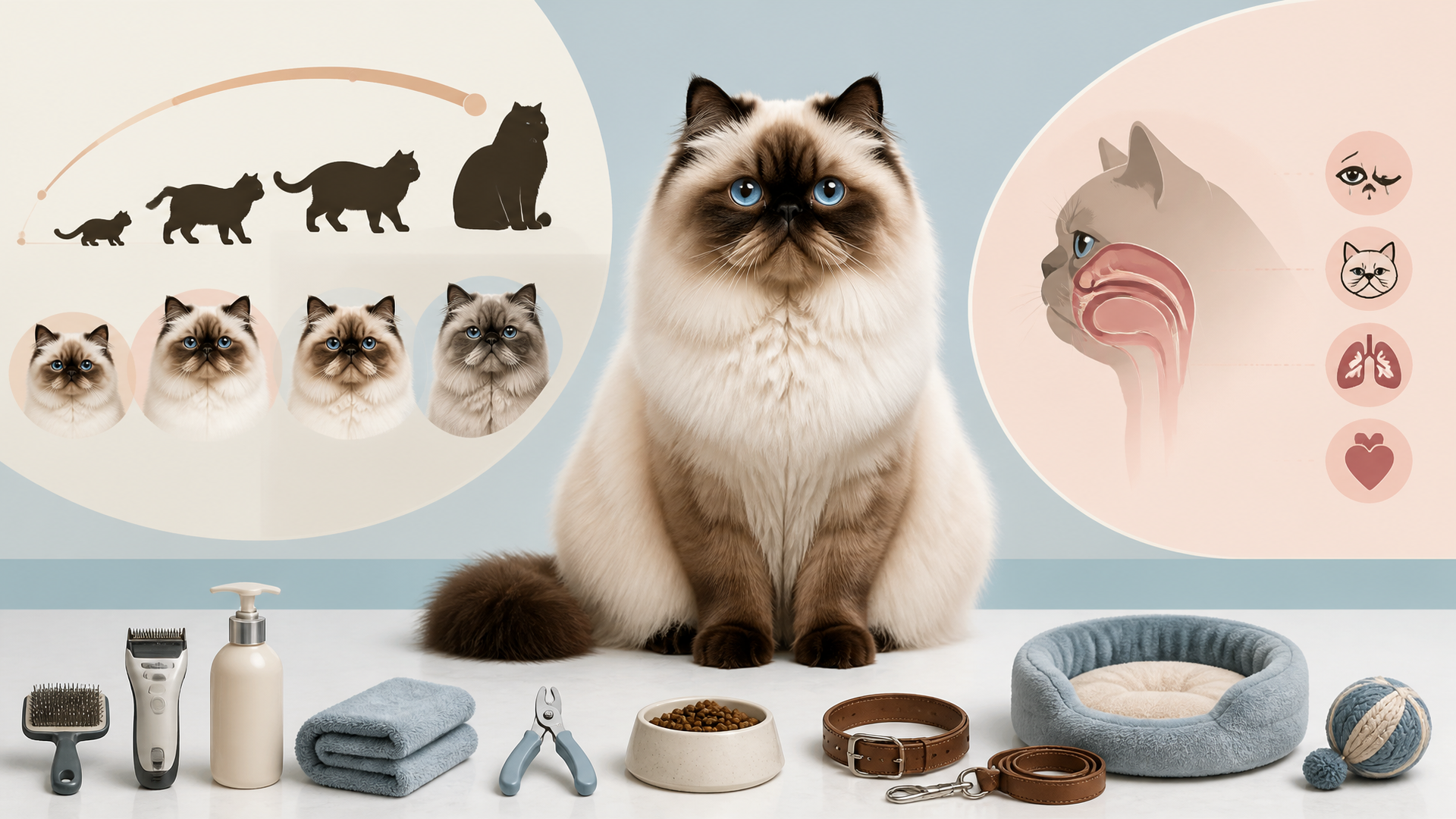
Himalayan cats typically live 9–15 years, with most reaching 12–14 years under proactive care. That’s 2–4 years shorter than the average domestic cat, driven by their flat-faced structure and breed-specific health risks. Below is the timeline, the biggest threats, and exactly what to do about them.

Himalayan Cat Lifespan at a Glance
| Life Stage | Age Range | Key Milestones |
|---|---|---|
| Kitten | 0–12 months | Rapid growth; socialization window closes by 16 weeks |
| Junior | 1–3 years | Full coat develops; adult personality emerges |
| Prime Adult | 4–7 years | Peak health; stable weight; established routine |
| Mature Adult | 8–11 years | Early senior care begins; vet visits become twice-yearly |
| Senior | 12+ years | Increased monitoring; diet adjustments; joint support |
Most Himalayans enter the senior bracket around age 10. A few reach 15+, but that requires active management of their known weak points.
Why Himalayans Have a Shorter Lifespan Than Other Cats
The Himalayan is a Persian-Siamese cross, inheriting the Persian’s flat face and the Siamese’s color-point pattern. That flat face is the primary reason their lifespan runs shorter.
Brachycephalic airway syndrome reduces breathing efficiency. Compressed nasal passages, an elongated soft palate, and a narrow trachea make every breath harder. Over years, this strains the heart and lungs. Even a cat that appears fine at rest may struggle during exercise, heat, or stress.
Polycystic kidney disease (PKD) affects 30–40% of Himalayans genetically. Fluid-filled cysts develop on the kidneys, gradually replacing healthy tissue. Without early detection, kidney failure typically sets in between 7–10 years.
Dental disease is often underestimated but can shave 2–3 years off a Himalayan’s life. Their flat faces cause crowded teeth that trap food and bacteria. Untreated dental infections damage the heart, liver, and kidneys over time.
Himalayan Lifespan Chart by Health Factor
| Health Factor | Impact on Lifespan | What You Can Do |
|---|---|---|
| PKD (genetic) | Can reduce by 3–5 years if untreated | Breeder screening; annual ultrasound after age 3 |
| Brachycephalic airway | 1–3 years reduction in severe cases | Weight management; avoid heat stress; consider surgery if breathing is labored |
| Dental disease | 2–3 years reduction if untreated | Daily brushing; annual dental cleanings |
| Obesity | 2–4 years reduction | Measured portions; controlled treats; daily play |
| Regular vet care | Adds 2–4 years | Twice-yearly checkups after age 8 |
The Counter-Intuitive Truth About Himalayan Lifespan
Most owners prioritize PKD screening — and they should. But the single biggest controllable factor that shortens Himalayan lives isn’t kidney disease. It’s obesity.
Himalayans are low-energy cats. They nap 18 hours a day. Their dense, fluffy coats hide weight gain perfectly, so owners often don’t notice until the cat is 2–3 pounds above ideal. For a 10-pound cat, that’s 20–30% excess body weight.
Actionable takeaway: Weigh your Himalayan monthly using a digital baby scale or the subtraction method (step on a scale holding the cat, then subtract your weight). Healthy adult females: 7–10 pounds. Males: 9–12 pounds. If weight trends up for two consecutive months, adjust food portions immediately.
3 Expert Tips to Extend Your Himalayan’s Lifespan
Tip 1: Screen for PKD Before Symptoms Appear
Actionable step: Ask your breeder for proof that both parents were PKD-negative via ultrasound or DNA testing. If you already own a Himalayan, request a PKD ultrasound at your next vet visit. The test is non-invasive and takes about 15 minutes.
Common mistake: Waiting for symptoms (weight loss, increased thirst, vomiting). By then, 70% of kidney function is already lost. Early detection lets you start a kidney-supportive diet and hydration protocol that can add years.
Product tip: Look for a high-moisture wet food specifically labeled for kidney support (low phosphorus, high-quality protein). Use a wide, shallow stainless steel or ceramic water bowl to encourage drinking — whisker fatigue is real for flat-faced cats.
Tip 2: Manage Breathing Stress Before It Becomes an Emergency
Actionable step: Keep your home between 68–75°F. Himalayans cannot pant effectively and overheat quickly. Provide cool resting spots (ceramic tiles, elevated beds). Never leave them in an unventilated room or direct sun.
Common mistake: Assuming your cat is “fine” because they’re not visibly gasping. Watch for subtle signs: open-mouth breathing after mild play, noisy breathing when sleeping, or sleeping with their head elevated. These indicate airway resistance that needs veterinary evaluation. In severe cases, soft palate resection or nostril widening surgery can dramatically improve quality of life.
Product tip: A cooling mat (gel or water-filled) placed in their favorite napping spot can help regulate body temperature during summer months.
Tip 3: Brush Their Teeth Daily — Not Weekly
Actionable step (numbered sequence):
1. Gather supplies: enzymatic toothpaste (chicken or seafood flavor), a finger brush or small cat toothbrush, and a treat for after.
2. Apply a pea-sized amount of toothpaste to the brush.
3. Gently lift your cat’s lip on one side and brush in small circles along the gum line for 30 seconds.
4. Switch to the other side and repeat for another 30 seconds.
5. Reward with a treat immediately.
Common mistake: Thinking dry kibble “cleans” teeth. It doesn’t — kibble shatters on contact and does nothing to remove plaque at the gum line. Without mechanical brushing, 70% of cats over age 3 have dental disease. For Himalayans with crowded teeth, that number climbs even higher.
Success check: After two weeks, you should see less visible plaque and fresher breath. If your cat resists, try a different toothpaste flavor or use a soft gauze pad wrapped around your finger instead of a brush.
The Himalayan Health Checklist (Save This)
Monthly checks:
- [ ] Weigh your cat and log the number
- [ ] Check for eye discharge or tear staining (common in flat-faced breeds)
- [ ] Listen for noisy breathing at rest
- [ ] Feel for lumps under the coat (especially around the kidneys)
- [ ] Check appetite and water intake
Twice-yearly vet visits (after age 8):
- [ ] Blood work (kidney values, thyroid, glucose)
- [ ] Urinalysis (early PKD detection)
- [ ] Dental exam under anesthesia if needed
- [ ] Blood pressure check (Himalayans are prone to hypertension)
Daily non-negotiables:
- [ ] Fresh water in a wide, shallow bowl (stainless steel or ceramic)
- [ ] Measured food portions using a kitchen scale, not a scoop
- [ ] 10–15 minutes of interactive play (wand toys, puzzle feeders, not just a laser pointer)
- [ ] Face wiping: clean tear stains and nose folds with a damp cloth
What Shortens a Himalayan’s Life Most (Beyond Genetics)
Heat stress kills fast. Himalayans cannot cool themselves efficiently. Never leave one in a car, unventilated room, or direct sun. Signs of heat stress: open-mouth panting, drooling, bright red gums, lethargy, vomiting. If you see these, move the cat to a cool area, offer water, and call your vet immediately.
Poor diet choices compound every other health issue. Himalayans do best on high-protein, low-carb wet food. Dry food alone is too low in moisture for a breed prone to kidney disease. Aim for at least 50% of their diet as wet food. Look for brands with named protein sources (e.g., chicken, turkey, salmon) and no artificial fillers.
Lack of mental stimulation leads to stress eating and obesity. Himalayans are intelligent cats that need puzzle feeders, treat-dispensing toys, and daily interactive play. A bored Himalayan eats. A stimulated Himalayan moves.
When to Call the Vet
These symptoms warrant an immediate vet visit:
- Open-mouth breathing at rest (not after play)
- Sudden increase in water consumption and urination
- Weight loss despite normal appetite
- Bad breath with red or bleeding gums
- Lethargy lasting more than 24 hours
- Straining to urinate or blood in urine
Escalation signal: If your Himalayan stops eating for more than 12 hours, that’s an emergency. Flat-faced cats can develop hepatic lipidosis (fatty liver disease) quickly when they stop eating.
What a Healthy Himalayan Senior Looks Like
A well-cared-for 12-year-old Himalayan should:
- Maintain stable weight (not losing or gaining)
- Have clear eyes with minimal discharge
- Breathe quietly at rest (no snorting or wheezing)
- Eat and drink normally
- Use the litter box without straining
- Still engage in short play sessions
If your senior Himalayan is losing weight despite eating well, get blood work done. Hyperthyroidism and chronic kidney disease are both common and treatable when caught early.
Save This Guide
Key takeaway: Himalayans can live 12–15 years with proactive care — but their flat faces and PKD risk mean you can’t coast on “wait and see.” The three actions that add the most years: monthly weigh-ins, daily tooth brushing, and twice-yearly vet blood work starting at age 8. Save this chart and checklist to catch problems before they become emergencies.
This article contains affiliate links. If you purchase through them, we may earn a small commission at no extra cost to you.
FAQ
How long do Himalayan cats typically live indoors vs. outdoors?
Indoor Himalayans average 12–15 years. Outdoor Himalayans average 5–8 years due to accidents, predators, and heat exposure. Himalayans should never be outdoor cats — their flat faces make breathing in heat dangerous, and their calm temperament makes them poor survivors.
At what age should I start PKD screening for my Himalayan?
Start annual ultrasound screening at age 3. If your cat has a family history of PKD, start at age 2. Blood work alone won’t catch early PKD — you need imaging.
Do male or female Himalayans live longer?
Females tend to outlive males by 1–2 years on average, consistent with most cat breeds. Neutered males and spayed females both live longer than intact cats.
What’s the oldest recorded Himalayan cat?
The oldest confirmed Himalayan lived to 22 years. That’s exceptional and requires excellent genetics, perfect diet, and no major health incidents. Plan for 12–14 years.
Can diet alone extend my Himalayan’s lifespan?
Diet is critical but not sufficient alone. A high-quality, moisture-rich diet combined with weight management, dental care, and twice-yearly vet visits gives the best results. No single factor guarantees longevity.