Most Expensive Shih Tzu Color
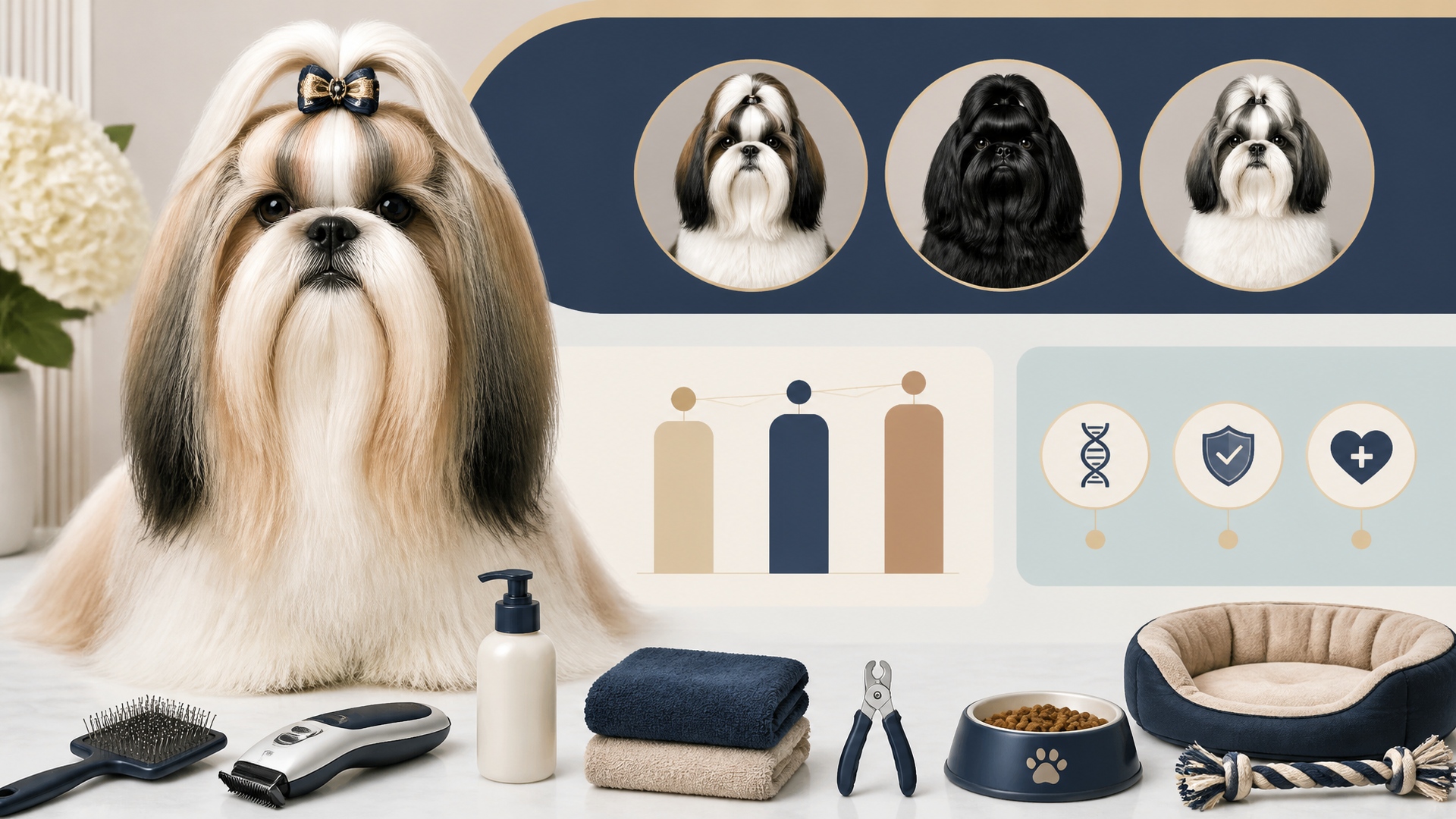
Pure white, blue (diluted black), and liver/chocolate Shih Tzus typically cost $3,000–$8,000 from reputable breeders — but the most expensive color is often not the healthiest choice. Rare coat colors come from deliberate color-breeding that can concentrate undesirable genetic traits. If you’re shopping for a Shih Tzu, knowing which colors cost more — and why — could save you thousands in vet bills down the road.

Here’s what matters most: before you search for a specific color, confirm the breeder performs genetic health testing on both parents. Without that, you could pay $5,000 for a puppy that develops chronic skin conditions within the first year, adding another $2,000–$3,000 in unexpected costs.
Shih Tzu Color Price Comparison
| Color | Typical Price Range | Rarity Level | Health Notes |
|---|---|---|---|
| Pure White | $3,000–$8,000 | Rare | Higher risk of skin sensitivities; sunburn vulnerability |
| Blue (dilute) | $3,500–$7,000 | Very rare | Associated with Color Dilution Alopecia (hair loss) |
| Liver/Chocolate | $2,500–$6,000 | Rare | Liver-colored nose required for show; skin pigment issues possible |
| Black | $1,800–$4,000 | Uncommon | Generally healthy; difficult to maintain pure black without fading |
| Brindle | $2,500–$5,500 | Rare | Pattern matters more than color; some lines carry skin issues |
| Gold/Red | $1,200–$2,500 | Common | Most breed-typical; fewer reported health links |
| Mixed/Parti | $1,000–$3,000 | Varies | Health depends on underlying genetics, not color |
Why These Three Colors Cost More
Pure White Shih Tzus
Pure white is the most sought-after Shih Tzu color in the US market. Breeders spend years trying to produce white puppies without cream or gold undertones. True white requires recessive genes from both parents, and white Shih Tzus are harder to breed without introducing pigment-related issues. Expect waitlists of 6–18 months for puppies from established lines.
Budget beyond purchase price: Plan for $300–$600 per year on tear-stain removers, eye powders, and sun protection. White coats stain visibly from tears and saliva — daily wiping is non-negotiable. Use a damp cloth and a gentle eye powder formulated for white coats to keep staining under control.
Blue Shih Tzus
“Blue” in Shih Tzus isn’t a blue coat — it’s a dilution of black pigment that produces a steel-gray or silvery appearance. The dilute gene (dd) is recessive, so both parents must carry it. The catch: up to 75% of blue dilute dogs develop Color Dilution Alopecia, a condition that causes patchy hair loss, thin coats, and increased skin infections. A blue puppy from a breeder who health-tests for this is extremely rare.
Real-world example: If you buy a blue puppy from a breeder who never tested for the dilute gene combination, you may notice thinning hair on the back and flanks by 6 months of age. By 18 months, large bald patches can form, requiring lifelong medicated shampoos, omega-3 supplements, and frequent vet visits.
How to verify: Ask for the results of a DNA color test (available through Paw Print Genetics or Embark) on both parents. The test confirms whether they carry the dilute gene (dd). A responsible breeder will show you these results without hesitation. If they say “I don’t do DNA testing” — walk away.
Liver/Chocolate Shih Tzus
Liver (brown) Shih Tzus require a specific recessive gene (bb) that also affects nose and eye rim pigmentation — the nose must be liver-colored, not black. This color is genuinely rare in the breed. However, liver dogs can have lighter eye colors and increased sun sensitivity on exposed skin (nose, eyelids, paw pads).
Trade-off to consider: If you plan to show your Shih Tzu in AKC conformation, a liver coat is acceptable — but the nose, eye rims, and paw pads must be liver-colored, not black. Many pet-quality liver puppies have black noses (meaning they aren’t true liver), yet breeders may still charge a premium. Always ask for a photo of the puppy’s nose and paw pads before committing.
What to Watch For When Buying a Rare-Color Shih Tzu
Counter-intuitive angle: The most expensive color is often the cheapest to produce if the breeder cuts corners. A breeder advertising “rare blue Shih Tzu puppies” without health testing may be breeding dilute-to-dilute without screening for skin conditions. The puppy might cost $5,000 upfront and $3,000 in vet bills within two years.
5 Red Flags When Shopping for Rare Colors
| Red Flag | What It Means | What to Do |
|---|---|---|
| No health testing on parents | Breeder likely prioritizing color over health | Request OFA or PennHIP records |
| Puppies priced significantly above market | Could be “rare color” marketing markup | Compare with 3–4 other breeders |
| Breeder won’t share parent photos | May not know the actual lineage | Ask for verified photos with ID |
| Claims of “teacup” or “imperial” sizing | Not a real Shih Tzu standard; often linked to unhealthy breeding | Walk away |
| Multiple available litters with the same rare color | Volume breeding; rare colors shouldn’t be common | Find a breeder with 1–2 litters per year |
How to Verify Color Authenticity
One concrete step before buying: Ask the breeder for a short video (15–30 seconds) of the puppy outdoors in natural sunlight. Coat colors can look dramatically different under indoor lighting versus daylight. A “white” puppy that looks cream-colored in sunlight is not true white. A “blue” puppy that appears dark gray with brownish tones may not carry the proper dilute gene. Compare the video to the AKC Shih Tzu color descriptions on their website.
3 Expert Tips for Buying a Rare-Color Shih Tzu
Tip 1: Ask for Color-Specific Health Guarantees
Actionable step: Request a written guarantee specifically covering color-related conditions (Color Dilution Alopecia for blues, sun sensitivity for whites and livers). A reputable breeder will offer at minimum a 2-year health guarantee that includes genetic skin conditions.
Common mistake: Accepting a generic “puppy health guarantee” that only covers life-threatening defects. Most standard guarantees exclude coat and skin issues — which are exactly the problems rare colors face.
Tip 2: Verify the Color by Seeing Both Parents
Actionable step: Ask to see the sire and dam in person or via live video. Their coat condition tells you more than any pedigree. A blue parent with patchy hair loss is a warning sign, even if it’s marketed as “normal for the color.”
Common mistake: Relying on photos alone. Breeder photos can be edited, filtered, or taken at flattering angles. Live video or in-person visits are non-negotiable for a $5,000+ puppy.
Tip 3: Budget for Ongoing Color-Related Care
Actionable step: Set aside $500–$1,000 per year for skin and coat-specific products: high-SPF dog-safe sunscreen for whites and livers, moisturizing shampoos for blues, and omega-3 supplements. Use a slicker brush and detangling spray weekly to monitor coat condition.
Common mistake: Treating a rare-color Shih Tzu the same as any other color. White coats stain around the eyes and mouth. Blue coats are more prone to dryness and breakage. Your grooming routine needs to match the color.
Color and Grooming: What Changes Day to Day
If you buy a rare-color Shih Tzu, your daily and weekly care routine needs adjustments specific to that coat. White, blue, and liver coats all have different vulnerabilities.
Daily Check
| Color | Daily Action | Watch For |
|---|---|---|
| White | Wipe tear stains with a damp cloth; apply eye powder | Red-brown staining around eyes and muzzle |
| Blue | Check for dry patches or flaking skin | Hair loss, thinning areas |
| Liver | Apply dog-safe sunscreen to nose and ear tips for outdoor time | Sunburn, redness on exposed skin |
Weekly Grooming Essentials
All rare colors benefit from a consistent grooming kit:
- Slicker brush — removes loose hair and prevents matting
- Pin brush — finishes the coat and adds shine
- Detangling spray — protects coat during brushing (especially critical for blue and white coats)
- Leave-in conditioner — adds moisture to dilute coats
When to Call the Vet
Escalate if you notice:
- Patchy hair loss that doesn’t regrow within 3–4 weeks
- Red, inflamed skin with no obvious cause
- Excessive tearing or eye discharge in white Shih Tzus (could indicate blocked tear ducts, not just staining)
- Sunburn on nose, ear tips, or paw pads (liver and white colors)
FAQ
Is it true that white Shih Tzus are more prone to tear stains?
Yes. White coats show tear staining more visibly, and the moisture can lead to yeast infections under the eyes if not cleaned daily. This is a grooming challenge, not a health defect, but it adds to the maintenance cost.
Can a Shih Tzu change color as it ages?
Yes. Black and blue coats often fade to gray or silver by age 2–3. Gold and red coats may lighten. White stays white but can yellow from tear stains, saliva, or urine contact. Be sure you like the adult color, not just the puppy appearance.
Do reputable breeders charge more for rare colors?
Some do, because producing them is harder. Others charge the same for all colors because they prioritize health over pigment. Both approaches can be ethical — the difference is health testing, not pricing.
Save This Guide: Key Takeaways
The most expensive Shih Tzu color — white, blue, or liver — can cost $3,000–$8,000, but rare colors come with real health and grooming trade-offs. Before you buy, verify health testing on both parents, budget for color-specific care ($500–$1,000/year), and never choose color over health. The best Shih Tzu color is the one from a breeder who tests for genetic conditions — regardless of what shade it is.
Disclosure: This article contains affiliate links for recommended grooming products. We may earn a small commission at no extra cost to you.