Emoji Bichon Frise: Guide: What Every Owner Should Know
That cheerful, cloud-white dog in your emoji keyboard is a Bichon Frise — a real breed with specific care needs. If you’re considering adding one to your home, this guide covers temperament, grooming, health, and the surprising exercise requirement most owners overlook. This advice applies to the standard purebred Bichon Frise (12–18 lbs, white double coat). If your dog is a mix or a miniature variant, check with your vet for adjustments.

Bichon Frise Basics: Size, Temperament, and Lifespan
The Bichon Frise is a small, powder-puff dog weighing 12–18 pounds and standing 9–11 inches tall. Their signature white double coat feels more like cotton than fur. They’re part of the Bichon family (along with the Maltese, Havanese, and Bolognese) and were originally bred as companion dogs for sailors and royalty.
Key traits at a glance:
- Lifespan: 14–15 years
- Coat: Hypoallergenic, non-shedding (requires daily brushing)
- Temperament: Playful, affectionate, sensitive
- Energy level: Moderate — needs 30–45 minutes of exercise daily
- Training: Smart but stubborn; positive reinforcement works best
Counter-intuitive fact: Most people assume Bichons are low-energy lap dogs. In reality, they need daily walks, play sessions, and mental games to avoid destructive boredom. A tired Bichon is a well-behaved Bichon.
Grooming Your Bichon Frise: The Complete At-Home Flow
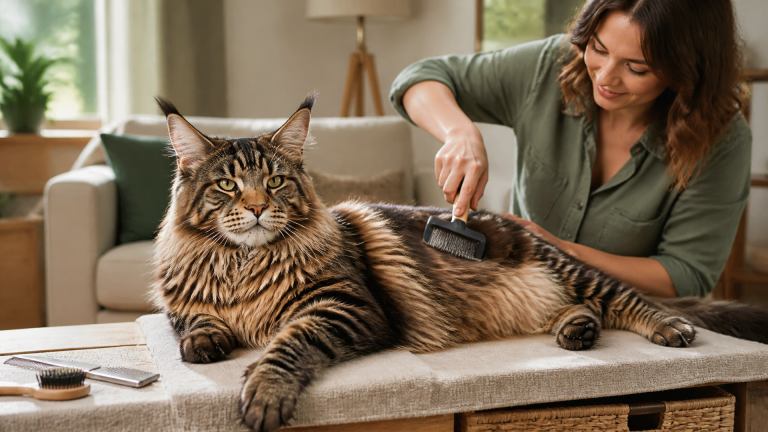
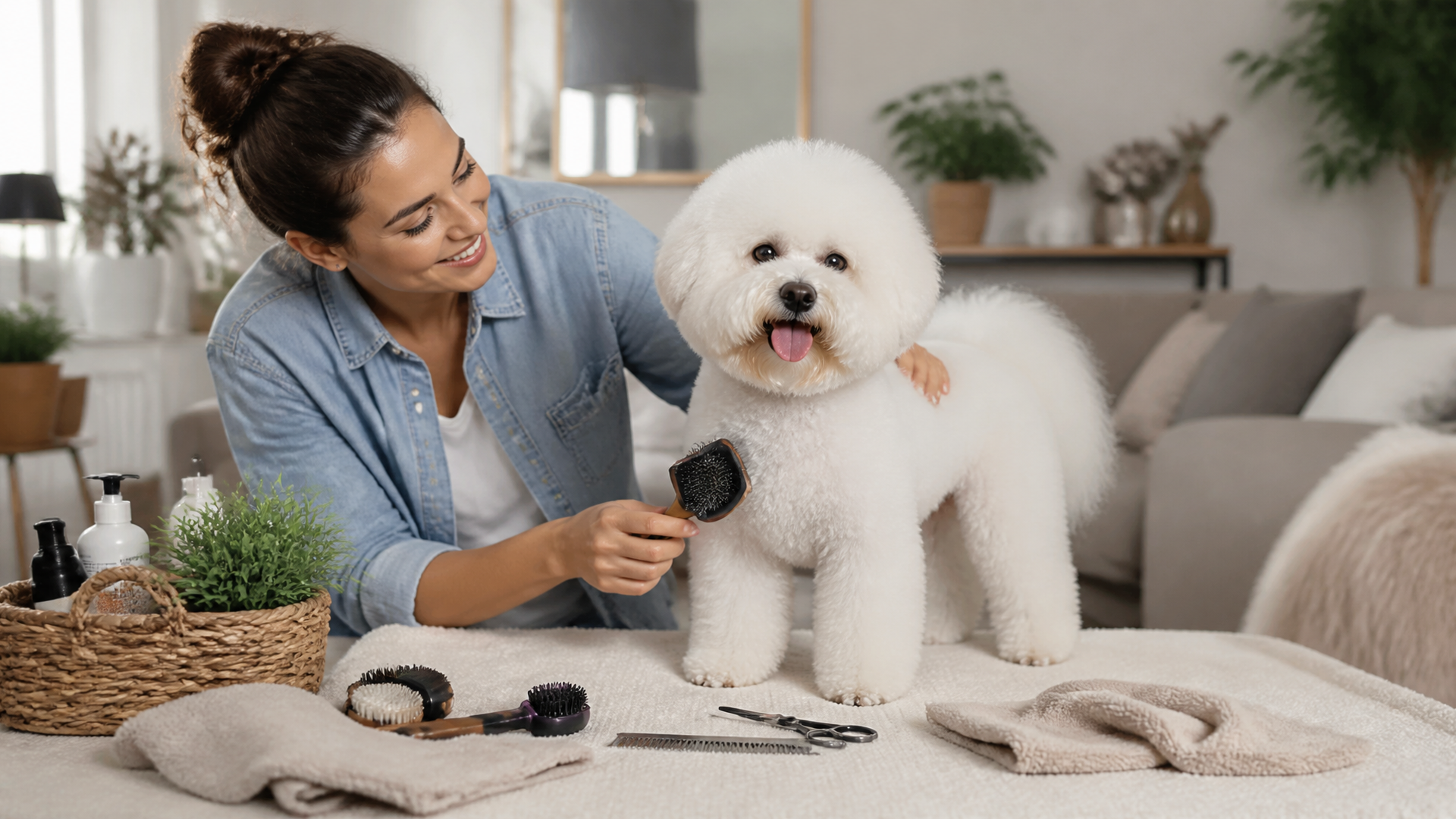
Grooming is the biggest commitment with this breed. Their coat mats easily, and professional grooming every 4–6 weeks is standard. With the right tools and routine, you can handle much of it at home.
Preparation
- Tools to have on hand: Slicker brush, pin brush, metal comb, detangling spray, nail clipper (guillotine or grinder), dog-safe shampoo and conditioner.
As an Amazon Associate, we earn from qualifying purchases.
- Workspace: A non-slip mat on a table or counter – your back will thank you.
- Timing: Groom after exercise so your dog is calm.
Early Checkpoints (Scan Before You Start)
Before you begin, run these checks:
- Mats behind ears, under armpits, and in the tail. Untangle with fingers or a dematting tool first – never force a brush through a tight mat.
- Skin redness or hot spots. If you find sore areas, stop and consult your vet before grooming.
- Nail length. If you can hear nails clicking on the floor, they’re too long.
Step-by-Step Grooming Routine
1. Brush thoroughly – Use the slicker brush in sections (back, sides, legs, tail). Work from the skin outward. Follow with the pin brush for a smoother finish.
2. Comb through – The metal comb catches mats the brushes missed. Pay extra attention to leg fringes and ear area.
3. Bath (every 2–4 weeks) – Wet the coat completely, apply shampoo from neck down, scrub gently, rinse until water runs clear. Repeat with conditioner for that fluffy texture.
4. Dry completely – Towel dry first, then use a pet dryer on low cool heat. Don’t let the coat air dry without brushing – it will mat.
5. Trim nails – Clip only the tip, avoiding the quick (pink part). If your Bichon has dark nails, grind them instead.
6. Face and feet trim – Use blunt-nose scissors to round the face (the “puppy cut” look) and shape the paws. Many owners leave this to a pro.
Verification step: After brushing and combing, run the metal comb through the entire coat from skin outward. If it snags anywhere, go back over that area with the slicker brush. The comb should glide through with zero resistance.
Likely Friction Points
- Matting around the collar and armpits – The most common problem. Check these spots daily and use detangling spray pre-brush.
- Brushing resistance on legs – Some Bichons hate it. Work slowly, reward with treats, and stop if your dog shows stress.
- Ear infections – Their floppy ears trap moisture. Clean with a vet-approved wipe after baths.
- Tear stains – The white fur under the eyes can stain reddish-brown. Wipe daily with a damp cloth and use a stainless steel water bowl.
Escalation Signals (When to Call the Vet)
Call your vet if you find:
- Hot spots (wet, red, oozing skin)
- Cuts or nicks from trimming
- Sudden hair loss in patches
- Persistent ear scratching or odor
- Red or swollen paw pads
Success Check
Your Bichon’s coat should look like a soft cloud – no bald patches, visible mats, or redness. If the comb slides through the entire coat without a snag, you’re golden.
Expert Grooming Tips (From Owners Who’ve Been There)
Tip #1: Brush your Bichon every single day, even if it’s just a 5-minute quick comb.
- Action step: Keep your slicker brush next to the couch and brush while watching TV.
- Common mistake to avoid: Skipping a day then trying to brush out a mat – that causes pain and makes future grooming harder.
Tip #2: Use a detangling spray before every brushing session.
- Action step: Spray lightly on the coat, wait 30 seconds, then brush.
- Common mistake to avoid: Using a human detangler – it can dry out a dog’s skin. Use a pet-safe product.
Tip #3: Trim the hair between your Bichon’s paw pads regularly.
- Action step: Use small, rounded-tip scissors to snip away excess hair from under the paw.
- Common mistake to avoid: Cutting too close to the skin – just take off the tufts that stick out.
Tip #4: Train your Bichon to tolerate grooming from puppyhood.
- Action step: Start with 2-minute sessions, reward with treats, and gradually increase time.
- Common mistake to avoid: Waiting until your dog is full-grown to introduce brushing – they’ll resist more.
Tip #5: Schedule professional grooms on a consistent 4-week cycle.
- Action step: Book your next appointment immediately after each visit.
- Common mistake to avoid: Stretching to 8 weeks between grooms – mats will form and require shaving.
Bichon Frise Health: Common Issues and Warning Signs
Despite their long lifespan, Bichons are prone to a few health problems. Knowing the signs helps you catch issues early.
| Condition | What to watch for | When to call the vet |
|---|---|---|
| Allergies | Itchy skin, red paws, ear infections | After 2–3 days of constant scratching |
| Bladder stones | Straining to urinate, blood in urine, licking genitals | Immediately |
| Patellar luxation | Skipping or hopping on a rear leg during walks | If it happens more than once in a month |
| Cataracts | Bumping into furniture, cloudy eyes | Annual eye exam after age 7 |
| Dental disease | Bad breath, yellow teeth, drooling | Annual dental cleaning |
Feeding Guidelines
Bichons do well on high-quality small-breed food. Typical daily amount: ½ to 1 cup of dry kibble split into two meals.
Avoid: Grapes, raisins, chocolate, xylitol (in sugar-free gum), onions, garlic.
Small-dog hazard: Because of their small body size, even a tiny amount of toxic food can cause serious problems. Keep all human food, medications, and household chemicals out of reach.
Practical implication: If you can’t commit to daily brushing and professional grooming every 4–6 weeks, the Bichon Frise may not be the right breed. The grooming cost and time are non-negotiable for a healthy, mat-free coat. Plan for roughly $50–$80 per professional visit plus at least 10 minutes of daily brushing.
Bichon Frise vs. Maltese vs. Havanese: Which Fluffy White Dog Is Right for You
These three breeds look similar but have different personalities and care needs.
| Feature | Bichon Frise | Maltese | Havanese |
|---|---|---|---|
| Weight | 12–18 lbs | 4–7 lbs | 7–13 lbs |
| Coat | Double, very curly | Silky, straight | Silky, wavy |
| Shedding | Very low | Low | Low |
| Exercise need | Moderate (30–45 min/day) | Low (20 min/day) | Moderate (30 min/day) |
| Trainability | Smart but stubborn | Smart, eager to please | Very smart, easy to train |
| Good with kids | Yes, gentle | Best with older kids | Excellent |
| Barking | Moderate | Frequent | Moderate |
| Grooming effort | High (daily brush, pro every 4–6 weeks) | High (daily brush, pro every 4–6 weeks) | High (daily brush, pro every 6–8 weeks) |
Bottom line: If you want a slightly larger, more playful dog that’s still hypoallergenic, go Bichon. If space is tight and you prefer a quieter lap dog, the Maltese might be a better fit. The Havanese is the most trainable and best with young children.
Frequently Asked Questions About Bichon Frises
Is the Bichon Frise hypoallergenic?
Yes. Their non-shedding coat produces less dander than many other breeds, making them a good option for people with mild allergies. No dog is 100% hypoallergenic, but Bichons are among the safest choices.
How often should I bathe my Bichon?
Every 2–4 weeks is typical. Bathing too often strips natural oils; too rarely leads to matting and odor.
Do Bichons bark a lot?
Moderately. They bark to alert you to visitors or unusual noises. With consistent training, excessive barking can be curbed.
Are Bichons good for first-time dog owners?
They can be, if you’re committed to daily grooming and consistent training. The stubborn streak can frustrate inexperienced owners, but with patience and positive reinforcement, most first-timers succeed.
How much exercise does a Bichon need?
30–45 minutes of daily exercise including walks, play sessions, and mental games. Without it, they can develop separation anxiety and destructive behaviors.
Save This Guide: The Bichon Frise is a loving, playful companion with one major catch — daily brushing and professional grooming every 4–6 weeks are non-negotiable. If you can commit to that routine, you’ll have a happy, healthy, cloud-white friend for 14–15 years. Bookmark this page for your grooming checklist and health warning signs.