Pomeranian Curly Tail Dog Breed
That signature curly tail is one of the first things people notice about a Pomeranian. A healthy Pom’s tail should curve up and rest flat against the back in a soft plume of fur. But not every curl is the same, and some shapes signal health problems or even mean your dog isn’t a purebred. Here’s exactly what to look for, how to groom that tail without ruining the shape, and when a change in curl means a vet visit.

Why Do Pomeranians Have Curly Tails?
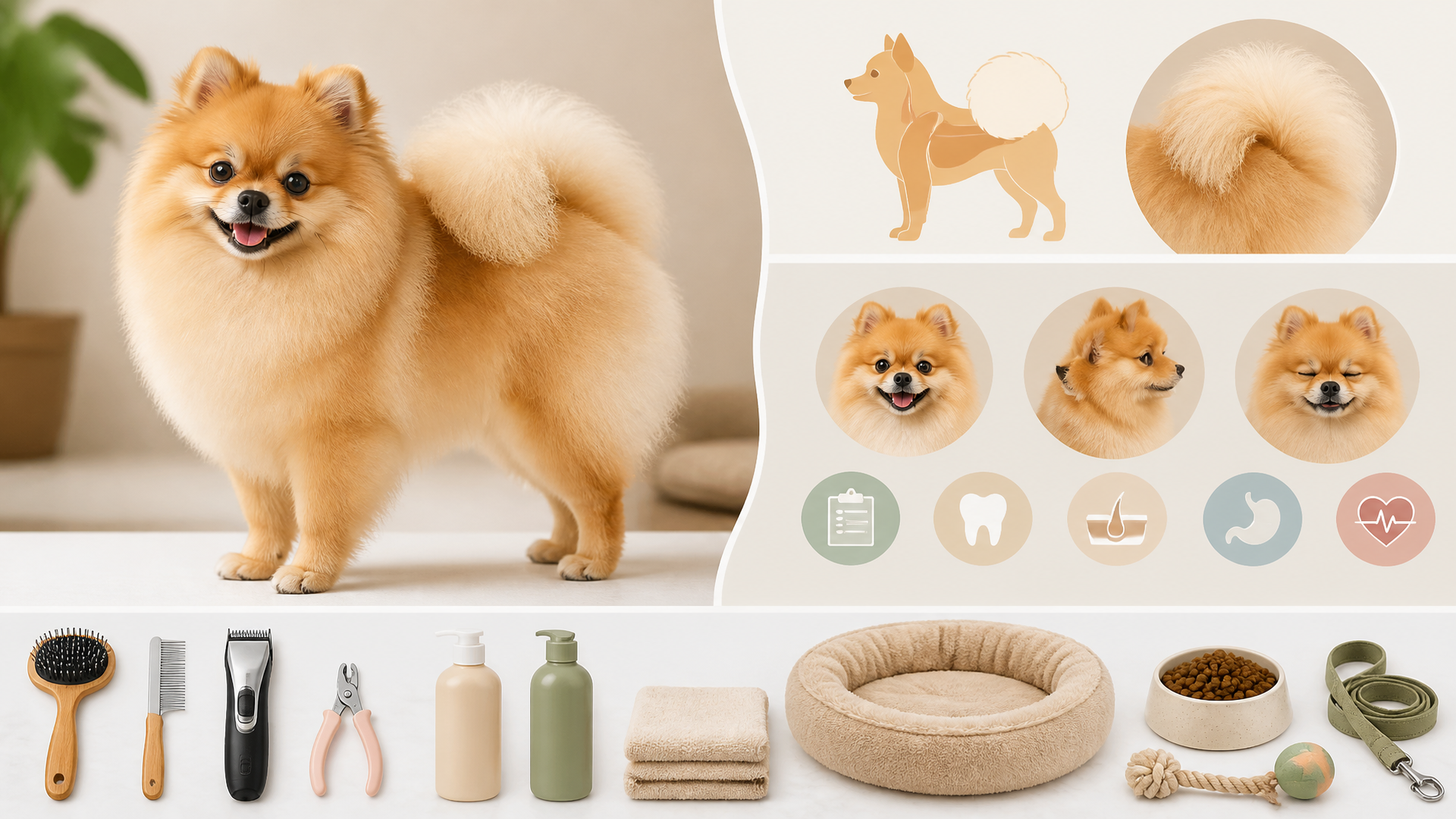
The curl comes from genetics. Pomeranians are part of the Spitz family (along with Huskies, Shiba Inus, and Akitas), and a tail that curves over the back is a hallmark of the group. The AKC breed standard calls for a tail that’s “set high, carried flat and straight over the back, well-feathered.”
What the curl should look like: A soft, smooth arc — not a full circle, not a tight spiral, and not a kink. The tail should lie flat against the back, not flop to one side or hang down.
What’s NOT normal:
- A kinked or bent tail (often from an old injury or a congenital fault)
- A tail that forms a tight loop or corkscrew
- A tail carried down or to the side when the dog is relaxed
- A tail that suddenly goes limp
Applicability boundary — when this changes: If you’re showing your Pomeranian in AKC conformation, any tail that doesn’t meet the standard (kinked, off-center, carried too low) can disqualify the dog. For a pet Pom, an imperfect curl is usually harmless — but it still affects grooming and health monitoring. A tight corkscrew tail, for example, traps more moisture and debris than a soft curve, so you’ll need to check the skin underneath more often.
Is Your Pom’s Curly Tail Normal? Weekly Health Check
Run this quick scan once a week while your Pom is relaxed on your lap or a grooming table. Touch the entire tail base and spine gently with your fingers.
| What to Check | Normal | Warning Sign |
|---|---|---|
| Curl shape | Soft arc, flat against back | Tight loop, kink, S-shape, or droop |
| Fur condition | Full, clean, no mats | Bald spots, crusting, dandruff, greasy patches |
| Skin under the tail | Pink, no redness or swelling | Redness, scabs, bumps, foul odor |
| Movement | Wags freely side to side | Stiff, held down, or painful when touched |
| Pain response | No reaction when you touch the tail | Yelps, pulls away, licks the area repeatedly |
Likely causes if something looks wrong:
- Injury — pulled or twisted tail from rough play, being stepped on, or getting caught in a door
- Anal gland issues — scooting or excessive licking at the tail base can mean impacted glands
- Skin infection or allergies — hot spots and dermatitis often start under the heavy tail plume
- Limber tail — the tail goes limp and painful after swimming, overexertion, or cold exposure; common in active Poms
Practical implication for you: If you see any warning sign, don’t wait to see if it resolves on its own. A tail that’s suddenly limp or painful needs a vet within 24 hours. Even a small mat at the tail base, left untreated, can turn into a hot spot requiring antibiotics and an Elizabethan collar. The cost of treating a hot spot (vet visit + meds) runs $150–$300, while a quick weekly check costs nothing.
Verification step — how to confirm normal curl vs. problem: Stand behind your relaxed Pom and look at the tail from above. A normal tail forms a single smooth curve that stays centered over the spine. If the tail tilts to one side, develops a sharp bend, or the tip touches the back in a tight spiral, that’s outside the breed standard and warrants a closer skin check.
Grooming Your Pom’s Curly Tail: Step-by-Step
The Pomeranian’s double coat means the tail has a dense undercoat covered by longer guard hairs. Mats form fastest at the tail base (hidden by body fur) and at the tip (where the plume drags). Here’s the exact routine.
What You’ll Need
- Slicker brush (Hertzko Self-Cleaning Slicker Brush works well) — for detangling
- Pin brush (Chris Christensen Oval Pin Brush) — for smoothing the topcoat
- Metal comb with wide and fine teeth — for checking mats at the base
- Detangling spray (The Stuff by Chris Christensen) — reduces hair breakage
- Blunt-tip grooming scissors — for trimming tail feathers (only if needed)
The Routine
Preparation: Always brush a dry coat. Wet fur mats faster and pulls painfully.
Step 1 — Slicker brush the tail. Start at the tip and work upward in small sections. Support the tail base with your other hand so you don’t tug the skin. Brush in the direction of hair growth, not against it.
Step 2 — Check the tail base for mats. Gently lift the tail and part the fur at the base with your metal comb. This area hides mats because it’s pressed against the back. If you find a mat, work it apart with your fingers first, then use the comb. Never yank a mat — it hurts and can damage the hair follicle.
Step 3 — Pin brush for finishing. Glide the pin brush through the tail in the direction of growth. This smooths the topcoat and adds shine without pulling out the undercoat.
Step 4 — Trim the tail tip (optional). If the tail feathers drag on the ground or pick up debris, carefully trim the tip hairs to about 1 inch above the ground. Use blunt-tip scissors and cut straight across — do not try to shape the curl.
Common mistake: Never cut into the curl to make it “look rounder.” The Pom’s tail plume is supposed to be a natural fan shape. Cutting straight across or into the curve ruins the silhouette and takes 6–12 months to grow back properly.
Success check: After grooming, the tail should lie flat against the back in a smooth arc. You should be able to run your metal comb through the entire tail with zero resistance.
Health Concerns Specific to the Pom Tail
Because the tail lies flat against the back, it traps heat, moisture, and debris. Three conditions are especially common:
1. Hot spots (acute moist dermatitis). These raw, weepy patches form when moisture gets trapped under the tail. Causes: flea allergies, over-brushing that irritates the skin, or letting the tail stay wet after a bath. Keep the tail dry and check daily during allergy season (spring and fall).
2. Tail base infection. Redness, swelling, or a foul odor near the anus often means impacted anal glands. Your vet can express them in minutes. If left alone, the infection can spread to the tail base and require antibiotics.
3. Limber tail (cold water tail). The tail suddenly goes limp and the dog seems uncomfortable sitting. It happens after swimming, heavy exercise, or exposure to cold rain. Most cases resolve with rest and anti-inflammatories within a few days, but see a vet to rule out a spinal injury.
Mismatch/trade-off — what can go wrong with home care: If you try to “fix” a tail that doesn’t meet the breed standard by training it into a different position, you can injure the tail vertebrae. Dogs’ tails have 5–23 vertebrae depending on length, and forcing the curl can cause fractures or nerve damage. The tail shape is determined by genetics and should never be physically manipulated.
How the Pom Curly Tail Compares to Other Breeds
Not all curly tails need the same care. Here’s how the Pomeranian stacks up against other curly-tailed breeds so you can tell what’s normal for your dog.
| Breed | Tail Type | Curl Degree | Special Care Needed |
|---|---|---|---|
| Pomeranian | Over-back curve | Soft arc, 180° or less | Daily brushing, check base for mats, keep dry |
| Shiba Inu | Sickle tail | Thick curl over back | Seasonal heavy shedding; brush 2x per week |
| Akita | Full curl over back | Tight, often touches the back | Check tail pocket for infections; brush weekly |
| Pug | Screw tail | Tight corkscrew, no straightening | Clean tail fold daily to prevent infection |
| Chow Chow | High-set curl over back | Loose curl carried forward | Heavy feathering; prone to mats and debris |
Decision criterion — how this changes your approach: If your dog’s tail forms a tight corkscrew (like a Pug), you need to clean the skin fold under the tail every single day, not just check for mats. If the tail has a loose, open curve (like a Chow Chow), you’ll focus more on brushing out the heavy feathering. The Pom’s soft arc falls in between — you’re watching for mats at the base and moisture trapping, not daily fold cleaning.
3 Expert Tips for Tail Care That Actually Work
Tip 1: Brush the tail base daily during coat blow season.
Pomeranians shed their undercoat twice a year (spring and fall). Loose fur at the tail base turns into mats within hours. Use an undercoat rake (Furminator or similar) once a week to pull out the loose undercoat, then follow with a slicker brush.
Common mistake: Skipping the base because you can’t see it. Set your Pom on a grooming table or your lap with a good light so you can actually see the area.
Tip 2: Add omega-3 fatty acids to support skin and coat health.
A healthy coat means less itching and less dandruff under that heavy tail plume. Add a fish oil supplement (Zesty Paws Omega Bites or a liquid salmon oil) to your Pom’s food. Follow the label dosage for your dog’s weight — typically 1 pump or 1 chew per 10–15 pounds.
Common mistake: Over-supplementing. Too much oil causes greasy coat, diarrhea, or pancreatitis. Stick to the labeled amount for your dog’s weight and don’t double up.
Tip 3: Dry the tail thoroughly after every bath and wet walk.
Moisture trapped under the tail is the #1 cause of hot spots. Towel-dry the tail first, squeezing from base to tip, then use a low-heat blow dryer on the plume. Hold the dryer at least 6 inches away and keep it moving so you don’t burn the skin.
Common mistake: Letting the tail air-dry while your Pom curls up on the couch. The damp fur pressed against the back creates a warm, wet environment perfect for yeast and bacteria. Always blow-dry the tail if you bathed the whole dog.
Save This Guide: Key Takeaways for Pom Owners
- A healthy Pomeranian tail forms a soft arc over the back — not a tight spiral, kink, or droop.
- Check the tail base weekly for mats, redness, or pain. Catching a problem early saves $150–$300 in vet bills.
- Brush the tail daily using a slicker brush, then a pin brush. Never cut into the curl shape.
- Use the comparison table to know whether your dog’s curl type is normal for a Pom or signals a different breed cross.
- If the tail suddenly goes limp or your dog yelps when you touch it, see a vet within 24 hours.
Disclosure: Some product links in this guide are affiliate links. We may earn a small commission at no extra cost to you. We only recommend tools we trust for our own dogs.