Labrador Retriever Great Swimmers: Daily Routine & Expert Tips
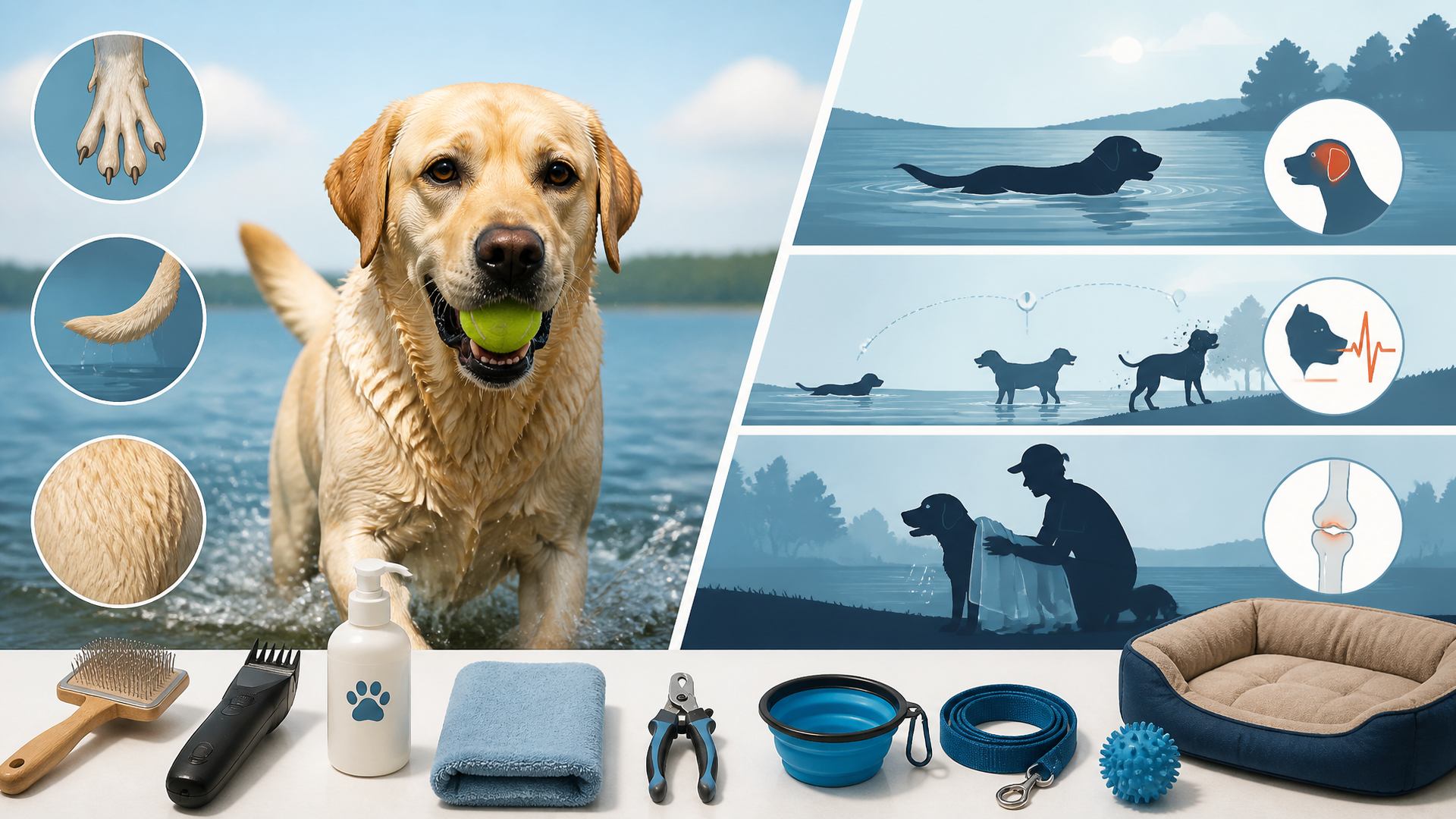
Labrador Retrievers are born for the water—webbed feet, a water-repelling double coat, and an otter-like tail make them natural swimmers. But that natural ability has a hidden danger. Labs were bred to retrieve in cold water for hours, and they will push past exhaustion while still wagging their tail. A structured daily routine with built-in safety checkpoints prevents ear infections, joint strain, and overexertion. Here is exactly how to set up a swim session, spot trouble early, and recover correctly.

The Prep Step That Prevents the Most Common Mistake
The biggest error owners make is letting a tired Lab keep swimming because they still look happy. Labs have an extraordinary work drive—they ignore muscle fatigue, cold water, and even mild disorientation to keep going. You have to be the one who enforces breaks.
Gear check – do this every time:
- Life jacket – even for strong swimmers. A handle on top lets you pull your Lab out fast if they struggle. Bright colors improve visibility in choppy water. Ruffwear Float Coat and Outward Hound Granby are reliable options with front and back handles.
- Fresh water bowl on land, positioned away from the water’s edge. Never let your Lab drink pool, lake, or ocean water—salt and chlorine cause vomiting, and standing water may contain harmful bacteria or blue-green algae.
- Ear-cleaning kit – drying solution plus cotton balls, packed and ready for immediate post-swim use.
5-minute land warm-up: Walk your Lab on grass or play a gentle game of fetch on solid ground. This activates the muscles they will use for paddling and reduces the risk of cramping when they hit cold water. A cold Lab jumping straight into 60°F water is at higher risk of muscle strain.
The 15-Minute Rule and Fatigue Checkpoints
Labs can swim daily, but each session needs to be structured in short blocks with mandatory breaks. Swimming is low-impact, but it is still vigorous exercise that taxes the cardiovascular system.
Swim Block
- 10–15 minutes of active swimming – fetching a bumper, paddling alongside you, or following a boat at a safe distance.
- Mandatory 5-minute rest on land or a stable float. No negotiation, even if they drop the ball at your feet and whine. This rest allows their heart rate to drop and muscles to reset.
Fatigue Checkpoints – Watch for These Signs
| Early Warning | What It Means | Action |
|---|---|---|
| Slower strokes, head riding lower in the water | Muscles tiring, endurance fading | Call them in for a break immediately |
| Glassy or wide eyes | Mental fatigue or mild disorientation | End the session entirely |
| Stops responding to name or treats | Energy reserves are fully depleted | End session, dry and warm up with a towel |
| Paddling with only front legs while rear end drags | Rear-leg muscle fatigue, risk of cramping or drowning | Pull them out immediately – this is an emergency signal |
| Excessive shivering after exiting | Body temperature dropping | Dry vigorously and get them indoors or under a blanket |
Likely cause of sudden fatigue during a swim session: Your Lab swam longer than they should have without a break, or the water temperature is draining their energy faster than expected. Cold water below 50°F pulls heat from the body rapidly. Warm water above 85°F causes heat stress and respiratory strain. Both scenarios shorten safe swim time significantly.
What to Do After a Rest Break
After the mandatory 5-minute rest, assess your Lab’s breathing and demeanor before allowing another swim block.
- If they are still panting heavily or refuse a high-value treat – skip the next swim block entirely. Switch to land fetch, a short walk, or simply let them relax and sniff around.
- If breathing has returned to normal and they are eager to re-enter – proceed with another swim block, but cap it at 10 minutes maximum. The second block is always shorter than the first.
- If they are hesitant to re-enter the water but seem physically fine – do not push them. Trust their reluctance as a valid signal that they have had enough.
When to Stop Completely
If your Lab sinks lower in the water, refuses to exit when called, or starts paddling with only their front legs while the rear end rides high, stop swimming for the day immediately. Do not let them have “one more throw.” Get them out, dry them off, and keep them warm. Monitor for stiffness, lethargy, or unsteadiness on land over the next hour. If any of those signs appear, contact your vet.
The Recovery That Prevents Ear Infections and Hot Spots
Skipping post-swim care is the single most common reason Labs develop chronic ear infections and skin hot spots. Their floppy ears trap moisture deep inside the ear canal, and their thick double coat holds chlorine, salt, sand, and bacteria against the skin for hours if not rinsed properly.
Step 1: Rinse the entire body thoroughly with fresh water from a garden hose or shower head. Focus on the chest, belly, and between the toes—those areas trap the most debris. Let the water run until it runs clear. For Labs that swam in salt water or a chlorinated pool, a rinse alone is not enough—use a mild neutralizing shampoo like Burt’s Bees Chlorine & Salt Water Shampoo to remove chemical residue.
Step 2: Dry the ears completely – squeeze a generous amount of vet-approved ear drying solution into each ear canal. Zymox Ear Cleanser with Hydrocortisone and Virbac Epi-Otic Advanced Ear Cleanser are both widely recommended by veterinarians. Massage the base of the ear for 20–30 seconds to work the solution down into the canal, then step back and let your Lab shake their head. Wipe away the loosened debris and excess solution from the outer ear flap with a cotton ball. Never use Q-tips—they push debris deeper into the canal and can damage the eardrum.
Verification step – confirm the drying was effective: After drying both ears, gently cup your hand around the ear opening and take a quick sniff. A neutral, clean smell means drying was successful. A yeasty, musty, or foul odor means moisture or debris remains trapped inside. Repeat the drying process from the beginning. If the odor persists after the second attempt, schedule a vet visit. A chronic smell is often the first sign of an impending ear infection.
Step 3: Towel dry the coat thoroughly – use an absorbent towel designed for large dogs, such as Paws with a Mission extra-large microfiber towel. Rub firmly and repeatedly along the body, legs, and belly to pull moisture out of the undercoat layers. A damp undercoat can lead to hot spots within 24 hours, especially in warm or humid weather.
Step 4: Check the skin under the collar, in the armpits, on the inner thighs, and between the paw pads. Look for redness, bumps, raised patches, or raw spots. Labs with lighter coats are especially prone to sunburn on the belly and nose bridge after long swim sessions. If you see any irritation, apply a gentle, dog-safe balm and monitor the area for 24 hours. If it worsens or does not improve, consult your vet.
Failure Mode – Recurring Ear Issues From Incomplete Drying
Even diligent owners can miss a step in the ear-drying routine. One skipped rinse or a single swim without proper drying can allow bacteria or yeast to multiply. Symptoms—head shaking, scratching at the ears, redness, odor—typically appear two to three days later, not immediately. This delayed onset tricks many owners into thinking the swim was fine.
If your Lab starts shaking their head or rubbing their ears on the carpet after a swim session, check the ears immediately and repeat the full drying routine. If symptoms return after multiple swims, switch to a waterproof ear cover (like a Labra Ear Wrap) during swimming, or reduce swim frequency until the ears heal completely. Some Labs are simply more prone to ear infections and need extra protective measures.
When to Skip a Swim Day
Swimming is excellent low-impact exercise, especially for Labs with hip dysplasia, elbow dysplasia, or arthritis. The buoyancy of water takes weight off the joints while still allowing muscle conditioning. However, swimming is still vigorous physical work, and there are clear situations where you should keep your Lab on dry land.
Skip swimming entirely if:
- Water temperature is below 50°F or above 85°F
- Your Lab has an open wound, hot spot, or skin infection
- They had a heavy meal within the last hour
- They are showing any sign of illness – vomiting, diarrhea, lethargy, or reduced appetite
- They are limping or stiff from a previous land workout
- The water body is under a blue-green algae warning (common in warm, stagnant freshwater during summer)
Quick Safety Checklist – Print or Save This
Take a screenshot or print this checklist. Run through it before every swim session:
- [ ] Life jacket fits snugly, all buckles are secure, D-ring is rust-free
- [ ] Fresh drinking water is set up on land, away from the water
- [ ] Ear-cleaning kit is packed within reach
- [ ] Swim timer set for 15 minutes max per block
- [ ] 5-minute rest break scheduled after each block
- [ ] Water temperature confirmed between 50°F and 85°F
- [ ] Exit point is visible and easy to reach (ramp, gradual bank, stairs)
- [ ] Post-swim rinse water and towel are ready
- [ ] Coat and paws will be checked for debris or irritation after drying
Maximum Swim Time by Age and Condition
| Dog Profile | Maximum Active Swim Time | Break Frequency |
|---|---|---|
| Puppy (under 12 months) | 5–10 minutes | Every 5 minutes |
| Healthy adult (1–7 years) | 15–20 minutes | Every 10–15 minutes |
| Senior (8+ years) | 10 minutes | Every 5–8 minutes |
| Overweight or low fitness | 5–10 minutes | Every 5 minutes |
| Recovering from injury | As directed by vet (typically 5 minutes) | Every 3–5 minutes |
These are upper limits, not targets. If your Lab shows any early fatigue signs, cut the time in half. If they are new to swimming, start with 5-minute sessions and build up gradually over several weeks.
Gear That Makes Swimming Safer and Easier
- Life jacket – Ruffwear Float Coat or Outward Hound Granby (both have front and back handles plus reflective trim for visibility)
- Ear drying solution – Zymox Ear Cleanser with Hydrocortisone or Virbac Epi-Otic Advanced Ear Cleanser
- Neutralizing shampoo – Burt’s Bees Chlorine & Salt Water Shampoo (removes pool chemicals and salt without stripping natural oils)
- Quick-dry towel – Paws with a Mission extra-large microfiber towel (absorbs several times its weight in water)
- Dog-safe paw balm – Musher’s Secret or Natural Dog Company Snout Soother (protects paw pads from hot sand or rough surfaces around water)
Disclosure: As an Amazon Associate, we may earn from qualifying purchases.
Save This Guide – A Lab that swims daily with proper safety checkpoints stays healthier, happier, and safer. Use the checklist before every swim, end each session while your dog still has the energy to climb out and shake off, and never skip the ear-drying verification step. Your Lab was built for the water—your job is to make sure they enjoy it safely every single time.