Beagle Anal Glands Med
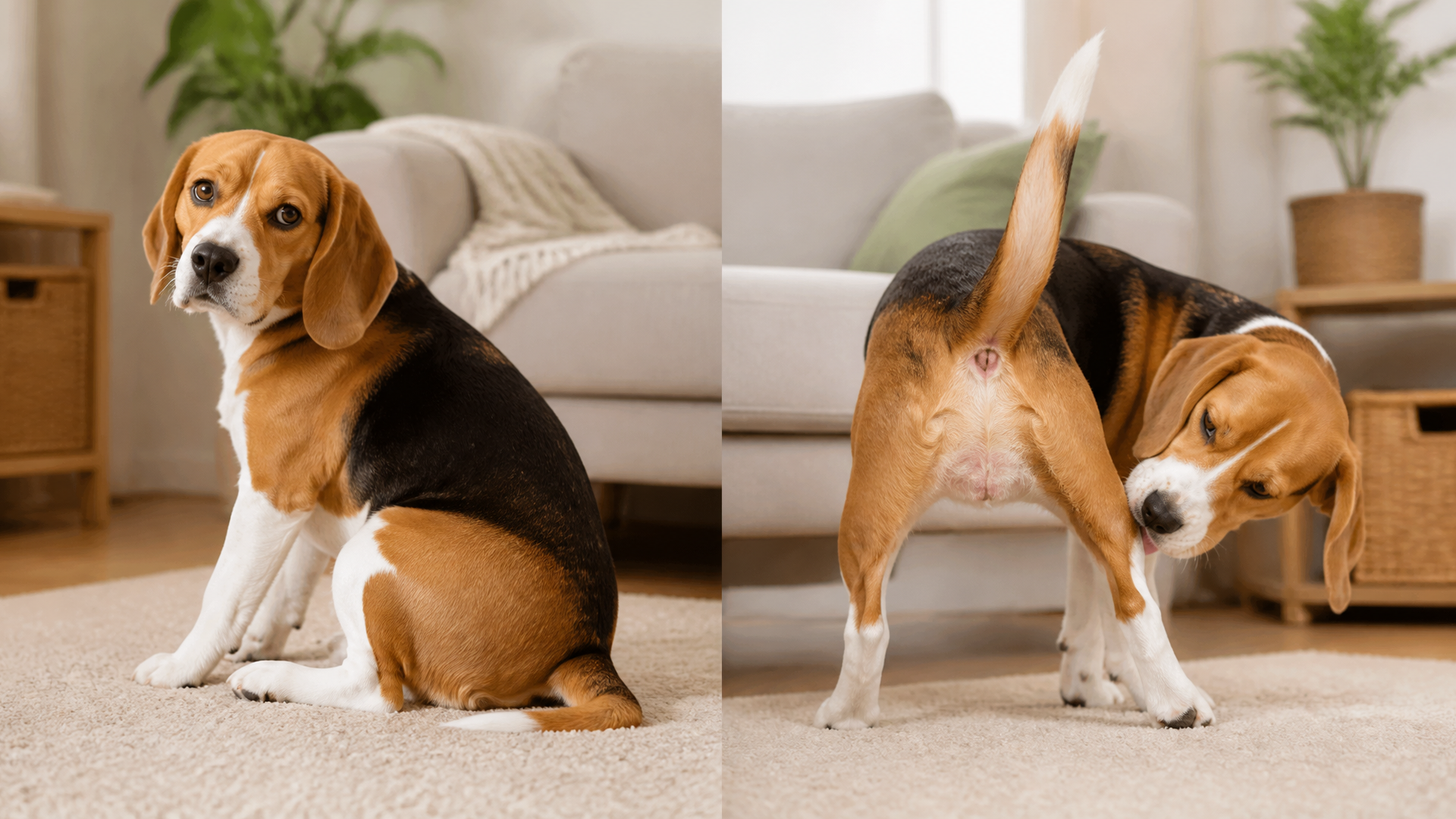
If your Beagle is scooting, licking their rear, or leaving a fishy smell, the problem is likely their anal glands. These small sacs on either side of the anus can become impacted, infected, or abscessed. Here’s the short answer: For a first-time issue with mild symptoms, start with dietary fiber and warm compresses. But if you see blood, pus, or swelling, or if scooting persists more than 24 hours, see your vet immediately. Beagles are prone to anal gland problems because their small sacs and tendency toward soft stools (from food sensitivities or scavenging) mean glands don’t empty naturally. This guide gives you the exact steps, products, and warning signs to handle it—and when to just go to the vet.

Signs Your Beagle’s Anal Glands Need Attention
Beagles are stoic, so subtle signs are easy to miss. Watch for:
- Scooting (dragging rear on floor) – the #1 clue
- Excessive licking or biting at the tail base or anus
- Fishy or metallic odor even after a bath
- Swelling or redness on one or both sides of the anus
- Pain when pooping or sitting awkwardly
- Small amounts of brown/yellow discharge on bedding or furniture
If you notice any of these, check the glands within 24 hours. For Beagles, even mild impaction can turn into an infection fast because the sacs are small and the ducts are narrow.
Decision Aid: Home Care or Vet Visit?
Use this checklist to decide. Each item is a pass/fail check—if any red-flag item applies, skip home care and call your vet.
| Check This | ✅ Home Care OK | ⛔ See Vet First |
|---|---|---|
| Glands feel firm but not hard | Small grape-sized, slightly firm | Rock-hard, marble-sized, or lumpy |
| No visible blood/pus | Clear or light brown discharge only | Blood, pus, or thick dark discharge |
| No swelling or heat | Glands normal size, skin cool | One side obviously swollen or warm to touch |
| Beagle not in obvious pain | Slight discomfort when touching tail base | Yelps, growls, or snaps when area is touched |
| Scooting stopped after 1–2 days of fiber | Yes, behavior resolved | Scooting continues after fiber trial |
| No prior history of infection/abscess | First-time issue | Recurrent problems or previous abscess |
If you checked “See Vet First” for even one item, do not attempt at-home expression. Forceful squeezing can rupture an infected sac and cause a painful abscess that requires surgery.
What Your Decision Means in Practice
If the checklist says home care is safe, your next step is simple: focus on fiber first, expression second. Start adding 1 teaspoon of pure pumpkin to meals and monitor for 48 hours. Most Beagles with mild impaction clear up with firmer stools alone. Only attempt external expression if your Beagle is still uncomfortable after the fiber boost. The practical takeaway: diet change is the safest, most effective long-term solution for Beagles. Jumping straight to squeezing often causes more irritation than it solves.
At-Home Care for Mild Cases (When the Checklist Says OK)
Only attempt this if your Beagle is calm, you’ve done it before, and the glands feel mildly full (not hard or painful). Even so, many vets recommend leaving expression to professionals. If you proceed:
1. Wear disposable gloves and have paper towels ready.
2. Lubricate your index finger with petroleum jelly or KY jelly.
3. External method (safest for first-timers): using a paper towel, apply firm but gentle pressure upward and inward toward the anus at the 5 o’clock and 7 o’clock positions. A small amount of liquid should release onto the towel.
4. Internal method (for experienced owners): insert lubricated finger about 1 inch into the rectum, feel the pea-sized gland, and gently squeeze it toward the opening. Stop if your Beagle resists.
How to Verify the Glands Are Really Full (Not Infected)
Before you squeeze, confirm you’re dealing with impaction and not infection. Palpate the area gently: a full gland feels like a small grape under the skin. If your Beagle doesn’t yelp or pull away, and the gland is firm but not rock-hard, it’s likely safe. If the gland is hot, hard, or your Beagle flinches, stop immediately and call your vet—you’re feeling an infected sac, not just a full one. This simple verification step prevents you from making a painful infection worse.
What Can Go Wrong (Realistic Trade-Offs)
Even with the best technique, at-home expression has limits. Some Beagles have deep-set anal glands that are hard to reach externally—if you can’t feel the gland or your Beagle won’t hold still, forcing it can cause bruising or a ruptured sac. In that case, it’s safer to have a vet express them under sedation. Another trade-off: over-expressing (emptying glands that weren’t truly full) can irritate the lining and cause glands to fill up faster, creating a cycle of dependency. One pattern many owners miss is that a Beagle with chronic soft stools from food allergies will keep having anal gland trouble no matter how often you express—the real fix is changing their diet, not squeezing more.
Medications and Supplements That Help Beagles
For anal gland issues, “med” can mean prescription drugs or over-the-counter supplements. Here’s what works for Beagles specifically.
Prescription Medications (Vet Required)
| Medication | Purpose | Beagle-Specific Notes |
|---|---|---|
| Antibiotics (e.g., clindamycin, amoxicillin) | Treat bacterial infection | Beagles often need 14–21 days; complete the full course even if symptoms resolve |
| Anti-inflammatories (e.g., carprofen, meloxicam) | Reduce pain and swelling | Watch for GI upset—Beagles have sensitive stomachs |
| Fiber laxatives (e.g., psyllium, lactulose) | Bulk up stool to naturally express glands | Lactulose can cause gas; use psyllium with plenty of water |
Over-the-Counter Supplements & Diet Aids
These help prevent recurrence by making stools firmer and bulkier, which naturally empties the glands when your Beagle poops.
| Product Type | Example | Why It Works for Beagles |
|---|---|---|
| Anal gland supplement | Glandex (chewable or powder) | Contains pumpkin, probiotics, and fiber; Beagles love the flavor |
| Pumpkin (pure, unsweetened) | 1 Tbsp per 20 lbs mixed into food | Adds soluble fiber without extra calories |
| High-fiber dog food | Hill’s Prescription Diet w/d or Royal Canin Gastrointestinal Fiber | Specifically formulated to increase stool bulk |
| Probiotics | FortiFlora (beef flavor Beagles love) | Improves digestion and firmness of stool |
One decision criterion that changes the recommendation: if your Beagle has chronic soft stool from food allergies (common in Beagles), adding fiber alone won’t fix the root cause. You need to switch to a limited-ingredient diet (e.g., venison or duck) and address the allergy first—then anal gland issues often resolve without supplements.
Expert Tips for Preventing Future Problems
Tip 1: Keep your Beagle at a healthy weight.
- Actionable step: Weigh once a month and adjust food to maintain a visible waist and easily felt ribs. Even 2 extra pounds can increase pressure on anal glands.
- Common mistake: Free-feeding. Beagles will eat until they’re sick. Measure meals and use a slow feeder to prevent gulping and soft stool.
Tip 2: Add fiber gradually.
- Actionable step: Start with 1 teaspoon of pure pumpkin per meal, increase to 1 tablespoon over a week. Monitor stool consistency—it should be firm but not hard.
- Common mistake: Switching to high-fiber food overnight causes gas, bloating, and diarrhea, which makes anal gland problems worse.
Tip 3: Express externally only when needed.
- Actionable step: Learn the external method (described above) and use it only if your Beagle shows clear signs of fullness, not as a routine weekly habit.
- Common mistake: Expressing “just in case” every two weeks. Over-manipulation can cause the glands to become irritated and fill up faster, creating a cycle of dependency.
When to See the Vet (Red Flags You Shouldn’t Ignore)
Even if you’re experienced with at-home care, go to the vet if:
- The glands have been impacted for more than 3 days despite fiber and warm compresses
- You see any blood, pus, or thick green discharge
- Your Beagle develops a fever (over 102.5°F) or loses appetite
- There’s a hard, painful lump near the anus—this could be an abscess or tumor
- The problem recurs more than twice in six months
Vet treatment might include manual expression under sedation, a flushing procedure, or surgery (anal sacculectomy) in severe recurrent cases. Anal gland removal is effective but not without risks—many vets reserve it for dogs with chronic, non-responsive infections.
Save This Guide
Bottom line: Beagles are genetically prone to anal gland issues due to their small sacs and tendency toward soft stools. Start with dietary fiber (pumpkin, Glandex) and monitor for 24–48 hours. Use the checklist above to decide between home care and a vet visit. If you see blood, swelling, or severe pain, don’t hesitate—call your vet. For mild cases, gentle external expression and a high-fiber diet can keep your Beagle comfortable long-term.
Disclosure: This article contains affiliate links. If you purchase products through these links, we may earn a small commission at no extra cost to you.