my Beagle is Always in a Feeding Grenzy
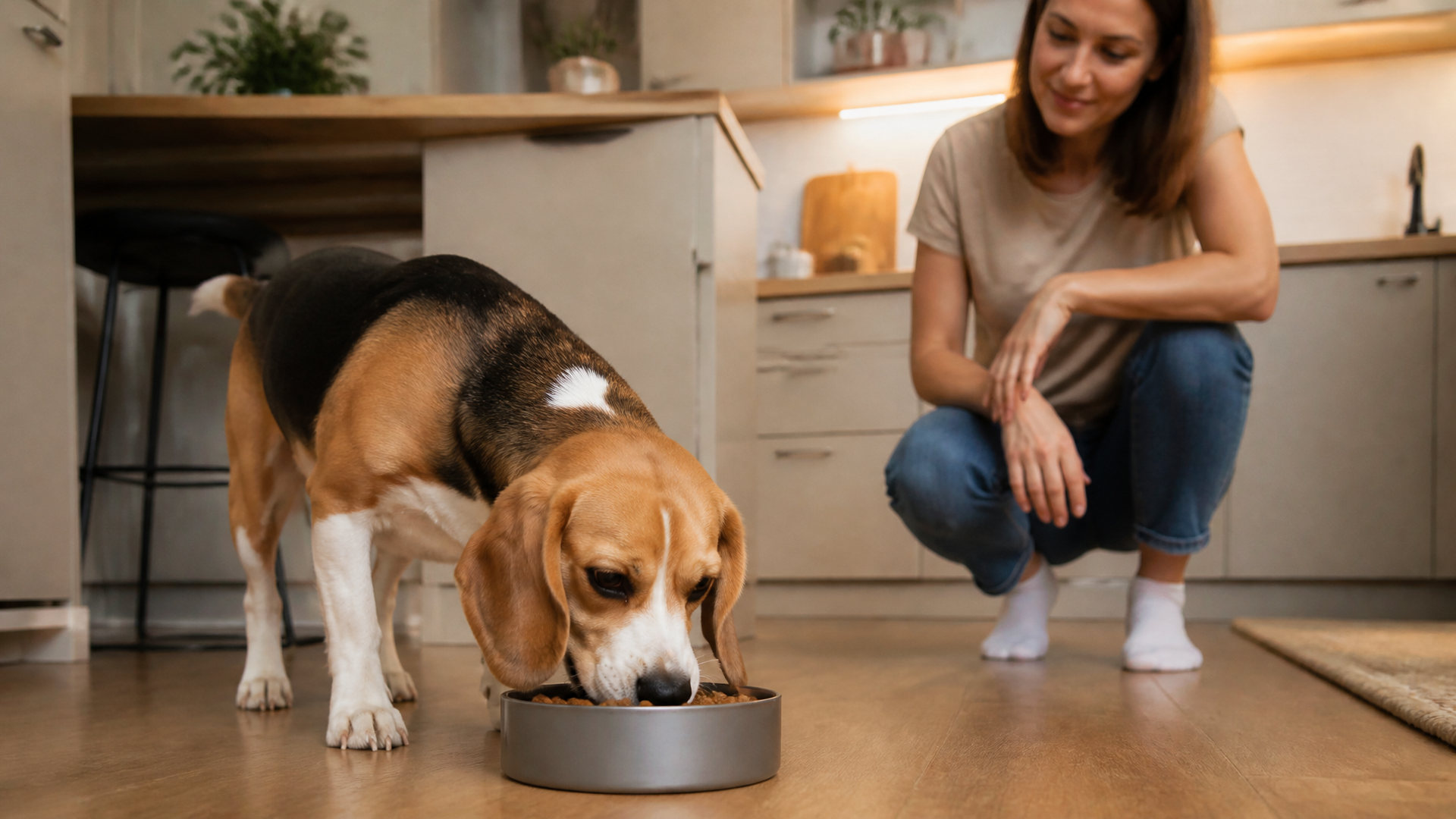
If your Beagle inhales his food in under 30 seconds then begs for more, you’re dealing with a hound instinct, not a bad dog. Beagles were bred to track game for hours on an empty stomach, so they treat every meal like a survival race. The good news: you can slow him down in under a week with the right tools and a simple routine.

Start with a slow‑feeder bowl. That’s the single quickest fix. But for long‑term results, you’ll also need to adjust portions, feeding schedule, and use a little training. Here’s exactly how.
Why Beagles Eat So Fast
It’s not greed — it’s biology. Beagles are scent hounds with an extraordinary sense of smell and a drive to work for food. In the wild, eating fast meant getting your share before another scavenger stole it. That instinct doesn’t disappear when the food comes from a bag. A typical Beagle can empty a standard bowl in 20–30 seconds, gulping air and kibble at the same time.
That speed puts him at risk for:
- Choking
- Vomiting (regurgitation from gulping air)
- Bloat (gastric dilatation‑volvulus, a life‑threatening emergency)
- Weight gain (he’ll keep eating even when full)
Slowing him down isn’t just about manners — it’s a health priority.
Decide Which Fix Fits Your Beagle
The right approach depends on why your Beagle is gulping. Use this quick decision guide:
| If your Beagle… | Then start with… | Because… |
|---|---|---|
| Finishes in under 30 seconds but seems calm | A slow‑feeder bowl | Pure instinct — an obstacle is enough to slow him |
| Whines, paces, or drools before the bowl touches the floor | The “wait” command + hand feeding | Anxiety or anticipation is the main driver |
| Eats fast only when other dogs are nearby | A quiet, separate feeding area | Competition is the trigger |
| Also eats non‑food items (rocks, carpet) | A vet check before any other fix | Could indicate pica or a nutritional deficiency |
| Vomits undigested food within 30 minutes | A vet check first | Possible reflux or bloat risk — rule out medical issues |
This decision framework helps you pick the most effective fix on the first try instead of guessing.
Your First Move: Grab a Slow‑Feeder Bowl Today
This is the fastest, easiest change with immediate results. A slow‑feeder bowl has raised ridges or mazes that force your Beagle to work around obstacles to get to the kibble. Most Beagles take 3–5 minutes per meal instead of 30 seconds.
What to look for:
- Durable material (ceramic or heavy plastic) – Beagles can be chewers.
- Non‑slip base – these dogs are determined.
- Deep, wide grooves – wide enough to fit kibble but narrow enough to force scooping.
Cost: $12–$25 (affiliate disclosure below).
Verification step: After switching, time his next meal. If he’s still finishing in under 1 minute, the bowl’s grooves may be too shallow. Try a different design or move to step 2 below.
7 Ways to Slow Down Your Beagle’s Feeding Frenzy
These are ordered from fastest fix to more involved training. Pick one or two to start, and you’ll see a difference within 3–5 days.
1. Switch to a Slow‑Feeder Bowl (as above)
Already covered — but pair it with a non‑slip mat to stop the bowl from sliding across the floor.
2. Add a Clean Tennis Ball or Large Stone
Place a solid tennis ball or a smooth stone (bigger than his mouth, about 2 inches) in the center of the bowl. He’ll have to nudge it aside to reach the kibble.
Safety check: Use a stone that’s too large to swallow. Inspect weekly for cracks or wear. Replace if chipped.
3. Use Puzzle Toys and Snuffle Mats
Beagles are clever and need mental exercise. A treat‑dispensing ball (like a Kong Wobbler) releases kibble as he rolls it. A snuffle mat lets him sniff and search — this satisfies his natural foraging instinct.
- How much to use: Reserve half of his daily kibble for puzzle toys, split between two sessions.
- Why it works: It mimics the work he was bred to do, and it takes 10–15 minutes to finish one meal.
4. Hand Feed the First 15 Pieces
Sit on the floor and offer kibble one piece at a time. This teaches him to take food gently and builds focus on you. Do this once a day for the first week, then reduce to once every few days.
Failure mode to watch for: If he starts snapping or grabbing aggressively, stop hand feeding and go back to the bowl. That behavior usually means he’s too anxious — work on “wait” first (step 5).
5. Teach a “Wait” Command Before Every Meal
This breaks the automatic “bowl down = eat now” reflex. Start in a low‑distraction area:
1. Hold a treat in your closed fist.
2. Say “wait” and keep your hand still.
3. When he stops pawing or sniffing, reward with the treat.
4. Repeat at mealtime: ask for a sit, say “wait,” lower the bowl slowly. Hold it an inch above the floor for 5 seconds, then release with “okay.”
Verification: After one week, he should hold the wait for 10–15 seconds without breaking focus.
6. Feed in a Quiet, Separate Area
If you have multiple dogs, competition is a major trigger. Feed your Beagle in a crate or a separate room where he can’t see or hear other dogs eating. This alone can cut his speed in half.
Stop threshold: If he still gulps in the quiet area, the problem is internal drive, not competition — focus on the other steps instead.
7. Add Wet Food or Warm Water to Kibble
Mixing a spoonful of wet food or a splash of warm water softens the kibble, forcing him to lap instead of gulp. Use this as a temporary aid while you work on the other steps — it’s not a long‑term solution because wet food is pricier and less convenient.
Recurrence warning: Once you stop adding wet food, he may go back to gulping dry kibble. Gradually reduce the amount over 2–3 weeks while reinforcing slow‑feeder bowl use.
Quick Decision Aid: Which Fixes Are You Doing?
Print or save this check-off list. It doubles as a weekly progress tracker:
- [ ] Slow‑feeder bowl – placed on a non‑slip mat
- [ ] Puzzle toy or snuffle mat – used daily for at least one meal
- [ ] Quiet feeding area – no other dogs in sight
- [ ] “Wait” command – practiced before every meal
- [ ] Hand feeding – first 15 pieces, once a day
- [ ] Portions measured by weight – use a kitchen scale, not a cup
- [ ] Vet check – if frenzy persists after 2 weeks of changes
Check off each item as you implement it. If you’ve checked at least five and your Beagle still finishes in under a minute, it’s time for a vet visit.
Feeding Schedule & Portions for Beagles
A typical adult Beagle (20–25 lbs) needs about ¾ to 1 cup of high‑quality kibble per day, split into two meals. But that’s a starting point, not a rule.
Why a kitchen scale matters: A measuring cup can vary by 20–30% depending on kibble density. Use a gram scale (costs about $15) to measure the exact portion recommended on the food bag. Beagles gain weight easily — accurate portions keep him lean.
Timing: Feed at the same times daily (e.g., 7 a.m. and 6 p.m.). A regular schedule reduces food anxiety.
When to Call the Vet (Stop Threshold)
Most fast eating is behavioral, but these red flags mean it’s time to escalate:
- Vomiting within 30 minutes of eating — especially if he’s bringing up undigested food or foam
- Bloated, hard belly that feels drum‑tight (possible bloat — this is a veterinary emergency)
- Rapid weight loss despite eating normally (could indicate parasites or metabolic issues)
- Pica: Eating non‑food items like rocks, carpet, or feces
- No improvement after 2 full weeks of using the steps above — a vet check can rule out thyroid problems, intestinal parasites, or hunger from an inadequate diet
Bloat warning signs: If your Beagle is retching without producing anything, pacing anxiously, or showing a distended abdomen, go to an emergency vet immediately. Bloat can kill within hours.
Likely Failure Mode: When the Fix Doesn’t Stick
Even after you’ve implemented slow‑feeder bowls and puzzle toys, some Beagles will find ways to speed up. Here’s what to expect:
Symptom: He starts obsessively licking the bowl or pawing it across the floor, finishing in 1 minute despite the obstacle.
Likely cause: He’s adapted to the obstacle — Beagles are persistent. The grooves may be too shallow for his specific kibble size, or he’s learned to tilt the bowl to dump kibble out.
Safer next move: Switch to a puzzle toy that drops kibble randomly (like a Kong Wobbler) for that meal. Or try a slow‑feeder bowl with deeper, tighter channels. You can also freeze half his meal in a Kong with a little water — that buys 10–15 minutes of licking and chewing.
If you see weight gain or obsessive begging after the fix, it may be a sign that he’s still hungry — check with your vet about a higher‑fiber food or a portion increase.
Recommended Products for Slower Feeding
These are tools that Beagle owners consistently report as effective. Prices are approximate — affiliate links may earn a small commission at no extra cost to you.
| Product Type | Example | Why It Works | Approx. Price |
|---|---|---|---|
| Slow‑feeder bowl | Omega Paw Mighty Space Bowl | Deep grooves slow the gobble | $19 |
| Puzzle toy | Kong Wobbler | Random drops keep Beagle engaged | $15 |
| Snuffle mat | AWOOF Pet Snuffle Mat | Encourages sniffing — very Beagle‑friendly | $25 |
| Treat‑dispensing ball | StarMark Everlasting Treat Ball | Adjustable difficulty | $18 |
Disclosure: Some links in this article may be affiliate links. We earn a small commission if you purchase through them (at no extra cost to you).
Save This Guide
This guide provides a practical plan to manage your Beagle’s feeding frenzy. The key takeaway: start with a slow‑feeder bowl and one puzzle toy, measure every meal with a kitchen scale, and teach a “wait” command. If he’s still gulping after two weeks, call your vet. A calm mealtime means better digestion, less risk of bloat, and a healthier, happier Beagle. Save it for quick reference.