if a Pomeranian Have Sloppy Ears, What is he Mixed With
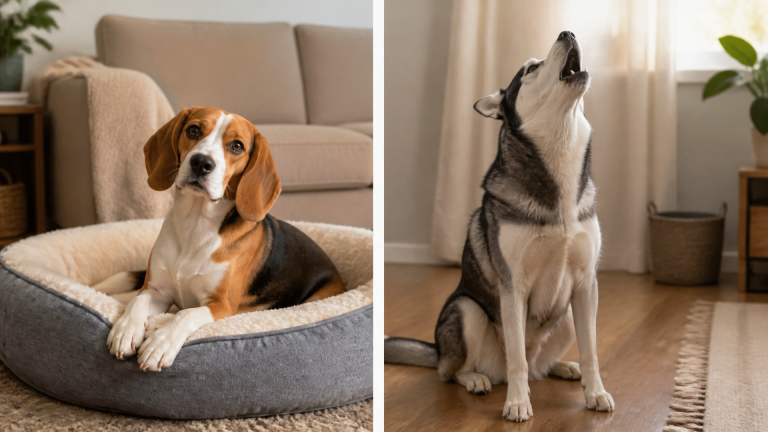
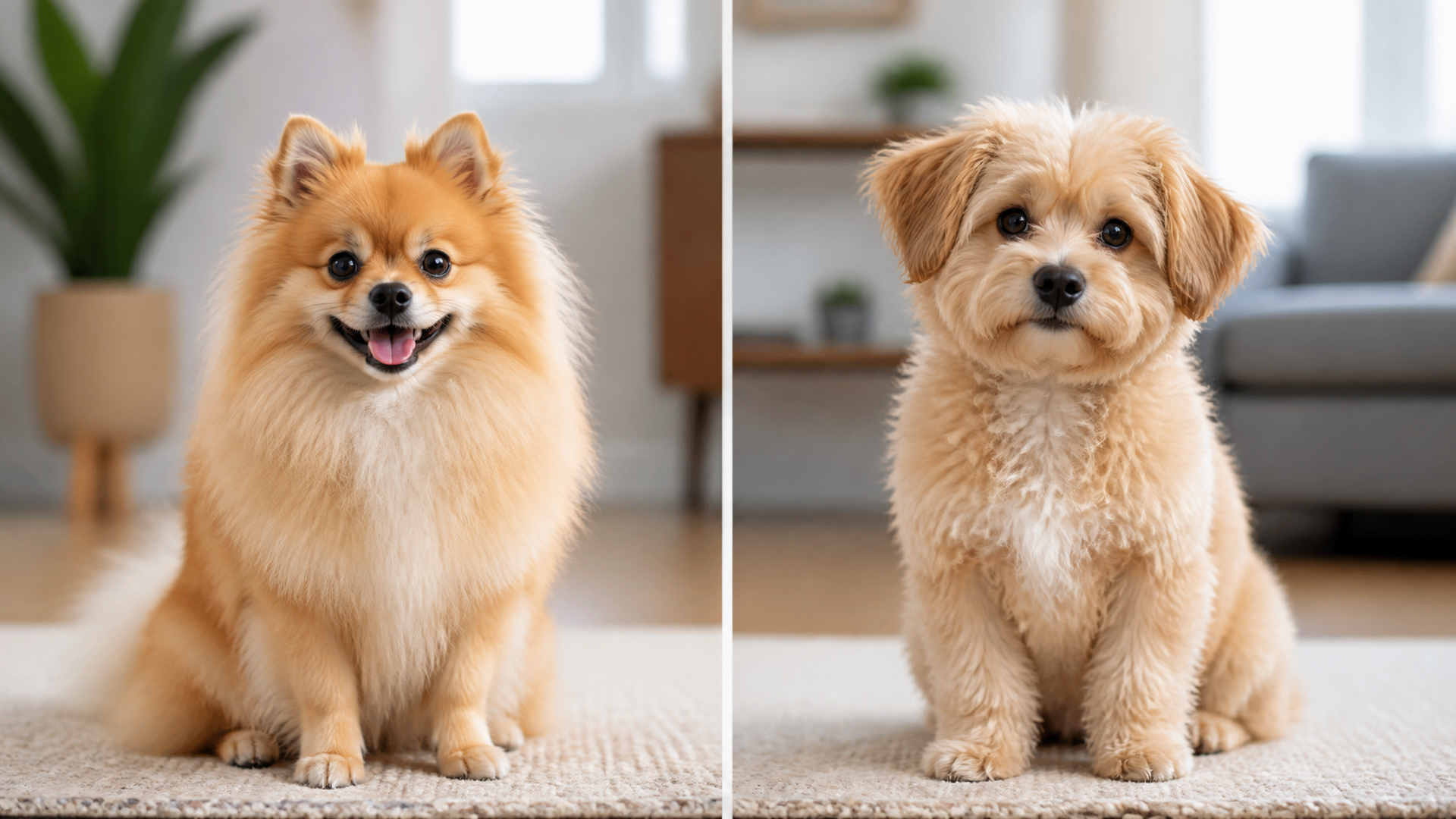
If your Pomeranian has floppy or droopy ears instead of the small, upright ears the breed is known for, he’s almost certainly a mixed breed. Purebred Pomeranians have small, triangular ears that stand erect by 4–6 months old. Sloppy ears that hang, flop forward, or droop sideways are a clear sign another breed with drop ears is in the mix. The most common crosses are Pomchi, Paperanian, Pom Shih Tzu, Pom-Poo, and Cavapom. Here’s how to narrow it down from there.

Why Pomeranian Ears Stand Upright
Pomeranians are part of the Spitz family (think Samoyeds, Huskies). Spitz dogs have small, pointed, erect ears as a breed standard. In Poms, the ears should be fully upright by 6 months. If they remain floppy past that age, a cross is almost certain.
- Pom ear size: small, about 1–2 inches tall, finely pointed
- Set: high on the skull, facing forward
- Muscle control: erect ears are held up by specific muscles; floppy ears lack that tension
Applicability boundary: This rule applies to Pomeranians over 6 months old. Puppies under 6 months may have temporary floppy ears that eventually stand up. If your Pom is over 6 months and ears are still floppy, the answer is clear: he’s a mix. For adult rescue dogs of any age, the same applies.
Common Mixed Breeds with Sloppy Ears
The table below shows the most likely crosses that produce floppy ears. These combinations are common in designer dogs and rescue mixes.
| Mixed Breed Name | Parent Breeds | Typical Ear Type | Other Traits |
|---|---|---|---|
| Pomchi | Pomeranian + Chihuahua | Large, often floppy or semi-erect (Chihuahua ears vary) | Apple-shaped head, short snout, 3–8 lbs |
| Paperanian | Pomeranian + Papillon | Large, floppy, or feathered drop ears (from Papillon) | Big ears, longer snout, 5–10 lbs |
| Pom Shih Tzu | Pomeranian + Shih Tzu | Floppy, hairy, low-set ears | Flat face, longer coat, 8–15 lbs |
| Pom-Poo | Pomeranian + Poodle | Floppy, sometimes semi-erect (Poodle drop ears) | Curly or wavy coat, 5–15 lbs |
| Cavapom | Pomeranian + Cavalier King Charles Spaniel | Long, floppy, silky ears (Cavalier trait) | Gentle expression, 10–20 lbs |
Practical implication: What your guess means for future decisions. A Cavapom mix may be prone to heart conditions common in Cavaliers, so knowing the mix helps you anticipate health needs. If you’re just curious, physical clues are enough. If you’re planning to breed, a DNA test is essential to avoid mismatched pairings.
How to Confirm Your Dog’s Breed Mix — Operator Flow
Follow this step-by-step flow with built-in checkpoints. Each stage tells you what to look for and when to move forward or stop.
Step 1: Examine the Ear Base and Fold Type
- Floppy at the base only, tips upright? Could be a Pom mixed with a breed that has semi-erect ears (like some terriers). Move to Step 2.
- Full drop ears (entire ear hangs)? Likely from a spaniel, hound, or poodle relative. Move to Step 2.
- Ears that alternate between up and down? Common in young puppies of any mix; wait until 6 months for the final shape. Checkpoint: Recheck at 6 months before concluding.
Likely causes at this point: A Pomchi may show semi-erect ears, while a Cavapom or Pom Shih Tzu will have full drop ears. If the ear leather feels thick or large (bigger than your thumb pad), the other parent was likely a larger breed with drop ears.
Step 2: Check the Skull Shape and Snout Length
Purebred Poms have a short, foxy face with a deep stop. A longer snout or different skull shape narrows the options.
- Round skull + short snout = Pomchi or Pom Shih Tzu
- Longer snout + large ears = Paperanian
- Flat face + droopy ears = Pom Shih Tzu
- Mismatch (e.g., round skull with a very long snout) → This increases the chance of a more complex mix. Escalation signal: If you can’t match a single breed pair here, a DNA test is the next move.
Checkpoint: You should now have 1–2 likely candidates. If still uncertain, move to Step 3.
Step 3: Evaluate the Coat Texture
Poms have a double coat with a ruff around the neck. Your dog’s coat confirms or refines the guess:
- Straight, long hair with feathering on ears → Likely Paperanian or Cavapom
- Curly or wavy coat → Pom-Poo
- Coarse, straight coat → Pomchi
- Dense, harsh topcoat with soft undercoat → Could be a Pom mixed with a hound or terrier
Checkpoint: If the coat aligns with one of the candidate breeds from Step 2, you have a strong probability. If it contradicts (e.g., curly coat but you guessed Pomchi), re-enter at Step 1.
Final Verification: DNA Test (or Accept the Guess)
Physical clues get you close but not exact. To confirm, order an Embark or Wisdom Panel DNA test ($80–$130). Collect the cheek swab as directed, mail it in, and receive a report in 2–4 weeks. Success signal: You can now say “Almost certainly a Pom mix of [candidate breed]” with confidence. No further steps needed unless you want the exact percentage.
Friction point / trade-off: If your dog has floppy ears and other unusual traits (droopy eyes, very long body, oversized paws), don’t force a two-breed conclusion — it may be a multi-generational cross. A DNA test is the only way to untangle that. Relying on ear shape alone can mislead; some mixes have semi-erect ears that look floppy when relaxed but erect when alert. If you choose not to test, accept that your best guess may be off.
Expert Tips for Identifying a Pom Mix
Tip 1: Check the Ear Leather Size
Purebred Poms have very small, thin ear leather. If your dog’s ears are thick, wide, or leathery, that’s a sign of a larger breed in the mix.
Action: Gently feel the ear flap — if it feels as big as your thumb pad or larger, the other parent likely had drop ears.
Mistake to avoid: Don’t assume floppy ears always mean a small breed; a Pom mixed with a small spaniel can still have ears that look out of proportion.
Tip 2: Look at the Ear Set in Relation to the Eyes
On a purebred Pom, the ears sit directly above the eyes and are close together. If your dog’s ears are set wide apart or much lower (near the cheek line), that’s a spaniel or hound influence.
Action: Place two fingers on the inner corner of each eye; the ears should sit just above those points. If they’re lower, it’s a cross.
Mistake to avoid: Don’t confuse a Pom’s temporary “puppy flop” with a true drop ear — watch for the permanent fold after 6 months.
Tip 3: Use the Tail as a Secondary Clue
Poms have a high-set, plumed tail that curls over the back. A mix with a breed like a Chihuahua (which carries its tail down or slightly curved) may have a straighter tail.
Action: When your dog is relaxed, note the tail position. If it’s not curled over the back, the floppy ears are very likely from a non-Spitz breed.
Mistake to avoid: Excitement can make any dog lift its tail; observe when the dog is calm at home.
Save This Guide
If your Pomeranian has sloppy ears, he’s a mix — no doubt. The most common crosses are Pomchi, Paperanian, Pom Shih Tzu, Pom-Poo, and Cavapom. Use the ear base, skull shape, coat, and tail as quick clues, or grab a DNA test for a definitive answer. This guide covers the most common Pom mixes and how to identify them.
This article contains affiliate links. If you purchase a product through one of these links, we may earn a small commission at no extra cost to you.