Russian Blue Allergies: Warning Signs & What To Do
Your Russian Blue is sneezing, scratching, or has watery eyes — and you need to know if allergies are the cause and what to do next. While Russian Blues produce less of the Fel d 1 protein than many other breeds (the main allergen that triggers reactions in people), they can still develop their own allergies to food, pollen, dust, or mold. Here’s how to spot the signs and take action.

Common Allergy Signs in Russian Blues
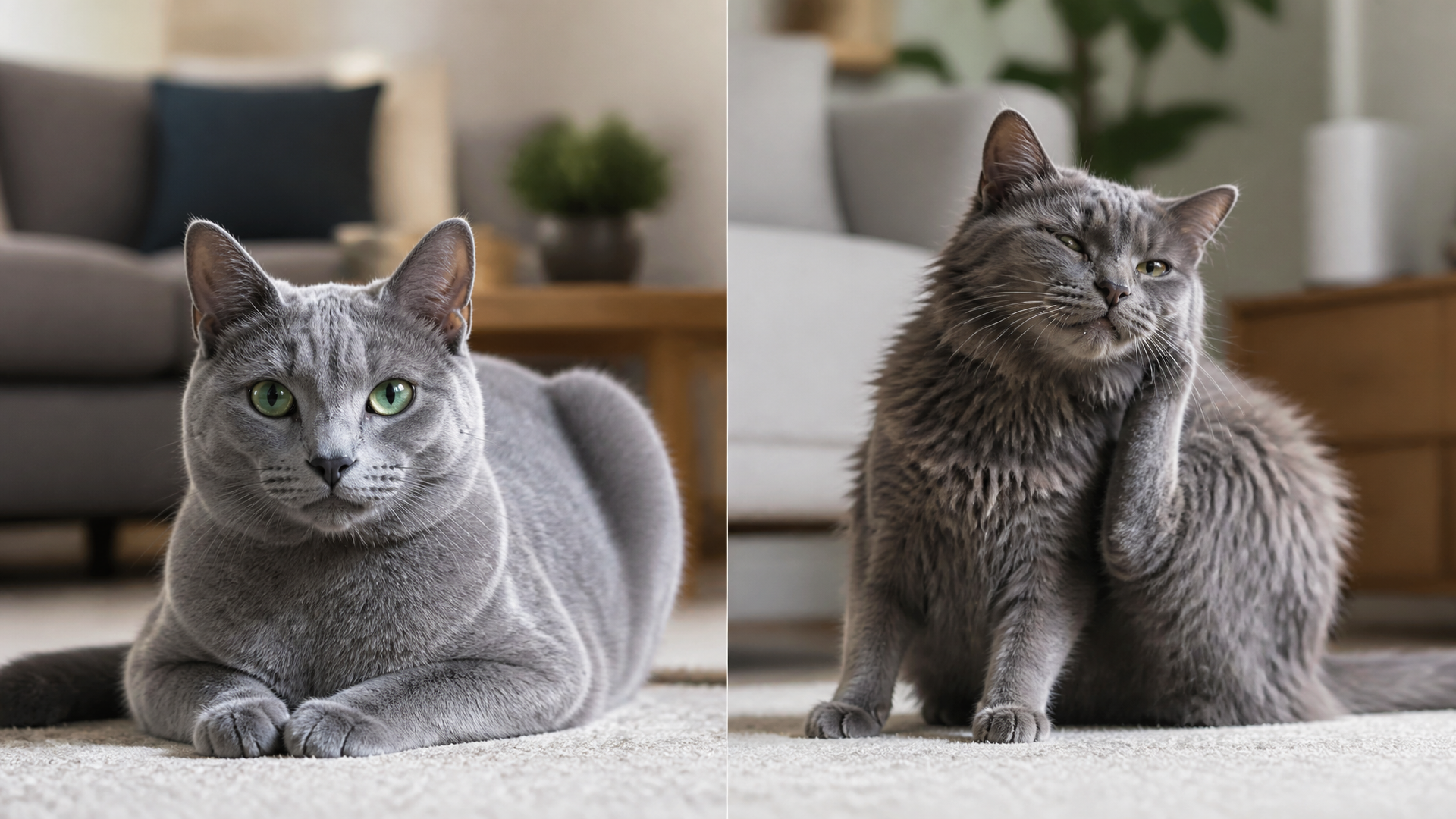
Russian Blues have short, dense double coats and sensitive skin, which can make allergy symptoms easier to spot if you know what to look for.
Skin and Coat Changes
- Excessive scratching or licking — especially around the face, belly, and paws
- Hair loss or bald patches — often from over-grooming
- Red, irritated skin or small scabs
- Dandruff or flaky skin
Respiratory Signs
- Sneezing fits (more than occasional)
- Watery or runny eyes
- Nasal discharge — clear or colored
- Wheezing or coughing
Digestive Issues
- Vomiting within hours of eating
- Diarrhea that comes and goes
- Gas or bloating
Checkpoint: If your Russian Blue has any one of these signs for more than 2–3 days, start tracking when symptoms appear. If it’s respiratory plus skin issues together, allergies are more likely.
What To Do at Home First
Before heading to the vet, try these steps to narrow down the cause and provide relief.
Step 1: Check Their Food
Switch to a single-protein, limited-ingredient diet for at least 8 weeks. Chicken and fish are common triggers. Avoid grain-free diets unless your vet confirms a grain allergy — most cat allergies are to proteins, not grains.
Common mistake: Switching foods too quickly. Transition over 7–10 days by mixing old and new food.
Step 2: Reduce Environmental Triggers
Vacuum weekly with a HEPA-filter vacuum. Wash your cat’s bedding in hot water (130°F) every week. Use a HEPA air purifier in the room your cat spends the most time in. Wipe your Russian Blue down with a damp, soft cloth daily during high-pollen seasons — this removes allergens from their coat before they groom it into their system.
Step 3: Check for Fleas
Even indoor cats can get fleas. If you see tiny black specks (flea dirt) on their skin or bedding, start flea control immediately. Flea allergy dermatitis is one of the most common causes of scratching in cats.
Step 4: Groom With Purpose
Brush your Russian Blue weekly with a rubber grooming mitt to remove loose fur and dander. Do not bathe your cat unless your vet specifically recommends it — their skin is sensitive and over-bathing can make allergies worse.
When To Call the Vet
Call your vet within 24 hours if you see:
- Open sores or bleeding from scratching
- Hair loss in clear patches
- Eye discharge that’s yellow or green
- Lethargy or loss of appetite
Go to an emergency vet immediately if:
- Your cat is struggling to breathe
- Their face or paws are swelling
- They collapse or seem disoriented
Your vet can run allergy tests (skin or blood tests), prescribe antihistamines (never give human antihistamines without a vet’s approval), or recommend a prescription hypoallergenic diet.
3 Practical Tips for Managing Russian Blue Allergies
Tip 1: Damp Wipe Daily
- Actionable step: Use a clean, damp microfiber cloth to gently wipe your cat’s coat each evening. This captures pollen and dust before they lick it off.
- Common mistake: Using pet wipes with fragrances or essential oils — stick to plain water.
Tip 2: Rotate Protein Sources
- Actionable step: Feed two different protein sources (like rabbit and venison) on alternating weeks. This reduces the chance of developing a new sensitivity.
- Common mistake: Assuming a single protein diet is the only option. Rotation can actually help prevent future allergies.
Tip 3: Keep a Symptom Journal
- Actionable step: Write down what your cat ate, what they came in contact with, and when symptoms appeared for 10 days. Look for patterns.
- Common mistake: Relying on memory. Pattern recognition is much clearer in writing.
Deciding Between Home Care and a Vet Visit
If symptoms are mild and occasional (a sneeze here, a scratch there), start with home adjustments for 2 weeks. If symptoms are persistent (daily scratching or sneezing for 3+ days) or worsening, go straight to the vet. Russian Blues can develop secondary skin infections from chronic scratching, which requires prescription treatment. This decision rule helps you act quickly based on severity.
Save This Guide
Bookmark this page for quick reference the next time your Russian Blue shows allergy signs. The key takeaway: watch for patterns, remove common triggers first, and don’t hesitate to call your vet if symptoms last more than a few days. Your Russian Blue’s comfort depends on catching the issue early.
This article contains affiliate links. If you purchase through them, we may earn a small commission at no extra cost to you.
Frequently Asked Questions
Can Russian Blues cause fewer allergies in people?
Yes — Russian Blues produce less Fel d 1 protein than many other breeds, which is why they’re often called hypoallergenic. But no cat is 100% allergen-free, and individual sensitivities vary.
What’s the most common allergy in Russian Blues?
Food allergies to proteins like chicken or fish are most common, followed by environmental allergies to dust mites and pollen.
Is it normal for my Russian Blue to sneeze occasionally?
Occasional sneezing (once or twice a day) is normal. Frequent sneezing or sneezing with discharge is not.
How long does a food trial for allergies take?
A proper food trial lasts 8 to 12 weeks on a single novel protein or hydrolyzed diet. You must avoid all treats, flavored medications, and table scraps during this time for accurate results.