Liver Snubnose Shih Tzu
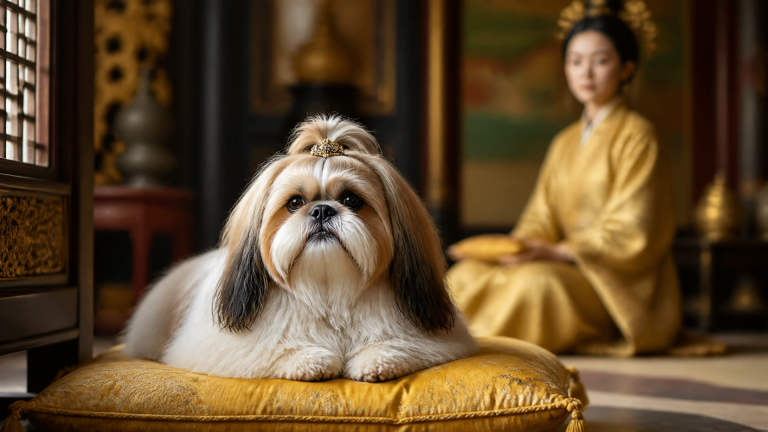
A liver snubnose Shih Tzu has a chocolate-brown coat and the breed’s signature flat face. The liver color is purely cosmetic — what matters is the daily care routine for the brachycephalic (flat-faced) features. Here’s exactly what changes for your care routine and what stays the same.

Applicability note: This guide covers purebred liver snubnose Shih Tzu. If your dog is a mixed breed or has a different coat color, the care details — especially sun sensitivity — may differ. For mixed breeds, check skin pigment first to decide if sunscreen is needed.
The Liver Coat: Not Just a Different Color
The liver gene turns all black pigment to brown. That means your dog’s skin under the fur is lighter — often pink or pale brown. Sun protection becomes a real concern.
How to Confirm Your Dog Is a Liver Snubnose
Before you change your care routine, verify the liver gene with these three checks:
1. Nose color — should be brown or pink, never black
2. Eye color — should be hazel or amber, not dark brown
3. Skin pigment — under the fur, especially on the belly and ear tips, look for light pink or pale brown
If all three match, your dog carries the liver gene. If only one or two match (e.g., a brown nose but dark eyes), you may have a different color variant — ask your breeder or vet for confirmation.
What Changes with a Liver Coat
- Higher sunburn risk on exposed skin — nose, ear tips, belly, and any pink patches
- Eye color shift — usually hazel or amber instead of dark brown
- Nose color — brown or pink instead of black
Action step: Apply pet-safe sunscreen (SPF 30+) to exposed pink skin if your Shih Tzu spends more than 15 minutes in direct sunlight. Never use human sunscreen — zinc oxide is toxic if licked.
Common mistake: Assuming all dogs handle sun the same way. Liver-coated Shih Tzu need shade breaks, protective clothing, and sunscreen on bright days.
The Snubnose Factor: Your Daily Care Flow for Brachycephalic Health
This is where the real work lives. The short muzzle compresses the airway, creates heat sensitivity, and demands daily checks.
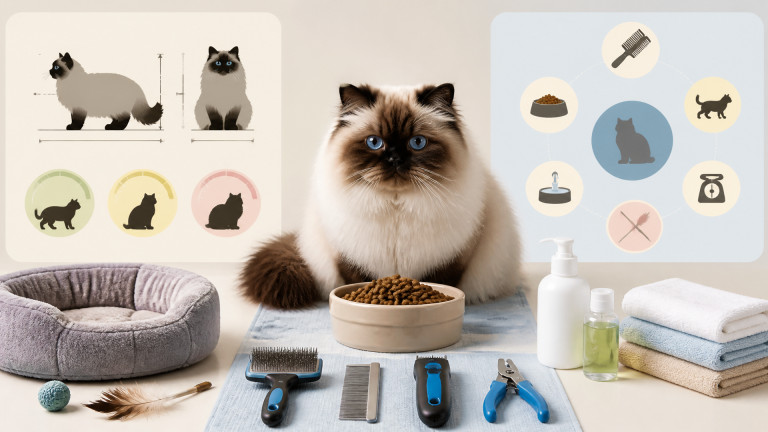
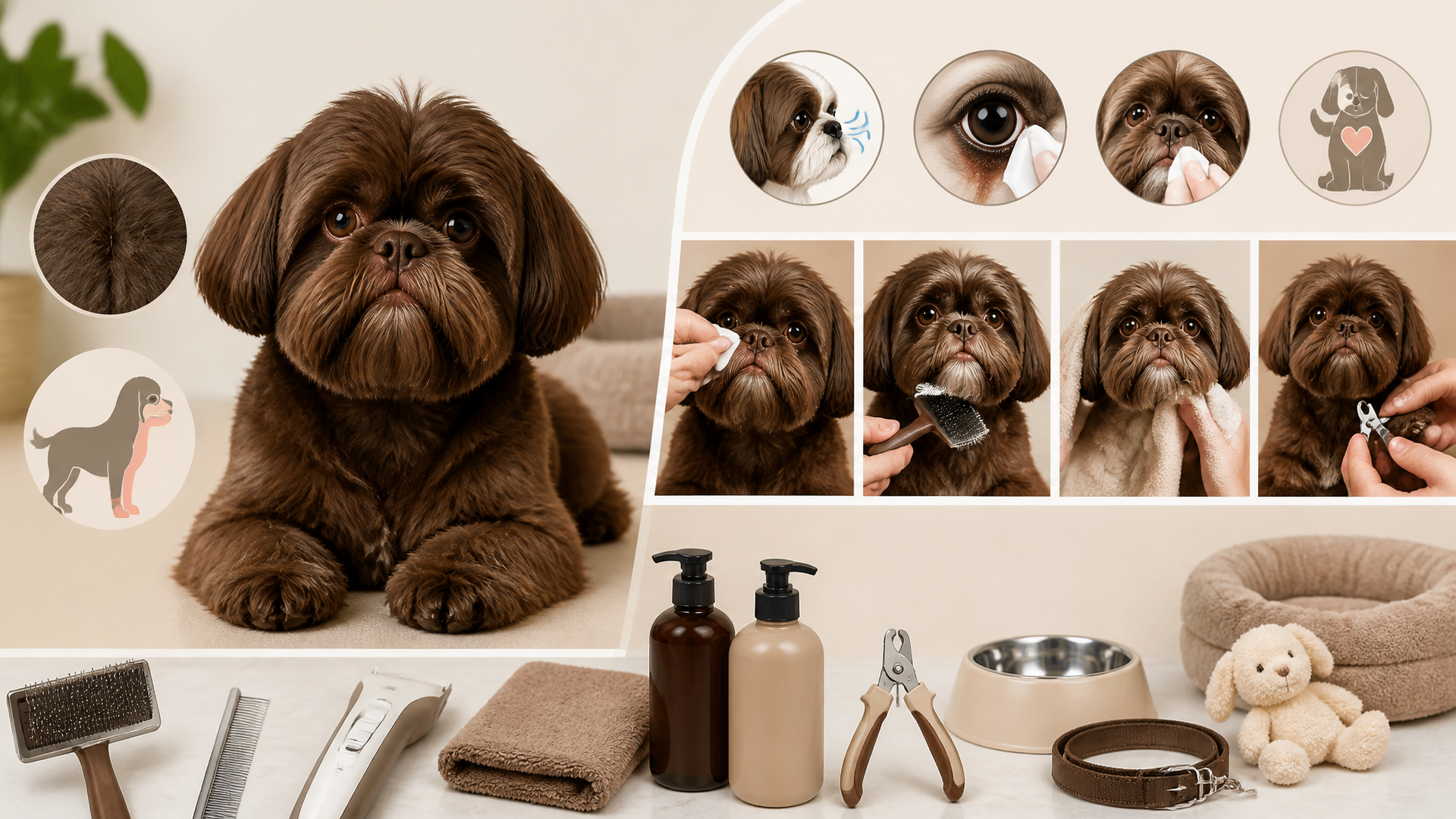
Before You Start: What You Need
- Soft cotton rounds or baby washcloths
- Pet-safe wrinkle paste (Squishface or similar)
- Lubricating eye drops (plain artificial tears, no redness reducers)
- Detangling spray and slicker brush
Early Checkpoint: The 30-Second Vibe Check
Before grooming, feeding, or walking, do this:
1. Resting breathing — count breaths for 15 seconds, multiply by 4. Normal is 15–30 breaths per minute.
2. Nose fold — lift the wrinkle. If it’s moist or smells yeasty, it needs cleaning now.
3. Eye clarity — look for redness, discharge, or cloudiness.
If any of these are off, address them before proceeding.
The 2-Minute Daily Health Routine
Step 1: Breathing check (30 seconds) — At rest, watch your dog’s chest rise. Snorting and snoring are normal. A high-pitched whistle or blue gums means stop everything and call the vet.
Step 2: Eye check (30 seconds) — Look for redness, discharge, or a white spot on the cornea (ulcer sign). Squinting is a pain signal.
Step 3: Nose fold cleaning (45 seconds) — Lift the wrinkle above the nose. Wipe with a damp cloth, then dry thoroughly. Pat — don’t rub. Apply a thin layer of wrinkle paste if the fold stays moist.
Step 4: Mouth check (15 seconds) — Lift lips to check teeth. Brown tartar means a vet visit. Bad breath means dental disease.
Likely Causes for Common Problems
- Excessive snoring or gagging — nasal passage inflammation or elongated soft palate. Try wiping the nose fold first. If it persists, ask your vet about brachycephalic airway surgery.
- Eye discharge — shallow sockets mean eyelids don’t fully close during sleep. Use lubricating drops at bedtime.
- Smelly nose fold — yeast or bacterial overgrowth from trapped moisture. Clean daily and apply wrinkle balm.
Friction Points Owners Hit (and How to Fix Them)
| Problem | Likely Cause | Fix |
|---|---|---|
| Dog resists wrinkle cleaning | Sensitive skin or past discomfort | Use warm water, go slow, reward with treats |
| Eye stains won’t fade | Tear duct blockage or diet | Try a water additive (Angels’ Eyes) and check with vet |
| Gums look pale after walk | Overheating | Stop immediately, cool with damp towel on belly and paws |
Realistic trade-off: Some wrinkle balms and stain removers can cause contact allergies in sensitive dogs. If your dog’s skin becomes red or itchy after using a new product, switch to a different brand (e.g., from Squishface to Natural Dog Company). Likewise, topical stain wipes that touch the eyeball can cause conjunctivitis — use water additives instead for safer long-term results.
Escalation Signals: When to Call the Vet
- Gums turn blue or gray during or after activity
- Wheezing or gagging that doesn’t stop within 60 seconds
- Eyes look cloudy or your dog squints repeatedly
- You can’t fit a finger between the nose and the wrinkle fold
- Collapse or stumbling after exercise
Success check: Your dog breathes quietly at rest, the nose fold stays dry, and eyes are clear. That’s a good day.
Grooming a Liver Snubnose Shih Tzu: Where the Real Work Lives
The double coat mats fast, and the flat face adds extra maintenance because facial folds trap moisture and bacteria.
Brushing: Daily or Your Dog Pays for It
Use a slicker brush first, then a pin brush to finish. Work section by section — never try to brush the whole dog at once. A mat that reaches the skin becomes painful and must be shaved out.
Expert tip #1: Spray a detangling conditioner (like The Stuff) before brushing. Common mistake: brushing dry fur — it breaks the hair and hurts the dog. Also avoid detangling sprays with alcohol — they dry out the coat and can irritate sensitive skin.
Face Care: The Critical 60 Seconds
- Daily — lift the nose wrinkle and wipe with a damp cotton round, then dry thoroughly
- Weekly — apply a wrinkle paste (Squishface or similar) to keep the fold dry
- Eye stain — wipe tear stains every morning with a gentle eye wipe (e.g., Angel Eyes). Never use bleach or peroxide — they burn
Expert tip #2: Use a water additive (like Angels’ Eyes powder) instead of topical stain removers. It works internally and won’t irritate the eyes. Common mistake: letting stain wipes touch the eyeball — that causes conjunctivitis.
Expert tip #3: If your Shih Tzu has dry skin (common with liver coats), bathe every 3–4 weeks with a moisturizing shampoo for sensitive skin, and use a leave-in conditioner. Common mistake: overbathing strips natural oils and makes dryness worse.
Bathing and Shedding
Shih Tzu are considered hypoallergenic because they shed very little. Bathe every 3–4 weeks with a moisturizing shampoo for sensitive skin (liver coats often have drier skin). Overbathing strips natural oils, so stick to that schedule unless your dog gets into something messy.
Feeding a Snubnose Dog: Less Is More
Brachycephalic dogs eat differently. The flat face makes it hard to pick up kibble from a flat bowl. Use a raised, wide bowl (elevated 4–6 inches) so your Shih Tzu doesn’t tilt its head down to eat. This reduces air swallowing and burping.
Feeding schedule for seniors or overweight dogs:
- Split daily portion into 2–3 small meals
- Measure kibble by weight, not volume
- Use a slow-feeder bowl if your dog inhales food
Expert tip #4: Avoid free-feeding. Small, flat-faced dogs are prone to obesity because they don’t recognize fullness well. Common mistake: leaving a full bowl out all day — your Shih Tzu will graze into a chunky body that worsens breathing.
Comparison: Liver vs. Other Shih Tzu Colors – Any Real Difference?
| Aspect | Liver Coat | Traditional Black/Gold Coat |
|---|---|---|
| Skin pigmentation | Light/pink | Dark (more sun protection) |
| Eye color | Usually hazel or amber | Dark brown |
| Nose color | Brown or pink | Black |
| Sunburn risk | Higher on nose and belly | Lower |
| Health issues | Same breed issues | Same breed issues |
| Grooming frequency | Identical | Identical |
Takeaway: The liver gene changes color only. Sun protection is the practical difference.
Training a Snubnose: Breathing Over Obedience
Shih Tzu are stubborn but food-motivated. The flat face means they overheat faster during exercise-based training. Keep sessions to 5–10 minutes indoors or in shade. Use tiny treats (half-kibble size) so your dog doesn’t choke.
Critical trainer note: Never use a collar for leash walking — it compresses the trachea. Use a harness with a front clip (like Puppia or Gooby). Common mistake: using collars “because it’s a small dog” — a tracheal collapse is expensive and dangerous.
Frequently Asked Questions
Are liver Shih Tzu rare?
No. The liver color is a standard recessive gene. Many breeders produce livers. They’re less common than gold but not rare enough to command a premium unless the breeder markets them as such. Always check health testing instead.
Do liver snubnose Shih Tzu need sunscreen?
Yes, on exposed pink skin. Use a pet-specific sunscreen (avoid zinc oxide). Apply to the nose, ear tips, belly, and any light-skinned patches before outdoor time.
How often should I clean the nose wrinkle?
Daily. Lift the fold, wipe with a damp cloth, then dry completely. Once a week, use a wrinkle balm to prevent moisture buildup and yeast infections.
Quick Takeaways to Save
A liver snubnose Shih Tzu is a standard Shih Tzu with a chocolate coat and flat face. The only special needs are sun protection for light skin and consistent brachycephalic care (breathing checks, eye cleaning, fold drying). Groom daily, use a harness, and never let your dog overheat.
This article contains affiliate links. We may earn a small commission if you purchase through them, at no extra cost to you.