When di Labradores Start Teething
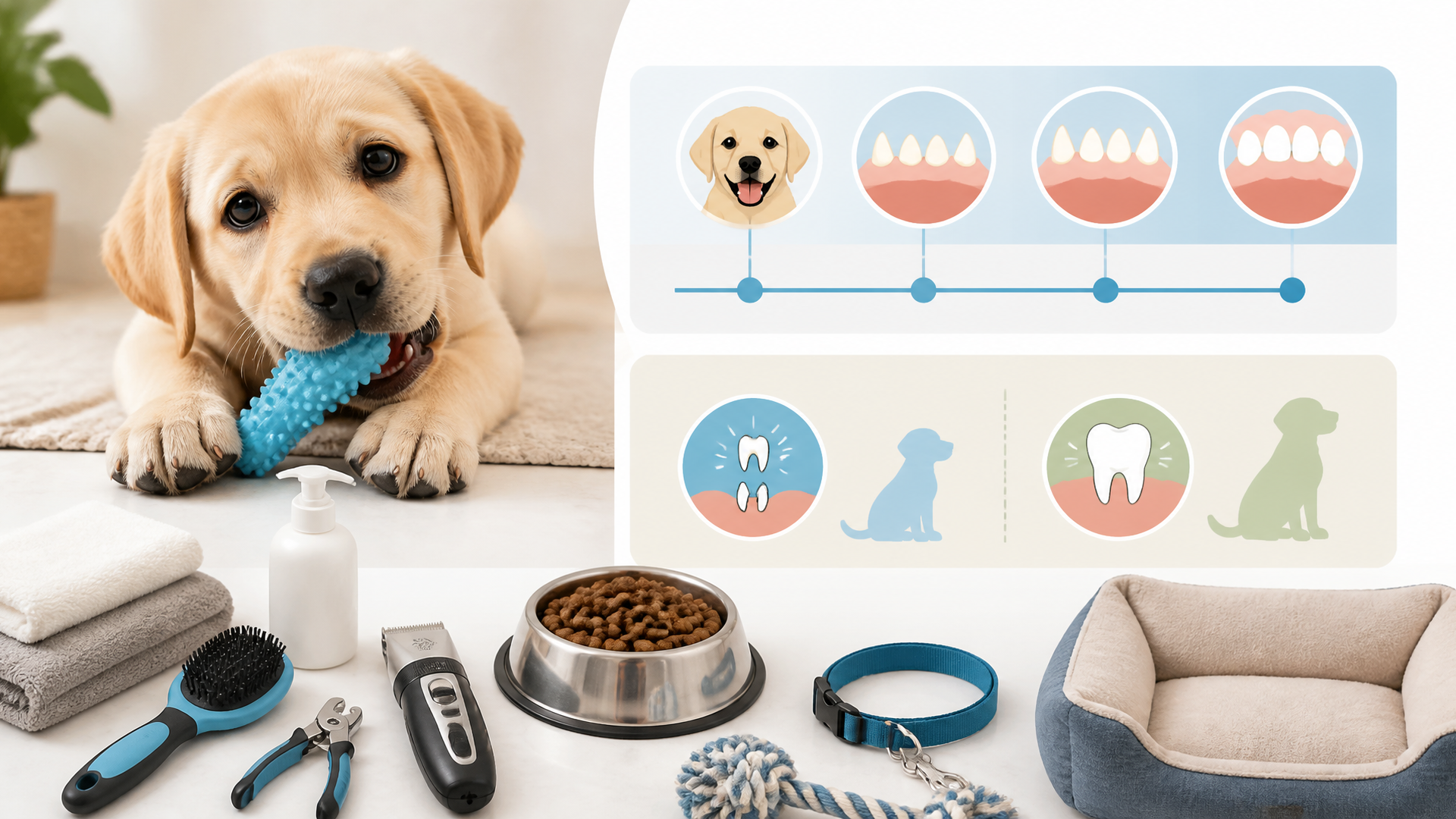
Your Labrador puppy will start teething around 3 to 4 months of age, with the full process of losing baby teeth and cutting adult teeth spanning roughly 3 to 6 months. Most Labs have their full set of 42 adult teeth by 8 months old.

During teething, your puppy’s gums will be sore and swollen. You’ll notice increased chewing, drooling, and maybe a little blood on toys. That’s normal. What catches most owners off guard? The destructive chewing phase hits hardest between 4 and 6 months, and Labradors — bred as retrievers with a natural instinct to carry things in their mouths — tend to chew more intensely than many other breeds.
Here’s what you need to know, week by week.
The Labrador Teething Timeline at a Glance
| Age Range | What’s Happening | What You’ll Notice |
|---|---|---|
| 2–4 weeks | Baby (deciduous) teeth begin erupting | Tiny needle-sharp teeth appear; nursing may get uncomfortable for mom |
| 5–8 weeks | All 28 baby teeth are usually in place | Puppy starts exploring the world with their mouth; light nibbling |
| 12–16 weeks (3–4 months) | Baby teeth start loosening and falling out | Increased chewing, drooling, occasional blood on toys; teething officially begins |
| 4–6 months | Adult incisors, canines, and premolars come in | Peak chewing phase — your Lab will mouth everything in sight |
| 6–8 months | Large adult molars (back teeth) finish erupting | Chewing gradually decreases; 42 adult teeth should be in place |
| 8+ months | All adult teeth fully set | Mouthing and chewing should mostly be breed-driven habit, not teething pain |
Breed-specific note: Labradors are heavy chewers by nature. The 4–6 month window is when most owners lose shoes, furniture corners, and baseboards. Plan ahead.
What this means for your next move: Before teething starts at 3 months, buy your chew supplies and start “drop it” training. Waiting until the 4-month peak means you’re playing catch-up while your puppy is already destroying things. Order a set of teething toys and a Kong Classic now — not when you’re already frustrated.
Two Surprising Phases of Teething
Most guides lump all teething into one window. But Labradors experience two distinct phases, and knowing the difference changes how you respond.
Phase 1: Baby Teeth Erupting (2–8 weeks)
This happens before your puppy comes home. By 8 weeks, all 28 baby teeth are in. You won’t manage this phase directly — the breeder handles it. But the puppy has already learned that chewing feels good on sore gums.
Phase 2: Adult Teeth Coming In (3–8 months) — The Real Challenge
This is the phase you’ll deal with. Between 3 and 6 months, your Labrador is simultaneously losing baby teeth and cutting adult teeth. That’s two sources of gum pain at once.
Here’s the counter-intuitive part: Many owners mistake normal Labrador mouthing for teething pain. Because retrievers naturally carry objects in their mouths, a 5-month-old Lab who grabs your hand or your sleeve may be expressing breed instinct, not teething discomfort. If you treat all mouthing as teething, you might miss the window for teaching bite inhibition.
What to do instead: Watch for the specific signs of teething (below). If your Lab is mouthing without those signs, redirect to a toy but also start consistent training for “drop it” and “leave it.”
5 Signs Your Lab Is Teething Right Now
Use this quick checklist to confirm whether your puppy is actively teething or just being a typical mouthy Labrador.
| Checklist Item | Yes or No? |
|---|---|
| Visible tooth loss — You find tiny baby teeth on the floor, bedding, or embedded in toys. | ☐ |
| Gum redness or swelling — Lift your puppy’s lip. Gums around teeth look pinker or puffier than normal. | ☐ |
| Blood spots on toys — Small specks of blood appear on chew toys, but your puppy is otherwise healthy and playful. | ☐ |
| Sudden increase in chewing — Your Lab starts chewing objects they previously ignored (furniture legs, baseboards, shoes). | ☐ |
| Pawing at the mouth — The puppy rubs their face on the floor, furniture, or uses their paws to scratch at their mouth. | ☐ |
If you checked 3 or more, your Lab is in an active teething phase. If only 1 or 2, the mouthing is more likely breed-driven behavior, and you can focus on training.
How to check for loose teeth: Gently lift your puppy’s lip and press a finger against a front incisor. If it wiggles slightly, that tooth is about to fall out. Don’t pull it — let it come out naturally. If you feel a hard bump behind a baby tooth, that’s the adult tooth pushing through. This confirms teething is active.
Expert Tips for Surviving Labrador Teething
Tip 1: Use cold therapy strategically
Actionable step: Freeze a wet washcloth (rolled up) for 15–20 minutes and give it to your puppy to chew on. The cold numbs sore gums. You can also use Kong toys stuffed with plain yogurt or pumpkin puree and then frozen.
Common mistake to avoid: Never freeze solid rubber toys or bones so hard that your puppy could crack a baby tooth. The washcloth should be damp, not soaked and frozen solid — you want flexible, not rock-hard.
Trade-off to know: Some Labradors lose interest in cold items after the initial novelty wears off, usually by week two of teething. If your puppy ignores frozen washcloths, switch to a silicone teething ring you’ve chilled in the fridge (not freezer). The milder cold still helps, and the different texture can re-engage them.
Tip 2: Rotate chew toys, don’t offer them all at once
Actionable step: Keep 3–4 different teething toys (different textures: rubber, rope, silicone) and swap them out every 2–3 days. Novelty keeps your Labrador interested.
Common mistake to avoid: Leaving every toy available all the time leads to boredom with all of them. Your Lab will move on to chewing your coffee table leg instead. A toy rotation system works better.
Tip 3: Teach “drop it” before teething peaks
Actionable step: Start teaching “drop it” at 8–10 weeks old, well before the intense 4–6 month chewing phase. Use high-value treats and trade for whatever is in their mouth.
Common mistake to avoid: Chasing your puppy to retrieve stolen items. This turns into a game for Labradors (they love being chased). Instead, stay still and offer a treat. Once they drop the object, praise immediately.
Product recommendation: For all three tips, a set of food-grade silicone teething rings, a medium Kong Classic, and a rope toy with knots work well for Labradors specifically. Look for toys labeled “for medium to large breeds” — small toys are a choking hazard for a growing Lab puppy. We may earn a commission if you purchase through these links, at no extra cost to you.
Verification step before buying a chew toy: Pinch the toy firmly between your thumb and forefinger. If your thumbnail can nearly touch your fingertip through the material, it’s soft enough for a teething Lab. If the material feels hard or unyielding, save it for after all adult teeth are in (8+ months).
When to Call the Vet
Teething is normal, but these signs aren’t:
- Adult teeth coming in before baby teeth fall out — If you see a double row of teeth (baby tooth still there with adult tooth behind it), the baby tooth may need extraction.
- Refusal to eat for more than 12 hours — Some soreness is normal, but a Lab who won’t eat at all needs a vet check.
- Swollen face, fever, or lethargy — These could indicate a tooth infection or abscess.
- Baby teeth still present at 8 months — Retained baby teeth can cause misalignment and dental problems.
- Excessive drooling with bad breath — Could signal a cracked tooth or gum infection.
Most Labrador puppies get through teething without complications. When in doubt, a quick call to your vet gives you peace of mind.
FAQ
At what age do Labradors stop teething?
Most Labradors stop teething by 8 months old, when all 42 adult teeth have fully erupted. Some finish as early as 6 months.
Do Labradors lose all their baby teeth?
Yes, all 28 baby teeth fall out to make room for 42 adult teeth. You might find some on the floor, but puppies often swallow them without issue.
Why is my Labrador more destructive during teething than my previous dog?
Labradors are genetically predisposed to mouth and carry objects — they’re retrievers. The combination of teething pain plus breed instinct makes them more prone to destructive chewing than breeds with lower prey or retrieve drives.
Can I give my Labrador ice cubes for teething?
Yes, plain ice cubes are generally safe for a Labrador puppy, provided they are large enough not to be a choking hazard. Some owners prefer crushed ice or ice chips to be extra safe. Supervise your puppy the first few times.
Do male and female Labradors teethe differently?
No, teething timing is consistent across sexes. Individual puppies may vary by a few weeks, but gender does not affect the process.
Save This Guide
Key takeaway: Your Labrador will start teething around 3–4 months, hit peak chewing at 4–6 months, and finish by 8 months. Teething has two phases — baby teeth coming in and adult teeth coming in — and the second phase is where most of the damage happens. Use cold therapy, rotate toys, and start “drop it” training early. If you see retained baby teeth, refusal to eat, or facial swelling, call your vet. Bookmark this guide — you’ll need the checklist again around month 4.