Tabetian Angorra Cat Colors
From pure white and deep black to rare lilac, shaded silver, and striking pointed patterns — the Tabetian Angorra cat carries an extraordinary range of coat colors. The short answer: coat color does not affect temperament, grooming frequency, or daily care, but it can affect health risks (deafness in white cats with blue eyes), price (rare colors cost more), and show eligibility (some registries restrict certain colors). Your next step is to decide whether you want a common color (white, black, blue) for a shorter wait and lower cost, or you’re willing to pay a premium for a rare shade like lilac or pointed. If health matters most, focus on the breeder’s genetic testing and your willingness to brush daily.

What Colors Do Tabetian Angorra Cats Come In?
Unlike many purebred cats with rigid color standards, the Tabetian Angorra’s gene pool is wide open. Here’s how the major groups break down.
Solid Colors
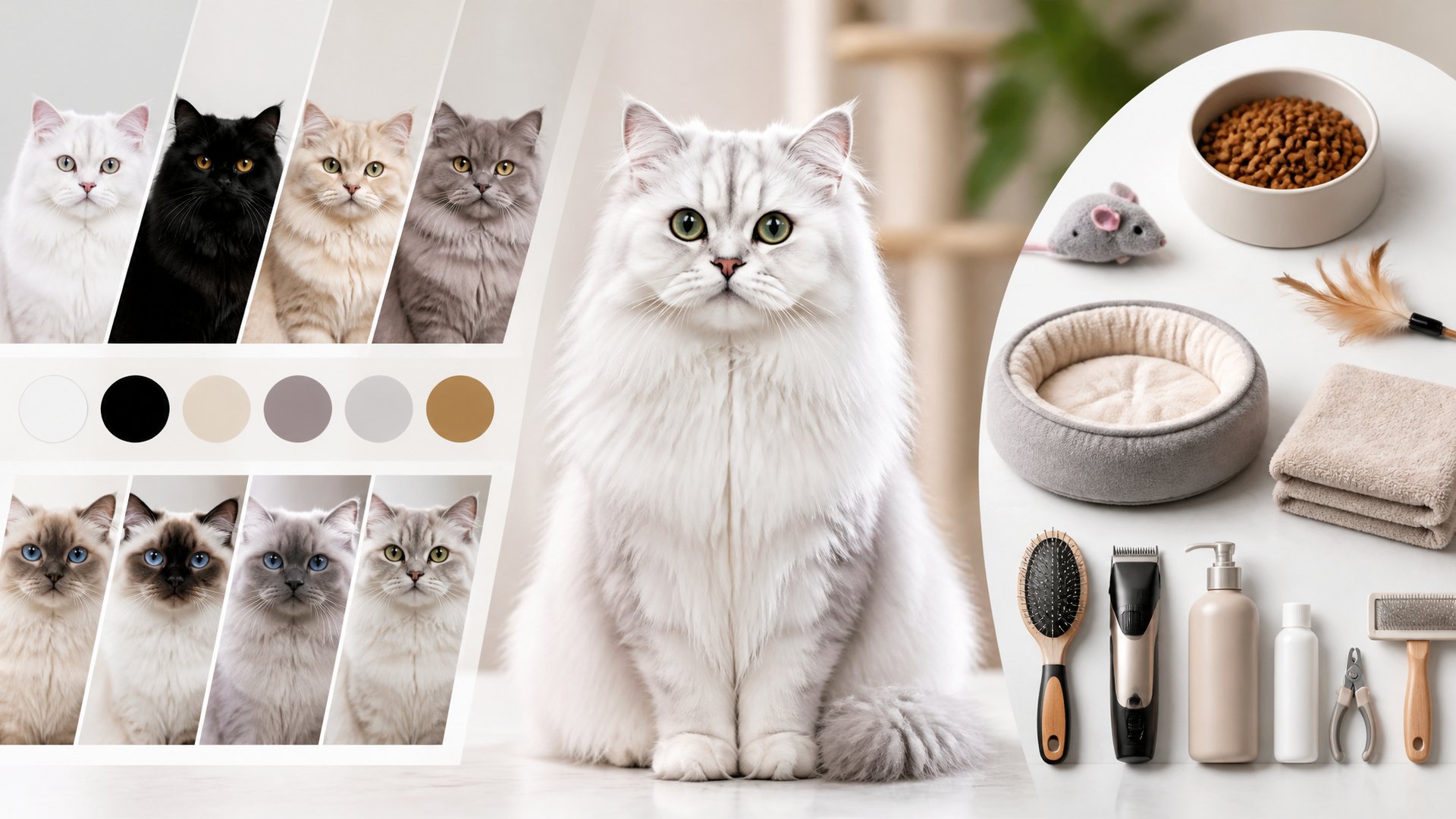
White – The most iconic Angorra color. Often paired with blue eyes or odd eyes (one blue, one gold). Caution: White cats with two blue eyes have a 60–80% rate of congenital deafness. Always ask for the breeder’s BAER test results for any white kitten.
Black – Deep, even black that may show slight reddish undertones in strong sunlight.
Blue – A soft gray-blue, the dilute version of black. Common and popular.
Red – Rich orange-red (ginger). Males are more frequently red than females.
Cream – Pale warm off-white, the dilute of red.
Chocolate – Rich brown, less common than black or blue.
Lilac – A pale, powdery gray-pink, the dilute of chocolate. Genuinely rare and highly prized.
If coat rarity matters to you, expect higher prices and longer wait times for lilac or chocolate. For show cats, always verify with the registry and breeder — some associations disallow certain solid colors. A “rare” color does not mean a healthier cat. Rare colors often come from smaller gene pools, so ask about genetic diversity in the breeding line.
Tabby Patterns
The tabby gene is common in Tabetian Angorras and can appear over any base color. Four distinct patterns exist:
Classic tabby – Bold, swirling patches on the sides with a butterfly shape on the shoulders.
Mackerel tabby – Narrow vertical stripes down the spine (like a fish skeleton). Most common tabby pattern.
Spotted tabby – Rounded spots instead of stripes. Less common, sought after for its wild look.
Ticked tabby – No obvious stripes; each hair has alternating light and dark bands, creating a shimmering, sand-like effect.
Bicolor and Tricolor
Bicolor – White combined with any other color. Typically white paws, chest, and belly. The Van pattern (mostly white with color only on the head and tail) also appears.
Tricolor (Calico) – White with patches of red and black. Dilute version uses blue and cream. Almost 100% female due to genetics.
Tortoiseshell – Black and red patches without white. Also almost exclusively female.
Torbie – Tabby coat with tortoiseshell patches of red and black. Predominantly female.
Pointed (Colorpoint) Patterns
Less common but striking, pointed Tabetian Angorras have darker color on the ears, face, paws, and tail against a lighter body. Colors include:
- Seal point – Dark brown points on a cream body
- Blue point – Gray-blue points on a bluish-white body
- Chocolate point – Milk-chocolate points on an ivory body
- Lilac point – Pale pinkish-gray points on a white body
Pointed kittens are born white. Their color develops gradually over the first two years and is temperature-sensitive — cooler body parts grow darker pigment. To predict adult color, ask the breeder for photos of both parents at 2–3 years old, not as kittens.
Smoke and Shaded Patterns
Smoke – White undercoat with colored outer coat. When the cat moves, the contrast creates a dramatic two-tone effect.
Shaded / Chinchilla – Only the tips of the hairs are colored, giving a shimmering silvery appearance. Gold or silver shaded are particularly rare and prized.
Quick Reference Color Chart
| Category | Examples | Rarity | Special Notes |
|---|---|---|---|
| Solid | White, Black, Blue, Red, Cream, Chocolate, Lilac | Common: White, Black, Blue Rare: Lilac |
White + blue eyes = higher deafness risk |
| Tabby | Classic, Mackerel, Spotted, Ticked | Common | Spotted and ticked are harder to find |
| Bicolor / Tricolor | Van, Bicolor, Calico, Tortoiseshell, Torbie | Common in females | Calico/tortoiseshell are 99.9% female |
| Pointed | Seal, Blue, Chocolate, Lilac point | Uncommon | Kittens born white; color develops over 2 years |
| Smoke / Shaded | Smoke, Silver Shaded, Gold Shaded | Rare | Requires specific genetics for the tipped effect |
Grooming for Tabetian Angorra Coats: Quick Checklist
Coat color does not change grooming needs. Every Tabetian Angorra has a long, silky single-layer coat (no dense undercoat) that tangles and mats fast without consistent care. If you skip brushing for 2–3 days, mats can form in the armpits and behind ears within a single day. Mats that reach the skin will need professional shaving — never cut them yourself with scissors.
- [ ] Brush daily with a metal pin brush (rounded tips) – 5 minutes minimum
- [ ] Spray with cat-safe detangling product before brushing to reduce breakage
- [ ] Check and brush high-friction zones – armpits, belly, behind ears, ruff (chest)
- [ ] Finish with a slicker brush to smooth and remove loose hairs
- [ ] Bathe every 4–6 weeks using a cat-specific shampoo for long coats
- [ ] Part the fur along the spine and tail weekly to check for skin irritation
Tools to use: Metal pin brush, wide-toothed comb, cat detangling spray, slicker brush.
Tools to avoid: Shedding blades, Furminators — they damage the fine single-layer coat.
Disclosure: Some product links in this guide may earn a small commission at no extra cost to you.
Step-by-Step Bathing Routine
1. Prepare – Brush out all tangles before wetting the coat.
2. Shampoo – Apply cat-specific long-coat shampoo from neck to tail. Use a damp cloth for the face.
3. Rinse thoroughly – Residue causes dullness and skin irritation.
4. Towel dry – Pat, don’t rub (rubbing creates tangles).
5. Blow-dry – Use a low-speed hairdryer on cool/low heat to fluff the coat.
When to call a professional groomer: If your cat has more than 3–5 large mats, is stressed during grooming, or you’re unsure about safe mat removal. A pro can shave mats without injuring the skin. If you see redness, bleeding, or pus under a mat, call your vet immediately — that’s a skin infection, not just a grooming issue.
Expert Tips for Tabetian Angorra Owners
Tip 1: Use a Metal Pin Brush with Rounded Tips
Actionable step: Choose a brush with stainless steel pins and rounded tips. Brush daily from the ends toward the skin.
Common mistake to avoid: Plastic-tipped brushes snag fine Angora hair more often and wear down quickly, leaving sharp edges. Stick to metal.
Tip 2: Apply Detangling Spray Before Brushing
Actionable step: Lightly mist a cat-safe detangling spray over the coat before you start. This reduces static and makes knots easier to release.
Common mistake to avoid: Using human detangling products with silicones or fragrances. They can irritate cat skin and attract dirt. Use cat-specific products only.
Tip 3: Weekly Skin Checks Are Non-Negotiable
Actionable step: Part the fur along the spine and tail every week. Look for red, greasy, or flaky skin — early signs of dermatitis or flea allergies.
Common mistake to avoid: Assuming no visible scratching means the skin is healthy. Many skin issues start under the dense coat before your cat shows discomfort.
Save This Guide
Your Tabetian Angorra’s coat color opens up a beautiful range of possibilities, from common white and blue to rare lilac and pointed patterns. The color you choose affects price and potential health risks (deafness in white cats with blue eyes) but not daily care — every Angorra needs daily brushing and weekly skin checks. Focus on finding a reputable breeder who performs genetic testing, and commit to the grooming routine regardless of coat shade.