Hms Beagle Beam: Guide: What Every Owner Should Know
The HMS Beagle Beam is a handheld training tool that marks correct behavior with a directional light beam. For Beagles, who are easily overwhelmed by scents and sounds, a visual cue cuts through the noise. It works — but only when you pair it with high-value treats, short sessions, and a clear understanding of what it can and cannot fix.

What the Beam Actually Does and Why Beagles Need It
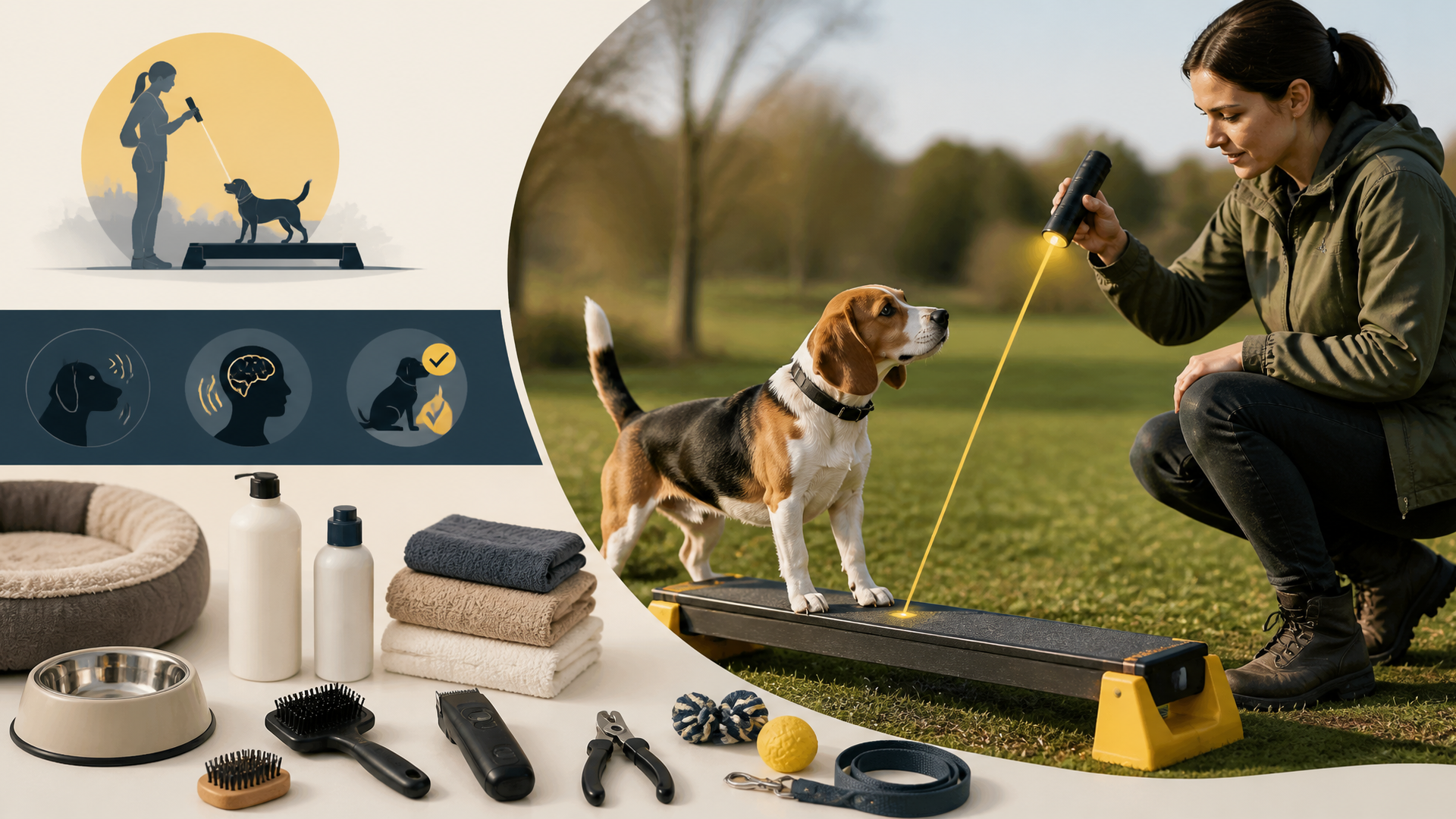
The beam is a visual marker. You press the button the exact second your Beagle performs the behavior you want, then reward immediately. The light becomes a reliable “yes” signal that predicts a treat.
Why this matters for Beagles specifically: Beagles process the world through their nose. An audible clicker or command can get lost when they’re locked onto a scent. A visible spot of light on the ground grabs their attention without adding noise, making it a clearer signal that says “that behavior — repeat it.”
Critical boundary to know upfront: Not all beam tools are the same. Some are steady-light markers only. Others combine the beam with vibration, tone, or a mild pulse. A few cheaper models use flashing or pulsing lights that can startle sensitive dogs. Always confirm you’re using a steady-light marker only. Avoid any tool with shock, spray, or correction modes unless directed by a professional trainer.
One failure mode to watch for early: The most common mistake owners make is pressing the beam too late — after the behavior is already done. Beagles learn quickly but can also lose the connection just as fast. If the light appears even one second late, your Beagle will associate the beam with whatever they’re doing at that moment, not the behavior you wanted to mark. Press within half a second of the correct action, or skip that repetition entirely.
What to Look for in a Training Beam for Your Beagle
Beagles pull, chase, and lose focus fast. The tool you pick needs to keep up with real-world training conditions.
Key Features to Check Before Buying
- Beam color: Green is more visible outdoors in daylight. Red works fine for indoor sessions. Test in the environment you’ll train in most.
- Button feel: Look for a firm, deliberate press — not a hair-trigger that activates accidentally in your pocket or bag.
- Auto-shutoff: A safety feature that turns the beam off after 20–30 seconds of non-use. Prevents accidental eye exposure if the tool is left on.
- Power source: Rechargeable with USB-C is ideal. Replacing batteries mid-session breaks the flow of training.
How to Verify the Beam Works Before Your First Session
Test the beam on a wall or floor at the distance you’ll use most — 15 to 20 feet for recall work. Confirm the spot is clearly visible without being too bright. If the beam washes out in your typical training area, switch to a green laser or try a different model.
Practical tip #1: Hold the beam tool at your side, not near your face, when pressing it. Beagles will look toward the light source, and you want them watching the spot on the ground, not your hand.
Common mistake to avoid: Don’t choose a tool based on price alone. A cheap beam with inconsistent output will frustrate both you and your Beagle. Look for a reliable mid-range model with auto-shutoff and a comfortable button instead.
How to Train Your Beagle with the Beam: Step by Step
The beam is only as useful as your conditioning. Follow this flow to build a strong link between the light and the reward.
Step 1: Condition the Beam
In a quiet room with no distractions:
1. Press the beam button, aiming it at the floor a few feet away from your Beagle.
2. Within one second, give a high-value treat — a small piece of cheese, chicken, or freeze-dried liver.
3. Repeat 10 to 15 times. Stop before your Beagle loses interest.
Likely friction: Your Beagle may stare at the light instead of looking at you. That’s normal at first. Reward any attention toward the beam, then gradually require eye contact with you.
Session checkpoint: After 3 short sessions (5 minutes each), your Beagle should perk up or look toward the floor when the beam appears. If they ignore the beam entirely after session 3, you’re waiting too long to reward. Shorten the delay between beam and treat to under one second.
Step 2: Mark a Simple Behavior (Sit)
1. Wait with your Beagle standing.
2. The moment their rear hits the floor, press the beam and treat immediately.
3. Repeat until they sit reliably when the beam appears.
Checkpoint: If your Beagle ignores the beam entirely after 3 sessions, revisit Step 1 with smaller, tastier treats. The conditioning link may not be strong enough yet.
Step 3: Move to a Distracted Environment
Once your Beagle responds to the beam in a quiet room, move to a slightly distracting area — your backyard or a quiet park corner.
1. Use the beam to mark a behavior they already know (sit, down, or touch).
2. Reward immediately.
3. If they don’t respond, you moved too fast. Go back to Step 2 for a session.
Escalation signal: If your Beagle continues to sniff, pull, or ignore the beam in a low-distraction outdoor area for more than 2 sessions, increase treat value rather than increasing distance. Switch from kibble to boiled chicken or cheese before trying again.
Step 4: Apply the Beam to Recall (Come)
Recall is one of the hardest behaviors for a Beagle because their nose overrides everything. The beam helps here by creating a clear visual target.
1. Stand 10 feet from your Beagle in a fenced area.
2. Say their name, then press the beam on the ground near your feet.
3. The moment they move toward the light, mark with the beam and treat.
4. Gradually increase distance to 20 feet, then 30 feet.
Practical tip #2: For recall, always aim the beam at the ground near your feet, not at your Beagle. Shining the beam directly toward their eyes can startle them and may cause vision damage with repeated use. Keep the beam aimed at the ground or a wall at all times.
Success check: Your Beagle reliably moves toward the beam spot when you activate it in a low-distraction environment, 3 out of 4 attempts. That’s the green light to add a verbal cue like “come” right before the beam appears.
Step 5: Fade the Beam
Once your Beagle reliably responds to your verbal cue, start using the beam less often.
1. Give the verbal cue first.
2. Only use the beam every third or fourth time to confirm.
3. Reward every successful response, but vary whether you use the beam or not.
This prevents your Beagle from becoming dependent on the light and keeps them responsive to your voice alone.
Practical tip #3: Always end a beam training session on a success, even if it’s the easiest behavior your Beagle knows. A win at the end makes them eager for the next session. Ending on a failure or frustration builds avoidance.
Common mistake to avoid: Don’t use the beam as a leash replacement. If your Beagle is off-leash in an open area and ignoring the beam, you’ve moved too fast or the distraction level is too high. Reel them in with a long line and practice at a shorter distance before trying off-leash again.
Beagle Training Beam Comparison Table
| Feature | What to Look For | Why It Matters for Beagles |
|---|---|---|
| Beam color | Green over red for outdoor use | Beagles train best outdoors where scent distractions live |
| Button type | Firm press, not hair-trigger | Avoids accidental marking during pocket carry |
| Auto-shutoff | 20–30 seconds of non-use | Prevents eye exposure if left on in a bag |
| Power source | Rechargeable (USB-C preferred) | Replacing batteries mid-session breaks training flow |
| Extra modes | None needed | Vibration or tone can confuse the visual marker system |
When the Beam Won’t Help — and What to Do Instead
The HMS Beagle Beam is a tool, not a fix-all. It won’t help in these situations:
- Fear or anxiety: If your Beagle is shaking, hiding, or avoiding training, a beam won’t help. Address the underlying fear first with counter-conditioning or a vet consult.
- Reactivity to other dogs: A visual marker is ineffective when your Beagle is over threshold. Work on leash reactivity with a qualified trainer before introducing the beam.
- Severe pulling on leash: The beam can mark moments of loose leash walking, but it won’t teach your Beagle not to pull by itself. Pair it with a front-clip harness and consistent stopping.
When to escalate: If you’ve conditioned the beam properly and your Beagle still ignores it after 6 to 8 sessions, check for underlying medical issues — vision problems, ear infections, or joint pain can all reduce engagement. A vet check is your next step.
Save This Guide: Quick Takeaway
The HMS Beagle Beam works as a visual marker for Beagles because it cuts through scent-driven distractions without adding noise. Condition the beam slowly in a quiet room, use high-value treats every time, keep sessions to 5 minutes or less, and never shine the light toward your dog’s eyes. Move to outdoor spaces only once your Beagle reliably responds indoors. Fade the beam once the verbal cue sticks, but keep rewarding the behavior. If your Beagle ignores the beam after 3 conditioning sessions, shorten your reward timing or switch to better treats before moving forward.
This guide contains affiliate links. We may earn a small commission if you purchase through these links, at no extra cost to you.