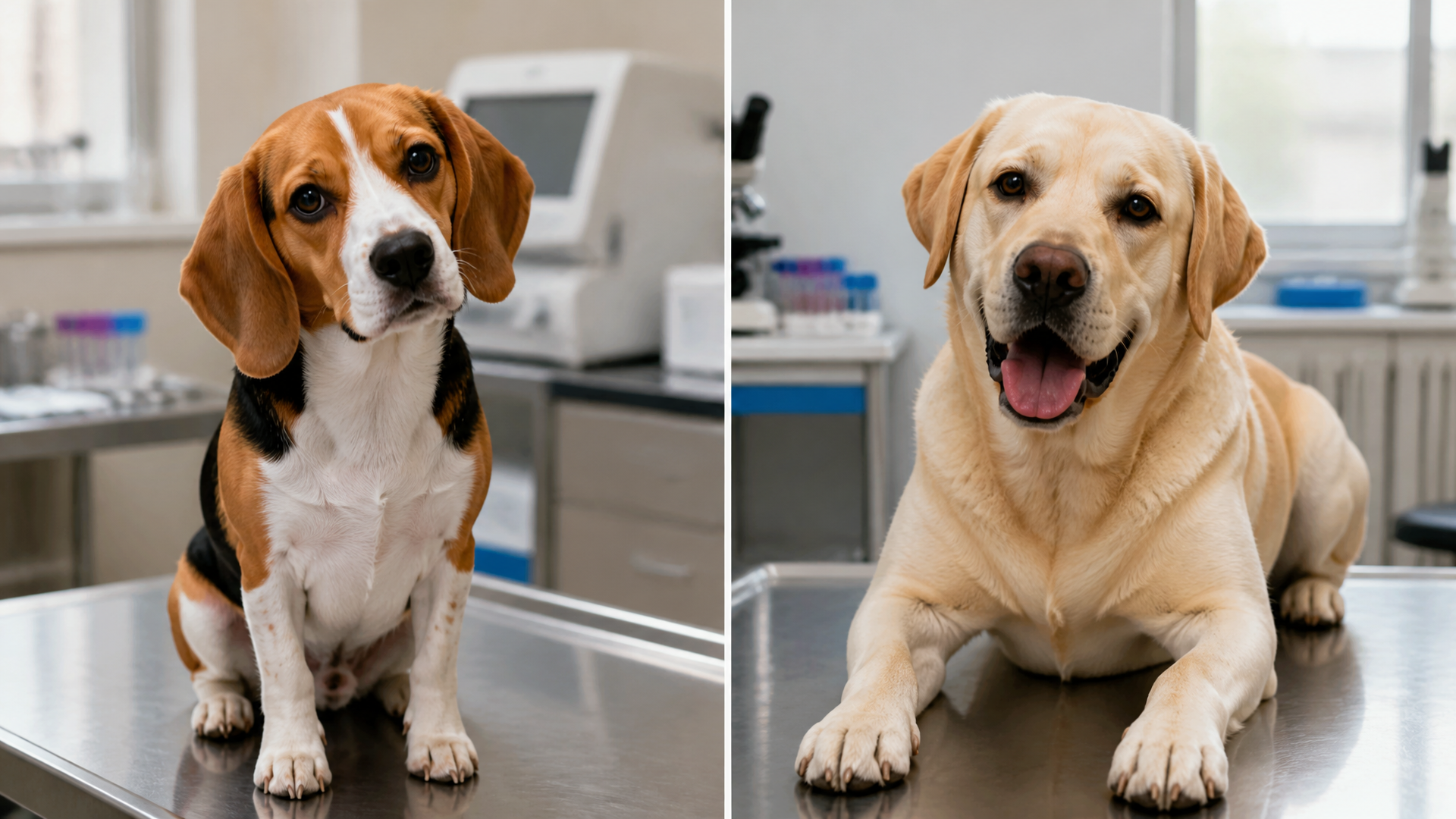
Beagle in Testing Lab
Bringing your beagle to a veterinary testing lab doesn’t have to feel like a battle. With breed-specific prep—focusing on scent, sound, and handling—most beagles can get through blood draws, allergy tests, or imaging without panic. The key is to work with your beagle’s wiring, not against it. Counter-intuitively, your beagle’s powerful nose is actually your biggest advantage: use it to build calm associations before the vet even touches them.

This advice works best for routine diagnostic visits (blood work, urinalysis, allergy testing, X-rays). If your beagle has a history of snapping under restraint or the test requires full sedation, skip the self-training and discuss sedation protocols with your vet first. Pushing a severely reactive dog through without professional support can ruin future visits.
What this means for your next appointment: if you can’t check off the pre-visit confidence list the morning of, reschedule unless it’s an emergency. Forcing a poorly prepared beagle through a lab procedure often backfires, making the next visit even harder.
Why a Lab Visit Is Different for a Beagle
Beagles are built differently from most other dogs during clinic visits. Their scent drive, vocal tendencies, and physical stamina each create specific challenges—and opportunities—that standard prep advice won’t address. Here’s what you’re working with:
| Beagle Trait | Lab Visit Impact | Owner Action |
|---|---|---|
| Strong scent drive | Distracted by cleaning chemicals, other animals, and lingering smells from previous patients | Use high-value treats that outrank any smell in the room |
| Loud baying/barking | Common reaction to restraint or unfamiliar equipment; can escalate if ignored | Practice handling at home with short calm sessions and reward silence |
| High stamina | Stays tense long after the procedure ends; may hold a grudge for hours | Plan a sniffy decompression walk afterward to reset their mood |
| Sensitive to pressure | May panic when held still for blood draw or X-ray positioning | Desensitize to gentle front-leg grip for 5 seconds daily, increase gradually |
| Food motivation (if trained correctly) | Can be used to redirect attention away from fear triggers | Keep a variety of high-value treats ready and rotate them mid-visit |
Prep Steps That Actually Work
Desensitize to Lab Handling at Home
Beagles need to be comfortable with someone holding their front leg extended—the typical blood-draw position. Practice daily for at least a week: gently grip your beagle’s leg for 5 seconds while offering a lick mat or treat. Gradually increase hold time to 10–15 seconds. Also practice having them stand still on a non-slip surface while you touch their neck and rear, simulating exam positions.
Expert tip: Use a lick mat smeared with plain peanut butter on the exam table. This keeps your beagle’s nose busy and lowers stress during restraint. The licking motion itself has a calming neurological effect. Common mistake: Holding too tightly—beagles push back harder against restraint. Use a loose but confident hold and reward calm stillness. If you feel tension, loosen your grip immediately and reward the release.
Verification check: Before the appointment, test your beagle’s tolerance. If your dog flinches or pulls away during a 5-second leg hold, you need more practice (or a different approach). If they accept it without tension, you’re ready.
Arrive with an Empty Bladder and a Full Treat Stash
A beagle that hasn’t pottied or eaten recently is already on edge. Feed a small meal 2 hours before the visit, then save high-value treats (freeze-dried liver, cheese cubes, boiled chicken) for when you enter the lab area. This builds a positive association with the space and gives you a tool to redirect attention the moment your beagle shows signs of worry.
Expert tip: Create a “trail of treats” from the car to the lab door. Sprinkle small bits so your beagle stays low and sniffing—not scanning for threats. This uses their strongest sense (smell) to override their fear response. Common mistake: Handing over all treats in the waiting room at once. You lose leverage for the critical moment of the blood draw. Keep at least half your stash hidden until the vet starts handling.
Muffle Noise with a Simple Calm Protocol
Beagles are vocal and reactive to sudden sounds (beeping machines, other animals, unfamiliar voices). Bring a portable white noise speaker or use a downloaded app on your phone. Play it at low volume near the exam table, paired with a gentle ear rub. The combination of familiar sound and gentle touch signals safety.
Expert tip: Train a “chin rest” cue at home—your beagle places its chin on your hand for a treat. Use this during the blood draw to redirect attention and prevent head-turning. Practice this daily for at least 10 days before a scheduled test. Common mistake: Shushing or saying “stop” adds tension and tells your beagle something is wrong. Instead, redirect to a specific task like chin rest or targeted sniffing.
The 5-Point Pre-Visit Confidence Check
Go through this list the morning of the appointment. If you can’t check off an item, a rough visit is very likely—and rescheduling is usually the smarter move unless it’s an emergency.
- [ ] Muzzle-trained? Even friendly beagles can snap when in pain or fear. Fit a basket muzzle with peanut butter and practice at home for 5 days first. Never force one on mid-visit.
- [ ] Front-leg touch no longer triggers flinch? Your beagle accepts gentle grip for 5 seconds without pulling away. If not, postpone unless urgent.
- [ ] Last bowel movement noted? Empty bladder and bowels reduce squirming. Wait until they go before leaving home. A full bladder adds physical discomfort that increases reactivity.
- [ ] High-value treat stash packed? Bring at least 3 distinct options (freeze-dried fish, cheese, liver). Lab smells are intense—your treat needs to outrank them. Test each option at home first to confirm your beagle will take it under stress.
- [ ] Post-visit decompression planned? A 15-minute quiet walk with full sniffing rights prevents residual anxiety from carrying into the next day. Beagles process stress through scent—let them sniff freely afterward.
What Can Go Wrong (and How to Avoid It)
Not every technique works for every beagle. Some dogs find calming wraps constricting and panic more. Others ignore high-value treats when the stress level is too high—especially if they’ve never been in a clinic before. If your beagle refuses food in the waiting room, switch to silent chin-rest training instead. If the vet needs to draw blood and your dog is still struggling after 30 seconds of calm attempts, ask about a mild sedative. A basket muzzle with treat holes only helps if your beagle is fully comfortable with it at home; forcing one on mid-visit increases fear and can make the procedure unsafe. Watch for subtle warning signs like whale eye (showing the whites of their eyes), lip licking, or sudden stillness—these mean your beagle is shutting down, not calming down.
Product Picks That Help (Use With Your Vet’s Approval)
- Lick mat – Keeps the nose busy during restraint; works best with wet food or peanut butter frozen onto it (affiliate)
- Basket muzzle with treat holes – Allows panting and treat delivery; safe for stress situations. Measure your beagle’s snout circumference before buying
- Calming vest or wrap – Light pressure that some beagles find grounding (test at home first for at least 20 minutes)
- Portable white noise speaker – Masks sudden lab sounds and familiarizes the environment
- Non-slip exam mat – Prevents paw sliding, which reduces panic in beagles during positioning for X-rays or blood draws
Affiliate disclosure: Some links in this article may earn us a small commission at no extra cost to you. We only recommend products we’d use on our own dogs.
FAQ
Q: Can I just sedate my beagle instead of training for the visit?
A: Sedation is a last resort for routine diagnostics. It masks fear, can interfere with test results, and doesn’t improve future visits. Only use it when snapping or extreme panic makes the procedure unsafe and you haven’t had time to train.
Q: My beagle only barks at the vet—is that aggression?
A: Usually no. Beagles bark to relieve tension and communicate frustration. Ignore the noise, reward quiet moments with treats. If the barking escalates to growling or snapping, consult a trainer before the next visit.
Q: How long should I practice chin rest before a scheduled blood draw?
A: At least 10 days of 2-minute daily sessions. If the draw is tomorrow, use the lick mat and trail-of-treats method instead—those work immediately and require no prior training.
Q: My beagle is fine at home but panics the second we enter the lab. What changed?
A: The scent load. Labs are overwhelming to a beagle’s nose—cleaning chemicals, other animals, fear pheromones from previous patients. Start the trail-of-treats from the parking lot, not the door. This gives their nose a familiar target before they process the scary smells.
Save This Guide
Beagles can become more comfortable with lab visits through breed-specific preparation. Focus on scent-based redirection, handling practice, and proper tools to reduce stress for both you and your dog.