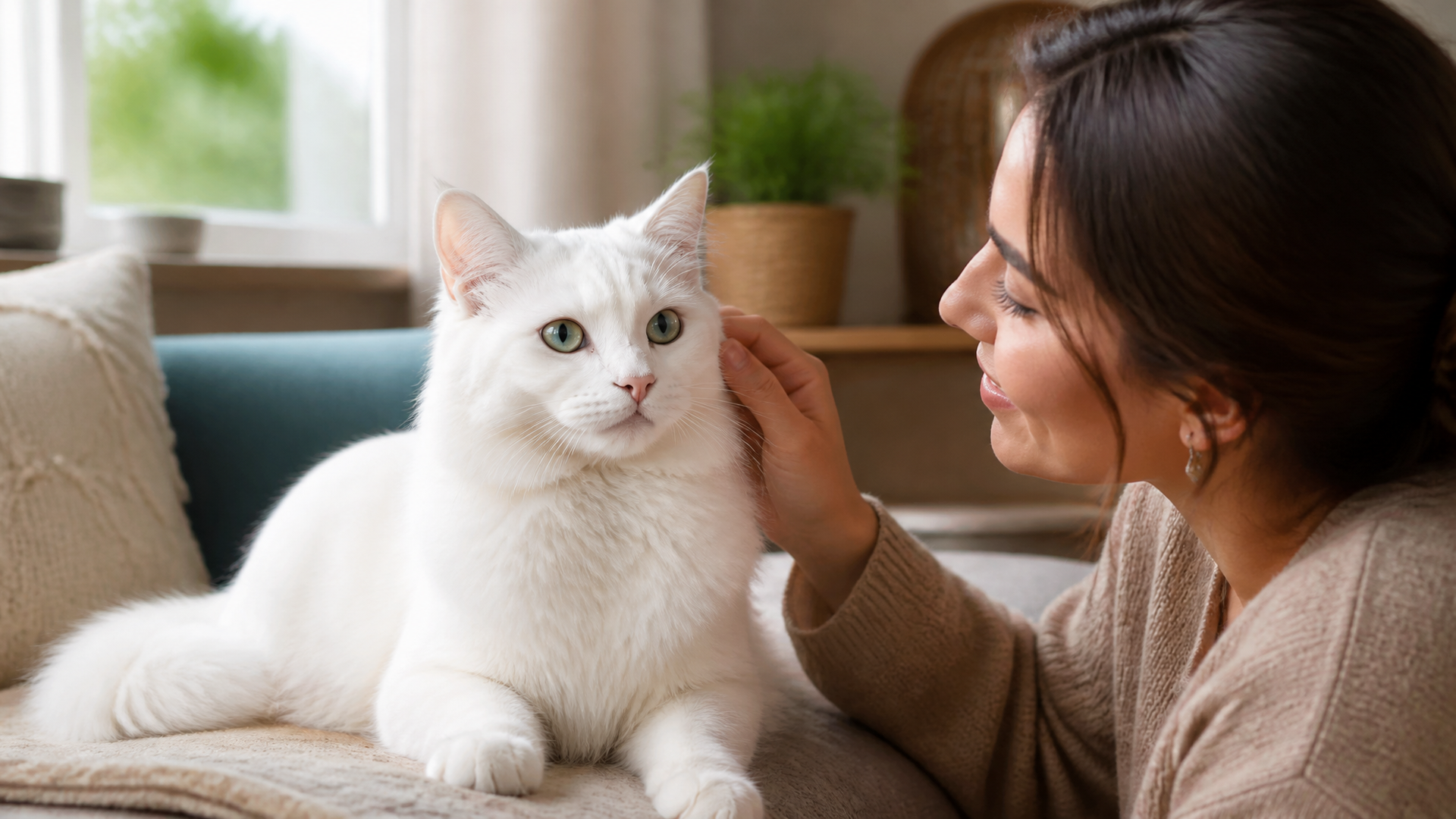
Turkish Angora Common Health Problems
Turkish Angoras are generally healthy cats with lifespans of 12–18 years, but they carry inherited risks that cats are masters at hiding. The most common problems are hypertrophic cardiomyopathy (HCM) , deafness (especially in white cats with blue eyes), progressive retinal atrophy (PRA) , and dental disease. The biggest failure mode? Waiting for visible symptoms. By the time you notice trouble, the condition may already be advanced. The fix is a monthly 5-minute home screening routine that catches problems early enough to make treatment options real.

Your 5-Step Early Detection Plan
Run through these checks once a month. Each step includes a clear pass/fail threshold, a likely cause, and what to do next based on what you find.
Step 1: Count Resting Respiratory Rate (HCM Check)
What to do: When your cat is sound asleep, set a timer for 30 seconds and count each breath (one inhale + one exhale = one breath). Multiply by 2 to get breaths per minute.
Normal range: 20–40 breaths per minute at rest.
Branch – what you see changes what you do next:
- If 40–50 breaths per minute: Recheck tomorrow at the same time. If still elevated twice in a row, call your vet within a week.
- If over 50 breaths per minute: Schedule a vet visit within 1–2 days. This can signal HCM (thickened heart muscle) reducing pumping efficiency.
- If over 60 breaths per minute or open-mouth breathing: This is an emergency. Go to the vet same day.
Verification step: After three days of normal readings, you can mark HCM screening as passed for the month. Continue weekly checks if your cat is over age 5 or has a family history of heart disease.
Step 2: Quick Vision Test (PRA Check)
What to do: In a dim room, shine a small penlight toward your cat’s eyes from 12 inches away. The pupils should constrict quickly. Then drop a cotton ball silently near their feet — a seeing cat will look down at it.
Pass/Fail: Hazy lens, no pupil response, dilated pupils that don’t shrink, or bumping into furniture means a vet visit ASAP.
Likely cause: Progressive retinal atrophy (PRA) — gradual retina degeneration that starts as early as 3 years old. There is no cure, but early diagnosis lets you cat-proof your home before your cat loses confidence.
Branch: If your cat passes the light test but fails the cotton ball test (doesn’t look down), they may be losing peripheral vision. Move furniture to consistent positions now and add textured floor mats near stairs.
Step 3: Hearing Response Check (White Angoras)
What to do: Stand behind your sleeping or relaxed cat (out of sight) and clap softly. Wait 10 seconds, then rattle a treat bag or crinkle a foil ball. Watch for an ear flick, head turn, or startle response.
Pass/Fail: No reaction to either sound means your cat is likely deaf or losing hearing. Up to 60–80% of white Turkish Angoras with two blue eyes are born deaf.
Branch:
- If your cat reacts to the treat bag but not the clap: They can hear high-frequency sounds but may be losing mid-range hearing. Test monthly.
- If your cat reacts to neither sound: Confirm by waiting until they are asleep and making a loud noise near them (drop a book). Still no reaction? Schedule a BAER hearing test at your vet within 2 weeks.
Verification step: A cat that responds to vibration (stomping the floor nearby) but not sound is likely deaf. You have confirmed the condition — now adapt their environment.
Step 4: Mouth Exam (Dental Disease)
What to do: Gently lift your cat’s lip to inspect the gum line along the upper back teeth. Sniff their breath from 2 inches away.
Pass/Fail: Red or swollen gums, brown tartar buildup, bad breath (halitosis), drooling, or pawing at the mouth means dental disease is already present.
Likely cause: Turkish Angoras have crowded teeth and small mouths, making them prone to early gingivitis and painful tooth resorption. Cats hide dental pain until eating becomes painful — you may see them drop food or chew on one side.
Branch:
- Mild redness with no tartar: Start daily brushing with an enzyme toothpaste like CET or Petrodex. Recheck in 3 weeks.
- Brown tartar or bad breath: Professional dental cleaning under anesthesia is needed. Do not attempt home scaling — it damages enamel and pushes bacteria deeper.
- Drooling or pawing at mouth: Emergency vet visit. This can mean a fractured tooth or advanced tooth resorption.
Verification step: After brushing daily for two weeks, the gums should look pinker and breath should improve. If not, schedule the dental cleaning.
Step 5: Weight and Body Condition
What to do: Run your hands along your cat’s ribs — you should feel a light fat layer over firm ribs (like the back of your hand). Then gently press on the belly.
Pass/Fail:
- Ribs feel too prominent (knobby or sharp): Weight loss — needs vet workup.
- Ribs hard to find under thick fat: Overweight — adjust diet.
- Belly feels bloated, hard, or fluid-filled: Can mean fluid from heart failure — emergency vet visit.
Likely cause: Unexplained weight loss can signal kidney disease, hyperthyroidism, or advanced HCM. Belly bloat can mean pleural effusion from heart failure.
Branch: If you detect weight loss, weigh your cat weekly on a kitchen scale (place them in a bowl). Losing more than 5% of body weight in one month means a vet visit within days, not weeks.
Verification step: After two weeks of dietary adjustment (or vet treatment), the weight should stabilize or trend upward. If it continues dropping, escalate to a full blood panel.
Breed-Specific Health Conditions
Hypertrophic Cardiomyopathy (HCM)
HCM is the most serious inherited condition in Turkish Angoras. The heart muscle thickens, reducing the chamber size and pumping ability. Males are affected more often and more severely.
What you can do:
- Annual screening: Ask your vet for a proBNP blood test or an echocardiogram, especially after age 5. An echo is the gold standard.
- Home care: Feed a taurine-rich diet (most quality cat foods already contain enough taurine). Keep stress low — loud visitors, construction noise, and new pets can trigger heart rate spikes.
- Red flags that mean emergency: Sudden hind-leg weakness, collapse, or cold hind paws. These can mean a saddle thrombus (blood clot) caused by advanced HCM. Time is tissue — every minute counts.
Deafness
Deafness in white Turkish Angoras is congenital and irreversible. It is linked to the dominant white gene that also produces blue eyes.
What you can do:
- Test kittens at 6–8 weeks: The BAER test is definitive. Ask your breeder for results before bringing a kitten home.
- Home adaptations for a deaf cat:
- Never let them outdoors unsupervised — they cannot hear cars, predators, or other dangers.
- Use visual cues: flash a light, wave your hand, or stomp the floor to create vibration.
- Approach from the front so you don’t startle them — step into their field of view before touching.
Progressive Retinal Atrophy (PRA)
PRA causes gradual vision loss starting between 3–5 years of age. There is no treatment or cure, but cats adapt remarkably well if changes are slow and their environment stays consistent.
What you can do:
- Home adaptations: Keep furniture in the same layout. Do not rearrange rooms. Use textured floor mats at the top and bottom of stairs. Speak before touching your cat so they know you’re there.
- When to suspect PRA: Bumping into furniture, dilated pupils in bright light, reluctance to jump, or startling easily when approached.
Dental Disease
Dental disease is the most common health problem across all cat breeds, but Turkish Angoras tend to develop it earlier due to dental crowding.
Prevention routine:
- Daily brushing: Enzyme toothpaste (CET or Petrodex) on a small finger brush or soft toothbrush. Start slow — let your cat lick the toothpaste first.
- Annual dental cleanings: Professional scaling and polishing under anesthesia. Your vet will also check for tooth resorption, which is painful and common in this breed.
- Dental diet options: Prescription dental diets (Hill’s t/d or Royal Canin Dental) help reduce plaque mechanically.
When to Stop Home Care and See the Vet
Home screening is powerful, but some signs mean it’s time to stop DIY and go in. Use these concrete thresholds:
- Resting respiratory rate over 50 for two consecutive days — call the vet within 24 hours. Over 60 means go now.
- Sudden hind-leg weakness or collapse — possible saddle thrombus. Go to the emergency vet immediately.
- Cloudy eyes, dilated pupils in bright light, or bumping into furniture — vision loss is happening. Schedule a veterinary ophthalmologist within 2 weeks.
- Head tilt, circling, or loss of balance — can indicate vestibular disease, ear infection, or neurological issue. See the vet within 24 hours.
- Unexplained weight loss of more than 5% in one month — needs blood work to check for kidney disease, hyperthyroidism, or HCM.
- Bad breath with red gums and tartar — dental disease requiring professional cleaning within 2 weeks. Do not attempt home scaling.
Quick Reference: Save This Guide
Turkish Angoras can live 12–18 healthy years with proactive care. The three most impactful actions are annual heart screening (proBNP or echo starting at age 5), daily tooth brushing with enzyme toothpaste, and hearing testing in white kittens by 8 weeks. Catching HCM early gives you treatment options — beta-blockers and dietary management — that can add years of quality life. Deaf and visually impaired Angoras adapt beautifully when their environment stays consistent. Keep this checklist accessible so your monthly screening stays on track.
Disclosure: Some product links in this article are affiliate links. We may earn a small commission at no extra cost to you.