French Bulldog Sick Symptoms Lethargy Lack of Appetite
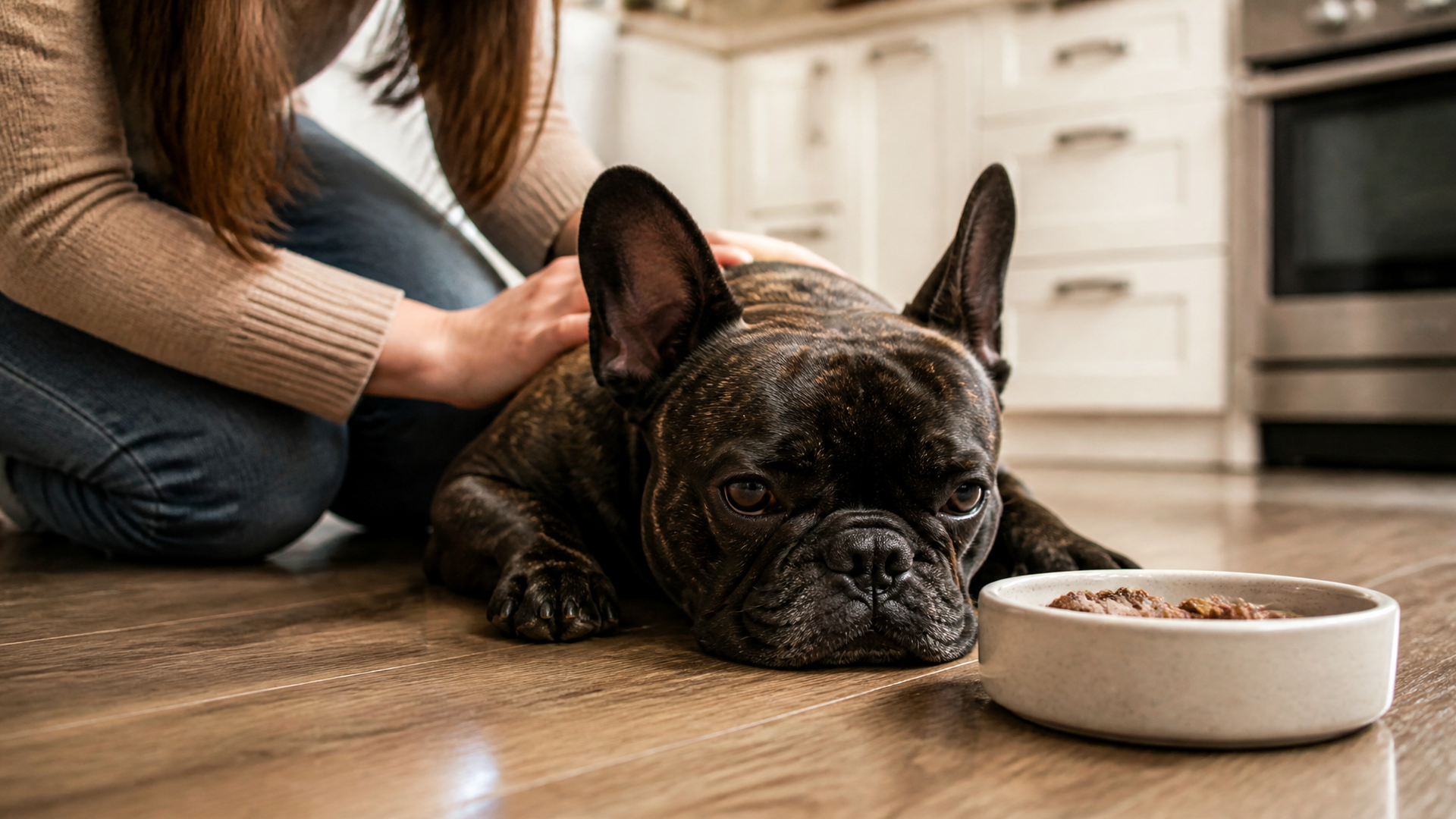
Your French Bulldog is usually a playful, food-motivated little clown. If they’re suddenly too tired to move and turning away from their bowl, that’s not normal. Lethargy combined with loss of appetite in a French Bulldog is a serious red flag. Their flat faces and compact airways make them vulnerable to overheating, breathing distress, and digestive trouble — so these two symptoms together often signal something serious.

Here’s what to check right now, what you can safely do at home, and when to get to the vet immediately.
The First 5-Minute Check
Before you panic or call the vet, do these three quick observations. They’ll tell you if this is an emergency or something you can monitor at home.
Check their breathing. Normal resting rate for a French Bulldog is 15–30 breaths per minute. Above 40 breaths per minute while resting means call the vet. Loud snorting, open-mouth breathing, or blueish gums means emergency.
Check their gums. They should be pink and moist, not pale, white, blue, or sticky-dry. Press a finger on the gum and release — color should return within 2 seconds. If the gum stays white longer, it’s poor circulation and your Frenchie needs a vet.
Check for signs of overheating. Look for heavy panting, drooling, bright red gums, or stumbling. If it’s warm in your home or they just exercised, cool them down slowly — never use ice water — and reassess in 10 minutes. If breathing is still rapid or they still won’t even sniff water, go to the vet.
Take their temperature. A healthy Frenchie runs 100–102.5°F. Above 103°F means overheating or infection. Use a pet thermometer rectally. If you don’t have one, skip this check and rely on breathing and gum checks instead.
Why These Symptoms Matter More for French Bulldogs
French Bulldogs can’t cool themselves as efficiently as longer-nosed breeds. A tired Frenchie who also refuses food could be overheating, in pain, having trouble breathing, or dealing with a gastrointestinal issue.
The counter-intuitive angle most owners miss: A lethargic, not-eating Frenchie may actually be too hot or too uncomfortable to breathe well enough to eat, not simply “not hungry.” Their flat face means eating requires more effort when they’re already struggling to breathe. If your Frenchie is breathing heavily while lying still and ignoring food, the breathing problem came first — treat that before you worry about the appetite.
Common Causes: What Might Be Wrong
Knowing what might be wrong helps you decide whether home care is safe or veterinary help is needed.
Heat Stress or Heat Stroke
French Bulldogs are one of the most heat-sensitive breeds. If your home is above 75°F or your Frenchie was active recently, overheating is the first suspect.
Signs beyond lethargy and not eating: heavy panting, drooling, red gums, wobbly walking, vomiting.
What to do: Move to a cool area immediately. Offer small amounts of cool (not ice-cold) water. Wet a towel and place it on their belly and paws. Call your vet even if they seem to improve — heat stroke can cause internal damage that shows up hours later.
Gastrointestinal Upset
Frenchies have sensitive stomachs. They can get sick from eating something they shouldn’t, a sudden food change, gulping air while eating, or a bacterial or viral infection.
Signs beyond lethargy and not eating: vomiting, diarrhea, gurgling stomach sounds, pacing, or a hunched posture.
What to do: Withhold food for 12–24 hours for adult dogs only, not puppies. Offer ice chips or small amounts of water. If vomiting continues or they won’t drink anything, go to the vet.
Pain (Back, Neck, or Ears)
French Bulldogs are prone to IVDD (intervertebral disc disease) which causes back or neck pain that makes them stiff, shaky, or unwilling to move. Ear infections can also make them lethargic and lose appetite from pain and nausea.
Signs beyond lethargy and not eating: yelping when touched, trembling, head shaking, ear odor, difficulty jumping up or down, a tense belly, or a “prayer position” with front down and rear up.
What to do: Do not try to massage or manipulate their back. If you suspect pain, see a vet — pain relief for French Bulldogs requires breed-safe medication. Over-the-counter pain meds for humans can kill dogs.
Respiratory Distress
A blocked airway or a flare-up of BOAS (brachycephalic obstructive airway syndrome) can make your Frenchie too exhausted to eat.
Signs beyond lethargy and not eating: noisy breathing, snoring that’s worse than usual, gagging, coughing, pale or blue gums, or their tongue turning purple.
What to do: Sit upright with them in a calm, cool room. Do not pull on their collar. This is an emergency — go to the nearest vet hospital. A French Bulldog who is breathing hard while lying still 15 minutes after stopping activity is not tired — they are in respiratory distress. The difference is whether they settle with rest under 5 minutes or stay panting for 10+ minutes.
Other Serious Causes
Pancreatitis is common in French Bulldogs fed high-fat treats and shows up as vomiting, hunched back, and a bloated belly. Kidney or liver issues, parvovirus in unvaccinated dogs under 2 years old, and Addison’s disease can also cause lethargy and appetite loss.
Decision Aid: Should You Call the Vet?
Use this quick checklist before deciding on your next step. Check each item honestly — if any Yes box is checked, call or visit your vet.
| Symptom or Sign | Yes (see vet) | No (monitor at home) |
|---|---|---|
| Lethargy + not eating for more than 12 hours in an adult (4 hours for a puppy) | ☐ | ☐ |
| Vomiting or diarrhea (especially both at once) | ☐ | ☐ |
| Breathing rate above 40 breaths per minute while resting | ☐ | ☐ |
| Gums are pale, white, blue, or sticky-dry | ☐ | ☐ |
| Won’t drink water at all | ☐ | ☐ |
| Yelping, trembling, or stiff when touched | ☐ | ☐ |
| Temperature above 103°F (check with a pet thermometer) | ☐ | ☐ |
| Signs of overheating: heavy panting, red gums, drooling, stumbling | ☐ | ☐ |
If two or more items in the Yes column are checked, do not wait. Go to the vet or emergency clinic now.
When It’s Safe to Monitor at Home
If your Frenchie has only mild lethargy and still drank water and had one episode of loose stool or skipped one meal, you can monitor at home — but with clear boundaries.
Do this: Offer a small amount of plain boiled chicken with no skin and no seasoning, or plain white rice. Make sure fresh water is always available and they are drinking. Keep them cool and quiet in a rest area away from other pets or kids. Watch for 6–12 hours.
If they eat the chicken or rice and keep it down, that’s a good sign. Offer a second small portion 4 hours later. If they eat that too and are acting more alert, you can resume their regular food mixed with the bland diet for the next day. If they refuse the bland food or eat it and vomit within 30 minutes, stop home care and call the vet.
Escalate immediately if: They vomit more than once, they refuse water entirely, their breathing changes, or they show any pain signs.
If They Improve… But Then Worsen
This is a common failure pattern. Your Frenchie perks up after a few hours of rest, eats a small meal, and seems fine — then 12 hours later they’re back to lethargic and refusing food. The underlying cause wasn’t resolved, just masked by rest. This pattern often means a low-grade infection, early pancreatitis, or a mild obstruction that’s partially passing. Do not restart the home monitoring clock. If symptoms return within 24 hours, see the vet. A second round of home care wastes time and allows the condition to progress.
Red Flags: When to Stop Waiting and Go to the Vet
These symptoms mean it’s time to stop home care and get veterinary help today or right this minute.
Go to the emergency vet if your Frenchie: collapses or can’t stand, has pale white or blue gums, is gagging or choking, has a distended hard belly, has a seizure, is under 6 months old and has not eaten for 4+ hours, has been vomiting or having diarrhea for more than 6 hours, shows signs of heat stroke including stumbling, disorientation, heavy panting, and drooling, or has not urinated in 12+ hours.
Call your regular vet today if your Frenchie: has skipped two or more meals, is still drinking water but seems weak or tired, has soft stool but no vomiting, is acting stiff, sore, or unwilling to move, or is a senior dog over 8 years old with these symptoms.
Preventative Tips for French Bulldog Owners
Keeping your Frenchie healthy means staying ahead of breed-specific risks.
Never leave them in hot rooms, cars, or direct sun — heat stroke can happen in minutes. Use a harness, not a collar, because collars put pressure on their airway and neck. Feed a consistent high-quality diet since sudden food changes trigger stomach upset. Avoid high-fat treats like bacon, cheese, or fatty meats due to pancreatitis risk. Keep their ears clean and dry since Frenchies are prone to ear infections. Limit intense exercise in warm weather and stick to short walks early morning or late evening. Maintain a healthy weight because extra pounds make breathing and mobility worse.
A cooling mat or a harness with a front clip can be helpful tools for managing heat and breathing. Check with your vet for breed-specific recommendations.
Save This Guide
A French Bulldog with lethargy and loss of appetite is not being dramatic. Their flat face, small airways, and breed-specific health risks mean these two symptoms should always be taken seriously.
Your key takeaway: Check breathing and gums first. If either looks wrong, see the vet. Monitor drinking as closely as eating — a Frenchie who stops drinking is in danger faster than one who stops eating. When in doubt, a vet visit is never overkill for this breed.
This article contains affiliate links. We may earn a small commission on purchases made through these links at no extra cost to you.