Turkish Angora Colors: Guide: What Every Owner Should Know
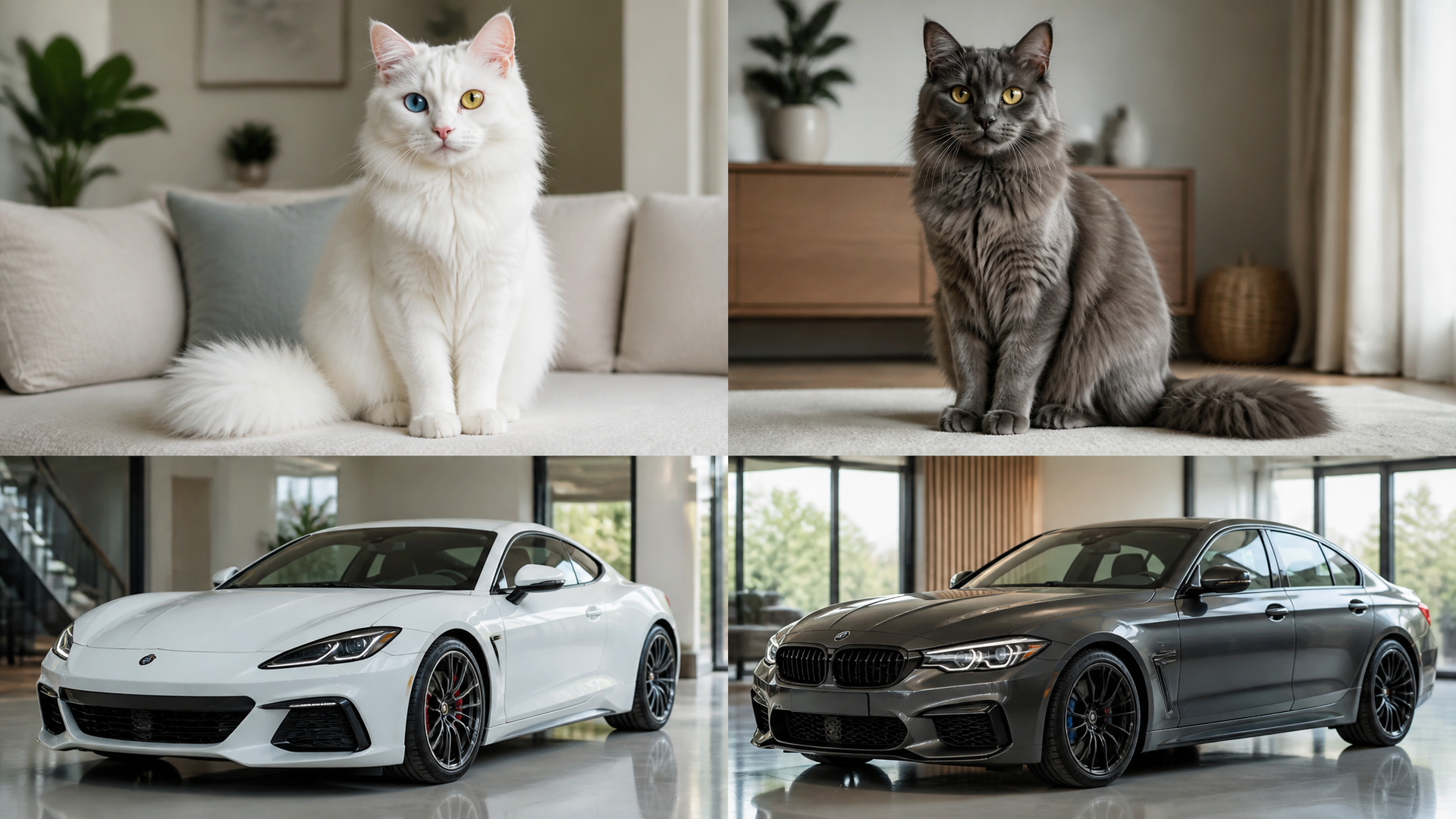
Think Turkish Angoras only come in white? That’s the most common misconception — and it stops most owners from seeing the full genetic palette. While the classic white Angora with blue or odd-colored eyes is iconic, these cats actually come in dozens of recognized colors: solid black, blue, red, chocolate, lilac, multiple tabby patterns, calico, tortoiseshell, smoke, and shaded varieties. Here’s exactly what’s possible and how to verify what you’re looking at.

The Full Color Palette of Turkish Angoras
Turkish Angoras carry a rich genetic palette that extends far beyond the white coat that made them famous. Breed standards vary slightly between organizations (CFA vs. TICA), but these are the color categories you’ll actually see. Important boundary: The color descriptions below apply to purebred Turkish Angoras registered with CFA or TICA. If your cat is a mixed breed or from an unregistered line, the color range may be wider or differ — and some colors (like chocolate or lilac) are rare enough that they indicate a crossbreed unless verified by pedigree.
Solid Colors
The breed accepts true solids, not just white:
- White — The classic. Often paired with blue, green, amber, or odd eyes (one blue, one amber). Most common color in the breed.
- Black — Jet black with no rust tones. Rare and striking. Check paw pads: they should be black or dark brown.
- Blue — A soft gray-blue dilution of black. Paw pads are slate-gray.
- Red — A warm ginger tone, more common in males. Paw pads are pink.
- Cream — A pale, diluted red. Also pink paw pads.
- Chocolate — Rich brown, less common but breed-recognized. Rare in most lines.
- Lilac — A pale, frosty dilution of chocolate. Very rare — the rarest recognized solid.
Tabby Patterns
Tabby is one of the most common non-white patterns in Turkish Angoras. All four classic patterns appear:
- Classic tabby — Bold swirls on the sides (sometimes called “blotched”)
- Mackerel tabby — Narrow vertical stripes along the spine like a fish skeleton
- Spotted tabby — Broken stripes that form distinct spots
- Ticked tabby — Each hair has alternating light and dark bands; no obvious body stripes (the Abyssinian look)
Bi-Color and Parti-Color
- Bi-color — White with patches of another color (often black, blue, or red)
- Calico — White with red and black patches. Almost always female due to genetic linkage.
- Tortoiseshell — Red and black blended without white. Also almost always female.
- Dilute calico/tortie — Softer versions using cream and blue instead of red and black
Smoke and Shaded
These affect how the coat looks in motion and require close inspection:
- Smoke — White undercoat with colored tips; looks solid when still, reveals white when the cat moves or you part the fur
- Shaded — Only the very tips of the hairs are colored, giving a dusted or silvered appearance
What this means for your buying or breeding decision: If you’re looking for a rare color like chocolate or lilac, expect a longer wait and a higher price ($1,500–$3,000 from a reputable breeder). Always request genetic color testing results — not just visual appearance — to confirm that the cat actually carries the color genes it shows. A cat that looks white may carry hidden tabby or tortie genes that can appear in future litters.
The Counter-Intuitive Truth Most Articles Skip
The white coat gene in Turkish Angoras is not the same as albinism. Many owners confuse the two, but they’re completely different genetically. White Turkish Angoras carry the dominant white gene (W), which masks whatever other color genes are underneath. Albinism (c/c) is a recessive mutation that affects pigment production differently — and true albino cats are extremely rare in this breed.
What does this mean for you? A white Turkish Angora can produce kittens in nearly any color when bred with a colored partner, because the white parent’s hidden color genes get passed down. That “pure white” cat showing no color at all might genetically be a black tabby or a chocolate tortie underneath. If you’re breeding or buying from a breeder, ask for genetic color testing results — not just the visual color.
Turkish Angora Color Quick Reference Card
| Color Category | Examples | Rarity | Eye Color Notes | Paw Pad Color |
|---|---|---|---|---|
| Solid white | White | Common | Blue, green, amber, or odd-eyed | Pink |
| Other solids | Black, blue, red, cream, chocolate, lilac | Uncommon to rare | Typically amber or green | Matches coat (black, slate, pink) |
| Tabby | Classic, mackerel, spotted, ticked | Common in non-white | Amber or green | Matches base coat |
| Bi-color/parti | Calico, tortie, bi-color | Uncommon | Amber or green | Pink or patched |
| Smoke/shaded | Silver smoke, shaded cameo | Rare | Green or amber | Pink with colored pads |
Does Coat Color Affect Grooming Needs?
Yes — and this is where practical owners need to pay attention. Your grooming tools and schedule should shift based on coat shade.
White Turkish Angoras show dirt and staining faster. You’ll see tear stains around the eyes and yellowing on the chest and tail. Plan for:
- Weekly baths (every 2–3 weeks for show cats). Use a gentle whitening shampoo like the ones from Chris Christensen or Isle of Dogs.
- Tear-stain wipes every 1–2 days minimum
- Checking for yellowish patches under the tail during each brushing session
Dark-colored Turkish Angoras (black, blue, chocolate) hide dirt but show dandruff and loose fur more visibly. A slicker brush with white bristles (like the Hertzko self-cleaning slicker) helps you see the fur you’re removing. Dark coats also absorb more heat — your cat may seek out cool tile more often in summer, and you may notice more shedding on light-colored furniture.
Tabby and parti-color coats hide everyday grime best, but their patterned fur makes it harder to spot skin issues like redness, flaking, or flea dirt early. You’ll need to part the fur regularly to check skin condition. A flea comb with rotating teeth (such as the Safari flea comb) works great for parting and inspecting.
Expert Tips for Managing Coat Color Care
Tip 1: Match your brushing tool to your cat’s color
- Actionable step: Use a fine-toothed flea comb for light coats to spot dirt and stains before they set. For dark coats, use a slicker brush with white bristles so you can actually see the fur you’re removing.
- Common mistake: Using the same brush for all coat colors without cleaning it between sessions. You’ll transfer oils and staining from one color to another — a white coat can pick up gray tones from a brush previously used on a blue cat. Wash your brush weekly with warm soapy water.
Tip 2: Address tear stains on white coats immediately
- Actionable step: Wipe the inner corners of the eyes daily with a damp, soft cloth or a pet-safe tear-stain wipe designed for white fur (like the ones from TropiClean). This takes 30 seconds.
- Common mistake: Waiting until the stain is brown and set. By then you’ll need professional whitening shampoo, and the stain may have damaged the fur shafts permanently.
Tip 3: Use sun exposure limits for lighter-colored cats
- Actionable step: Keep white, cream, and blue Turkish Angoras out of direct sun during peak hours (10 AM–4 PM). Their pink skin burns easily — sunburns on cats look like red, tender patches on the ears, nose, and belly. Consider window film or a cat-safe sunscreen on exposed areas if they insist on sunbathing.
- Common mistake: Assuming a white coat protects from sun damage. The opposite is true: less pigment means less natural UV protection. Dark coats reflect less UV but absorb more heat; light coats let more UV through.
Verifying Your Turkish Angora’s Color: Step-by-Step Flow
If you’re registering your cat, planning to breed, or just want to know exactly what color you own, follow this verification flow. Each checkpoint is designed to catch a common misidentification.
Step 1: Wait for the right age
Check the kitten at 8–12 weeks old. Colors can shift slightly as the adult coat comes in, but the basic pattern is set by this age. Before 8 weeks, the kitten coat can be misleading — especially for smoke and shaded patterns.
Checkpoint 1: Can you clearly see the pattern? If the coat looks solid but you suspect a pattern underneath, proceed to Step 3 first.
Step 2: Check the paw pads and nose leather
These matching points are your best physical evidence:
- Black coat → black or dark brown paw pads
- Blue coat → slate-gray paw pads
- Red/cream coat → pink paw pads
- White coat → pink paw pads
- Chocolate coat → cinnamon-brown paw pads
- Lilac coat → faded lavender-pink paw pads
Likely cause of confusion: A chocolate cat with dark paw pads can look black in dim light. Always check in daylight.
Step 3: Examine the undercoat
Part a small patch of fur on the flank and look at the base of the hairs:
- Smoke coats have a pure white undercoat — the top half of each hair is colored, the base is white
- Shaded coats have a lighter undercoat but not pure white — usually cream or pale silver
- Solids have uniform color from root to tip
Friction point: If the undercoat is hard to see, dampen the fur slightly. Wet fur parts more easily and reveals the color layers clearly.
Step 4: Photograph in natural daylight — never indoor light
Indoor lighting distorts color: warm bulbs make blue cats look gray; fluorescent lights make chocolate cats look black. Take photos outdoors (shade, not direct sun) between 10 AM and 2 PM for accurate color representation.
Success check: Your photo matches what you see in person. If it doesn’t, the lighting is wrong — retake.
Escalation signal: If after these steps you’re still unsure between two similar colors (e.g., blue vs. diluted black, or chocolate vs. black), consult a CFA or TICA breed judge or use a veterinary genetic test. A simple DNA cheek swab can confirm the exact color genes your cat carries ($50–100, from labs like UC Davis or Basepaws). This is the only way to know for sure if the cat carries hidden colors.
Disclosure: Some product links in this guide are affiliate links. We may earn a small commission at no extra cost to you.
Frequently Asked Questions About Turkish Angora Colors
Can Turkish Angoras be orange?
Yes. Red Turkish Angoras exist — “red” is the breed term for what most people call orange or ginger. They’re less common than white but fully breed-recognized, and they almost always have amber eyes.
Do Turkish Angora kittens change color as they grow?
Some do. White kittens stay white (the W gene is dominant and stable). But tabby patterns can become more defined or slightly softer as the adult coat develops. Smoke kittens often look solid-colored until 6–8 months old when the longer coat reveals the white undercoat.
Are odd-eyed Turkish Angoras always white?
Almost always. The odd-eyed trait (one blue eye, one amber or green) is genetically linked to the white coat gene. Non-white Turkish Angoras rarely have odd eyes — it’s possible but extremely uncommon.
What’s the rarest Turkish Angora color?
Lilac (a pale, powdery lavender-gray) and chocolate are the rarest recognized colors. True albino is not recognized in the breed standard and is extremely unusual — if someone claims to have an albino Turkish Angora, request genetic documentation.
Can two white Turkish Angoras produce non-white kittens?
Yes, if both carry hidden color genes. A white cat from a line with colored ancestors can pass down black, blue, red, or tabby genes without expressing them physically. This is why reputable breeders test for hidden colors.
Save This Guide
Turkish Angoras come in a far wider range of colors than most people realize — from solid white to chocolate, lilac, calico, and everything in between. The white coat is iconic but represents just one corner of the breed’s genetic palette.
Key takeaway: Don’t assume a Turkish Angora is “just white.” If you’re looking for a specific color, work with a breeder who tests for hidden color genes and can show you documentation. And remember that grooming needs shift depending on coat shade — match your tools and schedule to the color, not the breed average.