Secret Life of Pets Pomeranian
The Pomeranian in The Secret Life of Pets — Gidget, the white, fearless fluffball — makes owning a Pom look easy. But the real failure mode for new owners is expecting a low-maintenance lap dog. In reality, this breed demands daily grooming, firm training, and proactive health monitoring. Here’s exactly what you need to know before you bring home your own “Gidget” — and what to do if you discover it’s not the right fit.

Quick Fit Check: 5 Questions to Decide If a Pom Is Right for You
Run through these five pass/fail checks before you adopt. If you answer “no” to even two, a Pomeranian is probably not your match.
- [ ] Can you commit to 3–4 brushings per week? A Pom’s double coat mats fast — skipping a week can lead to painful tangles and shaving.
- [ ] Do you have a secure fenced area or live in an apartment? Poms must always be leashed — they bolt after a squirrel without warning.
- [ ] Are you home most of the day or can you afford a pet sitter? Poms bond intensely and can develop separation anxiety (barking, chewing, accidents).
- [ ] Do you have a veterinary fund set aside for dental disease and luxating patella? These two issues are expensive and common in the breed — routine care is not optional.
- [ ] Are you okay with a vocal watchdog? Poms bark at the doorbell, a falling leaf, and the neighbor’s cat. They do not whisper.
What This Means for Your Next Step
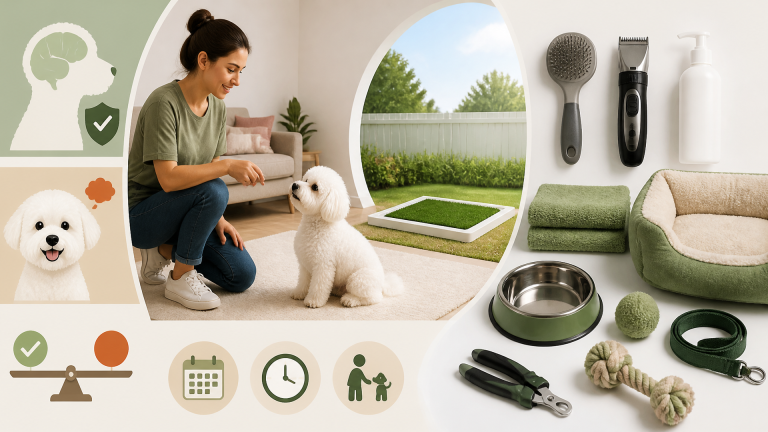
If you checked all five, you’re ready for a Pom puppy. But if even one is a “no,” your best move is to consider an adult Pomeranian (less energy, more settled behavior) or a different breed entirely. A Bichon Frise or Cavalier King Charles Spaniel offers similar size and affection with a lower grooming and noise profile. Choosing the right dog now saves you years of frustration — and the dog a trip back to the shelter.
How to Verify Your Lifestyle Fits a Pom: One Concrete Check
Before you commit, grab a notebook and track your current schedule for one full week. Every day, write down:
- How many minutes you have free for grooming, walks, and training (aim for at least 15 minutes daily for grooming and 30 minutes for exercise/training)
- How many hours the dog will be alone (Poms struggle with more than 4–5 hours without a break)
- Whether you’re willing to switch from a collar to a harness permanently
If your schedule shows you can’t find that time, you’ll know the answer before you bring the dog home.
Realistic Trade-Offs: What Gidget Doesn’t Show You
No matter how well you train, your real Pom may still bark at every sound, get anxious when left alone, or refuse to walk in the rain. Unlike the cartoon character who single-handedly saves Max, real Poms can be yappy and needy. They also have a stubborn streak — housetraining can take months, and they may mark indoors if not supervised. If you live in a thin-walled apartment, the barking could cause neighbor complaints. If you work full-time outside the home, you’ll need a pet sitter or doggy daycare. These trade-offs are real and should be factored into your choice.
Grooming Reality: The Work Behind That Fluffy Coat
Brushing Is Non-Negotiable
Use a slicker brush (fine wire bristles) and a pin brush for the outer coat. Brush line by line, section by section — don’t just swirl the top fluff.
Tip #1 – Brush before the bath, not after. Wet mats tighten and become nearly impossible to remove. Brush thoroughly first, then bathe.
Common mistake: Thinking “just detangling with conditioner” will fix a mat — if it’s already tight, you need to cut it out or see a groomer.
Bathing and Dry Time
Bathe every 3–4 weeks with a dog-specific shampoo. After rinsing, you must blow-dry the undercoat completely using a high-velocity dryer — Pom coats take 30+ minutes. Leaving the undercoat damp invites fungus and hot spots.
Paw Protection
Pom paws dry out on pavement, snow, or salt. Apply a paw wax like Musher’s Secret Dog Paw Wax before walks in winter or on hot asphalt (if it’s too hot for your palm, it’s too hot for their paws).
Common mistake: Assuming tiny dogs don’t need paw protection — they actually need it more because they’re closer to hot or irritated surfaces.
Teeth Brushing
Small breeds lose teeth fast. Brush daily with dog-safe toothpaste. Annual dental cleanings under anesthesia are common after age 4.
Health Issues That Hit Poms Hard
Luxating Patella (Trick Knee)
The kneecap slides out — you’ll see your Pom hop on three legs mid-stride, then shake it back in place. Keep your Pom lean (obesity worsens it). Avoid letting it jump off furniture — use ramps. Surgery may be needed if it happens more than once a week.
Collapsing Trachea
The windpipe flattens, causing a honking cough, especially when excited or on a leash. Use a harness, never a collar. Keep stress low during walks.
Tip #2 – Switch to a harness immediately. Even a well-fitted collar can aggravate a Pom’s trachea over time.
Common mistake: Using a collar for walks because it looks “cuter” — that choice can cause long-term airway damage.
Hypoglycemia (Especially in Puppies)
Tiny size means low blood sugar can hit fast — symptoms include weakness, lethargy, shivering, and seizures. Feed small meals 3–4 times per day. Keep a dab of honey or Nutri-Cal on hand for emergencies.
Common mistake: Free-feeding dry kibble endlessly — that can lead to obesity and picky eating.
Training and Socialization
Pomeranians are clever and stubborn. Without early boundaries, they can develop “small dog syndrome” — acting like a terror because it’s “cute.” This includes demand barking, snapping at guests, and resource guarding.
Tip #3 – Enforce the same rules as for a big dog. No jumping on guests, no growling at the vacuum, no demand barking. If your 5-pound Pom resource-guards a toy, correct it immediately with a firm “leave it” and remove the item.
Common mistake: Allowing barking because it “looks funny” — that quickly becomes a nightmare in an apartment or group setting. Barking is self-reinforcing; the more they do it, the harder it is to stop.
Use positive reinforcement only. Poms shut down under harsh corrections. Use tiny training treats (pea-sized) and keep sessions to 3–5 minutes. Start socialization before 16 weeks — expose your Pom to other dogs, surfaces, and new people. A poorly socialized Pom can become a biter.
For housetraining, set a timer for every 2 hours and take your Pom outside immediately after meals, naps, and play. Crate training helps but limit crate time to 3–4 hours maximum for a puppy.
Feeding Guide
Pom puppies and adults need calorie-dense, high-quality food. Avoid corn or wheat as the first ingredient.
| Life Stage | Daily Amount | Meals per Day |
|---|---|---|
| Puppy (2–6 months) | ¼–⅓ cup | 3–4 |
| Adult (6 months–7 years) | ⅓–½ cup | 2 |
| Senior (8+ years) | ⅓ cup (adjust for activity) | 2 |
Use a small-breed kibble. No free-feeding — Poms gain weight fast. If your Pom still seems hungry, add plain green beans or pumpkin puree as a low-cal filler.
Trade-off: Poms can be picky eaters. Once you start mixing in wet food or toppers, they may refuse dry kibble alone. Stick to a consistent routine from day one to avoid creating a fussy eater.
Products That Actually Save You Time
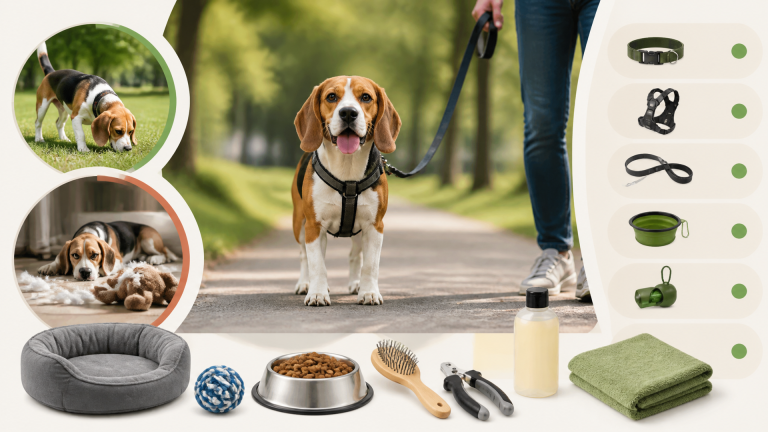
These tools prevent common Pom problems and make daily care faster.
- Slicker brush (fine wire, curved head) — essential for daily grooming.
- Pin brush — for the outer coat finish.
- High-velocity dog dryer — drying a Pom’s undercoat with a towel alone takes hours and can cause skin issues.
- Harness (step-in or vest style) — protects the trachea. Never use a collar.
- Ramp for beds and couches — saves the knees.
- Calming chews for anxiety-prone Poms — look for melatonin, chamomile, and L-theanine. Pawzitive Pets Calming Chews are a popular option for travel, vet visits, or alone time.
- Dental wipes or small-breed toothbrush kit — daily use.
Affiliate disclosure: As an Amazon Associate, we earn from qualifying purchases.
Save This Guide
Bottom line: A Pomeranian is not low-commitment. You need daily grooming, a harness, early training, and a budget for dental and knee problems. But if you’re ready for the work — and can honestly pass the fit check — you’ll get a loyal, hilarious, pint-sized companion who thinks she’s a Great Dane. Bookmark this guide for the routines and red flags that will help you and your Pom thrive.