Himalayan Cat Colors: Guide: What Every Owner Should Know
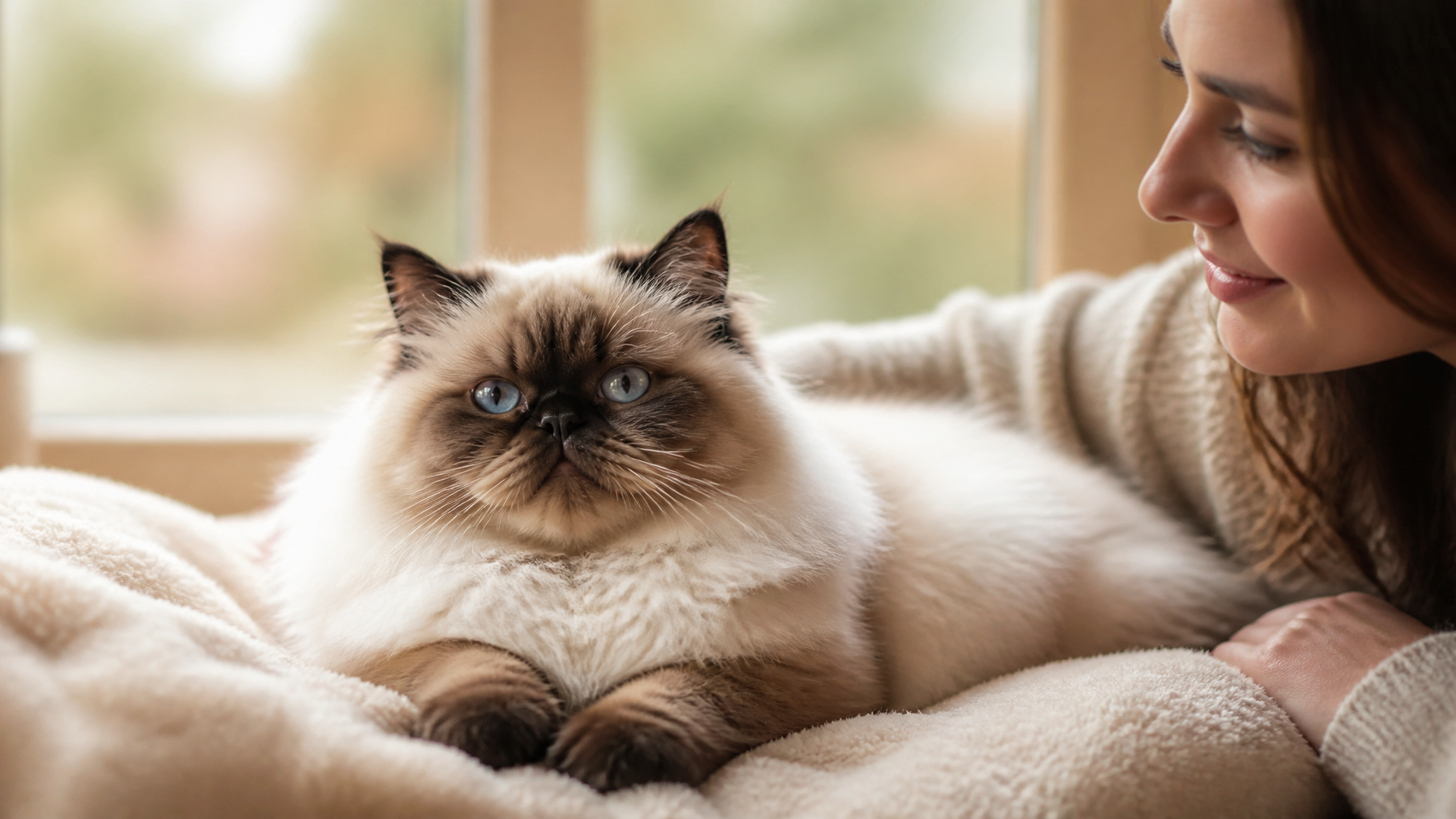
Himalayan cats get their distinctive look from a temperature-sensitive gene that only allows color to develop on the coolest parts of the body — ears, face, paws, and tail. The eight recognized point colors are seal, blue, chocolate, lilac, flame (red), cream, tortie, and blue-cream. Each color has specific markers you can identify at home, and understanding the genetic and environmental factors behind them helps you track changes as your cat ages.

Here’s what every owner needs to know to identify their Himalayan’s color with confidence.
The 8 Official Colors at a Glance
All Himalayans share the same long, silky coat and blue eyes. The only differences are in the point color and body shade. Use this table as your quick reference:
| Point Color | Body Coat | Nose Leather & Paw Pads | Key Identifier |
|---|---|---|---|
| Seal | Warm cream to fawn | Deep dark brown/black | Darkest point color — nearly black pads |
| Blue | Bluish-white, cold tone | Slate gray | Dilute of seal; silvery appearance |
| Chocolate | Ivory | Cinnamon/pinkish brown | Pinkish-brown pads distinguish from seal |
| Lilac | Frosty white with pink undertone | Lavender-pink | Very pale, almost pastel — dilute of chocolate |
| Flame (Red) | Cream | Pink | Bright orange-red points; rare |
| Cream | Pale cream | Pink | Dilute of flame; soft peachy tone |
| Tortie | Cream or fawn | Pink with dark mottling | Patched mix of red and black (almost always female) |
| Blue-Cream | Bluish-white | Pink with slate mottling | Dilute tortie — blue and cream patches |
Expert Tip #1: The paw pads are your most reliable ID tool. Dark brown or black pads = seal. Pinkish-brown = chocolate. Lavender-pink = lilac. Solid pink = flame or cream. Mottled pink and dark = tortie. Common mistake: assuming your kitten’s point color at 8 weeks is her adult color. It’s not — seal kittens often look like blue points until 4-6 months.
Expert Tip #2: Take monthly photos of your kitten’s points during the first year. This creates a visual timeline of color development and helps you spot abnormal changes early. Most Himalayans darken noticeably by age 2-3. A common mistake is comparing your cat to breeder photos from 6 months — your adult cat will likely be much darker.
Why Your Himalayan’s Color Changes Over Time
Here’s the counter-intuitive part: a Himalayan’s color isn’t fixed at birth. Kittens are born pure white because the womb is warm. As they grow, cooler body parts (extremities) trigger the heat-sensitive enzyme that produces melanin, causing points to darken.
What this means for daily care:
- Points darken with age — expect noticeable darkening by age 2-3
- Seasonal shifts are normal — darker in winter, lighter in summer, especially for flame and cream points
- Fever or illness can lighten points temporarily — if your cat’s normally dark points suddenly look faded and she seems lethargic, call your vet
Expert Tip #3: If your cat’s points seem lighter in summer, that’s normal physiology. But if they stay pale into winter or change rapidly within weeks, that’s a red flag. Common mistake: assuming seasonal fading means a health problem — it usually doesn’t, but sudden shifts without temperature changes warrant a vet visit.
How to Identify Your Himalayan’s Color at Home
Follow this step-by-step flow to confidently name your cat’s color.
Checkpoint 1: Examine the Paw Pads
This is your fastest ID method. The pads don’t have fur, so the color is clear and direct.
- Dark brown/black → proceed to seal or blue
- Pinkish-brown → chocolate
- Lavender-pink → lilac
- Solid pink → flame or cream
- Mottled pink with dark patches → tortie or blue-cream
Checkpoint 2: Check the Nose Leather
Same color rule as paw pads, but the fur around the nose can make this trickier. Use natural light for accuracy. Hold your cat facing a window and gently lift the nose fur to get a clear view.
Checkpoint 3: Assess Body Coat in Natural Light
- Warm fawn or cream body → seal or chocolate
- Bluish-white or silvery → blue or lilac
- Cream body with bright orange points → flame
- Pale cream with soft peachy points → cream
- Patches or dappling on body → tortie or blue-cream
Checkpoint 4: Verify Under Sunlight
Concrete verification step: Take a sharp photo of the paw pads and nose in direct, natural daylight (not window-filtered light). Compare the image side-by-side with official color charts from the Cat Fanciers’ Association (CFA) or The International Cat Association (TICA). Yellow artificial light can make pinkish-brown pads look dark brown, and cool LED light can make slate gray pads look lavender. Sunlight removes that distortion. If the photo matches one chart color clearly, you have your answer.
Checkpoint 5: Look for Patches on the Points
If you see distinct patches of red/orange mixed with dark color on the ears or face, you have a tortie or blue-cream (nearly always female). No patches means a solid point color. Examine the base of the ears and the areas around the eyes — that’s where subtle patches often hide.
Escalation Signal
If you notice rapid color change (within weeks), bald patches, redness, flaking, or scaling on the points, stop self-diagnosing and see your vet. These are not normal color shifts — they’re potential skin issues or systemic illness. Himalayans are prone to ringworm and other fungal infections that can cause patchy coat changes, so don’t dismiss point changes that come with skin symptoms.
What to Do When You’re Still Not Sure
Color identification has real limitations. A rescue Himalayan may have unknown parentage, and some colors can look identical to the untrained eye in poor lighting. A chocolate point in dim light can appear seal. A blue-cream can be mistaken for a dilute tortie if patches are subtle. And some Himalayans develop minor freckling on the nose or lips that doesn’t match standard descriptions. In addition, older Himalayans often develop generalized darkening across the body (called “rugging”) that blurs the distinction between point color and body coat, making identification harder after age 5-6.
The trade-off: Without pedigree paperwork or breeder confirmation, you may not get a 100% precise label, especially for rare dilute patterns like lilac-cream or chocolate-tortie, which are not in the standard eight but occur occasionally. In that case, pick the closest standard color (based on paw pad hue and body tone), and note the anomaly. For show or breeding registration, you must get a judge or breeder to verify — paw pad photos alone won’t satisfy CFA or TICA. For the average pet owner, a close-enough label is perfectly fine as long as you’re tracking health-related changes year to year.
The Genetics Behind the Colors
Himalayan coat color is controlled by the cs gene (a form of the albino gene), which makes melanin production temperature-dependent. The enzyme tyrosinase, which produces pigment, only activates below about 95°F. This is why the coolest body parts — ears, face, paws, and tail — develop color while the warmer torso stays pale.
The base point color comes from the same genetics as Siamese cats. Seal and chocolate come from different alleles at the same gene locus, with seal being dominant over chocolate. Blue is the dilute version of seal, and lilac is the dilute version of chocolate. Flame is the red (orange) gene at work, and cream is its dilute version. Tortie and blue-cream result from X-chromosome mosaicism, which is why nearly all are female — males with tortie coloring are rare and usually sterile.
Paw pad cheatsheet for quick ID on the go:
- Almost black → seal
- Gray → blue
- Pinkish-brown → chocolate
- Lavender-pink → lilac
- Pink → flame or cream
- Pink with dark spots → tortie or blue-cream
Seasonal and Life Stage Color Changes: A Practical Timeline
Knowing what to expect at each age helps you distinguish normal changes from problems.
Birth to 3 weeks: All white. No visible color.
4-8 weeks: Points begin to appear. Often very light and hard to identify accurately. Seal and blue look almost identical at this stage.
3-6 months: Point colors become distinguishable. Body coat starts to darken slightly. This is the most common time for owners to incorrectly label their cat’s color — wait until 6 months for a reliable guess.
6-12 months: Colors are clearly visible but still lighter than adult tone. Body coat becomes warmer or cooler depending on point genetics.
2-3 years: Adult color reached. Points are at their darkest, body coat is fully developed.
4-8 years: Gradual darkening continues slowly. Some Himalayans develop “rugging” — color spreading onto the body fur.
9+ years: Points may lighten slightly due to reduced melanin production, or darken further with continued temperature exposure. Both are normal.
Seasonal normal range: Expect about a 1-2 shade difference between summer and winter for solid points. Flame and cream points show the most dramatic seasonal shift because the orange pigment is more temperature-sensitive.
Save This Guide
Himalayan colors aren’t just beautiful — they’re a living record of genetics and environment working together. The eight standard point colors (seal, blue, chocolate, lilac, flame, cream, tortie, blue-cream) each have distinct paw pad and body coat markers you can learn in minutes. The color identification table, monthly photo tracking, and seasonal change timeline provide a complete reference for any owner. When in doubt, use sunlight verification and consult a breed expert — a wrong label won’t hurt your cat, but a missed health signal might.
This article contains affiliate links. We may earn a small commission if you purchase products through these links.