Toy Poodle Loyal to Owner
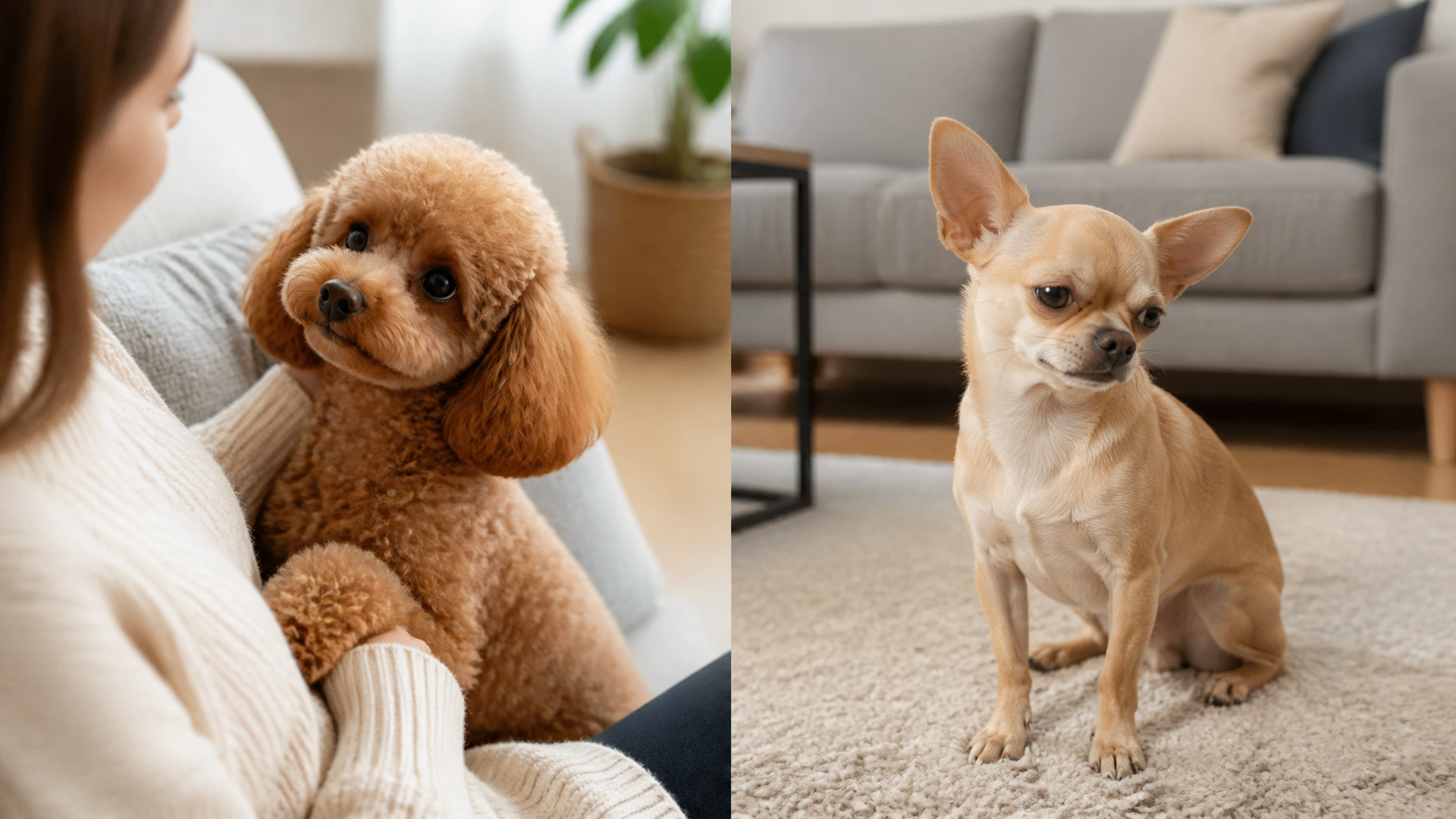
Your Toy Poodle will bond to you faster and more intensely than most small breeds. They study your face, follow you from room to room, and often choose your company over food or toys. That devotion comes from centuries of breeding as companion dogs—bred specifically to read human emotions and respond with affection.

But this loyalty has a catch. Without clear boundaries, it can slide into separation anxiety or needy behavior. The key is building a bond that feels secure, not dependent.
Why Toy Poodles Form Such Intense Bonds
Toy Poodles were bred as lap dogs for European nobility. Thousands of years of selective breeding created a dog that thrives on human partnership. Unlike working breeds that split focus between a task and their owner, Toy Poodles concentrate almost entirely on their people. They learn your routines, pick up on your mood from your tone, and position themselves to stay within arm’s reach.
The breed ranks in the top two for intelligence among all dog breeds. Smart dogs bond faster because they understand cause and effect—staying near you leads to praise, pets, and treats.
Important boundary to know: This intense loyalty works best for owners who are home most of the day or can bring their dog along. If you work a standard 9-to-5 outside the home without a dog walker or daycare, your Toy Poodle’s devotion will likely turn into distress. If you live alone and work full time, this breed is a high-risk choice unless you invest heavily in separation training and enrichment.
What this means for your next choice: If you’re a busy professional considering a Toy Poodle, plan ahead. Budget for a midday dog walker (at least two 15–20 minute breaks) or dog daycare 3–4 days per week. If you’re retired or work from home, you can skip those costs—but you still need to teach your dog to be calm alone for short periods.
Daily Signs of a Healthy Bond
Loyalty shows up in observable daily behaviors when it’s working well:
- Constant proximity: On the couch, they curl on your lap or press against your leg. In the kitchen, they settle on the rug behind you.
- Check-in glances: Every few minutes during play, they look back at you for approval before continuing.
- Sleeping on or near you: Toy Poodles often curl against their owner’s neck or hip at night.
- Protective alertness: They bark at the doorbell or a stranger, then immediately look to you for guidance on how to react.
This intensity makes them wonderful for people who want a velcro dog. It also means you must deliberately teach calm alone time from puppyhood. Without it, what looks like devotion is actually dependence.
Quick verification test: After 4 weeks of structured alone training, run this check. Leave your Toy Poodle in a puppy-proofed room with a baby monitor or home camera. Set a timer for 20 minutes. If your dog settles within 5 minutes and stays relaxed (lying down, chewing a toy, or sleeping) for the full 20 minutes, you’ve built a healthy foundation. If they pace, whine, or bark after the first few minutes, they need more separation practice before you extend alone time.
Training That Builds Loyalty Without Creating Clinginess
The goal is a bond where trust replaces anxiety. Use this operator flow to build healthy loyalty from day one.
Early Checkpoint Before You Start
Make sure your puppy has had a meal and a potty break in the last 30 minutes. A hungry or full bladder will derail even the best training session.
Ordered Training Steps
1. Start with short separations at 8 weeks. Leave the room for 2 minutes, then return calmly. Gradually increase to 10–15 minutes over two weeks.
2. Use a crate as a safe zone. Feed meals in the crate and give special toys—like a frozen Kong or a small puzzle toy (Outward Hound Hide-A-Squirrel for tiny dogs works well)—only when inside. This teaches that alone time equals good things.
3. Practice “settle” on a mat. Reward your Toy Poodle for lying calmly on a bed a few feet away instead of right on your lap. Use small treats like Zuke’s Mini Naturals (they’re bite-sized for small dogs).
4. Vary your attention. Ignore gentle nudges or pawing for pets—only give affection when they’re calm or have all four paws on the floor.
5. Leave an article of clothing like a worn t-shirt when you go out. Your scent comforts them during alone time.
Likely Cause of Clingy Behavior
You’ve accidentally reinforced pushing for attention by always picking them up or petting them on demand. This is the most common training mistake new Toy Poodle owners make.
Friction Point to Watch For
If you skip structured alone training and just enjoy constant cuddles, your Toy Poodle may become unable to handle even a trip to the bathroom alone. This can lead to destructive chewing focused on doors and windows, excessive barking that annoys neighbors, and potty accidents from stress. Correcting this later is harder than preventing it early—you may need to hire a certified separation anxiety trainer or consult a veterinary behaviorist, which can cost $200–$500 per session.
Success Check
By 12 weeks of age, your Toy Poodle should be able to stay calm alone for 30–45 minutes while you’re in another room or out of the house. If they can’t, extend step 1 before moving on to longer separations.
3 Expert Tips to Strengthen Your Bond
Tip 1: Use Hand-Feeding to Reinforce Eye Contact
Actionable step: Hold a few kibbles in your closed palm. Wait until your Toy Poodle looks at your face, then open your hand and say “yes.” Do this for 5 bites at each meal for the first month.
Common mistake: Dropping the kibble as soon as they paw at your hand. This teaches that poking gets the reward, not watching you.
Tip 2: Create a “Goodbye” Ritual Without Fanfare
Actionable step: 10 minutes before you leave, give your Toy Poodle a stuffed chew or interactive puzzle like a Nina Ottosson Dog Tornado (the small version fits Toy Poodle paws). Leave the house with a simple “be back soon” in a cheerful but neutral tone—no long goodbyes or emotional cuddles.
Common mistake: Making a big fuss before leaving, which signals that departure is a stressful event worth worrying about.
Tip 3: Rotate Novel Experiences Weekly
Actionable step: Once a week, take your Toy Poodle somewhere unfamiliar—a friend’s home, a pet store, a quiet park with different ground textures like grass, gravel, and pavement. Let them explore at their own pace while you stay calm.
Common mistake: Only socializing between home and the same walking route. This narrows their world and makes you the only safe person, which increases separation reactivity.
When Loyalty Becomes a Problem: Warning Signs
Over-loyalty can turn into separation anxiety, which affects an estimated 10–20% of Toy Poodles. Watch for these red flags:
- Destructive chewing focused on exit points (doors, windows, your shoes)
- Excessive barking or howling when you’re gone
- Accidents in the house even though they’re fully house-trained
- Refusal to eat or take treats from a sitter or dog walker
Escalation signal: If your Toy Poodle shows any of these signs consistently for more than two weeks, stop trying to “tough it out.” Contact your veterinarian or a certified separation anxiety trainer. Medication like trazodone or clomicalm combined with behavior modification is the most effective approach for moderate to severe cases.
Quick Reference: Healthy vs. Problematic Loyalty
| Behavior | Healthy Loyalty | Problematic Loyalty |
|---|---|---|
| Following you | Wanders nearby, checks in occasionally | Panics if you close a door between you |
| Sleeping | Curled near you but can nap in another room | Must be touching you or cannot settle |
| Greeting | Happy tail wags, calms down within 30 seconds | Frantic jumping, mouthing, crying |
| Alone time | 3–4 hours calmly playing or sleeping | Cannot relax, paces or barks nonstop |
| New people | Wary but warms up with your reassurance | Hides, growls, or trembles |
FAQ
Q: Are Toy Poodles more loyal than other Poodle sizes?
Yes, typically. Toy and Miniature Poodles were bred closer to human companionship, while Standards were often used for hunting and fieldwork. Toy Poodles rank highest in owner-focused attachment among the three sizes.
Q: Can a Toy Poodle be loyal to more than one person?
Absolutely. Toy Poodles bond strongly to their primary person but will also adore other family members who feed, play, and train them consistently. They just show their deepest loyalty to whoever meets their needs most reliably.
Q: At what age do Toy Poodles become most loyal?
Loyalty develops through bonding experiences, not age. Many pups show strong attachment by 12–16 weeks if you’ve spent that time hand-feeding, playing, and handling them gently. Full trust and devotion often solidify around 6–9 months.
Q: Does spaying or neutering change loyalty?
No, it does not change their attachment to you. It may reduce hormone-driven behaviors like roaming or marking, which can actually strengthen the bond by making them calmer and more focused on you at home.
Save This Guide
Toy Poodle loyalty is a wonderful trait—but it needs careful management to avoid separation anxiety. Focus on structured alone time, calm attention-seeking rules, and early exposure to new situations for a healthy, joyful bond. This guide covers the essentials for building that balance.
Affiliate disclosure: Some product links in this article are affiliate links. If you purchase through them, we may earn a small commission at no extra cost to you.