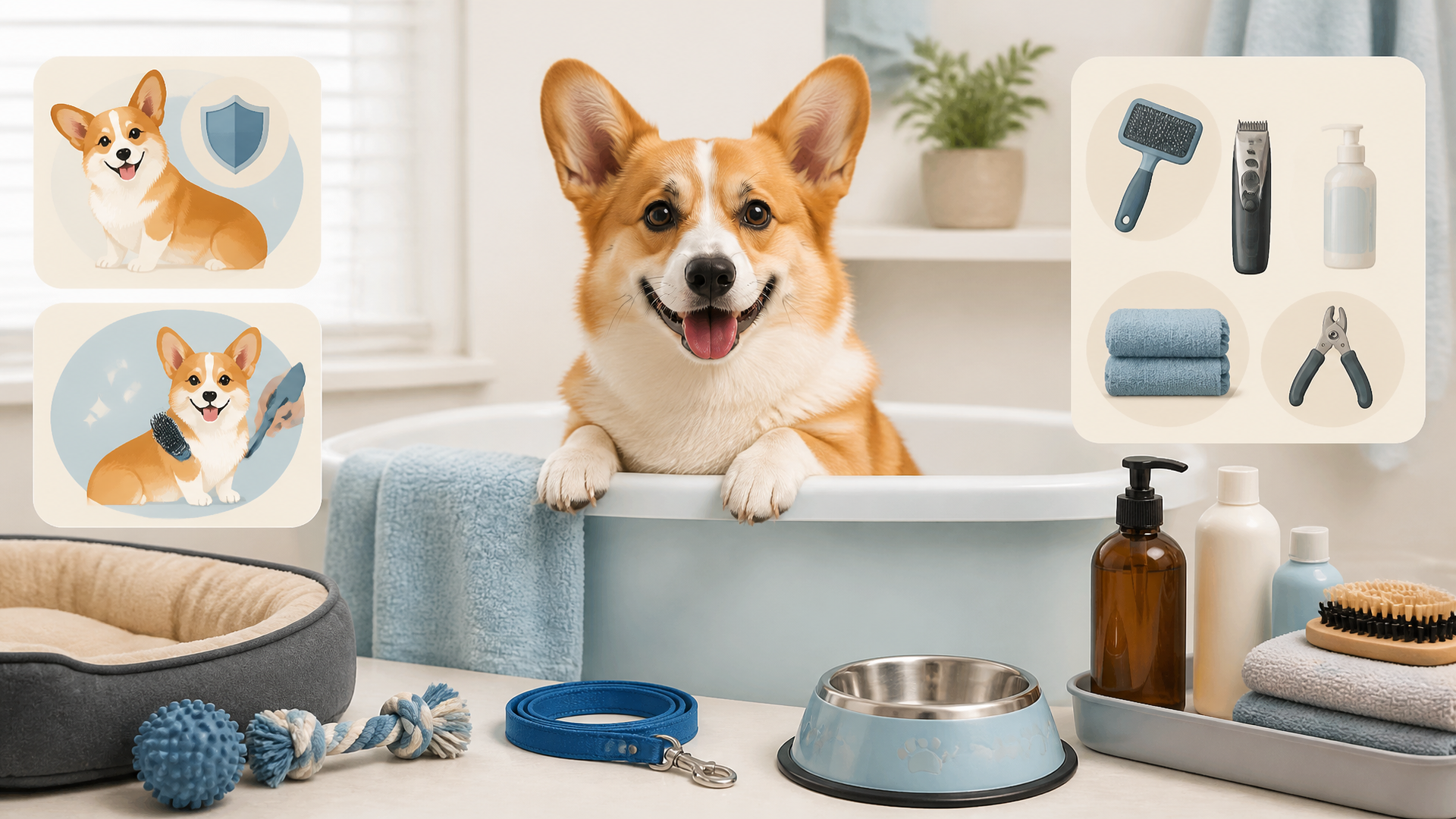
Corgi Bath Sunday: Complete Guide for Corgi Owners
You want a bath routine that actually works for your double-coated Corgi — not a wet wrestling match with a stubborn herder. Corgi Bath Sunday is the system that keeps your pup clean, reduces shedding, and makes bath day predictable for both of you. Here’s exactly how to set it up and avoid the common mistakes that turn a simple wash into a mess.

Why a Regular Bath Schedule Matters for Your Corgi
Corgis have a thick double coat that sheds year-round. A consistent bath every 4–6 weeks helps remove loose undercoat before it mats, reduces dander in your home, and gives you a chance to check for skin issues, bumps, or parasites. Stick to that schedule unless your Corgi finds something foul to roll in — then wash sooner. Bathing more than once every three weeks strips natural oils and leads to dry, irritated skin.
The one failure mode most owners hit is brushing too late. If you wet unbrushed fur, the loose undercoat binds into concrete-like mats that won’t brush out after drying. Catch this early: run your hand through the coat before the bath. If you feel loose tufts or small tangles, brush them out completely before turning on the water.
What You’ll Need Before the Water Runs
Gather everything ahead of time. A mid-bath dash for a missing tool is how escapes happen.
| Item | Why It Matters for Your Corgi |
|---|---|
| Slicker brush (fine bent wires) | Removes loose undercoat before water seals it in |
| Undercoat rake (stainless steel teeth) | Gets deeper into the dense double coat |
| Corgi-safe shampoo (oatmeal-based or double-coat formula) | Gentle on skin, good for moisture balance |
| Conditioner or detangling spray | Prevents matting after drying |
| Rubber bath mat (non-slip) | No slipping means a calm Corgi |
| High-velocity dryer or heavy towels | Speeds drying and reduces mildew risk |
| Cotton balls (for ears) | Keeps water out of floppy ear canals |
| High-value treats (freeze-dried liver works well) | Bribery for cooperation during every step |
This article contains affiliate links. If you purchase through these links, we may earn a small commission at no extra cost to you.
Step-by-Step: How to Bathe Your Corgi the Right Way
Each step here prevents a common mistake. Follow them in order.
1. Brush thoroughly for 5–10 minutes — Use the slicker brush first, then the undercoat rake. Focus on the rear, belly, and behind the ears where mats form first. This is the most important step of the whole bath.
2. Set up the bath area — Lukewarm water (test with your wrist), rubber mat in place, cotton balls gently placed in each ear (not pushed deep). Have your treats within reach.
3. Wet the coat from the neck down — Avoid the head until the very end. Most Corgis hate face water. Use a cup or sprayer on low pressure. Wet thoroughly so the water reaches the skin.
4. Apply diluted shampoo — Mix shampoo with water in a cup first, then work it from neck to tail. Massage into the undercoat, not just the topcoat.
5. Checkpoint: the rinse test — Halfway through rinsing, stop and run your fingers through the fur near the skin. If you feel any slippery soap residue, keep rinsing. Leftover shampoo causes irritation and flakes.
6. Condition (recommended for Corgis) — Focus on the rear and belly where mats are most likely. Rinse again until water runs completely clear.
7. Towel dry first — Press with a towel to squeeze out excess water. Do not rub — that causes tangles. Then use a high-velocity dryer on low heat, keeping the nozzle moving so you don’t overheat one spot.
8. Final brush while damp — This fluffs the coat and prevents tangles as it dries. Work through any remaining loose fur.
Success check after the bath: Run your hand through the coat. It should feel clean, smell fresh, and have no mats or soap residue. Your Corgi should be calm (or at least tolerating the process). If you notice excessive scratching, redness, or ear shaking, stop and check for irritation.
Troubleshooting Common Bath Day Problems
Your Corgi hates the water
The likely cause is a negative past experience or sensitivity to the noise of running water. Forcing a scared dog into the tub makes the problem worse.
Fix: Start with a wet washcloth rubdown for the first session. Use high-value treats during every step. Keep the first few baths short — 10 minutes max. If your Corgi panics, stop and try again next week. Build up gradually.
Matted fur after drying
This happens when you skipped the pre-bath brushing. Wetting unbrushed fur turns loose undercoat into mats that won’t brush out.
Fix: Next time, brush thoroughly first. If mats have already formed after drying, apply detangling spray and gently work them out with a slicker brush while the coat is still slightly damp. For tight mats, clip them out carefully with round-tip scissors.
Ear trouble after the bath
Water trapped inside floppy ears is the likely cause. If your Corgi shakes its head constantly, scratches at ears, or you notice redness, swelling, or a yeasty smell, see the vet within 48 hours. Ear infections are common in Corgis and need prompt treatment.
Shedding explosion during drying
That fluff flying everywhere is the loosened undercoat — it’s normal. Use a dryer with a filter or dry outside on a calm day. Brush again after the coat is fully dry to catch the rest.
When to Stop and Get Help
Stop the bath immediately if your Corgi:
- Shakes uncontrollably or whines persistently
- Tries to jump out of the tub repeatedly
- Shows signs of aggression (growling, snapping)
- Has open wounds, hot spots, or severe mats you can’t safely remove
Let the coat air-dry and contact a professional groomer or your vet for guidance. If you notice ear discharge, persistent scratching, or red skin within 24 hours after the bath, call your vet — don’t wait for the next scheduled visit.
Bath Day Quick Checklist
- [ ] Brush thoroughly before water touches coat — 5–10 minutes minimum
- [ ] Cotton balls in ears (not pushed in)
- [ ] Rubber mat in tub — no slipping
- [ ] Lukewarm water, not hot — test with your wrist
- [ ] Shampoo diluted and applied from neck down
- [ ] Rinse until water runs completely clear (pass the rinse test)
- [ ] Towel dry (press, don’t rub) then dryer on low heat
- [ ] Final brush through damp coat
- [ ] Reward with treats and praise
- [ ] Dry ear canals with a soft cloth after bath
Save this checklist. Each item prevents a common Corgi bath disaster.
Frequently Asked Questions
Can I bathe my Corgi too often?
Yes. Bathing more than once every 3–4 weeks strips natural oils and dries out their skin. Stick to once a month unless your vet advises otherwise.
Do I need a professional groomer for Corgi baths?
Not necessarily. At-home baths work well if you follow the steps. But for a full deshedding treatment or nail trim, a groomer is a good option every 8–12 weeks.
What if my Corgi has dry, flaky skin after the bath?
Check your shampoo — it may be too harsh. Switch to an oatmeal-based or medicated formula. Also ensure you rinsed fully. If flakes persist, talk to your vet.
Is it okay to use human shampoo in a pinch?
No. Human shampoo’s pH is wrong for dogs and can irritate Corgi skin. Use dog-specific shampoo only.
Save This Guide
Corgi Bath Sunday works when you brush first, rinse well, dry completely, and reward generously. Prep everything before the water runs, and your Corgi will learn the routine. Key takeaway: brush before every bath, pass the rinse test, and stop if something feels wrong. Your Corgi stays clean, your home has less fur, and bath day stops being a battle.