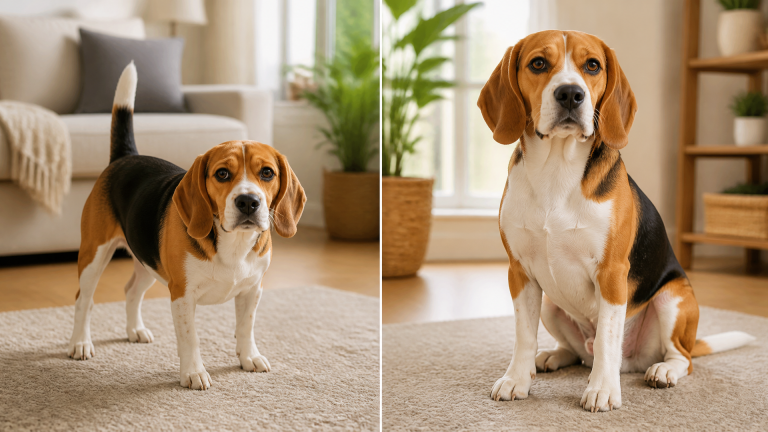
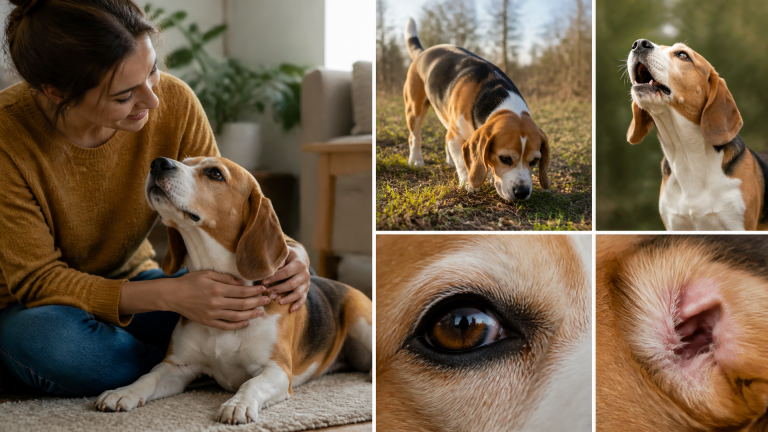
Beagle 12 Year Old Vision
Your 12-year-old Beagle is entering the senior years, and vision changes are common at this age. Most Beagles develop some degree of vision loss by age 12, usually from cataracts, glaucoma, or age-related retinal degeneration. The good news: Beagles adapt remarkably well to gradual vision loss, especially when you catch the changes early and modify your home accordingly.

Here’s what you need to know about your senior Beagle’s eyesight, the one change most owners miss, and exactly what to do about it.
The One Vision Change Beagle Owners Overlook
Cataracts get all the attention, but the most common vision problem in senior Beagles is progressive retinal atrophy (PRA) — a painless, gradual degeneration of the retina that starts with night vision loss. By age 12, about 1 in 4 Beagles shows measurable signs of PRA.
Why Beagle owners miss it: Beagles rely heavily on their nose, not their eyes. Your dog may be navigating by scent long before you notice any vision trouble. That “bump into the coffee table” might not happen until vision loss is significant.
How to detect it early:
- Watch for hesitation in dim lighting (dusk, dark rooms)
- Notice your Beagle bumping into furniture edges, not full-on crashes
- See your dog sniff the floor more deliberately before moving through doorways
- Observe reluctance to jump onto the sofa or into the car
When does this advice change? If your Beagle has had prior eye surgery (e.g., cataract removal in a younger age) or a known genetic condition like primary glaucoma, the progression and early signs may differ. For dogs with a history of eye infections, symptoms of dry eye can mask early PRA. Always consult your vet if your dog falls into one of these categories.
What your next move should be: If you notice any of these signs, schedule a veterinary ophthalmology exam within two weeks. While you wait, keep your furniture layout unchanged — moving things disorients a dog that’s already compensating with scent. If the vet confirms PRA, focus on scent cues and night lights. If cataracts are found, discuss surgery options. For any eye redness or squinting, treat it as an emergency and go in immediately.
What Vision Problems Are Common in 12-Year-Old Beagles?
Cataracts (Most Common)
About 40% of Beagles develop cataracts by age 12. Unlike other breeds where cataracts are genetic, age-related cataracts in Beagles develop slowly over months to years. You’ll see a whitish or blue-gray haze behind the pupil.
What you can do: Discuss cataract surgery with your vet. It’s expensive ($2,500–$4,000 per eye), but Beagles with healthy eyes otherwise recover well. If surgery isn’t an option, adjust your home setup (see the checklist below).
Progressive Retinal Atrophy (PRA)
This one’s sneaky because it starts with night vision. Your Beagle may seem fine during the day but bump into things after sunset. PRA is painless and eventually leads to total blindness over 1–2 years.
Beagle-specific note: Beagles are one of the breeds with a known genetic marker for PRA. If your dog wasn’t tested as a puppy, your vet can do a DNA cheek swab now. This test confirms the diagnosis and helps plan management.
Glaucoma
Less common but more urgent. Glaucoma causes painful pressure buildup inside the eye. Signs include redness, cloudiness, squinting, and your Beagle rubbing their face on the carpet.
Rule of thumb: If your Beagle’s eye looks red or cloudy and they seem uncomfortable, this is a medical emergency. Glaucoma can cause permanent vision loss within 24–48 hours of onset.
Dry Eye (Keratoconjunctivitis Sicca)
Senior Beagles often produce fewer tears, leading to dry, irritated eyes. This doesn’t cause blindness on its own but makes the eyes vulnerable to corneal ulcers and infections.
Simple fix: Ask your vet about artificial tear drops or cyclosporine ointment. Most dogs tolerate application well.
Expert Tips for Managing Your Beagle’s Vision Loss
Tip 1: Add scent markers to every room change
The single most effective adjustment for a Beagle with vision loss is scent cues. Place a dilute vanilla or lavender scent (pet-safe essential oils) at the top and bottom of stairs, near food bowls, and beside doorways. Beagles process scent 10,000x more efficiently than humans, so they’ll map the house by smell within days.
Actionable step: Use a cotton ball with 2 drops of essential oil, secured in a small mesh bag taped to the wall. Replace monthly.
Common mistake: Moving furniture around to “help” your Beagle. This disorients scent-based navigation. Keep furniture in the same arrangement.
Tip 2: Use contrasting floor mats
Vision-impaired Beagles can still perceive contrast. Place a light-colored mat in front of dark flooring transitions, or a dark mat on light tile. This visual cue helps with depth perception at stairs and door thresholds.
Actionable step: Buy mats that are at least 2 shades lighter or darker than your flooring. Test by looking at them from your Beagle’s eye level (about 14 inches off the ground).
Common mistake: Choosing mats that blend into your flooring. The whole point is contrast — pick the opposite color.
Tip 3: Protect the remaining vision with UV-blocking dog goggles
If your Beagle has cataracts or PRA, UV light accelerates retinal damage. Dog goggles (Rex Specs or Doggles) with UV400 lenses protect what vision remains. It takes 3–5 short training sessions to get your Beagle comfortable wearing them, but it’s worth the effort.
Actionable step: Before buying, measure your Beagle’s head circumference just behind the ears and compare to the manufacturer’s sizing chart. Most Beagles need a medium in Rex Specs, but check the fit guide. Start with 30-second wearing sessions while giving treats.
Common mistake: Only using goggles during walks. UV exposure happens through windows and during sunbathing too. Use them any time your dog is in bright light.
Quick Home Safety Check — 5 Items to Verify Today
Use this checklist to make your home vision-safe for your 12-year-old Beagle. Check each item as pass/fail.
| Check Item | Pass | Fail |
|---|---|---|
| Food and water bowls in the same spot every day | ✅ | ❌ |
| Stair gates installed top and bottom (even if your dog has managed stairs fine for years) | ✅ | ❌ |
| No sharp furniture corners at Beagle eye level (coffee tables, TV stands) — add corner guards if needed | ✅ | ❌ |
| Clear, uncluttered floor paths between sleeping area, food station, and door to yard | ✅ | ❌ |
| Night lights plugged into every room your Beagle uses after dark | ✅ | ❌ |
If any item shows a ❌, fix it this week. Vision loss can accelerate quickly, and these adjustments prevent injury before it happens.
When to Call the Vet — Don’t Wait on These Signs
Some vision changes are gradual and manageable at home. These signs require immediate veterinary attention:
- Sudden vision loss (your Beagle bumps into walls today when they navigated fine yesterday)
- Eye redness or cloudiness lasting more than 24 hours
- Squinting or excessive blinking in bright light
- Eye discharge that’s yellow, green, or thick
- Rubbing the face against furniture or carpet for more than a few minutes
One exception: If your Beagle has been gradually losing vision over months and suddenly seems panicked, it may not be the vision itself — it could be cognitive dysfunction (doggy dementia) compounding the adjustment. Your vet can rule out other causes and recommend anti-anxiety support.
Product Recommendations That Help
Affiliate disclosure: As an Amazon Associate, we may earn from qualifying purchases at no cost to you.
- Rex Specs Dog Goggles (UV400 lenses) — for outdoor UV protection
- Memory foam dog bed with raised rim — helps your Beagle feel secure and orient themselves in the room
- Scented furniture corner protectors — clear rubber guards for sharp edges, paired with a dab of pet-safe vanilla oil as a scent marker
- Night lights with automatic sensors — plug into any room outlet; your Beagle gets consistent low-light cues without you remembering to turn them on
Save This Guide
Senior Beagle vision changes are manageable when you catch them early. The key takeaways: test for night vision loss first (it’s the earliest sign), keep your furniture layout consistent, and use scent markers — your Beagle’s nose is their best tool for navigating the world. Add night lights, protect against UV exposure, and get a veterinary ophthalmology exam if you see any hesitation, bumping, or eye discomfort. Your Beagle can live a happy, full life with vision loss — they just need you to be their eyes when the lighting gets tricky.