Bichon Frise Age Chart
A Bichon Frise lives 12 to 15 years on average, with many reaching 16 or 17 with proper care. That puts them among the longer-living small breeds. Use the chart below to quickly convert your Bichon’s age to human years, then read on for what each life stage actually means for grooming, diet, and vet visits.

Bichon Frise Age to Human Years Chart
| Bichon Age | Human Years Equivalent | Life Stage |
|---|---|---|
| 2 months | 1–2 years | Puppy |
| 6 months | 5–6 years | Puppy |
| 1 year | 15 years | Adolescent |
| 2 years | 24 years | Adult |
| 3 years | 28 years | Adult |
| 4 years | 32 years | Adult |
| 5 years | 36 years | Adult |
| 6 years | 40 years | Adult |
| 7 years | 44 years | Mature Adult |
| 8 years | 48 years | Senior |
| 9 years | 52 years | Senior |
| 10 years | 56 years | Senior |
| 11 years | 60 years | Senior |
| 12 years | 64 years | Geriatric |
| 13 years | 68 years | Geriatric |
| 14 years | 72 years | Geriatric |
| 15 years | 76 years | Geriatric |
Small breeds like the Bichon age more slowly than large breeds. A 7-year-old Bichon is roughly equivalent to a 44-year-old human — not truly senior yet, but entering the mature zone where preventive care matters more.
Life Stages of a Bichon Frise (What to Expect at Each Age)
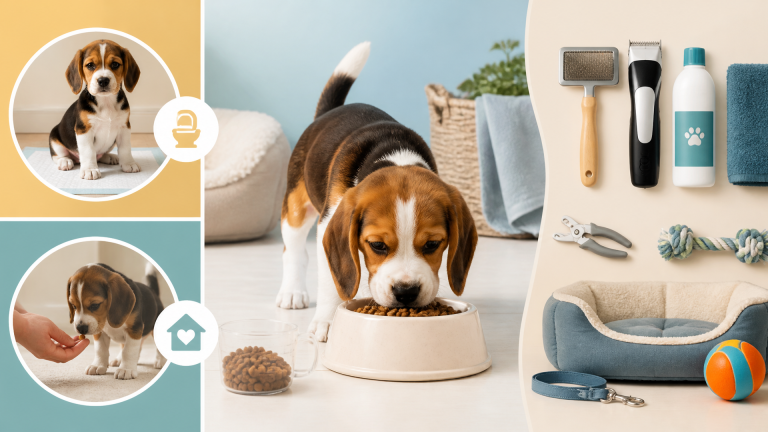
Puppy Stage: Birth to 12 Months
Your Bichon puppy will double or triple in birth weight within weeks. Full adult weight (10–18 pounds) is typically reached by 10–12 months.
Key milestones:
- 8 weeks: First vaccine, ready to leave breeder
- 12–16 weeks: Socialization window — expose to sounds, surfaces, friendly people
- 4–6 months: Adult teeth come in, chewing peaks
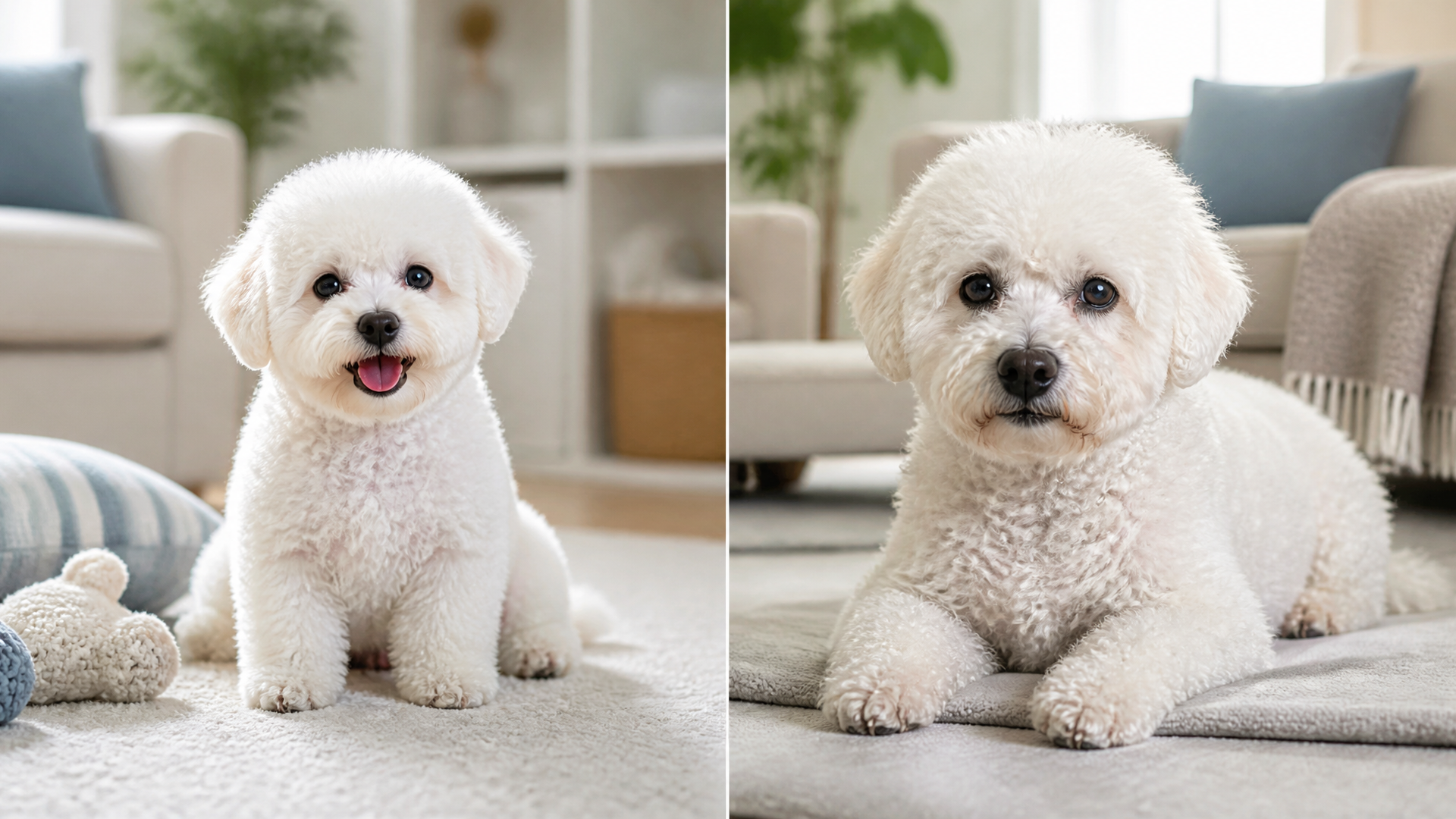
- 6–12 months: Coat transitions from soft puppy fluff to denser adult coat
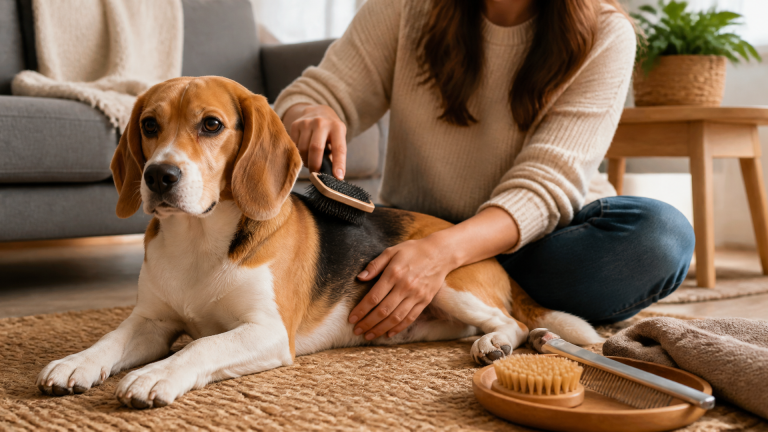
Grooming note: Start brushing your puppy daily from day one. Bichons have hair, not fur, and matting begins fast on a puppy who won’t hold still yet. Use a slicker brush (like the Chris Christensen Big G) and a metal comb.
Feeding: Feed a high-quality small-breed puppy formula three to four times daily until 6 months, then drop to two meals. Avoid overfeeding — a chubby puppy is at higher risk for hip problems later.
Adult Stage: 1 to 7 Years
At one year, your Bichon is physically mature but may still act like a puppy mentally until age 2. This is the prime health window.
What to stay on top of:
- Teeth: Bichons are prone to dental disease. Brush daily or at least three times weekly. Annual dental cleanings under anesthesia are recommended starting at age 2.
- Eyes: Have tear stains checked at every vet visit. Redness or squinting could mean dry eye or glaucoma.
- Weight: A Bichon should have a visible waist. Feel ribs — you should feel them with light pressure, not see them.
Exercise: 20–30 minutes of moderate activity daily. Bichons are adaptable but need enough movement to avoid obesity. A short walk plus indoor play works well.
Expert Tip #1 — Brushing Schedule
Actionable step: Set a 10-minute daily brushing session at the same time each day, ideally before a meal so your Bichon associates it with a reward.
Common mistake: Brushing only the top layer. Part the coat in sections and brush down to the skin, or mats will form underneath where you can’t see them.
Senior Stage: 8 Years and Older
At 8, your Bichon is officially senior. This doesn’t mean immediate decline, but it does mean twice-yearly vet visits instead of yearly.
What changes:
- Activity: Your Bichon may slow down naturally. Let them set the pace, but don’t stop walks entirely.
- Joints: Watch for stiffness after lying down, hesitation on stairs, or reluctance to jump on furniture.
- Skin: Senior Bichons often develop dandruff, thinning coat, or skin tags. Brush gently to avoid irritation.
- Vision: Cataracts are common in senior Bichons. A cloudy lens doesn’t always mean blindness — your vet can grade the severity.
Diet shift: Switch to a senior small-breed formula around age 7–8. Look for added glucosamine, omega-3s, and lower calories to match reduced activity. Joint supplements like Cosequin or Dasuquin are worth discussing with your vet.
Expert Tip #2 — Senior Mobility Checks
Actionable step: Once a month, film your Bichon walking from the side. Compare to previous months — subtle changes in gait are easier to spot on video than in person.
Common mistake: Assuming limping is “just old age.” Pain is never normal. A limp warrants a vet exam — arthritis is manageable with medication, physical therapy, or weight management.
Expert Tip #3 — Dental Care After Age 8
Actionable step: Ask your vet to check tooth roots at every senior visit. Retained baby teeth or resorbing roots are common in Bichons and painful without obvious signs.
Common mistake: Stopping dental cleanings because your Bichon is older. Anesthesia risks are low with pre-anesthetic bloodwork, and dental disease causes heart and kidney damage.
Geriatric Stage: 12 Years and Beyond
Bichons reaching 12+ are exceptional. Focus on quality of life at this stage.
Priorities:
- Monthly weight checks — rapid loss can mean kidney or dental problems. Use a kitchen scale for small dogs; a 1‑pound drop in a 12‑pound Bichon is significant.
- Soft bedding in warm, draft-free spots — provide multiple options on the same floor to avoid stairs.
- Shorter, gentler grooming sessions — standing for long periods is hard on old joints. Take breaks and use a non‑slip mat.
- Consider ramps or steps for furniture access.
Vet care: Bloodwork and urinalysis every 6 months. Thyroid, kidney, and heart function become the main watchpoints. Ask about a quality‑of‑life assessment — scoring tools like the HHHHHMM scale can help you track changes objectively.
Signs Your Bichon Is Aging (What to Watch For and Do Next)
Some changes are normal, but others need a vet’s input — and fast. Use this quick-reference list with decision guidance.
Normal aging (no action needed beyond monitoring):
- Graying around the muzzle (usually starts around age 6–8)
- Slightly reduced energy
- Sleeping more deeply
- Less interest in rough play
Not normal — take these actions:
| Sign | Why It Happens | What to Do |
|---|---|---|
| Coughing or gagging, especially at night | Possible collapsing trachea or heart disease | Record a video of the cough and show your vet. Heart disease is treatable if caught early. |
| Excessive drinking or urination | Diabetes or kidney disease | Collect a urine sample first thing in the morning. Your vet will run bloodwork and a urinalysis. |
| Sudden weight loss or gain | Always warrants bloodwork | Weigh weekly and log results. |
A 5% change in one month is a red flag. |
| Staring at walls, pacing, getting lost in corners | Canine cognitive dysfunction | Schedule a cognitive assessment. Early intervention with diet (MCT oil, antioxidants) and mental enrichment can slow progression. |
| Foul breath with loose teeth | Dental disease causing systemic infection | Don’t wait for the annual visit. Dental infections can spread to the heart or kidneys within weeks. Request a dental check and bloodwork. |
Quick Health Check for Senior Bichons
Run through this five‑point check once a month. Each item is a simple pass/fail — if it fails, follow the “Next Step” below.
1. Rib check: Can you feel ribs with light pressure but not see them? □ Pass □ Fail
2. Stair test: Does your Bichon go up and down stairs without hesitation? □ Pass □ Fail
3. Water intake: Is drinking roughly the same as last month (not significantly more or less)? □ Pass □ Fail
4. Coat feel: Is the coat soft and clean, not greasy or flaky in patches? □ Pass □ Fail
5. Morning greeting: Does your Bichon greet you normally, not stiff or slow to get up? □ Pass □ Fail
Next steps based on results:
- 0 fails: Continue monthly checks. No action needed.
- 1 fail: Recheck in 2 weeks. If still failing, call your vet.
- 2 or more fails: Schedule a vet visit within the week. Bring a log of the last 3 months’ weight, appetite, and activity.
Feeding and Grooming Adjustments by Age
| Age | Grooming Frequency | Food Type | Vet Visits |
|---|---|---|---|
| Puppy (0–12 mo) | Brush daily, first groom at 4–6 months | Small-breed puppy (3–4 meals → 2 meals) | Vaccine series + spay/neuter |
| Adult (1–7 yr) | Full groom every 4–6 weeks, brush daily | Small-breed adult (2 meals) | Annual wellness + dental |
| Senior (8–11 yr) | Full groom every 4–6 weeks, gentler handling | Small-breed senior with joint support | Twice-yearly + dental as needed |
| Geriatric (12+ yr) | Shorter sessions, more breaks | Senior or renal support if needed | Twice-yearly with bloodwork |
Save This Guide
Your Bichon Frise will spend roughly half its life in the adult stage and the other half in senior or geriatric care. Knowing the age milestones helps you catch problems early — from dental disease at 2 to joint stiffness at 8. Bookmark this chart and revisit it at each birthday to stay ahead of your Bichon’s changing needs. The most actionable takeaway: start daily brushing, annual dentals, and twice-yearly senior bloodwork on schedule, not after symptoms appear.
This article contains affiliate links. As an Amazon Associate, we earn from qualifying purchases.