Corgi Puppy Color Change
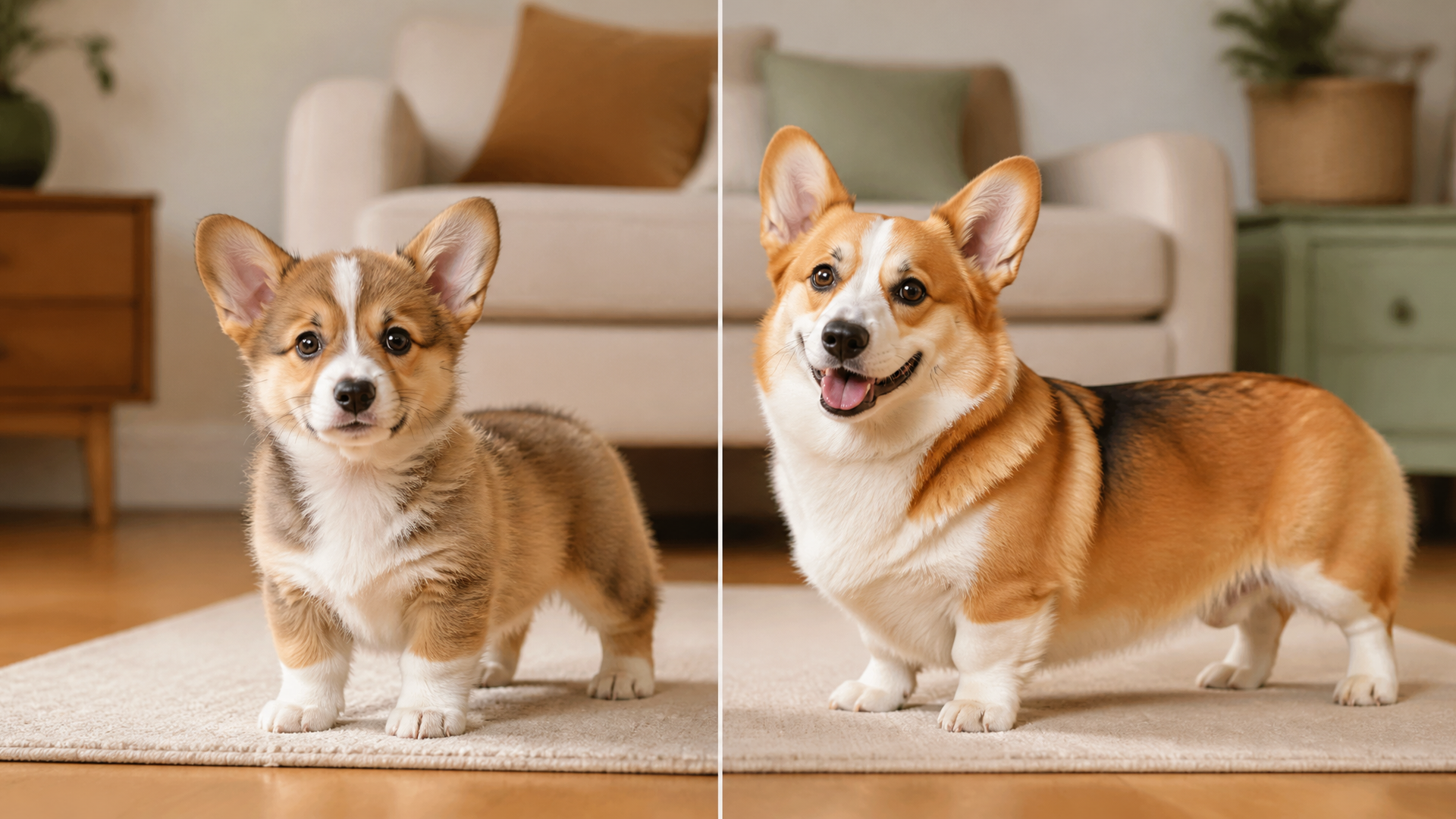
Yes, your Corgi puppy’s coat will change color as they grow — and it can be dramatic. Most Pembroke and Cardigan Welsh Corgi puppies get lighter, darker, or develop new markings between 8 weeks and 6 months old. Here’s exactly what changes, when, and what’s normal versus a red flag.

What this means for you right now: You don’t need to intervene or try to “preserve” a temporary shade. The color shift is purely natural and driven by genetics. Your job is to focus on good nutrition and consistent brushing. If the change is symmetrical on both sides of the body, it’s almost certainly normal. If it’s patchy or one-sided, schedule a vet visit this week.
What Actually Changes on a Corgi Puppy’s Coat
Two distinct things happen during the transition.
The puppy coat sheds out. Puppies are born with a fine, soft single coat. Around 8–12 weeks, this starts falling out to make room for the adult double coat. The adult coat is thicker, coarser, and often a different shade entirely.
Markings shift independently. Red or sable puppies often darken along the back and lighten on the legs and belly. Tricolor puppies (black, tan, white) typically lose black patches as they age — some Cardigans go from mostly black at birth to mostly red by 1 year.
What doesn’t change: white markings. The white blaze on the forehead, white collar, white paws, and white tail tip are set at birth and stay that way. If white patches appear later, that’s worth a vet check.
Markings That Darken vs Fade
| Marking Type | Typical Change | When It Happens |
|---|---|---|
| Red/sable body coat | Darkens to deeper red, sometimes with black tipping | 4–10 months |
| Black patches (tricolor) | Fades to brown or red | 3–12 months |
| Tan points | Lightens or stays stable | 4–8 months |
| White markings | No change | Birth onward |
| Blue merle patches | May spread or shift slightly | Up to 2 years |
Track Your Corgi’s Coat Transition: A Step-by-Step Timeline
Use this flow to monitor your puppy’s color changes. It covers preparation, early checks, ordered actions, common friction points, escalation signals, and a success check.
Before You Start: Preparation
Take a baseline photo – top-down, side, and face in natural daylight. Note the date and your puppy’s age in weeks. This is your reference for later comparisons.
Get the right brush – a slicker brush for weekly grooming. A dematting tool is useful if you miss a few sessions.
Check your puppy food – look for DHA and omega fatty acids. Purina ONE Plus Healthy Puppy Formula has real chicken as the first ingredient, plus DHA for brain and vision development and antioxidants for immune support.
Early Checkpoint (Weeks 8–12): Is Shedding Starting Normally?
What to look for: patches of soft undercoat coming out, especially around the neck and behind the ears. The coat may look scruffy or uneven.
Likely cause: normal puppy coat blow. The adult guard hairs are starting to push through.
Friction point: some owners panic when they see bald-looking spots. Gently brush 2–3 times per week. If the skin underneath is pink and healthy, it’s fine.
Escalation signal: large bald patches with red, scaly, or crusty skin. That could indicate ringworm, mange, or a bacterial infection — see your vet.
Ordered Action Steps (Weeks 8–24)
Weeks 8–12: Introduce brushing. Brush 2–3 times per week with a slicker brush. Work in small sections from skin outward. This removes loose puppy coat and prevents mats from forming where the old coat tangles with new growth.
Weeks 12–16: Increase brushing frequency. The adult coat is coming in fast. Brush 3–4 times per week. Pay extra attention behind the ears and around the rear – common matting zones. If you find tangles, use a dematting tool gently.
Weeks 16–20: Monitor color changes weekly. This is the most dramatic period. Take a new photo set every two weeks. Compare to your baseline. Red puppies often reach peak darkness now; tricolors may show significant black fading. Checkpoint: Is the change symmetrical? If one side of the face or body changes while the other stays the same, see your vet.
Weeks 20–24: Adjust grooming for the adult coat. The adult double coat is mostly in. The undercoat will be thicker; the guard hairs coarser. Brush 3–4 times per week year-round, plus daily during seasonal blowing (spring and fall). Expect the color to continue shifting slowly until about 18 months.
Success Check: When Is the Coat Stable?
The adult double coat feels dense and weatherproof. Color changes have slowed to imperceptible week-to-week shifts. Your Corgi’s coat looks uniform in texture with no leftover puppy fluff.
If you hit 18 months and the color is still changing abruptly (not gradual), consult your vet. Otherwise, you’re done – the final color is close to where it’ll stay.
Pembroke vs Cardigan: Does Breed Matter?
Yes, the breed affects what changes you’ll see and when.
Pembroke Welsh Corgi
- Acceptable colors: red, sable, fawn, tricolor (with or without white markings)
- Tricolor Pembrokes usually fade from black to brown within the first year
- Red and sable Pembrokes often darken significantly between 4 and 8 months
- Blue merle is not a Pembroke color — if you see it, the dog is likely a mix or a Cardigan
Cardigan Welsh Corgi
- Acceptable colors: red, sable, tricolor, blue merle, brindle
- Blue merle Cardigans can shift in pattern up to 18 months — patches may spread or new speckling can appear
- Brindle Cardigans may develop more visible striping as the adult coat comes in
- Tricolor Cardigans tend to retain more black than Pembroke tricolors, but still fade over time
Applicability boundary: This guide applies to purebred Pembroke and Cardigan Corgis. If your puppy is a Corgi mix or has an unusual color (like solid black or completely white), the color change timeline may differ significantly. For mixed breeds, coat genetics are unpredictable, and these normal patterns may not apply.
Trade-off to consider: Some owners prefer the darker puppy color and are disappointed when it lightens. Trying to “prevent” the change (e.g., with special supplements or avoiding sun exposure) doesn’t work and can be harmful. Accept the final color as a natural outcome — it’s not a health concern, and it’s part of the breed’s charm.
Realistic mismatch example: A tricolor Pembroke that fades completely to red by 6 months is still a healthy dog — but it may not meet the show ring standard for tricolor. If you bought a puppy expecting permanent black patches, you might feel misled. This is why reputable breeders provide clear guidance on expected color shifts.
4 Expert Tips for Managing Your Corgi’s Coat Transition
Tip 1: Brush Through the Awkward Phase
Action: Use a slicker brush 3 times per week during the 8–16 week shedding window. Work in small sections, brushing from skin outward.
Common mistake: Stopping brushing because “the puppy coat is already falling out anyway.” This causes mats to form where the old coat tangles with the new coat. A dematting tool can help if mats have already started.
Tip 2: Photograph Every 2 Weeks
Action: Take a top-down, side, and face photo of your puppy on the same day every other week. Use the same lighting (natural daylight is best).
Common mistake: Relying on memory to judge color changes. Day-to-day shifts are subtle — photos side by side show the real trajectory. If you ever need to contact a breeder or vet about color concerns, the photo timeline is invaluable.
Tip 3: Feed for Coat Quality, Not Color
Action: Choose a puppy food with DHA, omega-3, and omega-6 fatty acids. These support the developing coat and overall health.
Common mistake: Switching foods to try to bring back a puppy color that’s fading naturally. No diet can reverse normal breed-specific color changes. What good nutrition can do is minimize excessive shedding, reduce dander, and keep the adult coat glossy. The Purina ONE Chicken and Rice Formula provides a microbiome balance with prebiotic fiber for digestive health — which directly affects coat condition.
Tip 4: Accept the Final Color by 18 Months
Action: By the time your Corgi is 18 months old, consider the adult color settled. Plan your grooming routine (brush type, frequency, seasonal shedding prep) based on the adult coat, not the puppy coat.
Common mistake: Expecting the 4-month “peak” color to last. For red Pembrokes especially, the darkest shade is temporary. The adult coat will be lighter. This isn’t a health issue — it’s the breed standard.
When Should You Worry About Color Changes?
Most color changes are normal. These signs warrant a vet visit:
- Sudden graying in a dog under 2 years — possible thyroid dysfunction
- Patchy hair loss with color change — ringworm, mange, or bacterial infection
- One-sided color change — could indicate nerve damage, inflammation, or hormonal imbalance
- White patches appearing where there were none — vitiligo or autoimmune condition
- The coat turning yellow or orange — could be staining from saliva, urine, or tear overflow (check for dental or urinary issues)
Concrete verification step you can do right now: Compare your puppy’s left and right side in the same lighting. Use a mirror or take two photos. If the color, pattern, or amount of black/tan is visibly different between sides, that’s your verification that something may be off. Symmetry is the quickest test for normal vs. abnormal.
Quick Reference: Corgi Color Change Checklist
Keep this checklist handy to track your puppy’s coat transition:
- [ ] Week 8: First photo set (top, side, face)
- [ ] Week 10: Shedding starts — increase brushing
- [ ] Week 12: Adult coat begins coming in — note any darkening or fading
- [ ] Week 16: Check for symmetry — both sides should match
- [ ] Week 20: Peak color change — photograph again
- [ ] Week 24: Adult coat mostly in — adjust grooming routine
- [ ] 18 months: Final color settled — no more major changes expected
Save This Guide: Your Corgi’s color will shift naturally between 8 weeks and 18 months. Focus on good nutrition and consistent brushing, not on trying to preserve a temporary shade. If the changes are symmetrical and the coat is healthy, relax and enjoy the process.
Note: This article contains affiliate links. We may earn a commission if you purchase through these links, at no extra cost to you.