Blue Tick Beagle Size: Warning Signs & What To Do
A full-grown Blue Tick Beagle typically stands 13–15 inches tall and weighs 20–30 pounds. If your dog falls significantly outside this range, that’s your first warning sign. Here’s what to check next.

What That Size Range Means for Your Next Decision
Those numbers aren’t just trivia — they guide every purchase you make. A crate that fits a 30-pound Beagle will be too large for a 15-pound “pocket” dog, and a harness that fits a 13-inch Beagle will rub wrong on a 15-inch dog.
The practical rule: If your Blue Tick Beagle is outside the standard size range, skip the “one size fits most” products. Measure your dog’s chest girth and back length, then compare those numbers to product specifications — not the breed label. A wrong-sized harness or crate creates stress, escape risk, or discomfort that can lead to behavior problems.
The One Height-and-Weight Check Most Owners Skip
Home scales can drift, and growth charts online often disagree. Here’s how to verify your measurements are accurate before you make any changes:
The concrete verification step: Use a metal tape measure (cloth tapes stretch over time) and a digital scale with a tare function. Measure your dog three times on two different days at the same time of day. If the height reading varies by more than 0.5 inches or the weight by more than 1 pound, repeat the process. Write down all three measurements and take the middle value — this eliminates human error from a wiggly dog.
Only after you’ve confirmed a consistent reading should you compare against breed standards or adjust food portions. A single outlier measurement can send you on a feeding change that isn’t needed.
Weight vs. Height: The Number Most Owners Miss
Most size guides focus on height at the shoulder. For Beagles specifically, weight tells you more about health. A Beagle at 13 inches should weigh 20–25 pounds. At 15 inches, expect 25–30 pounds.
The counter-intuitive part: A Beagle that’s the right height but 5+ pounds overweight is harder to spot than one that’s too tall. That rib-check test (you should feel ribs without pressing hard) matters more than any number on a tape measure.
When Every Ounce Counts: The Growth Window That Matters Most
Blue Tick Beagles finish most of their height by 8 months, but they fill out until 18 months. During this window, monthly weight tracking catches problems early.
Warning signs by age:
- 8 weeks: 5–8 pounds
- 4 months: 12–15 pounds
- 6 months: 16–20 pounds
- 12 months: 20–25 pounds (smaller end) or 22–28 pounds (larger end)
Red flags:
- Rapid weight gain (over 3 pounds in two weeks) — could mean overfeeding or fluid retention
- Stalled growth (no weight change for 4+ weeks) — check for worms or absorption issues
- Sudden weight drop — schedule a vet visit within 48 hours
The 6-Point Size Check You Can Do This Week
Grab a scale, a measuring tape, and 10 minutes. Run through these checks:
- Height check: Measure from floor to shoulder while your dog stands square. Write the number down.
- Weight check: Use a bathroom scale — weigh yourself, then weigh yourself holding your dog, subtract.
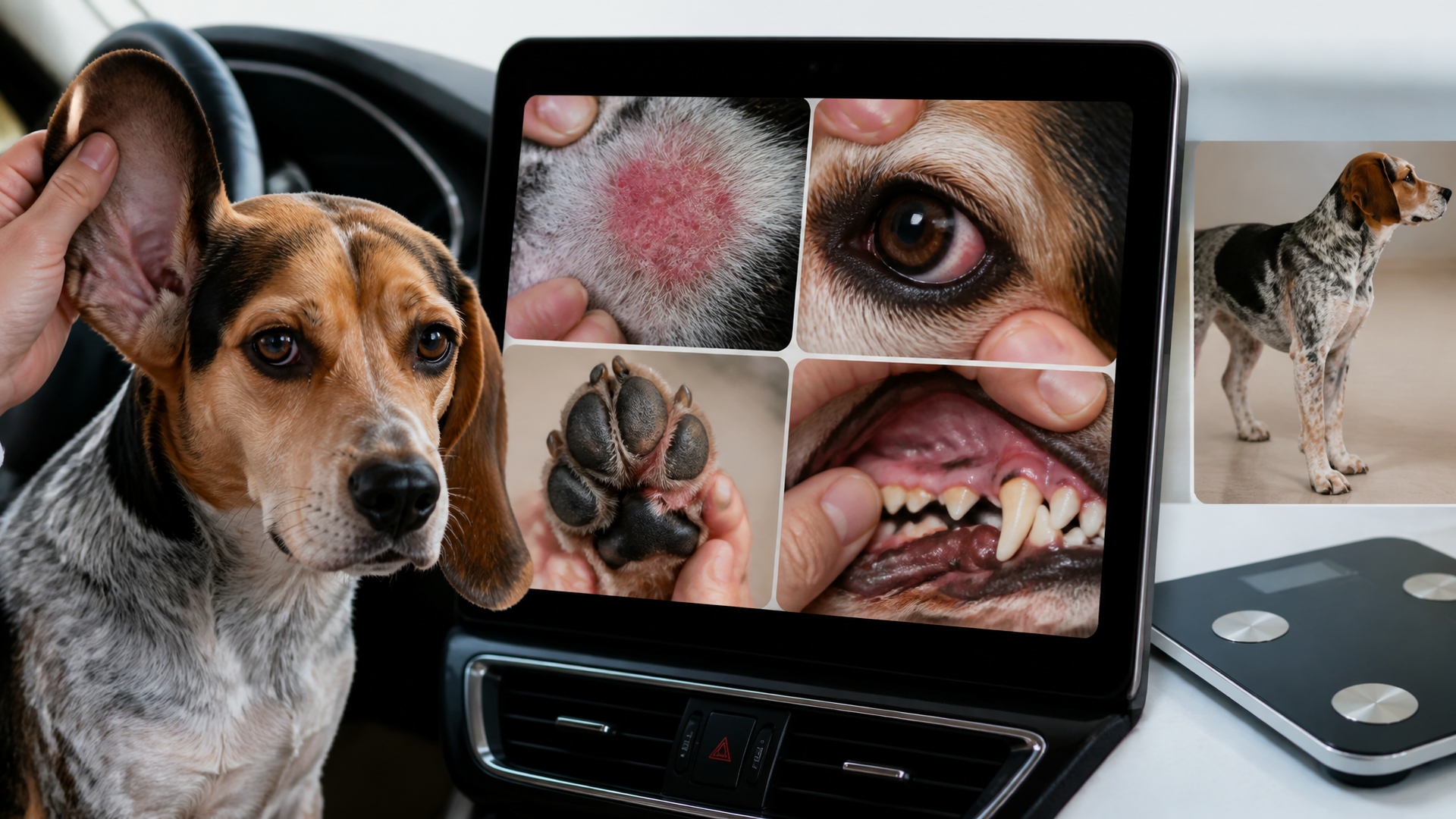
- Rib feel test: Run your hands along the ribcage. Can you feel ribs with light pressure? If you have to push, your dog is overweight.
- Waist check: Look from above. There should be a visible tuck behind the ribcage. No tuck = too heavy.
- Belly tuck check: Look from the side. The belly should curve upward from the chest to the hind legs. A sagging belly means extra weight.
- Growth chart check: Plot your dog’s age and weight against the ranges above. Mark any jumps or plateaus.
If three or more checks flag a concern, adjust feeding or see your vet within a week.
Blue Tick vs. Standard Beagle Size: What Actually Changes
Blue Tick is a color pattern, not a separate breed. These Beagles share the same size range as any other Beagle. The confusion comes from two sources:
Puppy mill lines often produce “pocket” or “mini” Blue Tick Beagles that weigh 15–20 pounds fully grown. These aren’t a legitimate size variant — they’re undersized due to poor breeding. Expect joint problems and a shorter lifespan.
Field-bred Beagles run slightly leaner and can be taller (14–16 inches) but lighter per inch than show-line Beagles. A field-bred Blue Tick at 15 inches might weigh 22 pounds while a show-line Beagle at the same height hits 28 pounds. Both can be healthy within their body type.
The Trade-Off You Need to Know About
If your Beagle is field-bred, using standard crate or harness sizing can backfire. A “Large” crate labeled for Beagles may feel cramped for a 16-inch field-bred dog, while a harness sized for a 30-pound show-line Beagle may sag on a leaner 22-pound field-bred. Worst case: a too-loose harness allows your Beagle to slip out during a walk, risking escape and traffic injury. Always test harness fit by trying to pull it up over the dog’s belly — if you can get more than 2 inches of slack, go down a size.
Product Tools That Actually Help
For home tracking, grab a digital bathroom scale with a hold feature (the reading stays on screen after your dog steps off). For consistent weekly weigh-ins, a collapsible pet scale is smoother than struggling with the bathroom version.
A growth chart whiteboard on the wall keeps the data visible for everyone in the household. Mark feeding changes and vet visit dates alongside the weight numbers.
When buying a harness or crate, take your verified measurements (chest girth and back length) and compare them to the product’s size chart. Do not trust “breed” labels — trust the numbers.
We include product recommendations to help our readers. We may earn a small commission if you purchase through links — this does not affect your price.
3 Expert Tips Every Beagle Owner Needs
Tip 1: Weigh on the same day and time every week.
Beagle weight fluctuates with meal timing and bathroom schedule. Sunday morning before breakfast gives the most consistent read.
Common mistake: Weighing after a walk (dehydration artificially lowers the number) or after dinner (food weight adds 1–2 pounds).
Tip 2: Use a food scale for meals, not measuring cups.
One “cup” of kibble varies by 30% depending on how you scoop. A cheap kitchen scale gives exact portions.
Common mistake: Scooping from a bag that’s settling — the top scoop is lighter than the bottom scoop. Weigh every meal.
Tip 3: Body condition score monthly, not just weight.
A Beagle can hold the same weight for six months while losing muscle and gaining fat. The rib feel test and waist check catch this shift.
Common mistake: Celebrating a “stable weight” when your dog is actually getting softer. Muscle weighs more than fat by volume, so stable weight + softer feel = fat gain.
When the Size Problem Isn’t About Food
If your Blue Tick Beagle’s size or weight changes and feeding hasn’t changed, look for medical causes:
- Hypothyroidism: Slow metabolism, weight gain despite normal food intake, thinning coat, low energy. Blood test required.
- Cushing’s disease: Pot-bellied appearance, increased thirst/urination, muscle wasting on the back. Common in Beagles over 6 years.
- Intestinal parasites: Weight loss or failure to grow in puppies, sometimes with a bloated belly. Fecal test at annual visit catches this.
- Diabetes: Weight loss despite normal or increased appetite, excessive thirst, frequent urination. More common in middle-aged Beagles.
The stop point: If your dog shows any of these plus appetite or energy changes, see the vet this week. Don’t wait for the next annual checkup.
When to Measure, When to Vet
Do at home:
- Weekly weight tracking
- Monthly body condition check
- Food portion adjustment (up or down by 10%)
Call the vet for:
- 10%+ weight change in one month without diet change
- No weight gain in a puppy for 4+ weeks
- Any size change accompanied by vomiting, diarrhea, or lethargy
- Visible rib or spine protrusion (your dog is underweight and needs evaluation)
- Pot-bellied appearance in a puppy (worm burden or organ issue)
Save This Guide: A Blue Tick Beagle’s size tells you more about health than most owners realize. Track weight weekly, check body condition monthly, verify your measurements with the tape-and-scale double-check, and know the three red flags that mean a vet visit, not a food adjustment. Pin this for quick reference during your next weigh-in day.