Cancel Meet Beagle: Guide: What Every Owner Should Know
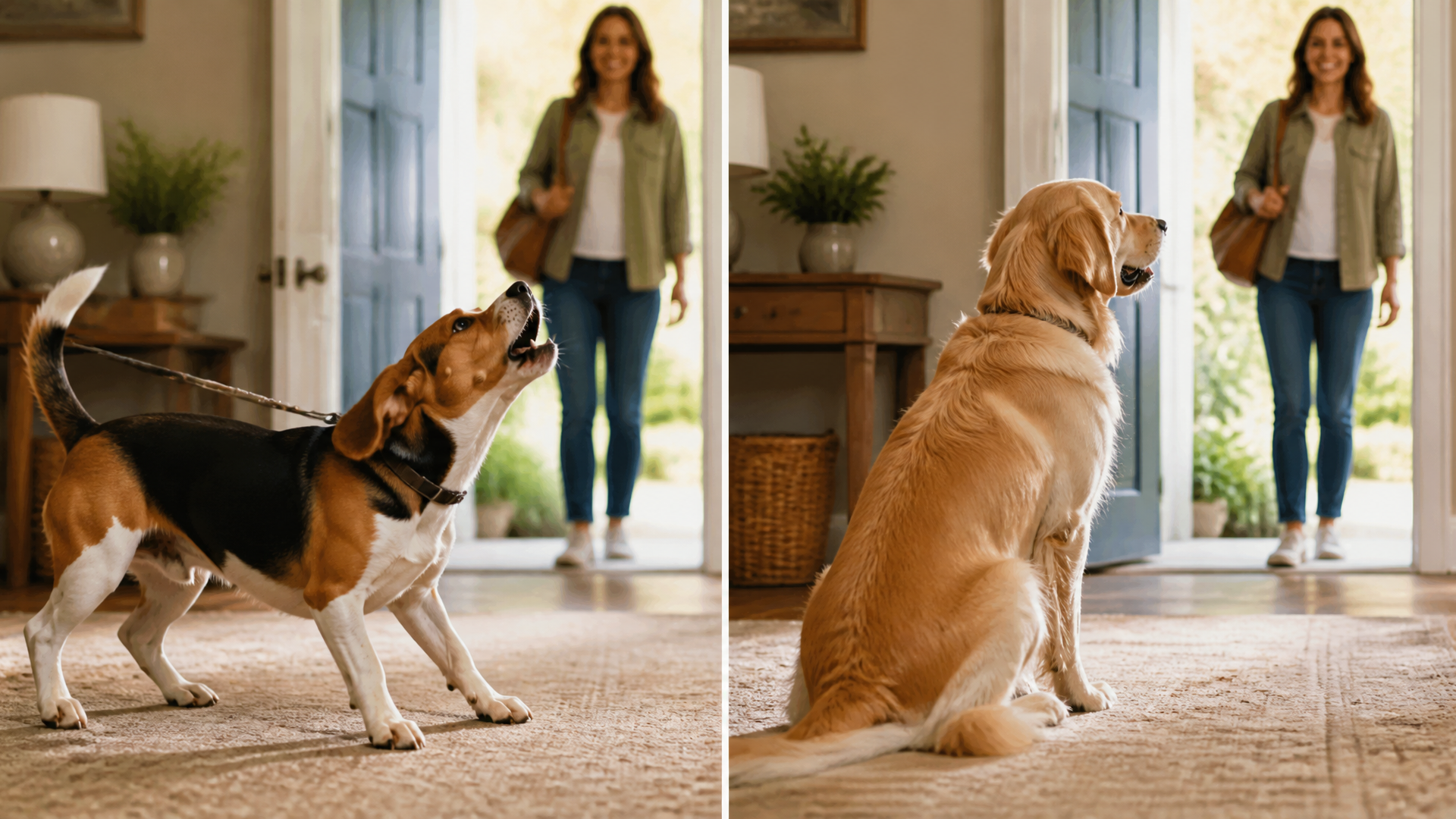
Your Beagle launches toward every visitor barking like a hound on a scent. You want to “cancel” that chaotic meet-and-greet energy for good. The short answer: yes, you can train a calmer greeting — but the approach depends on whether your Beagle is excited-friendly or genuinely stressed, and the training must match your dog’s age, drive level, and household consistency.

Beagles are scent hounds bred to follow their nose and voice their findings. That makes them naturally enthusiastic, vocal, and stubborn when meeting people or dogs. The goal isn’t to suppress their friendliness — it’s to teach a polite off-switch so greetings don’t turn into chaos.
Why Beagles Struggle With Calm Greetings
Beagles face specific challenges when meeting new people or dogs:
- Scent-driven focus – Once your Beagle locks onto a new smell (hello, guest’s shoes or treat pocket), everything else fades.
- High vocalization – Barking, baying, and whining are normal expressions. Quiet greetings require deliberate training.
- Strong food motivation – This works in your favor. Beagles will work for kibble, cheese, or freeze-dried liver.
- Stubborn streak – They’ll test boundaries repeatedly. Training must be consistent every single time.
When to Cancel a Greeting vs. Let It Happen
Your Beagle’s arousal level determines whether you allow the greeting or redirect immediately. This decision rule changes depending on your dog’s age and temperament.
| Arousal Level | Signs | Action |
|---|---|---|
| Calm / low | Soft eyes, relaxed tail, no whining | Allow greeting with “sit” cue |
| Medium | Tail wagging stiff, slight whine, leaning forward | Delay greeting until calm (wait 5 seconds) |
| High / over-threshold | Jumping, frantic barking, spinning | Cancel the greeting – redirect to “mat” or turn away |
Decision rule: If your Beagle cannot hold a sit for 3 seconds without breaking, the greeting is canceled. Work on calm behavior at a distance first.
When This Decision Changes (Applicability Boundaries)
This approach works best for Beagles whose arousal is excitement-based, not fear-based. If your Beagle shows tucked tail, flattened ears, whale eye (wide white showing), or lip curling during greetings — those are stress signals, not excitement. The “cancel and redirect” approach still applies, but you need a certified trainer’s help to address the underlying anxiety.
The split by Beagle type also matters. Use this comparison to adjust your starting distance and expectations:
| Beagle Type | Energy Level | Typical Starting Distance | Training Timeline |
|---|---|---|---|
| Field-line | Higher prey drive, more energy | 25+ feet | Slower progress; need aerobic exercise before sessions |
| Show-line / companion | Moderate, easier to settle | 10 feet | Faster results; can use higher-play value treats |
| Puppy under 6 months | Low impulse control, short attention span | Any distance | Reward any 2-second pause; build duration gradually |
Puppy exception: Puppies under 6 months cannot hold a sit for 3 seconds reliably. For puppies, reward any 2-second pause in the excitement and build duration gradually over weeks.
Step-by-Step Training Protocol
Build a Solid “Sit” on Cue
Use high-value treats (small, smelly, soft — freeze-dried liver or cheese work well). Practice in low-distraction settings before adding guests. Reward only when all four paws stay on the floor.
Verification test: Before you attempt any greeting, do a “puppy push-up” — ask for sit, down, sit. If your Beagle switches positions cleanly, they’re ready to learn. If they ignore or pop up immediately, your treat value or the distraction level is wrong.
Create a Calm Zone
Designate a spot (dog bed, mat, or rug) where your Beagle goes when the doorbell rings. Toss treats onto the mat repeatedly. Practice sending your Beagle to the mat while you open the door (no guest yet). The goal is that your Beagle chooses the mat because good things happen there.
Introduce Real Greetings Slowly
Have a helper approach from a distance. If your Beagle stays on the mat for 5 seconds, the helper approaches one step closer. Reward calm behavior only. If your Beagle breaks position, the helper stops and backs away — the distance increase is the consequence, not punishment.
Use a No-Pull Harness for Walks
On-leash greetings are harder. A front-clip harness (like the PetSafe Easy Walk) gives you better control without choking. The front clip redirects your Beagle’s momentum sideways when they lunge, which naturally interrupts the forward drive toward a person or dog.
3 Expert Tips for Beagle-Specific Greeting Training
Tip 1: Manage the Scent Overload
Actionable step: Before guests enter, scatter a handful of kibble in your Beagle’s crate or on their mat. This buys you 30 seconds of calm and redirects their nose to a positive task.
Common mistake: Expecting your Beagle to ignore a guest’s scent without a competing smell. Beagles are designed to follow smells — give them a better one.
Tip 2: Use Pattern Interruption for Barking
Actionable step: When your Beagle starts baying during a greeting, calmly say “quiet” and immediately toss a treat a few feet away. The movement interrupts the barking cycle. Reward silence for 2 seconds, then increase duration.
Common mistake: Shouting “no” or “quiet” repeatedly. Your raised voice sounds like excited barking to a Beagle, which reinforces the behavior.
Tip 3: Never Allow Guests to Reward Jumping
Actionable step: Ask every visitor to turn their back and cross their arms if your Beagle jumps. The instant all four paws hit the floor, the guest can give a treat and calm petting.
Common mistake: Letting guests say “it’s okay” and pat jumping Beagles. This teaches that jumping = attention, and it only takes one permissive guest to undo a week of progress.
Quick Decision Aid: Should You Allow or Cancel This Greeting?
Check these 5 items before letting your Beagle meet anyone (pass/fail):
- [ ] Beagle is sitting or lying on their mat (not pacing)
- [ ] No barking or whining for the last 10 seconds
- [ ] Tail is low or neutral — not stiff or wagging in tight circles
- [ ] You have high-value treats ready in your hand
- [ ] The guest understands your training rules (no reaching, no eye contact until released)
Pass all 5? Proceed with a calm, sit-based greeting.
Fail even one? Cancel the greet — redirect your Beagle to a crate or another room for 30 seconds, then try again at a lower arousal level.
What This Training Approach Won’t Solve
This method works for Beagles who are friendly but overaroused. It is not designed for:
- Aggressive Beagles – growling, snapping, or stiff body language toward people or dogs. These dogs need a professional behavior assessment, not a sit-on-mat protocol.
- Multi-Beagle households – if you have two Beagles, they often trigger each other. You may need to train one dog at a time in a separate room while the other is crated.
- Inconsistent households – if one family member lets the Beagle jump and another enforces the mat rule, the behavior will not improve. Every person who enters the home must follow the same protocol.
- High-drive field Beagles – these dogs may need 5+ minutes of aerobic exercise before a greeting session to be under threshold. Without that outlet, the mat training may fail repeatedly.
If any of these describe your situation, skip the DIY approach and contact a certified positive-reinforcement trainer who specializes in scent hounds.
When to Escalate to a Professional Trainer
If your Beagle’s greeting behavior includes growling, snapping, or the stress signals mentioned above (tucked tail, flattened ears, whale eye), stop training immediately. These are stress signals, not excitement. Contact a certified positive-reinforcement trainer with experience in scent hounds.
Also escalate if you’ve been consistent for 3 weeks with no improvement — some Beagles need in-person guidance because their hardwired baying and lunging pattern has been rehearsed too many times to resolve with owner-led training alone.
Save This Guide
Key takeaway: Beagles can learn polite greetings, but you must work below their arousal threshold and match the approach to your Beagle’s age, drive level, and household consistency. Use the 5-item checklist before every greeting, keep high-value treats ready, and ensure every family member and visitor follows the same rules. Consistency across every guest and every walk is what makes it stick.
Disclosure: This article contains product recommendations. As an affiliate, we may earn a commission on qualifying purchases at no extra cost to you.