Adult Weight Beagle: Daily Routine & Expert Tips
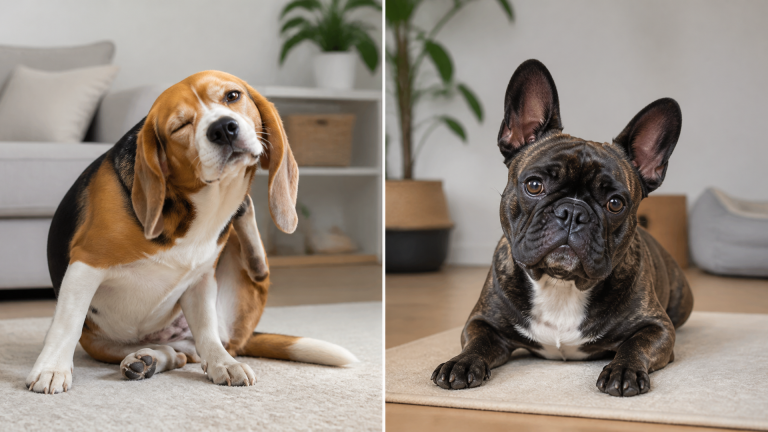
A healthy adult Beagle weighs between 20–30 pounds. Males typically land at the higher end, females at the lower. But here’s what most owners get wrong: your Beagle’s pleading eyes aren’t hunger — they’re boredom. Weight management starts with entertainment, not portion cuts.

What a Healthy Adult Beagle Should Weigh
Adult Beagles come in two size varieties, and the difference matters for every care decision.
| Size Variety | Typical Weight | Ideal Body Shape |
|---|---|---|
| 13-inch Beagle | 20–23 lbs | Visible waist when viewed from above |
| 15-inch Beagle | 25–30 lbs | Ribs easily felt under a thin fat layer |
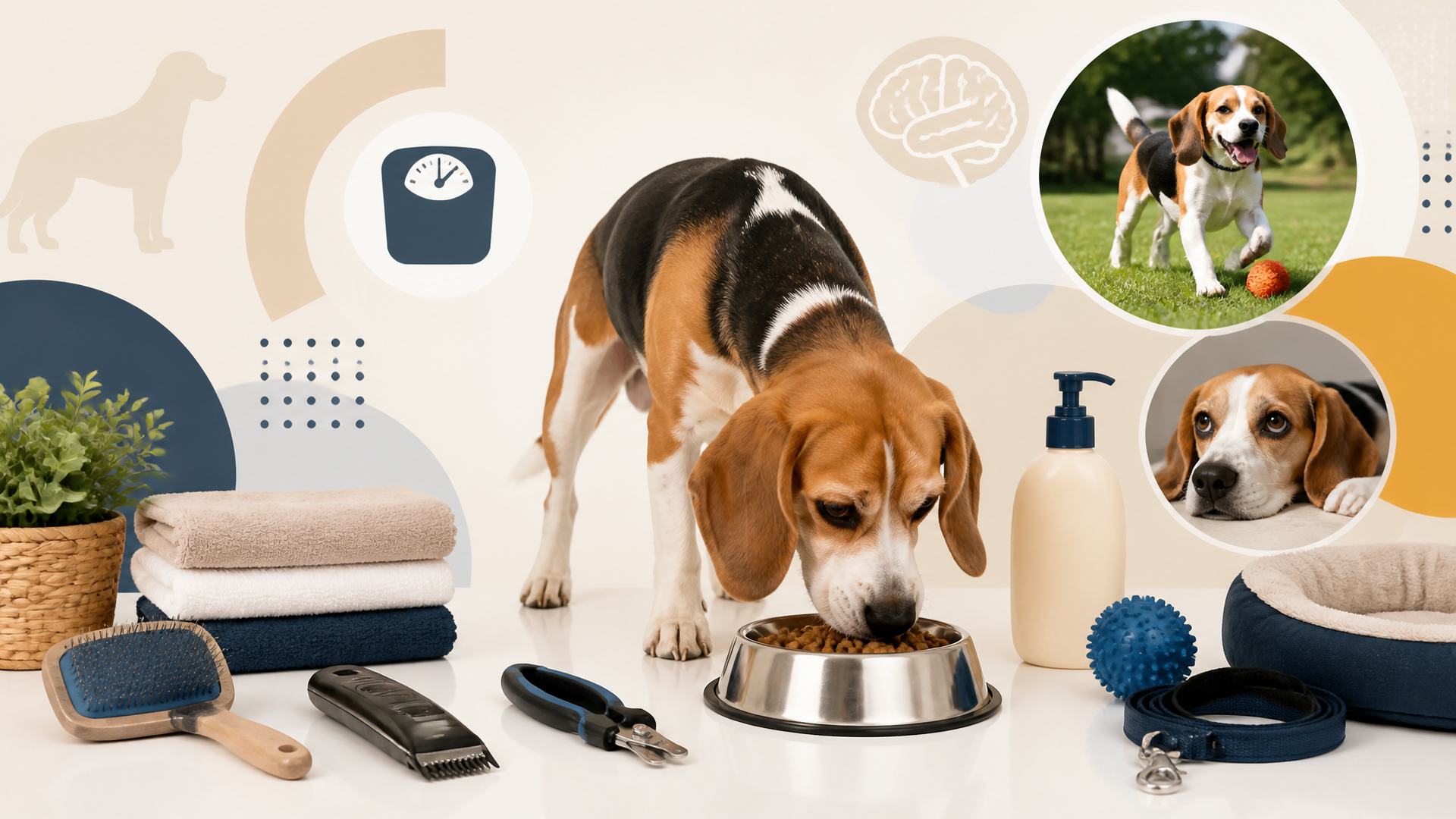
How to check at home: Run your hands along your Beagle’s sides. You should feel ribs with a light touch — not a bony ridge, not a padded layer. From above, you should see a clear waist behind the ribcage. No waist? Time to adjust the routine.
The Real Reason Your Beagle Acts Hungry
Beagles were bred to hunt in packs, using scent and endurance. Food motivation is hardwired. Your dog isn’t starving — they’re genetically programmed to eat every opportunity because their ancestors never knew where the next meal came from.
The disconnect most owners miss: That “I’m starving” performance at the dinner table is a trained behavior. Beagles learn fast that whining or staring earns treats. If you’ve rewarded it even once, you’ve reinforced it.
The fix isn’t less food — it’s more structure and more stimulation.
A Daily Routine That Works for Beagles
Beagles thrive on predictability. A consistent daily schedule prevents begging behaviors and weight creep.
Morning (6:00–7:00 AM)
- 20-minute walk — Let your Beagle sniff. Sniffing is mental exercise that burns energy.
- Measured breakfast — Split daily food into two meals. A single large meal encourages food anxiety.
- Puzzle toy — Feed breakfast from a slow feeder bowl or puzzle toy like the Outward Hound Fun Feeder. Meal time doubles as mental work.
Midday (12:00–1:00 PM)
- 10-minute sniff break — A quick walk around the yard or block. No intense exercise after eating.
- Frozen Kong — Stuff with a small portion of dog-safe peanut butter and kibble, then freeze. This buys you 30 minutes of calm.
Evening (5:00–7:00 PM)
- 30-minute walk or fetch session — Beagles need moderate daily exercise. Aim for 30 minutes to 1 hour of activity.
- Measured dinner — Same amount as breakfast. Stick to the schedule.
- Training session (10 minutes) — Use low-calorie training treats. Freeze-dried liver pieces broken into tiny bits.
Night (8:00–9:00 PM)
- Final potty break — Beagles have small bladders relative to their food drive.
- Crate or designated rest area — No access to food bowls or trash after dinner.
Daily treat limit: No more than 10% of total calories. A single large milk-bone type treat can be 50–80 calories — that’s already most of the daily treat budget for a 20-pound Beagle.
Weight Warning Signs: When to Act vs. When to Wait
Not every change means you need to sprint to the vet. Here’s how to triage.
Likely cause (adjust routine first)
- Gradual weight gain over 2–3 months — Portion sizes crept up or treats increased.
- Begging intensifies — Solution: add 10 minutes of mental enrichment before meal times.
- Weight stays stable but no waist — Cut daily calories by 10% and measure every kibble for two weeks.
Friction point (proceed with caution)
- Sudden weight loss with increased appetite — This can signal intestinal parasites. Have your vet run a fecal test.
- Weight gain despite unchanged food and exercise — Could be hypothyroidism. Blood work is warranted.
- Your Beagle becomes lethargic alongside weight gain — Rule out Cushing’s disease, especially in dogs over 8 years old.
Stop and escalate (call the vet this week)
- Hunched back or pot-bellied appearance
- Visible rib or hip bones with normal eating habits
- Vomiting or diarrhea lasting more than 24 hours
STOP: If your Beagle loses more than 10% of their body weight in 30 days without intentional dieting, call your vet immediately. Do not wait another week. Do not try to “fix it” with extra food or supplements first — let the vet rule out metabolic or gastrointestinal causes.
Why the routine fails (and how to fix it)
The one failure pattern that trips up most owners: You buy a puzzle toy, your Beagle solves it in 10 minutes, and the mental stimulation stops. The begging returns by evening. You assume the toy is useless. You give in and feed extra.
What’s really happening: The puzzle toy worked — it just wasn’t enough. Beagles need variety. Rotate three different puzzle toys across the week. Hide kibble in a towel rolled into a knot. Scatter food in the grass for a sniff-fest. The stimulation must change, not just exist.
Safer next move: If your Beagle starts counter-surfing or trash diving after a week on a new routine, you haven’t failed — you’ve hit a boredom ceiling. Add 15 minutes of nose work before dinner. Most Beagle weight problems are really Beagle boredom problems.
The 5-Point Beagle Weight Check
Use this before every monthly weigh-in. Mark each item pass or fail.
| Check | What to Look For | Pass/Fail |
|---|---|---|
| 1. Rib feel | Ribs easily felt with light palm pressure, not visible from a distance | ☐ Pass ☐ Fail |
| 2. Waist view | Clear hourglass shape when viewed from above | ☐ Pass ☐ Fail |
| 3. Belly tuck | Belly curves upward from chest to hind legs (not sagging) | ☐ Pass ☐ Fail |
| 4. Energy level | Typical Beagle enthusiasm: curious, sniffing, eager to walk | ☐ Pass ☐ Fail |
| 5. Treat journal | Daily treats logged and under 10% of total daily calories | ☐ Pass ☐ Fail |
One fail means recheck portions. Two or more fails means adjust the routine now and schedule a vet weigh-in within two weeks.
Feeding Numbers That Actually Work for Beagles
Beagles have a slower metabolism than many similarly sized breeds. Follow these guidelines, then adjust based on your dog’s activity level.
Daily calorie estimate:
- 20-pound Beagle (light activity): 480–520 calories
- 20-pound Beagle (moderate activity): 520–580 calories
- 30-pound Beagle (light activity): 650–700 calories
- 30-pound Beagle (moderate activity): 700–780 calories
What this looks like in practice:
- A high-quality dry food like Blue Buffalo Life Protection Chicken & Brown Rice (364 kcal/cup) — for a 20-pound Beagle: about 1.3 to 1.5 cups per day, split between two meals.
- A high-quality dry food like Hill’s Science Diet Adult Chicken & Barley (377 kcal/cup) — for a 30-pound Beagle: about 1.7 to 2.1 cups per day, split between two meals.
The real-world trick: Use a kitchen scale to measure food in grams for one week. Most owners over-pour by 25–40% when using measuring cups alone. A standard 1-cup scoop leveled off should weigh about 95–110 grams, depending on the food. Check the bag for grams per cup and calibrate your scoop.
Affiliate disclosure: As an Amazon Associate, we earn from qualifying purchases. Product links help support our content.
The Counter-Intuitive Truth About Treat Training
Here’s what most Beagle owners get backward: using high-value treats for training actually helps weight control — if you adjust meal portions to compensate.
Why it works: Training with small, high-value treats (single pea-sized bits of freeze-dried liver or chicken) builds focus and burns mental energy. A Beagle who works for treats during a 15-minute training session is mentally tired and less likely to obsess over food the rest of the day.
The mistake: Owners skip training to “save calories,” so the Beagle gets bored and redirects that energy into counter-surfing, trash diving, and begging.
The fix: Dedicate 20–30 calories of the daily budget to training treats. Reduce the dinner portion by the same amount. You get a calmer Beagle, the same total calories, and better behavior.
Save This Guide
Your adult Beagle’s healthy weight comes down to three things: measured portions split into two meals, daily mental enrichment that outlasts the begging phase, and a quick monthly rib-and-waist check. The begging eyes won’t stop — but you’ll know they mean “entertain me,” not “feed me.”
Key takeaway: A Beagle at a healthy weight lives 2–3 years longer on average than an overweight one. Manage the routine, not the whining.