Burmese Cat Temperament: Guide: What Every Owner Should Know
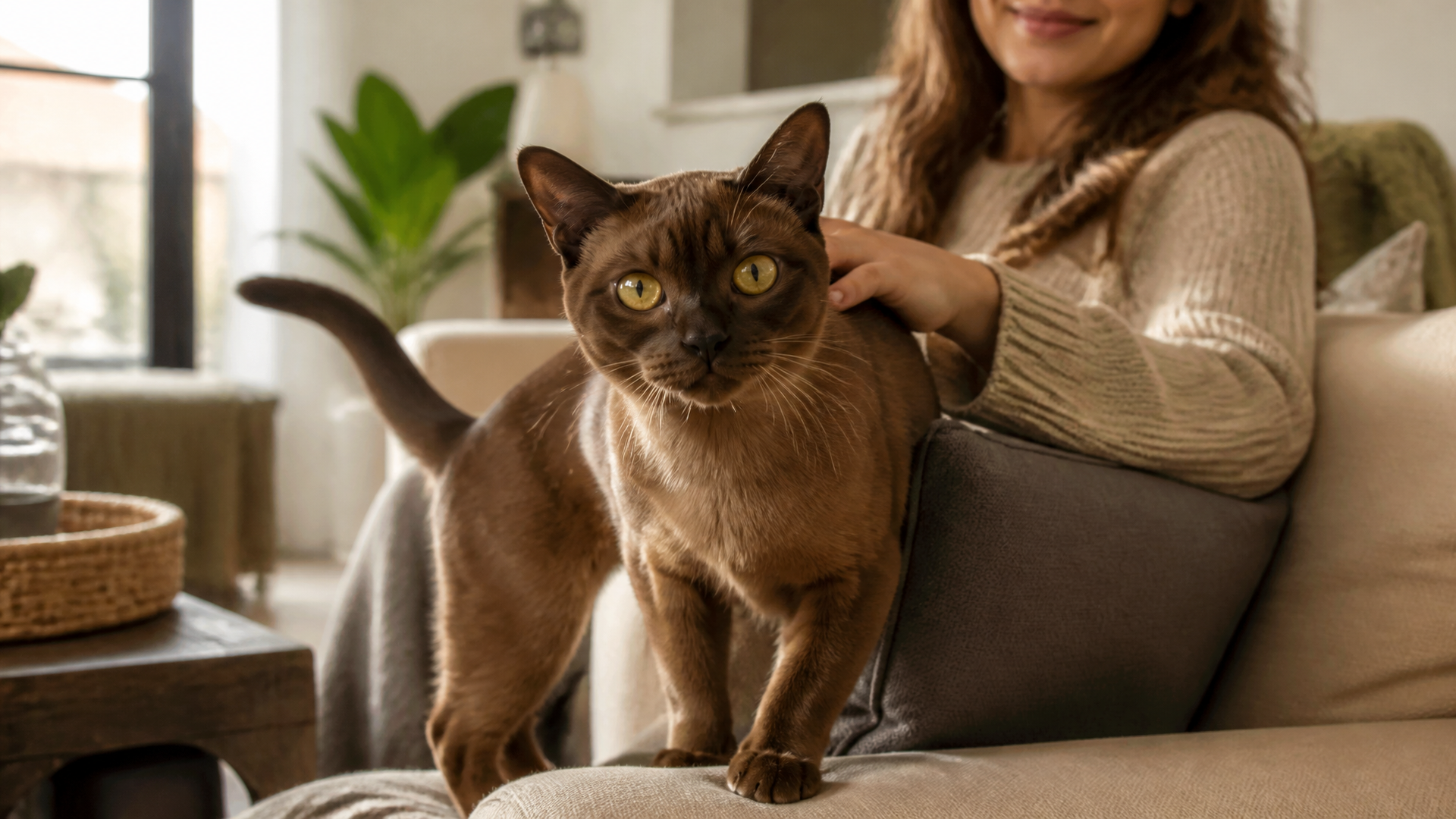
Burmese cats are famously people-oriented, social, and affectionate — often described as the “velcro cat” because they stick close to their owners. If you’re looking for a lap cat who follows you from room to room and demands attention, the Burmese is hard to beat. But this extreme sociability also means they’re not ideal for owners who are away from home most of the day. Here’s what you need to know before bringing one home.

The Burmese Personality at a Glance
Burmese cats were bred for companionship, and it shows. They form intense bonds with their humans and thrive on interaction. Key temperament traits include:
- Extremely people-oriented. They want to be involved in everything you do — working at your desk, watching TV, cooking dinner. Expect a furry supervisor.
- Vocal but not yowly. Burmese cats have a soft, distinctive voice. They’ll “talk” to you with chirps and meows, especially when greeting you or asking for food.
- Playful well into adulthood. Unlike some breeds that mellow out after kittenhood, Burmese cats stay energetic and playful for years. They love puzzle toys, fetch, and climbing.
- Dog-like loyalty. Many Burmese owners report their cat comes when called, follows them on walks (with a harness), and greets them at the door.
- Comfortable with other pets. They generally get along well with cat-friendly dogs and other cats, especially if introduced gradually.
- Not a lap cat 100% of the time. They are lap cats, but they also need active play sessions. Plan for 15–20 minutes of interactive play twice a day.
- Sensitive to being alone. This is the most important trait to understand before adopting.
The One Decision Criterion That Changes Everything
How many hours per day will your cat be left alone? This single question determines whether a Burmese is a good fit.
0–4 hours alone per day — Ideal match. If you work from home, are retired, or have a household where someone is usually present, a Burmese will thrive. They’ll happily shadow you all day and curl up on your lap during breaks.
4–8 hours alone per day — Proceed with caution. A single Burmese left alone for a full workday can become anxious, destructive, or develop separation-related behaviors. If this is your situation, strongly consider adopting two Burmese kittens or a bonded pair so they keep each other company.
8+ hours alone per day — Not recommended. Even with enrichment toys and cat trees, most Burmese cats will not do well with long daily isolation. A more independent breed (like a British Shorthair or Russian Blue) would be a better choice.
Bottom line: If you can’t be home much, a Burmese is likely the wrong breed. If you can, they are one of the most rewarding companion cats you’ll ever own.
How to Help Your Burmese Cope With Alone Time: A Step-by-Step Flow
If you fall into the 4–8 hour alone time category and still want a Burmese, use this operator flow to set them up for success. Follow each checkpoint honestly — skipping steps often leads to behavior problems down the road.
Step 1: Assess your baseline — can your Burmese handle 15 minutes alone right now?
Before leaving them for hours, test short absences. Leave the house for 5–10 minutes while the cat is awake. Watch through a pet camera or listen at the door.
Checkpoint: If you hear constant yowling or scratching at the door within 5 minutes, your cat already shows high distress. Do not proceed to longer absences without addressing this first.
Step 2: Create a “safe zone” with high-value enrichment
Set up a separate room (or large crate) with:
- A comfy bed
- A litter box (away from food)
- Water and a slow-feeder puzzle toy
- A GAPZER Pet Carrier for Large Cats left open so it becomes a den, not a scary box
- A vertical perch (cat tree or shelf) so they can watch from above
Checkpoint: Does your cat willingly enter the safe zone on their own? If they hide or refuse treats there, the space still feels threatening. Add a worn T-shirt with your scent and a Feliway diffuser before trying again.
Step 3: Build up duration slowly — 15-minute increments
Start with 15 minutes, then 30, then 1 hour, up to your target alone time. Only increase when the cat stays calm at the current level.
Likely causes of failure: Your cat may associate your departure with punishment (if you scold them before leaving) or with sudden silence (if you always leave the TV on). Keep departures low-key: no long goodbyes, no emotional fuss.
Step 4: Introduce a companion cat if you hit a wall
If your cat still shows signs of anxiety (excessive grooming, litter box avoidance, destructive scratching) after 2–3 weeks of step 3, it’s time to consider a second cat. Do not skip this checkpoint. A lonely Burmese will not “get used to it” — they will get worse. Adopt another social cat (preferably a Burmese or a confident mixed breed) and do a proper slow introduction over 7–10 days.
Escalation signals — when to call your vet
- Your cat stops eating or drinking while you’re away
- Vomiting or diarrhea appears only on workday mornings
- Self-inflicted bald spots or skin wounds from over-grooming
If any of these appear, consult your veterinarian. Separation anxiety in cats can be managed with medication, behavioral therapy, or both — but it will not resolve on its own.
Success check
Your Burmese is coping well when they:
- Eat their food and use the litter box normally during your absence
- Greet you calmly (not desperately) when you return
- Spend alone time napping or playing with toys instead of pacing or yowling
If you’ve worked through these steps and your cat still struggles, the kindest choice may be to rehome them with a household that has more human presence. That’s not failure — it’s putting your cat’s well-being first.
3 Expert Tips for Living With a Burmese
Tip 1: Build a daily play ritual they can count on
Actionable step: Schedule two 15-minute interactive play sessions at the same times every day — morning and evening work best. Use wand toys that mimic bird or prey movements. Burmese cats love to leap and chase, so vary the speed and direction.
Common mistake to avoid: Leaving toys out for them to play with alone and assuming that’s enough. Burmese cats need you in the game. Without structured playtime, they may redirect their energy into destructive behaviors like knocking items off shelves or scratching furniture.
Tip 2: Create vertical space and perching spots near where you spend time
Actionable step: Install cat shelves, a tall cat tree, or window perches in the rooms where you spend the most time — especially your home office and living room. Position them so your Burmese can watch you from above.
Common mistake to avoid: Putting the cat tree in a quiet corner of the house. Burmese cats don’t want to be away from the action. If the tree is in a room you rarely use, they’ll ignore it and follow you instead — then climb your curtains or bookshelves for height.
Tip 3: Travel and vet visits require a cat carrier your Burmese can’t escape
Actionable step: Get a sturdy, escape-proof carrier before you need one. Burmese cats are clever and can work flimsy zippers or latches. The GAPZER carrier mentioned above has self-locking zipper sliders that prevent clever cats from opening the bag from inside, and the soft-sided design with mesh ventilation keeps them comfortable during trips. Test the carrier at home with treats and short practice sessions before the first real outing.
Common mistake to avoid: Forgetting that a stressed Burmese can squeeze through gaps or pop weak seams. Always double-check zipper locks and latch closures before lifting the carrier. If your cat has ever escaped a carrier before, upgrade to a more secure model.
Quick Reference: Burmese Temperament at a Glance
| Trait | What You Need to Know |
|---|---|
| Affection level | Very high. Expect lap time, head-butts, and following you everywhere. |
| Playfulness | High. Stays playful into senior years. Needs daily interactive play. |
| Vocalization | Moderate. Chirps and soft meows, not loud or excessive. |
| Tolerance of alone time | Low. Not a breed for owners who are away all day without a companion cat. |
| Good with kids | Yes, if kids are taught gentle handling. Prefers calmer, older children. |
| Good with other pets | Yes, with proper introductions. Often bonds with cat-friendly dogs. |
| Trainability | High. Can learn fetch, walk on a harness, and respond to their name. |
| Grooming needs | Low. Short coat needs weekly brushing. Minimal shedding. |
Frequently Asked Questions About Burmese Cat Temperament
Are Burmese cats aggressive?
No. Burmese cats are not known for aggression. They are gentle, social cats. If your Burmese shows aggression, it’s usually a sign of stress, boredom, or feeling threatened — not a breed trait.
Do Burmese cats get along with dogs?
Yes, generally well. Burmese cats are confident and adapt to living with cat-friendly dogs. Introduce them slowly: keep the dog on a leash, let the cat approach at their own pace, and create safe high spaces the cat can retreat to.
Can Burmese cats be left alone with another cat?
Yes, and this is actually the recommended setup if you work outside the home. A bonded pair of Burmese or a Burmese with another social cat breed can keep each other company and reduce separation anxiety. Make sure both cats are fixed and properly introduced.
Are Burmese cats lap cats?
Yes, but on their terms. They will sit in your lap for hours — but they also need active playtime first. Expect a Burmese to alternate between “cuddle mode” and “zoomies mode” throughout the day.
Do Burmese cats shed a lot?
No. They have a short, fine coat that sheds lightly. Weekly brushing with a soft bristle brush keeps loose hair under control. They shed less than most domestic short-haired cats.
Save This Guide — Burmese cats are one of the most loving and loyal breeds you can welcome into your home, but their need for companionship is a real responsibility. The key takeaway: if you can be present and engaged, you’ll have a devoted friend for life. If you’re away most of the day, adopting two is the way to go.
As an Amazon Associate, we earn from qualifying purchases. This helps us continue providing free breed guides.