Burmese Cats Weight: Daily Routine & Expert Tips
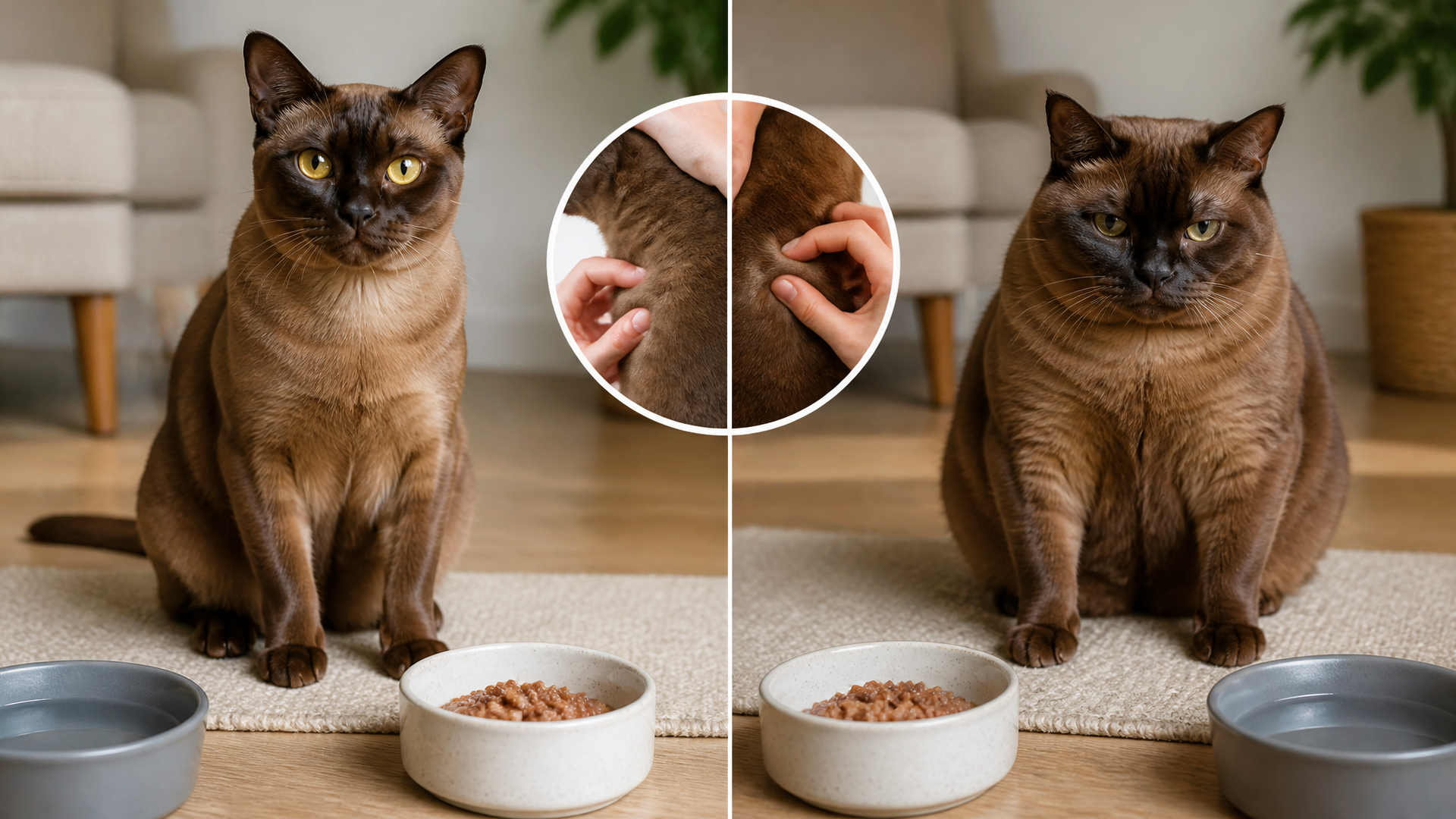
A healthy adult Burmese cat weighs 8–12 pounds for females and 10–15 pounds for males. These cats are naturally dense and muscular — a lean Burmese should feel heavy for its size, not soft or flabby. If you can’t easily feel their ribs beneath a thin layer of fat, it’s time to adjust their daily routine starting today.

What a Healthy Burmese Should Look and Feel Like
Burmese cats have a compact, muscular build that often tricks owners into thinking they’re overweight when they’re actually perfectly proportioned. Run your hands along their sides — you should feel ribs with a light fat cover, similar to the back of your hand. From above you should see a visible waist behind the ribs. From the side there should be a slight abdominal tuck.
Warning signs to watch for:
- No visible waist when viewed from above
- A sagging belly pouch that swings when they walk
- Ribs that feel like pressing into a mattress
- Reluctance to jump onto counters or furniture
- Excessive panting after short play sessions
Stop and see the vet if: Your cat shows any of these warning signs and has lost or gained more than a pound in a month without a diet change — this may signal thyroid disease, diabetes, or other metabolic issues that need professional evaluation before you adjust food.
Daily Feeding Routine for Weight Maintenance
Burmese cats are food-motivated and will eat past fullness if given the chance. Portion control isn’t optional — it’s essential for this breed.
Your daily feeding schedule:
- Morning (7–8 AM): ¼ cup high-quality dry food (look for 40%+ protein, under 15% fat)
- Evening (5–6 PM): One 3-ounce can of wet food (70–85% moisture content)
Use a kitchen scale to measure portions at least once a week. Burmese cats should eat 200–250 calories daily depending on activity level. Adjust by 10% if they’re gaining or losing weight.
Pro tip: Feed wet food as the primary protein source. Dry food is convenient but tends to be calorie-dense. A wet-food-first approach helps maintain hydration and naturally prevents overeating. A slow feeder bowl or puzzle ball turns mealtime into a 20-minute activity instead of a 60-second inhale — this alone reduces begging behavior by half.
Early Checkpoint: The First Week
After seven days on this schedule, check:
- Is your cat finishing meals and walking away, or still begging?
- Is their energy level stable or improving?
- Are they maintaining weight within 0.5 pounds?
If begging persists after meals, increase wet food portion by ½ ounce and reduce dry food by ⅛ cup. Burmese cats often need trial-and-error adjustments in the first week. If after two weeks the cat is still losing or gaining weight beyond 0.5 pounds per month, stop DIY adjustments and consult your vet — Burmese cats can hide early signs of illness behind changes in appetite.
Weekly Weight Check Decision Aid
Run through these five checks every Sunday morning. If three or more flags turn red, adjust food portions by 10% and reassess in two weeks.
| Check | How to Do It | Healthy (Green) | Needs Adjustment (Red) |
|---|---|---|---|
| Rib feel | Run palms along sides while cat stands | Light pressure, ribs felt easily | Must push through fat to find ribs |
| Waist view | Look down from above while cat stands | Visible hourglass shape behind ribs | Straight line or bulging sides |
| Belly tuck | Side view while cat stands | Slight upward slope from ribs to hips | Belly hangs low or sags |
| Activity level | Daily playtime | 20–30 minutes of active play | Lethargic, naps more than 18 hours per day |
| Weight trend | Weekly scale reading | Stable within 0.5-pound range | Gaining or losing more than 0.5 pound monthly |
Likely cause if multiple red flags pop up: Free-feeding, hidden treat calories from other family members, or a recent drop in play intensity. Track everything for three days before making changes. If the pattern continues despite strict portion control, schedule a vet visit — Burmese cats are prone to diabetes and early detection makes a difference.
The 3-Step Weight Correction Plan
If your Burmese is carrying extra pounds, here’s the fix order with clear checkpoints:
Step 1: Measure Every Meal (Week One)
Stop free-feeding entirely. Use a digital kitchen scale for dry food and a measuring cup for wet. Log everything in a notes app — including treats, table scraps, and whatever the kids might be sneaking.
Failure checkpoint (Day 3): If your cat is still gaining weight despite measured portions, check for hidden food sources. Burmese cats are clever enough to open cabinets or steal from other pets’ bowls. Also verify that no one else in the household is giving extra meals.
Step 2: Increase Play Intensity (Week Two)
Burmese cats need high-impact play — not just wand toys but chase-and-pounce games. Try 10-minute sessions three times daily:
- Laser pointer up and down stairs
- Crinkle balls tossed across rooms
- Feather wands that mimic bird flight paths
Watch for actual panting — that’s good sign of real exertion. If your cat isn’t panting at all after play, increase intensity.
Likely cause if play isn’t working: Your cat may prefer different toy types. Try crinkle toys, spring toys, or even a crumpled receipt — Burmese cats often have strong toy preferences that change with age. Rotate toys weekly to keep interest high.
Step 3: Reduce Treats by Half (Ongoing)
Burmese cats respond to treats like kids respond to candy. Replace half their daily treat allotment with freeze-dried chicken pieces or single-ingredient fish flakes. Those tiny training treats add up fast — a dozen pieces can equal 15–20 extra calories.
Escalation signal: If after four weeks on this plan your cat hasn’t lost weight, or if they lose weight too fast (over ½ pound in two weeks), see your vet. Sudden weight loss or resistance to weight loss both warrant bloodwork to rule out thyroid issues or other metabolic problems. Do not continue DIY adjustments beyond this point — you risk missing a serious health problem.
Expert Tips That Actually Work for Burmese
Use puzzle feeders. Burmese cats are intelligent and need mental stimulation. A slow feeder bowl or puzzle ball turns mealtime into a 20-minute activity instead of a 60-second inhale. This alone can reduce begging behavior by half.
Track body condition score monthly. The 9-point scale is more reliable than the scale itself. A score of 5 (ideal) means ribs are easily felt with minimal fat, waist is visible, and belly tuck is present. Score 6 or above means your cat is overweight.
Watch for age-related shifts. Burmese cats tend to slow down around age 7–8. If your cat was stable at 10 pounds for years and suddenly starts gaining at age 7, drop their daily calories by 10–15% before the weight accumulates. If weight gain persists despite the calorie cut, have your vet check for arthritis or dental pain — both can reduce activity and trigger weight gain.
Don’t confuse muscle with fat. A muscular Burmese feels dense and firm. An overweight Burmese feels spongy and soft. If you’re unsure, ask your vet to demonstrate the body condition score on your cat during the next visit so you know exactly what to feel for at home.
Save This Guide
A healthy Burmese cat is lean, muscular, and active — not fluffy around the edges. Measure portions weekly, check body condition monthly, and adjust calories as your cat ages. If your vet says your Burmese is at an ideal weight, trust that muscular frame and keep doing what’s working. The moment your cat’s weight changes unexpectedly or resists your best efforts, escalate to professional care — that’s the fastest way to keep your Burmese healthy for years.
We include product recommendations that help Burmese owners care for their cats. As an Amazon Associate, we earn from qualifying purchases at no extra cost to you.