Bichon Frisé Appearance: Guide: What Every Owner Should Know
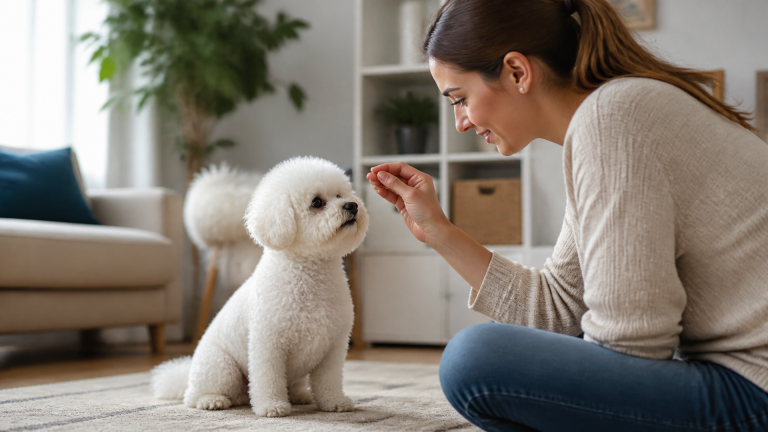
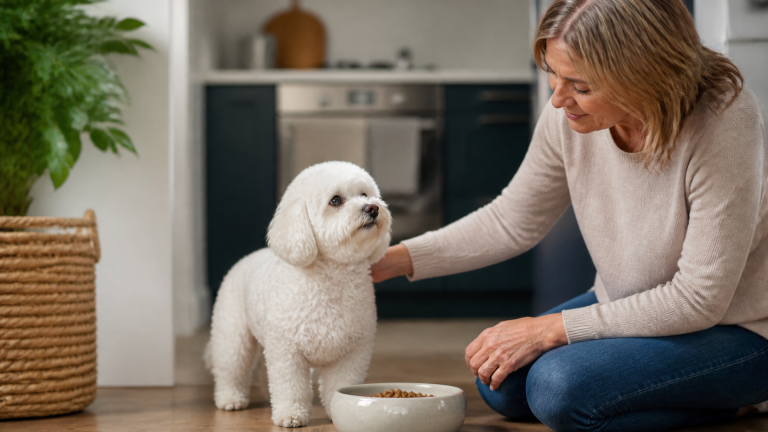
The Bichon Frisé is a small, sturdy dog wrapped in a cloud of white fluff — round head, dark button eyes, black nose, and a powder-puff coat that never stops growing. They stand 9–12 inches tall and weigh 12–18 pounds, a compact, balanced companion that looks like a living teddy bear.

Here’s the part most guides skip: that iconic fluffy look is 100% human effort. A Bichon’s natural coat is a double layer of soft, tight curls that mats within hours if not brushed. The round “poodle puff” silhouette you see in photos is a groomed shape, not the dog’s natural outline. Understanding what’s coat and what’s cut is the first step to keeping your Bichon looking its best.
The Coat: White, Curly, and Non-Negotiable Upkeep
Bichons are almost always solid white. The AKC standard allows slight cream or apricot shadings on the ears and body, but pure white is the goal for show dogs. The coat texture is soft, fine, and tightly curled — similar to a Poodle but with a looser corkscrew. This double coat sheds very little, which is why they’re often called hypoallergenic (low-dander, not truly allergy-free).
Critical detail: A Bichon’s coat grows continuously, just like human hair. No seasonal blow-out, but constant upkeep. Without daily brushing, the curls mat against the skin and cause painful hot spots.
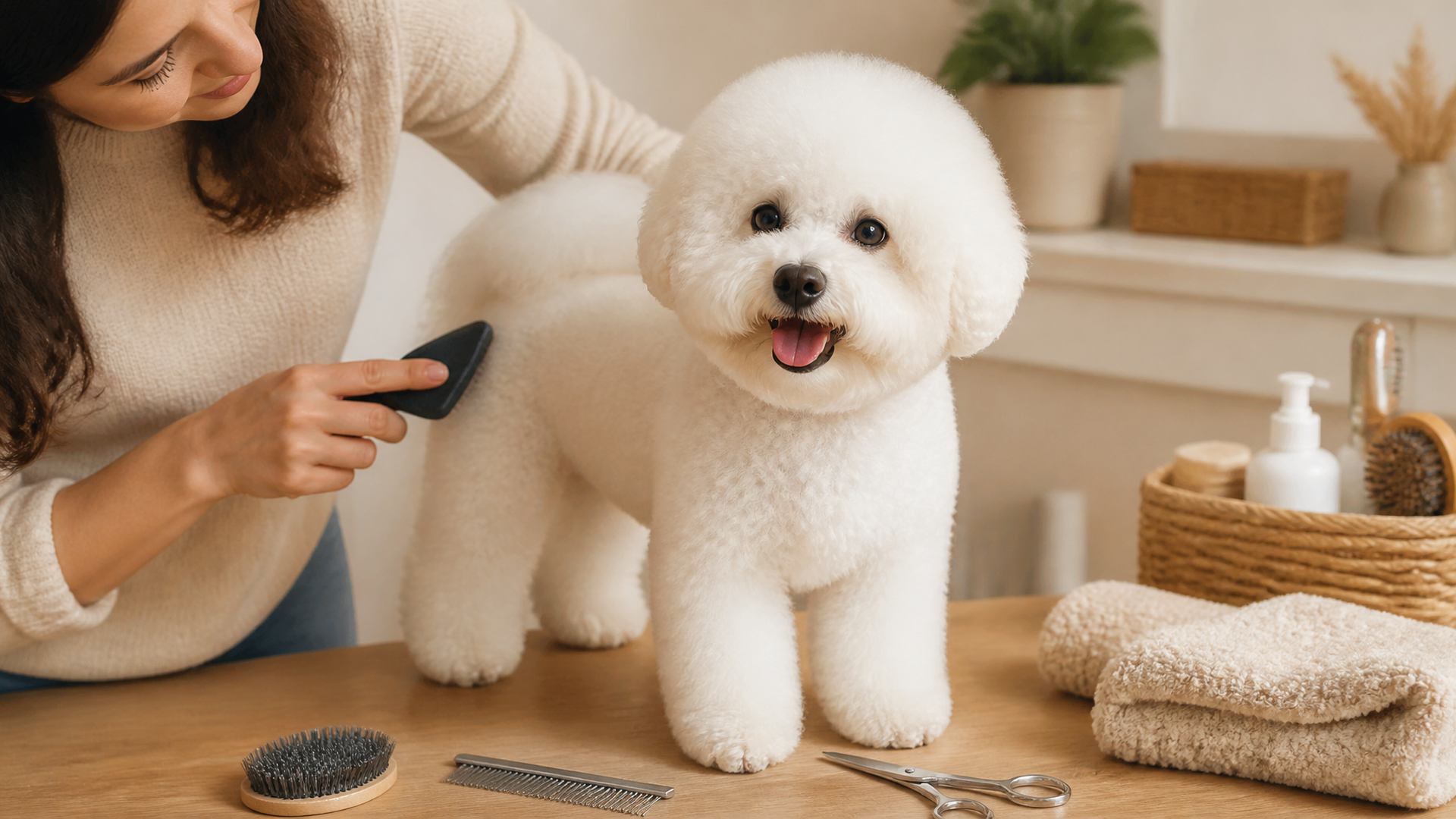
Tools you’ll need (affiliate disclosure):
| Tool | Purpose | Why It Matters |
|---|---|---|
| Slicker brush | Daily line-brushing | Firm pins reach the undercoat |
| Pin brush | Gentle finishing | Smooths the top layer |
| Detangling spray | Pre-breakage slip | Water-based, no alcohol |
| Metal comb | Spot-checking | Catches mats behind ears and under legs |
Body Shape: Square, Sturdy, and Easy to Misjudge
The Bichon is built like a small brick — square from shoulder to rump, with a level topline and a chest that reaches the elbows. They’re heavier than they look. That fluffy coat can hide a lean, muscular body, so many owners mistakenly believe their dog is underweight when it’s actually perfectly fit.
Breed-specific measurement: The length of the body (from point of shoulder to point of buttock) should roughly equal the height at the withers. A Bichon that looks longer than it is tall may be overweight or have poor structure.
Expert tip #1:
- Actionable step: Feel your Bichon’s ribs with light pressure. You should feel each rib without pressing hard. If you can’t, your dog needs to lose weight.
- Common mistake: Assuming the fluffy coat means a bigger frame underneath. A 15-pound Bichon should look compact, not round. Check body condition monthly.
Head and Expression: The “Button” Look That Defines the Breed
The head is the Bichon’s calling card. The skull is slightly rounded, the stop (the dip between eyes) is moderate, and the muzzle is about two-thirds the length of the skull. The nose is always black and broad. The eyes are dark brown or black, round, and set to look straight ahead — never bulging like a Pug or deep-set like a Terrier.
The ears drop naturally, covered in long, curly hair that blends into the body coat. When the dog is alert, the ears lift slightly but stay low. A Bichon’s expression is soft and curious, never harsh.
Counter-intuitive fact: The dark eyes are a breed requirement, but many pet Bichons have lighter amber eyes, especially as puppies. That’s not a fault unless you’re showing. For pet owners, keep the area around the eyes clean from tear stains — a common issue with white coats.
Expert tip #2:
- Actionable step: Wipe under the eyes daily with a damp cloth or pet-safe eye wipe. This prevents tear stains from drying into red-brown crusts.
- Common mistake: Using hydrogen peroxide or lemon juice to lighten stains — both irritate the eye area. Stick to wipes or a vet-recommended stain remover.
Tail and Gait: High Spirits, Low Maintenance
The Bichon’s tail is set level with the topline and carried high, often curving over the back. It’s covered in long, flowing hair that gets caught in everything — bushes, car doors, even your own pants. When the dog walks, the tail acts like a fluffy flag. The gait is efficient and free, with good reach from the front and drive from the rear.
What to watch: A tail that hangs low or is tucked may indicate fear or pain. A Bichon that suddenly doesn’t carry its tail up may have a back or tail injury — check with your vet.
When the Standard Doesn’t Apply: Show vs. Pet Differences
The AKC breed standard describes an ideal, but most pet Bichons don’t match every point — and that’s fine. Here’s where the appearance changes based on use case:
- Show Bichons maintain full coat length, rounded silhouette, and precise proportions. Grooming cost: $60–$100 every 4–6 weeks plus daily home brushing.
- Pet Bichons often get a “puppy cut” (short all over) or a clip that leaves 1–2 inches of length. This reduces daily brushing to every other day, but the coat mats faster when short because the curl texture doesn’t change.
- Gender differences: Males tend to have thicker, coarser coats; females may have softer, more prone-to-mat fur, especially after heat cycles.
- Age changes: Puppies have softer fluff that transitions to adult curl around 12–18 months. Senior Bichons often develop bald patches or thinning coats — a vet check is warranted, not just a grooming issue.
Verification step: To confirm your Bichon matches the standard body proportions, measure from the point of shoulder straight down to the ground, then from the top of the withers to the ground. The height at the withers should equal the length from shoulder point to buttock. If your dog’s height is less than its length, it’s built long — not a fault for a pet, but you’ll need to watch for weight gain.
Trade-off to consider: A full show coat looks beautiful but is high-maintenance. The shorter pet clip is easier on you but requires more frequent professional grooming (every 4 weeks) because the curl texture mats faster against the skin. The real risk is skin irritation: if you skip brushing even one day with a short coat, mats can tighten against the skin and cause red, moist hot spots that require veterinary treatment. Always choose a groomer experienced with Bichons — a generic “all-breeds” cut can leave the coat uneven, leading to tangles.
Daily Grooming Flow: The Only Way to Keep That Look
A show-ready Bichon requires a professional groom every 4–6 weeks. At home, daily brushing is non-negotiable. Here’s the flow that works for real owners:
Before You Start
- Tools ready: Slicker brush, pin brush, metal comb, detangling spray, and a non-slip mat or grooming table.
- Checkpoint: Run your fingers through the coat. Feel for any bumps or tangles. If you find a mat, don’t yank — apply detangling spray and work it loose gently.
Daily Brushing Steps (5–7 minutes)
1. Part and brush: Use the slicker brush on small sections. Part the coat so you can see the skin, then brush from skin to tip.
2. Priority zones: Behind ears, under collar, armpits, and between back legs — these mat first.
3. Comb check: Run the metal comb through each brushed section. If it snags, brush that spot again.
4. Eye wipe: Damp cloth under each eye, then dry.
Likely cause of mats: Friction. Collars, harnesses, and lying on hard surfaces cause mats to form at the skin before you see them on top.
Friction point: Bichons wriggle. Standing behind the dog and brushing against the growth direction gives better control than brushing forward.
Weekly Deep Check (10 minutes)
- Full-body comb-through with the metal comb.
- Trim paw pads and sanitary area with blunt-tipped scissors (or leave to the pro).
- Nail check: no clicking on the floor when the dog walks.
Every 4–6 Weeks
- Professional bath, clip, and style.
- Show cuts maintain the rounded “powder puff” shape.
- Pet cuts (puppy cut, short clip) are easier to maintain but still need daily brushing.
Escalation signal: If you find a mat that’s too tight to brush out, don’t cut it yourself near the skin — Bichons have thin skin. See the groomer before it develops into a hot spot.
Success check: After brushing, the coat should feel smooth and not snag on a comb. The dog should not squirm away from the brush — signs of pain or discomfort mean you missed a mat.
Expert tip #3:
- Actionable step: Set a phone alarm for daily brushing at the same time each day. Bichon coats deteriorate fast — one missed day can mean several mats.
- Common mistake: Only brushing the top layer of fur. Mats develop at the skin. Always part the coat so you can see the skin. If you can’t see skin through the part, you’re not brushing deep enough.
Save This Guide: The Bichon Appearance Bottom Line
A properly cared-for Bichon looks like a living cloud — white, fluffy, and perfectly round. That look is earned through daily brushing, regular grooming, and careful weight management. It is not a low-maintenance dog, but it is one that turns heads.
Key takeaway: The Bichon’s appearance is 80% grooming effort and 20% good genetics. Owners who commit to the daily routine will have one of the most beautiful small breeds around.
As an Amazon Associate, I earn from qualifying purchases made through product links in this article.