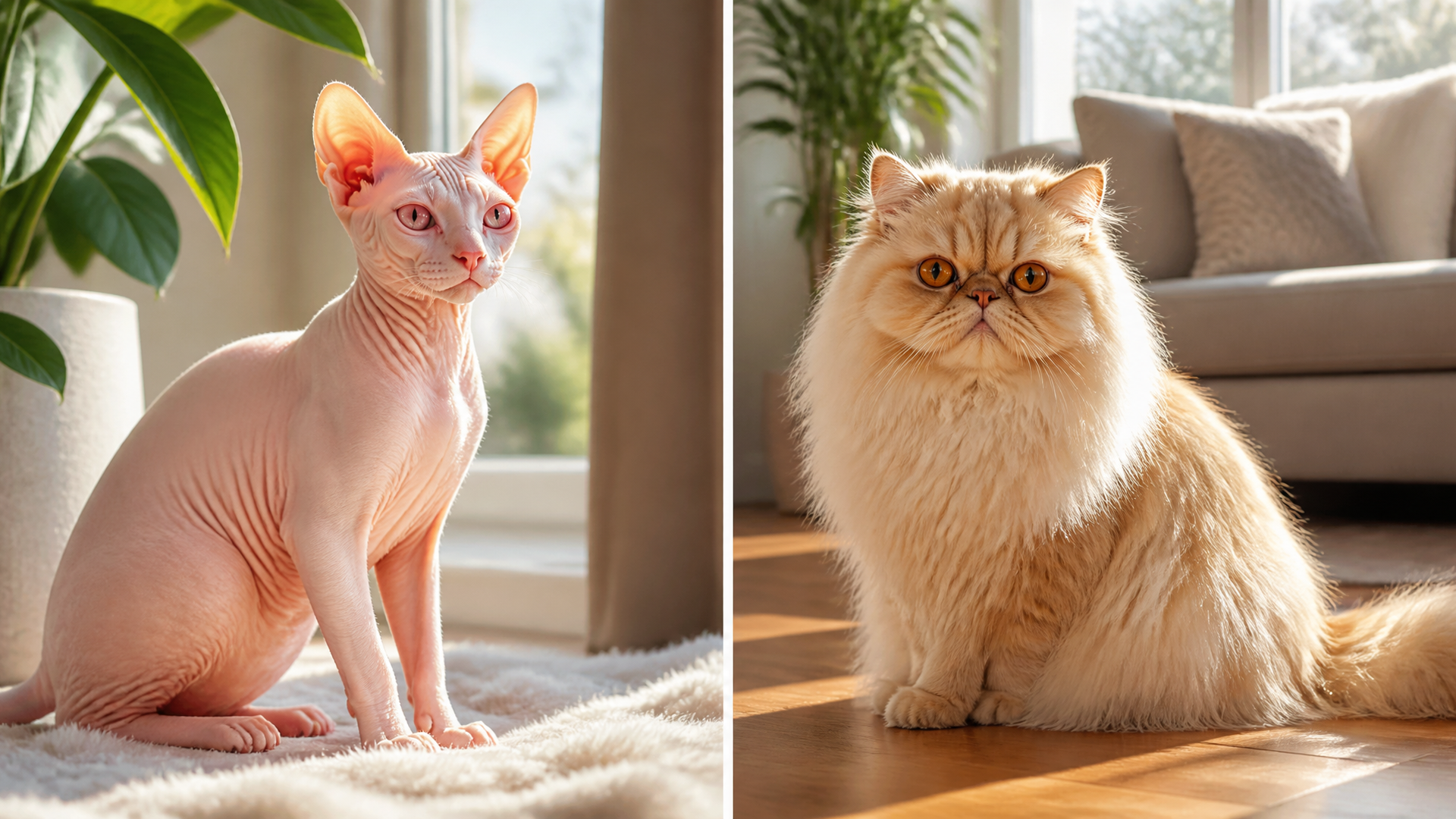
Albino Sphynx Cat: Guide: What Every Owner Should Know
Albino Sphynx cats aren’t a separate breed — they’re a rare color variation of the Sphynx. Their complete lack of pigment means white fur (if any), pink skin, and translucent pink or pale blue eyes. That same lack of melanin leaves them with zero natural UV protection, making them highly vulnerable to sunburn and skin cancer. The failure most owners miss? Detecting sun damage too late. Here’s how to protect your albino Sphynx every day and catch early warning signs before a sore turns serious.

The one failure mode: chronic sun exposure & skin cancer
Most owners assume a few minutes of sun won’t hurt. For an albino Sphynx, even 15–20 minutes of direct sunlight can cause a painful sunburn. Over months and years, repeated burns lead to actinic keratosis (precancerous lesions) and eventually squamous cell carcinoma — the most common skin cancer in cats. Because the skin is hairless, scabs and crusts are easy to spot, but owners often mistake them for acne or a scratch.
How to detect it early:
- Check your cat’s skin every week for red patches, crusty spots, or sores that don’t heal within 7 days.
- Focus on the ears, nose, eyelids, and belly — these areas get the most UV exposure.
- Watch for behavior changes: if your Sphynx starts avoiding sunny spots or flinches when you touch certain areas, schedule a vet visit within 24 hours.
Applicability boundary: This guidance applies specifically to Sphynx cats with confirmed albinism (pink or pale blue eyes with no pigment in the iris). If your Sphynx is white but has gold, green, or copper eyes, it’s a blue-eyed white or a white Sphynx with some melanin — it still needs sun protection but has slightly more natural defense than a true albino. Verify eye color in natural daylight to be sure.
Essential daily care for albino Sphynx cats
Sun protection is non-negotiable
- Use pet-safe sunscreen on all exposed skin before any outdoor time. Apply 15 minutes before sun exposure and reapply every 2 hours. Common mistake: using human sunscreen — zinc oxide and chemical UV blockers are toxic to cats. Stick to a fragrance-free pet formula designed for hairless cats.
- Keep windows covered with UV-blocking film or curtains. Indoor sunbathing through glass still delivers UV rays that can burn.
- Provide shade everywhere — cat trees near windows should have a built-in canopy, and any outdoor catio must be fully roofed.
Expert tip #1 — Choose the right sunscreen: Look for products with titanium dioxide as the active ingredient. Avoid any formula containing zinc oxide, octocrylene, or homosalate. A good option is a pet-specific, fragrance-free SPF 30+ lotion. Actionable step: Test a tiny dab on your cat’s belly and wait 24 hours to rule out irritation before applying all over. Common mistake: Assuming “natural” human sunscreens are safe — many contain essential oils that are toxic to cats.
Practical implication for your next choice: Decide whether your cat needs daily sunscreen or restricted outdoor access. If your home has large unshaded windows, installing UV-blocking film is the single most effective long-term solution. If you can’t film the windows, buy a washable pet-safe sunscreen and make application part of your morning routine.
Realistic trade-off: While sunscreen is essential, some cats hate being handled for application. A UV-protective cat bodysuit (rash guard) can be a partial alternative, but it limits airflow and increases the risk of overheating in warm weather. For indoor cats, sunscreen on exposed ears and nose is usually safer than a full suit.
Bathing and skin care
Sphynx cats produce more skin oil than furred breeds, so they need a bath every 1 to 2 weeks. For an albino Sphynx, use a gentle, fragrance-free, hypoallergenic cat shampoo. After the bath, pat dry with a soft microfiber towel and apply a hypoallergenic moisturizer if the skin feels tight or flaky.
Expert tip #2 — Bathing technique: Always use lukewarm water (around 98°F) — hot water strips oils and cold water can shock the skin. Actionable step: Fill the sink with only 2–3 inches of water and use a cup to wet the cat’s back, avoiding the face until the final rinse. Common mistake: Scrubbing vigorously with a washcloth — this can cause micro-abrasions on sensitive, unpigmented skin. Use your hands only.
Routine vet exams
Schedule a veterinary check-up every six months with a dermatology focus. The vet should do a full skin mapping — documenting every spot, mole, or irregularity — so changes are caught fast. Ask about annual skin biopsies if your cat has any chronic sun damage.
Expert tip #3 — Home photo tracking: Take clear photos of your cat’s skin from all angles once a month. Use the same lighting (natural daylight) and store them on your phone with dates. Actionable step: Write “skin check” on your calendar every 30 days and set a 10-minute timer to complete it. Common mistake: Only checking when you notice a problem — by then it may be advanced. Comparison photos make subtle growth visible.
Verification step — Confirm your cat’s albinism status: In good natural daylight, examine your cat’s eye color. True albino Sphynx cats have translucent pink or pale blue eyes with no visible iris color. If you see any green, gold, or copper tones, your cat is not a true albino and has some melanin. This changes the risk level — you can reduce sunscreen frequency for fully indoor cats with pigmented eyes, but still provide shade.
Weekly health checklist for albino Sphynx owners
Run through these five checks every Sunday:
- [ ] Skin inspection: No red patches, crusts, scabs, or open sores on ears, nose, eyelids, or belly.
- [ ] Sun exposure record: Total time in direct sunlight (outdoors or through uncovered windows) is less than 10 minutes per day.
- [ ] Sunscreen applied today: Pet-safe sunscreen used before any time outside or near unshaded windows.
- [ ] Food and water intake: Normal appetite and drinking — loss of appetite can signal pain from sunburn or other illness.
- [ ] Behavior check: No flinching when touched on the back, no hiding from light, no excessive scratching at specific spots.
If you answer “no” to any item, act that day. For skin abnormalities, call your vet within 24 hours. Don’t wait to see if it heals on its own — unpigmented skin heals slowly and ulcers can become infected fast.
Traveling with your albino Sphynx
Vet visits and travel require extra care to prevent sun exposure. Use a soft-sided carrier with ventilation on multiple sides — the GAPZER Pet Carrier for Large Cats offers four mesh sides and a removable fleece bed. Line it with a cooling pad in summer and never leave the carrier in direct sunlight, even for a minute. For cats up to 20 lbs, the GAPZER Cat Carrier 18″x11″x11″ is a convenient carry-on option with top-open access.
Trade-off note: The mesh sides that provide ventilation also let in UV rays. If you must keep the carrier in a car near a sunny window, cover it loosely with a lightweight cotton towel — do not use a dark blanket, which traps heat in summer.
Save this guide
Albino Sphynx cats are stunning but require daily vigilance against sun damage. Weekly skin checks, strict sun protection (sunscreen + UV-blocking windows), and twice-yearly vet exams are your best tools. Catch redness or a scab early — don’t wait for a crusty spot to grow. Bookmark this page for your monthly skin check reminder.
This article contains affiliate links. As an Amazon Associate, we may earn from qualifying purchases.