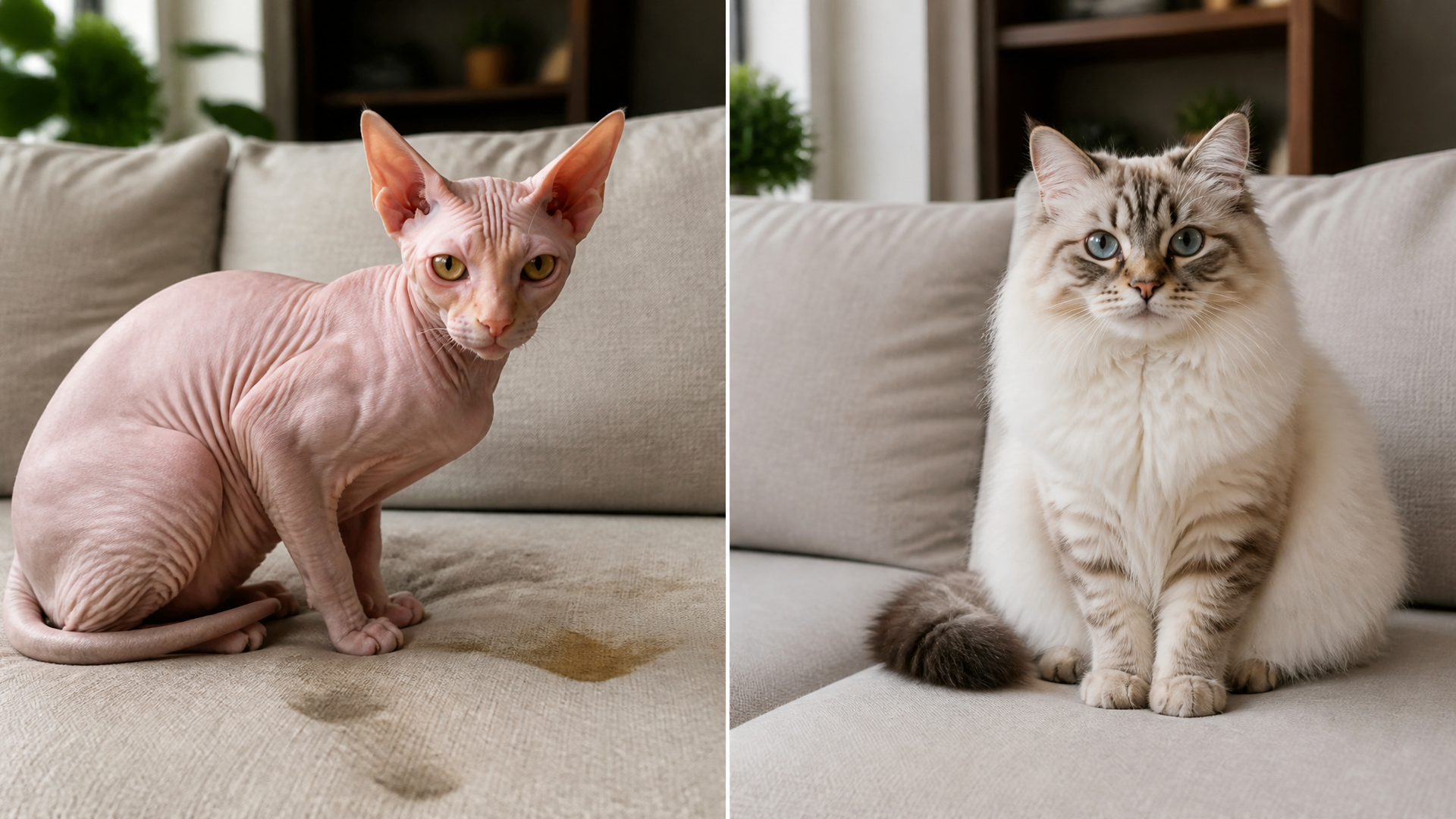
Hairless Cat Oil Stains
If you own a Sphynx, Donskoy, or Peterbald, oil stains on your couch, bedding, and clothes are the trade-off for that warm, fuzzy-free cuddle. The short answer is a consistent three-part routine: bathe every 1–2 weeks with a degreasing cat shampoo, wipe down daily with a damp cloth or pet wipe, and wash their bedding every 3–4 days. That combination stops most stains before they set. Here’s exactly how to do it without drying out your cat’s skin.

What Causes the Oil (and When It Changes)
Hairless cats produce more sebum than coated breeds. Without fur to absorb it, that oil ends up on every surface your cat naps on. How much oil depends on two main factors:
- Spayed or neutered cats produce noticeably less oil. You can often stretch baths to every 2–3 weeks.
- Intact cats (unspayed/unneutered) produce more sebum due to hormones. Weekly baths are usually needed.
- Diet also plays a role – cats on a high-protein, low-carbohydrate diet with omega-3 fatty acids tend to have healthier, less greasy skin. A diet high in carbs or low-quality fats can worsen oil production.
Practical implication: If your cat is intact and you’re bathing every two weeks but still seeing heavy stains, increase to weekly. If your cat is spayed or neutered and you’re bathing weekly, try every 10–14 days – over-bathing can actually trigger more oil.
Verification check: Run a clean white cloth over your cat’s back and tail. If it picks up visible yellow grease after 24 hours since the last bath, you need to bathe more often. If only faint residue shows, you can stretch the schedule.
Mismatch to watch for: Bathing more than once a week can strip the skin’s natural barrier, causing dryness and flaking. That makes the skin overcompensate and produce more oil, making stains worse. If you see dry, flaky skin along with ongoing greasiness, back off to every 10–14 days and focus on daily wipedowns instead.
Products That Remove Oil (and What to Avoid)
Use the right tools for your cat and your furniture.
| Product Type | Best For | Specific Pick |
|---|---|---|
| Degreasing cat shampoo | Weekly baths | Earthbath Oatmeal & Aloe or Vet’s Best Hypoallergenic |
| Pet-safe wipes | Daily touch-ups | Burt’s Bees Unscented Pet Wipes |
| Microfiber cloths | Quick surface wiping | Pack of 12, machine washable |
Affiliate Disclosure: Some links below are affiliate links. We may earn a small commission at no extra cost to you.
Avoid: Human makeup wipes, baby wipes with fragrance, dry shampoo, and full-strength dish soap on your cat. Dish soap like Dawn can strip the skin completely, causing irritation and rebound oil. Use it only on upholstery stains, not on your cat.
How to Remove Oil Stains from Furniture (Step by Step)
1. Blot fresh oil immediately with a dry microfiber cloth. Press and lift – do not rub or the stain spreads.
2. Sprinkle baking soda over the area. Let it sit 15 minutes to absorb the grease, then vacuum.
3. Mix a drop of Dawn dish soap with 1 cup warm water. Dab a cloth in the solution and blot the stain until it lifts.
4. Rinse with a clean damp cloth (plain water) and blot dry.
5. For set-in stains, apply an enzyme cleaner (like Nature’s Miracle Advanced Stain & Odor) and follow the bottle’s dwell time before blotting.
3 Expert Tips for Managing Hairless Cat Oil
Tip 1: Bathe on a fixed schedule – not when you see stains.
Pick a day (every Saturday, for example) and stick to it. Waiting until the cat feels greasy or leaves a mark means stains accumulate between baths. If your cat’s skin feels dry after two consecutive baths, add an extra day between sessions.
Tip 2: Wash bedding every 3–4 days in hot water with white vinegar.
Add ½ cup white vinegar to the rinse cycle – it breaks down sebum without harsh chemicals. Tossing bedding in with regular laundry won’t cut the grease. Skip fabric softener; it coats fibers and traps oil.
Tip 3: Use a warm damp cloth for daily wipedowns, not wipes every time.
A soft microfiber cloth dampened with plain warm water is gentler and more effective for daily maintenance. Relying solely on pet wipes can leave buildup over time. Focus on the chin, tail base, and between paw pads – where oil collects fastest.
When to Call the Vet
A sudden increase in oiliness is worth a vet visit if you also see:
- Red, flaky, or scabby skin
- A strong, unusual odor (yeasty or sour)
- Excessive scratching, licking, or rubbing against furniture
- Dark, waxy buildup in the ears
These signs can indicate a yeast infection, allergy, or thyroid imbalance. Hairless cats are prone to yeast overgrowth because their warm, moist skin is an ideal environment. Don’t try to treat these at home with extra baths or over-the-counter products – you’ll make it worse.
Weekly Oil-Control Checklist
Run through these 5 checks every week:
- [ ] Bathed within the last 14 days (or per your cat’s spay/neuter status)
- [ ] Wiped down today with a damp cloth or pet wipe
- [ ] Bedding washed within the last 4 days
- [ ] Skin checked for redness, flakes, bumps, or odor
- [ ] Napping surfaces vacuumed or spot-cleaned
Pass all five? You’re on track. Fail any? That’s your priority for today.
Frequently Asked Questions
How often should I bathe my Sphynx to keep oil under control?
Most owners bathe every 7–14 days. Spayed or neutered cats tend toward the longer end; intact cats need the shorter end.
Can I use dry shampoo on my hairless cat?
No. Dry shampoo clogs pores and irritates their sensitive skin. Stick to wet baths or damp cloth wipedowns.
Will changing my cat’s food reduce the oil?
Sometimes. A diet with quality animal protein and added omega-3s from fish oil or a vet-recommended food can balance skin health. Ask your vet before switching, and transition food gradually over 7–10 days.
Do all hairless cats leave oil stains?
Yes, but the amount varies. Spayed or neutered cats, cats on a high-protein diet, and well-hydrated cats tend to be less greasy.
Save This Guide – A consistent bath-and-wipe routine, weekly bedding washes, and regular skin checks are all it takes to keep hairless cat oil stains under control. Your furniture stays cleaner, and your cat’s skin stays healthier.