What Shapes Make up The Sphynx Feet
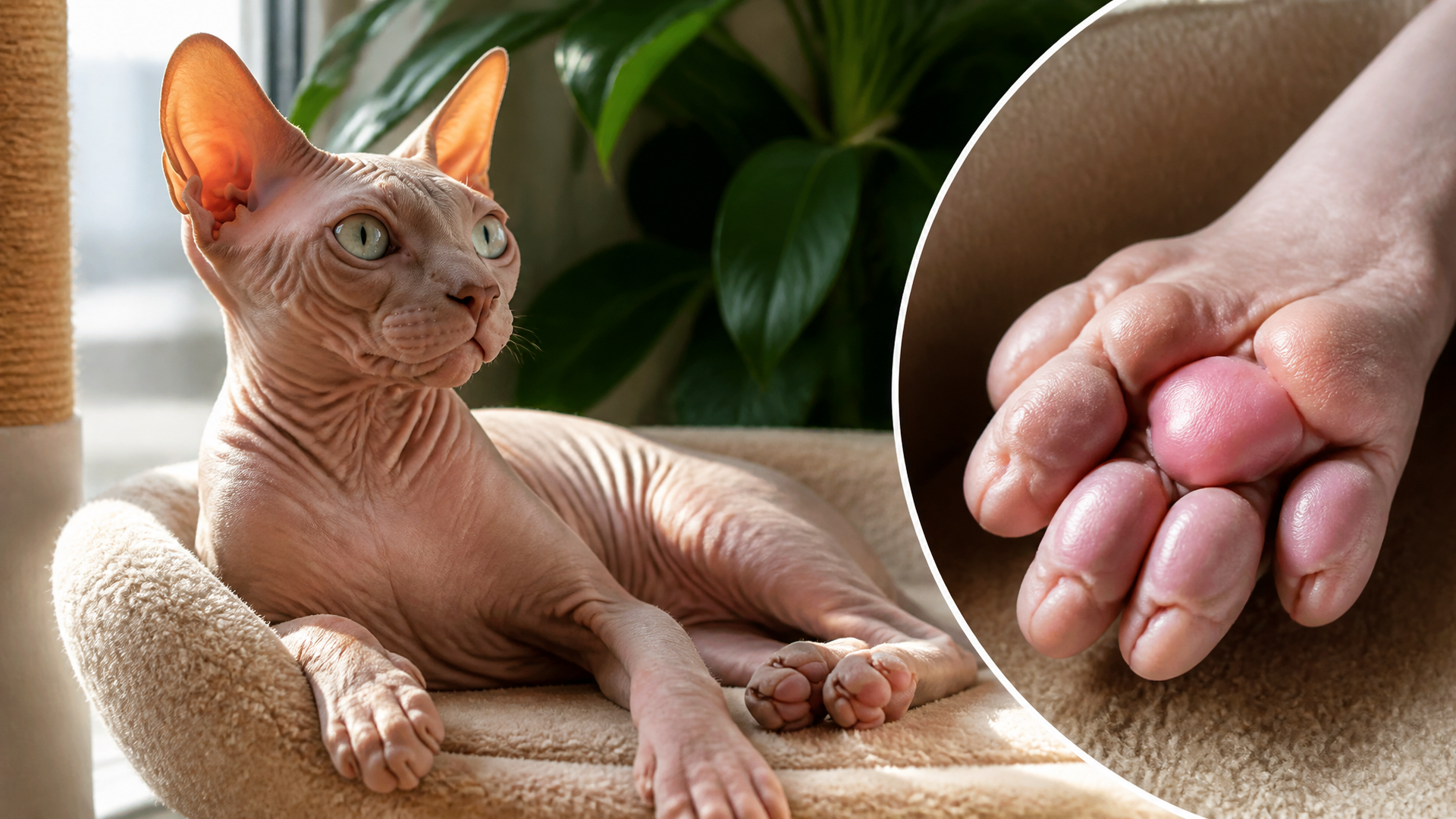
A Sphynx cat’s paw is built from four distinct shape zones: rounded, prominent toe knuckles; thick marshmallow-like paw pads; a large triangular heel pad; and an overall oval foot silhouette. Without fur to soften the outline, every contour is visible — giving these cats their signature “princess paws.”

If you’re a new Sphynx owner wondering whether those knobby toes are normal, yes, they are. Here’s exactly what you’re seeing, how to spot the difference between normal anatomy and a real problem, and how to keep those paws healthy.
The Four Key Shapes of a Sphynx Paw
Sphynx feet combine four visible structures, each with a unique look and care need.
| Shape Component | What It Looks Like | Why It Matters |
|---|---|---|
| Toe knuckles | Rounded, prominent bumps along each toe | Collect dirt and oil; needs daily wiping |
| Digital pads (toe pads) | Small, round, jellybean-shaped cushions under each toe | Cushion toe bones; can crack if dry |
| Metacarpal pad (main pad) | Large, rounded-triangle or heart-shaped pad behind the toes | Absorbs impact; sensitive to rough surfaces |
| Carpal pad (wrist pad) | Small oval pad on the back of the front leg above the foot | Helps with grip when jumping; often missed during cleaning |
The overall foot shape is oval with a slight taper toward the toes, giving Sphynx paws an almost cartoon-like marshmallow appearance.
Why Sphynx Feet Look Different From Other Cats
Most cats have fur that hides underlying anatomy. Sphynx hairlessness exposes everything:
- Knuckles that look swollen — they aren’t. The knuckles are naturally prominent. This is normal for the breed.
- Thicker paw pads — Sphynx cats typically have noticeably thicker pads than furry breeds. It provides extra grip and warmth.
- Visible skin folds between toes — normal webbing. Keep them clean to prevent oil buildup and irritation.
How to Verify Normal vs. Swollen
The failure mode: new owners see prominent knuckles, assume infection, and either rush to the vet or start aggressive cleaning that strips natural oils and irritates the skin.
Detection test: Compare both front paws side by side. Gently press each knuckle. If all knuckles are roughly the same size, feel firm but not hot, and have no redness or discharge, they’re normal. If one knuckle is significantly larger, painful to touch, or shows red streaks, that’s a real problem — schedule a vet visit. A quick check each week catches the difference.
Common misconception: Many new owners worry about swollen feet or arthritis. Unless your cat is limping, favoring a paw, or showing redness, those knobby toes are healthy anatomy.
Daily Paw Care Routine for Sphynx Cats
Sphynx feet need more attention than a typical cat’s paws. Here’s a practical routine with checkpoints.
Preparation: Gather a soft microfiber cloth, pet-safe wipes, and a paw balm. Keep wipes near the litter box for quick post-use checks.
Step 1: Wipe Paws Daily
Sphynx cats produce more skin oil than furry breeds. That oil collects dirt, litter dust, and debris between the toe knuckles and skin folds.
- What to use: Soft microfiber cloth or pet-safe wipes (unscented baby wipes work too)
- How: Gently wipe between each toe and around each knuckle. Pay special attention to the carpal pad.
- Common mistake to avoid: Skipping between the toes. Oil buildup there can lead to yeast infections or brown staining.
- Early checkpoint: After two days, check the cloth for brownish oil residue — that’s normal buildup you’re catching. If you see dark-brown discharge with a yeasty smell, that’s a likely infection sign — escalate to vet.
Step 2: Moisturize Paw Pads Weekly
Sphynx paw pads can crack in dry climates or during winter. Cracked pads are painful and risk infection.
- What to use: A pet-safe paw balm (like Musher’s Secret or Natural Dog Company Snout Soother) — avoid human lotions containing fragrances or toxins. (We may earn a commission if you purchase through these links, at no extra cost to you.)
- How: Apply a pea-sized amount to each pad and massage in. Apply at bedtime so it absorbs without getting on floors.
- Common mistake to avoid: Using coconut oil alone — it makes paws greasy and attracts more dirt. Use a dedicated balm that absorbs within a few minutes.
- Likely cause of cracking: Low humidity or heated floors in winter. If pads feel rough, increase moisturizing to every 3–4 days.
Step 3: Check for Debris After Every Litter Box Visit
Sphynx cats often track litter between their prominent knuckles. Small clay particles can get trapped and cause irritation.
- What to do: Keep pet-safe wipes near the litter box. Quick once-over after each use prevents problems.
- Switch to larger-grain or crystal litter if you see constant tracking — smaller particles get stuck easily.
- Common mistake to avoid: Relying on a single weekly cleaning. Daily checks catch trapped litter before redness starts.
- Friction point: If your Sphynx squirms during paw checks, wrap them in a towel like a burrito and do one paw at a time while they’re calm.
Success signal: Healthy Sphynx paws are clean, supple, and free of cracks or redness. If you see that after a few weeks, you’re on track.
3 Expert Tips for Healthy Sphynx Paws
Tip 1: Use a Grout Sponge for Deep Knuckle Cleaning
- Actionable step: Dampen a grout sponge (the tough scrubby side) and gently wipe between knuckles once a week to remove stubborn oil.
- Common mistake: Scrubbing too hard — you can irritate the skin. Use light pressure, just enough to lift the oil.
Tip 2: Trim Nails Every 10–14 Days
- Actionable step: Use cat nail clippers and cut only the clear tip. If you see the quick (pink area), stop.
- Common mistake: Waiting too long — overgrown nails can curve into the paw pad and cause infection. Check weekly.
Tip 3: Apply Balm Before Bed, Not After Baths
- Actionable step: Wait until your cat is calm (e.g., after evening play) and apply balm right before they settle down.
- Common mistake: Applying right after a bath — wet paws don’t absorb balm well. Always dry paws thoroughly first with a towel.
Warning Signs: When to See the Vet
Sphynx feet are tough, but watch for these signs:
- Redness or swelling between toes — possible yeast or bacterial infection from trapped moisture
- Cracked or bleeding paw pads — needs vet treatment and protective booties during healing
- Limping or avoiding jumping — could be a sprain, broken nail, or pad injury
- Heavy brown discharge with odor between knuckles — normal in small amounts, but odor means infection
- Overgrown nails — trim every 2–3 weeks; can grow into the pad if neglected
When to escalate: Open cracks, pus, or your cat won’t let you touch the paw — schedule a vet visit. Don’t treat deep cracks at home.
Daily & Weekly Care Checklist (Save This!)
Daily:
- [ ] Wipe between all toes and knuckles with soft cloth or wipe
- [ ] Quick check for trapped litter after each litter box visit
- [ ] Verify knuckles match in size (compare front paws) — no one knuckle is larger
Weekly:
- [ ] Moisturize paw pads with pet-safe balm
- [ ] Deep clean knuckles with grout sponge (light pressure)
- [ ] Trim nails if needed
Monthly:
- [ ] Inspect for cracks, redness, or unusual odor
- [ ] If dry climate, increase moisturizing to every 3–4 days
Frequently Asked Questions
Are Sphynx cats born with these foot shapes?
Yes. The prominent knuckles and thick pads are present from birth and become more visible as the kitten grows and loses any birth fuzz.
Do Sphynx cats need booties?
Indoor cats generally don’t. Consider booties if you live in cold climates (below 50°F) or if your cat has cracked pads needing protection during healing.
Why are my Sphynx’s paws brown?
Brown discoloration comes from oxidized skin oil. It’s harmless but can be reduced with daily wiping. If the skin also smells yeasty, check with your vet.
Can I use human lotion on Sphynx paws?
No. Most human lotions contain ingredients toxic to cats (essential oils, fragrances). Stick to pet-specific balms.
Save This Guide
Sphynx feet are made of four distinct shapes — prominent knuckles, jellybean toe pads, a triangular main pad, and a small wrist pad. Their exposed anatomy means daily wiping and weekly moisturizing are non-negotiable. Keep this guide saved for quick reference during grooming and when evaluating whether that knobby toe needs a vet visit. Your Sphynx’s marshmallow paws will thank you.