Fat Sphynx Cat: Guide: What Every Owner Should Know
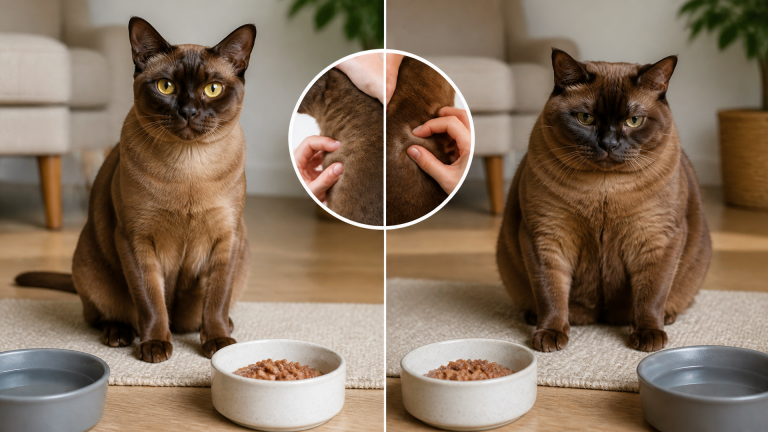
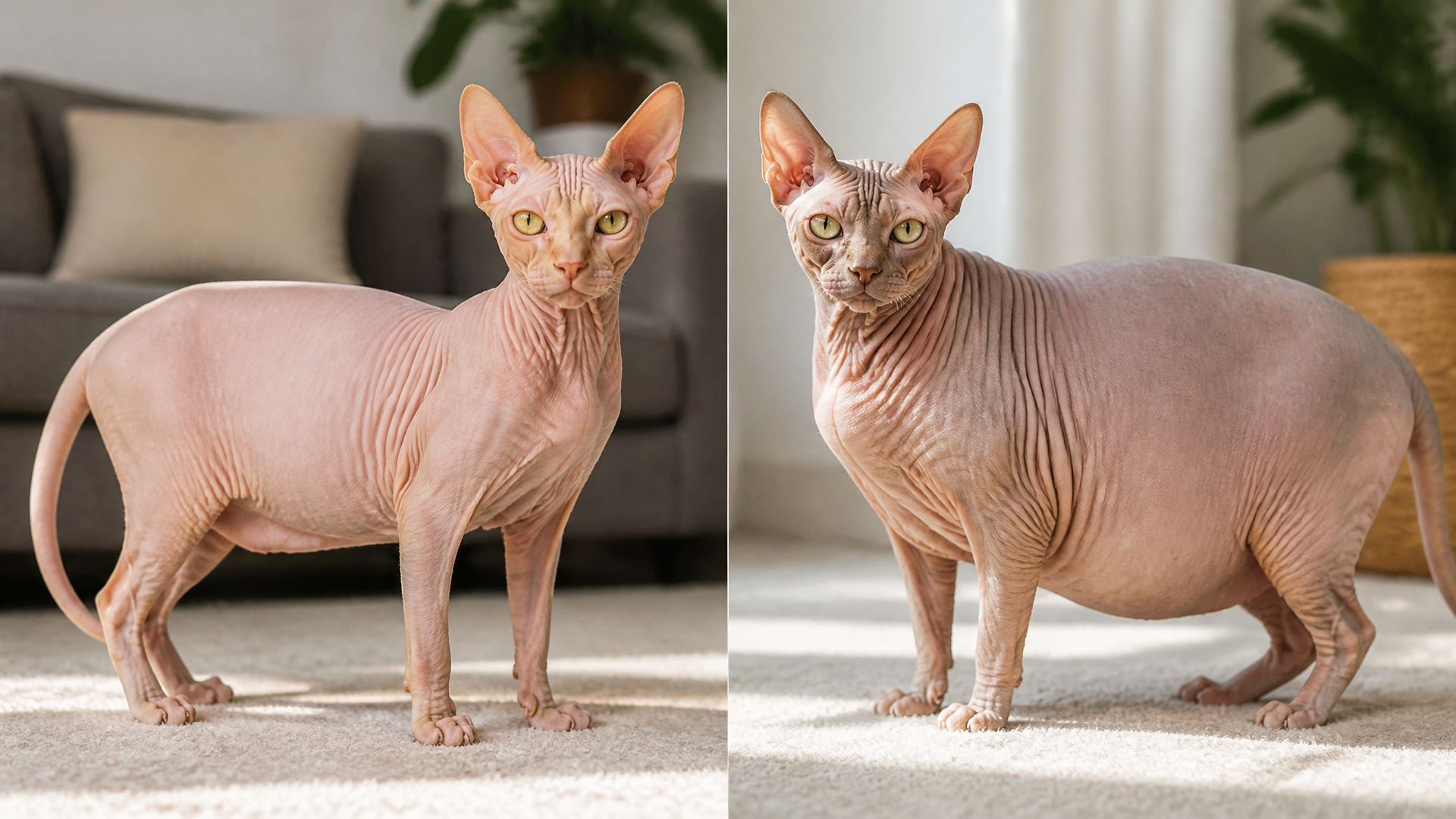
Your Sphynx cat’s round belly might be normal loose skin — or excess fat. Because these cats have a naturally barrel-shaped chest and wrinkled skin, extra pounds are easy to miss. The fastest way to check: run your hands along your cat’s sides. You should feel ribs with a light layer of fat, like the knuckles on your hand. If you have to press hard, your cat is overweight. Here’s exactly how to assess, plan, and fix it — with breed-specific advice that works for Sphynx cats.

The One Mistake Owners Make (and How to Catch It Early)
Most Sphynx owners mistake their cat’s loose belly skin and broad chest for normal weight. That’s the failure mode: you see a round silhouette and assume it’s fine because “Sphynx just look that way.”
How to detect it early: Use the rib feel test weekly. Stand over your cat while they’re standing and place both hands on their ribcage. If you can feel the ribs with gentle pressure, you’re good. If you need to push through a layer of fat, your cat is already overweight.
| Body Condition Score | What You See/Feel | Action |
|---|---|---|
| Ideal (4–5 out of 9) | Ribs easily felt, visible waist, belly tuck | Maintain diet and exercise |
| Overweight (6–7) | Ribs hard to feel, waist less defined, rounded belly | Start weight-loss plan with vet input |
| Obese (8–9) | Ribs cannot be felt, heavy fat pads, no waist | Vet visit immediately |
When the Rib Test Doesn’t Work
This test applies to adult Sphynx over 1 year old that have stopped growing. If your cat is still a kitten (under 12 months), expect a rounded belly that may be normal growth — ribs can be harder to feel during growth spurts. Also, some Sphynx have a naturally thicker skin fold over the ribs that mimics fat. In that case, use the waist tuck instead: look from above — a healthy Sphynx should have an hourglass shape behind the ribs. If the waist is straight or bulging, treat it as overweight and confirm with your vet.
Why Sphynx Cats Pack on Pounds So Fast
Three breed-specific factors work against you:
- Heat-seeking metabolism: Hairless cats burn more calories staying warm, so they feel hungry often. Owners overcompensate with extra food.
- Indoor-only life: Most Sphynx never go outside. No hunting, limited climbing, low calorie burn.
- Treat creep from skin care: Bath-time rewards, oil supplements, and high-calorie skin conditioners add hidden calories. A single teaspoon of coconut oil is about 120 kcal — almost half a day’s allowance for a small Sphynx.
Step-by-Step Weight Loss Plan for Your Sphynx
This operator flow includes built-in checkpoints. Do not skip Step 1.
Step 1: Vet Check (First Checkpoint)
Take your cat to the vet before changing anything. They will:
- Weigh and assign a body condition score
- Rule out thyroid disease or diabetes
- Set a target weight (typically 8–12 lbs for a Sphynx)
Likely cause of failure: Skipping the vet and guessing calories. That can lead to underfeeding, which triggers dangerous fatty liver disease.
Step 2: Set Your Daily Calorie Target
Your vet will give you a target. For an overweight Sphynx, 180–220 kcal per day is typical for losing 1–2% body weight per week (never more than 2%).
| Current Weight (lbs) | Daily Calories for Weight Loss |
|---|---|
| 10–12 | 180–200 kcal |
| 13–15 | 200–220 kcal |
| 16–18 | 220–250 kcal (vet-supervised) |
Practical implication: If your cat falls into the 13–15 lb range, start with 200 kcal. You’ll need to weigh food in grams — using a measuring cup can easily add 30% more calories, which will stall progress or cause weight gain. If you skip weighing, you’re essentially guessing and risk underfeeding or overfeeding.
Step 3: Switch to a High-Protein, Low-Carb Food
Sphynx are obligate carnivores. Choose wet food with at least 40% protein (dry matter) and under 20% carbs. Wet food is better — it’s lower in calories per gram and higher in moisture.
- Look for brands labeled weight management or high protein.
- Avoid grain-free unless you’ve verified the calorie density isn’t sky-high.
- Transition slowly over 7 days to avoid diarrhea.
Realistic mismatch to watch for: Many “weight management” foods actually have moderate protein and higher fiber, which can make your cat hungrier and less active. Sphynx do better on high-protein, low-carb formulas like those from brands such as Weruva or Tiki Cat. If the new food causes loose stools, switch back to the old food and consult your vet — a sudden diet change can trigger pancreatitis in sensitive cats.
Step 4: Portion Control (Use a Scale, Not a Cup)
Weigh every meal with a digital kitchen scale in grams. Kibble sizes vary — a cup of one brand can be 100 kcal more than another.
- Feed 2–3 small meals per day (no free-feeding).
- Count all treats in the daily total.
- Use a puzzle feeder to slow eating and add mental stimulation.
Step 5: Warm-Up Playtime
Sphynx cats will not exercise if they’re cold. Warm the room to at least 75°F before play. Then try:
- Interactive wand toy for 5 minutes, twice a day.
- Toss a toy up a few stairs for short sprints.
- Place a heated pet bed on top of a cat tree so they climb for warmth.
Success check: After 2 weeks, weigh your cat once per week before breakfast. You should see 0.5–1% loss per week (about 0.1–0.2 lb for a 12-lb cat).
Trade-off to plan for: If your Sphynx refuses to play because the room isn’t warm enough, a heated bed on the floor won’t help — they’ll just nap on it. The climbing trick only works if the bed is on a high surface, and some overweight Sphynx can’t jump. In that case, use a ramp or steps to the cat tree, or stick to wand toys only.
Step 6: Escalation Signal
Stop the plan and call your vet if:
- Weight loss exceeds 2% per week.
- Your cat stops eating or vomits.
- You notice increased thirst, urination, or appetite (possible diabetes).
3 Practical Weight-Loss Tips That Actually Work
Tip 1: Weigh food in grams, not cups.
- Action: Use a digital kitchen scale to portion 40 g of dry food (check the bag for kcal/g). Write the daily grams on the bag.
- Common mistake: Relying on a measuring cup — kibble density varies, and you can accidentally feed 30% more calories.
Tip 2: Eliminate bath-time treats.
- Action: After a weekly bath (to remove skin oil), give one freeze-dried chicken bit instead of a handful of high-calorie treats.
- Common mistake: Thinking the bath itself burns enough calories to justify extra food. It doesn’t.
Tip 3: Use heat as a movement motivator.
- Action: Place a self-warming pet pad on the far side of a cat tree. Your Sphynx will walk or climb to reach it.
- Common mistake: Expecting play when the room is cool. Sphynx are heat-seekers — if the room is below 70°F, they’ll curl up instead of moving.
When to Call the Vet
Stop your home plan and schedule a vet visit if:
- Your cat loses weight but also loses muscle (feel the spine — too bony).
- Appetite or thirst changes dramatically.
- Skin folds become red, smelly, or oozing (sign of infection).
If you need to transport an overweight Sphynx to the vet, a sturdy carrier is essential. The GAPZER Pet Carrier for Large Cats measures 18.1 x 11.8 x 11.8 inches, holds up to 20 pounds, and has escape-resistant zippers that prevent a stressed cat from popping open the bag.
Save This Guide
This guide contains the key numbers: 180–220 kcal per day, 40% protein minimum, 0.5–1% weight loss per week. The quickest fix is the weekly rib feel test — if you can’t feel ribs without pressing, start the plan today.
We include affiliate links in this guide. If you purchase through these links, we may earn a small commission at no extra cost to you.
Frequently Asked Questions
How much should a healthy Sphynx cat weigh?
Most adult Sphynx weigh between 8 and 12 pounds. Males tend to be larger. A cat over 13 pounds is likely overweight unless it has a very large frame.
Can a fat Sphynx still have skin infections?
Yes — deeper skin folds trap more oil and moisture, raising the risk of yeast and bacterial infections. Keeping folds clean and dry is even more important when your Sphynx is overweight.
Is it safe to put my Sphynx on a diet without a vet?
No. Sudden calorie restriction can cause hepatic lipidosis (fatty liver disease). Always get a vet’s approval and a target weight first.