What is a Sphynx Cats Sense of Hearing Like
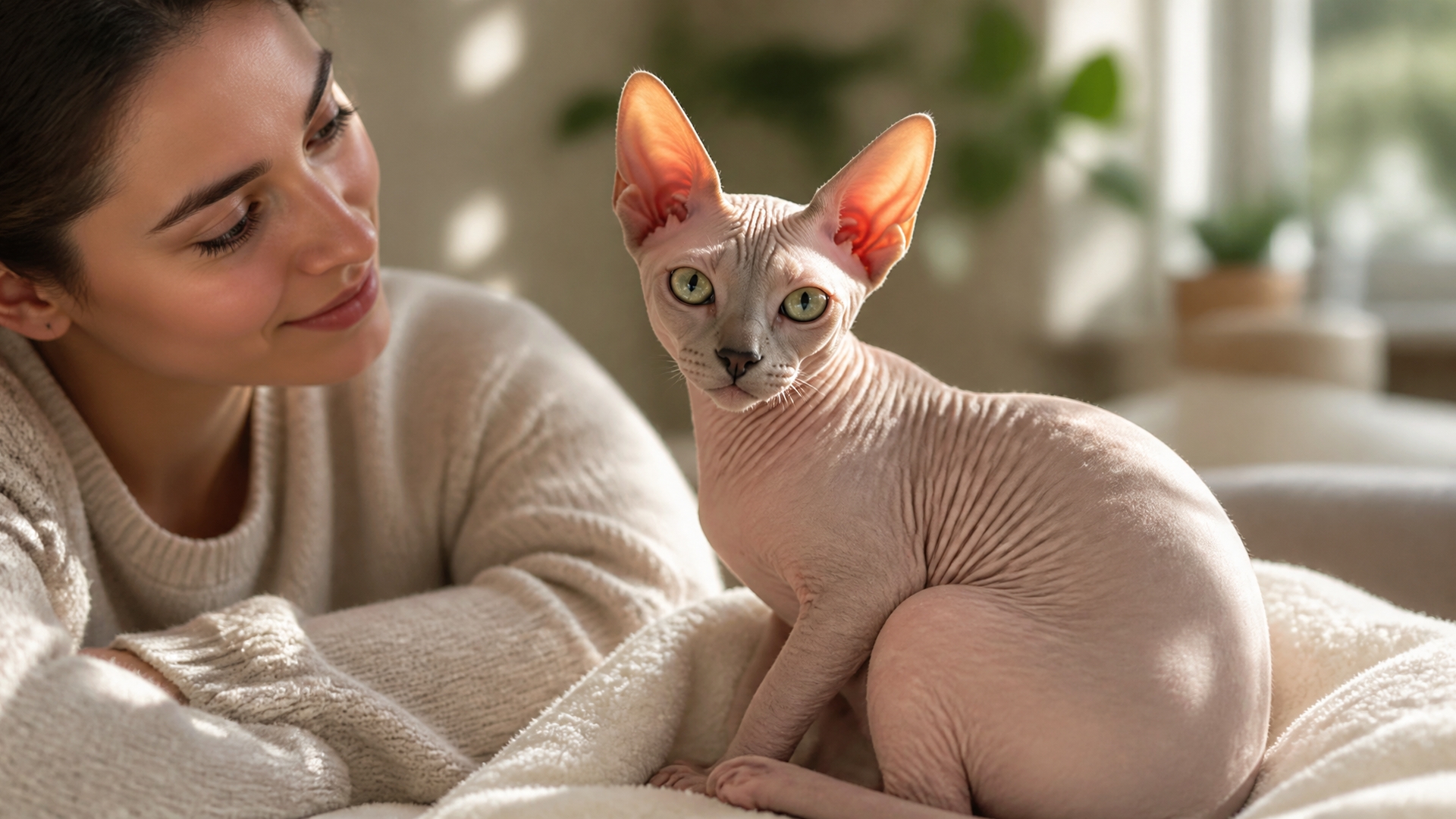
A Sphynx cat’s hearing is just as sharp as any other domestic cat — they can hear frequencies up to 64 kHz (compared to 20 kHz for humans). Their large, hairless ear pinnae act like satellite dishes, giving them excellent directional hearing. But the lack of fur also means ear wax builds up faster, and infections can sneak up quickly. For Sphynx owners, ear hygiene directly affects hearing health. Weekly checks aren’t optional — they’re the difference between a cat that responds to every treat crinkle and one that slowly loses sound perception.

How a Sphynx’s Ears Work (and Why They’re Different)
Typical Cat Hearing Range
| Species | Frequency range (Hz) | Peak sensitivity |
|---|---|---|
| Human | 20 – 20,000 | 2,000 – 5,000 |
| Cat (including Sphynx) | 48 – 85,000 | 800 – 32,000 |
Cats hear low rumbles down to 48 Hz and high-pitched squeaks up to 85 kHz. That’s why your Sphynx can hear a treat bag rustle from two rooms away but might ignore a low truck rumbling past.
Unique Sphynx Features
- Larger ear pinnae – Sphynx ears are noticeably big and wide, capturing sound waves more efficiently. This improves directional hearing — they can pinpoint a squeaky toy within inches.
- No ear fur – Most cats have tufts of hair inside the ear that trap debris and slightly dampen subtle sounds. Sphynx ears are completely bald, so sound waves pass unobstructed. The trade-off? Wax, dirt, and oils accumulate faster in the open canal.
- Behavioral sensitivity – Because their hearing is so acute, Sphynx cats startle easily at loud, sudden noises (vacuum cleaners, door slams, shouting). This isn’t a defect — it’s an extra-wired alertness that many owners learn to manage with quiet hideouts.
The Biggest Hearing Risk for Sphynx Cats (and How to Spot It Early)
The most common failure mode Sphynx owners face is gradual conductive hearing loss from wax buildup. Because there’s no fur to wick wax out, oils and dead skin cells collect in the ear canal and harden. Over weeks, a wax plug forms that physically blocks sound from reaching the eardrum. Your cat doesn’t “go deaf” overnight — they just stop reacting to quieter sounds, and you may not notice until the buildup is significant.
How to detect it early: Do the “hand test.” Stand behind your Sphynx in a quiet room. Rub your fingers together softly about 6 inches from one ear, then the other. A cat with normal hearing will turn their head or flick an ear. If they don’t respond on one side, suspect wax blockage or an infection. Repeat monthly — it takes 30 seconds.
Why Ear Cleaning Is Non-Negotiable for Hearing Health
Sphynx cats produce more ear wax than furry breeds because there’s no hair to wick it out. If you skip cleaning for two weeks, wax can start to harden. Chronic infections can cause permanent hearing damage.
Telltale Signs of Ear Trouble
- Black or reddish discharge
- A strong, yeasty or sour smell
- Head shaking or scratching more than two times in five minutes
- No response when you call their name (in a quiet room)
- One ear appears swollen or tender to the touch
Step-by-Step Ear Cleaning Routine
1. Get the right supplies – Use a gentle, vet-recommended ear cleaner (avoid alcohol or hydrogen peroxide). Have cotton balls or rounds on hand — never Q-tips, which push debris deeper and can rupture the eardrum.
2. Warm the solution – Hold the bottle in your hand for 30 seconds. Cold drops startle them.
3. Fill the ear canal – Squeeze enough cleaner to fill the canal (about 1/2 teaspoon per ear). Rub the base of the ear for 20–30 seconds to loosen wax.
4. Let them shake – Your Sphynx will shake their head. That motion brings debris up where you can wipe it.
5. Wipe the outer ear – Use a damp cotton ball to clean visible wax from the inner flap and folds. Stop at the depth you can see; never push inside.
BLOCKQUOTE_0
Expert Tips for Ear Care
Tip 1: Check ears weekly, not just when they look dirty.
Actionable step: Every Sunday, lift an ear and peek inside with a flashlight. A small amount of light-yellow wax is normal. Dark brown or black wax needs cleaning.
Common mistake: Waiting until you see debris falling out. By then, wax may already be partially blocking the ear canal.
Tip 2: Address mites early.
Actionable step: If you see dark, crumbly specks that look like coffee grounds, suspect ear mites. Start treatment with a veterinarian-prescribed mite solution immediately.
Common mistake: Assuming all dark wax is dirt. Mites cause intense itching and can scar the ear canal, reducing hearing sensitivity permanently.
Tip 3: Protect their ears from loud, repetitive noise.
Actionable step: If you run a vacuum, place your Sphynx in a quiet room with a toy or treat puzzle. Provide a hiding spot (covered bed or cardboard box) so they feel secure.
Common mistake: Thinking they’ll “get used to it.” Continuous stress from noise doesn’t improve hearing — it can lead to anxiety that mimics hearing issues (e.g., not responding because they’re too overwhelmed to care).
Does the Lack of Fur Affect Hearing Ability?
No. Fur on the outside of a cat’s ear doesn’t change how sound waves are processed by the eardrum and cochlea. A Sphynx’s inner ear structure is identical to a Maine Coon or Persian’s. However, because the ears are hairless and upright, they’re much more sensitive to physical irritation:
- Sunburn can make the ear leather painful, causing a Sphynx to avoid being touched on the head or ear.
- Cold drafts can make ear skin crack, leading to secondary infections that affect hearing.
- Dry indoor air can cause flaky skin and itchiness, which leads to scratching and potential ear damage.
What to do: In winter, keep humidity around 40–50%. Apply a pet-safe ear moisturizer (like Bag Balm or Snout Soother sparingly on the outer ear — never inside the canal) to prevent cracking. In summer, use cat-safe sunscreen on ear tips if your Sphynx spends time near sunny windows.
Weekly Hearing Health Checklist
Use this list every Sunday to confirm your Sphynx’s ears (and hearing) are in good shape:
- [ ] Clean ears – No visible wax clumps or debris inside the ear flap.
- [ ] Pink, not red – No redness, swelling, or heat around the ear canal.
- [ ] Odor-free – No sour, musty, or yeasty smell coming from either ear.
- [ ] Sound response – Your Sphynx turns their head or perks up when you call their name from across the room.
- [ ] No head shaking or scratching – Less than three shakes or scratches in a five-minute observation.
- [ ] Ears are dry – No discharge or wetness, even right after a bath.
If any item fails, schedule a vet visit within a week. Hearing problems caught early are almost always treatable.
FAQ
Do Sphynx cats hear better than humans?
Yes. Sphynx cats, like all domestic cats, can hear high-frequency sounds (up to 64 kHz) that humans cannot perceive. They also have a wider dynamic range, allowing them to hear very quiet sounds.
Can a Sphynx cat’s hearing get damaged?
Yes. Chronic ear infections, untreated ear mites, or physical trauma can cause conductive hearing loss (blockage in the ear canal) or sensorineural loss (damage to the inner ear). Regular ear cleaning and prompt vet care prevent most hearing loss.
Do Sphynx cats need earplugs or sound protection?
No, not for ordinary household sounds. However, if you plan to take your Sphynx to a loud event (concert, construction area), keep them in a carrier lined with a thick, noise-absorbing blanket. Better yet, leave them home.
How often should I clean my Sphynx’s ears?
Most Sphynx owners clean ears once a week. If you notice wax building up faster, increase to twice a week. Over-cleaning can dry out the ear skin, so only clean when there’s visible wax or as recommended by your vet.
My Sphynx doesn’t seem to hear me — should I worry?
First, rule out other causes: Is there loud background noise? Is your cat distracted by a toy? If they consistently ignore you in a quiet room, and the checklist items above are all green, check with your vet. A simple hearing test (clapping hands behind them) can confirm if the response is delayed or absent.
Consistent weekly ear care is the key to keeping your Sphynx’s hearing sharp for years to come.