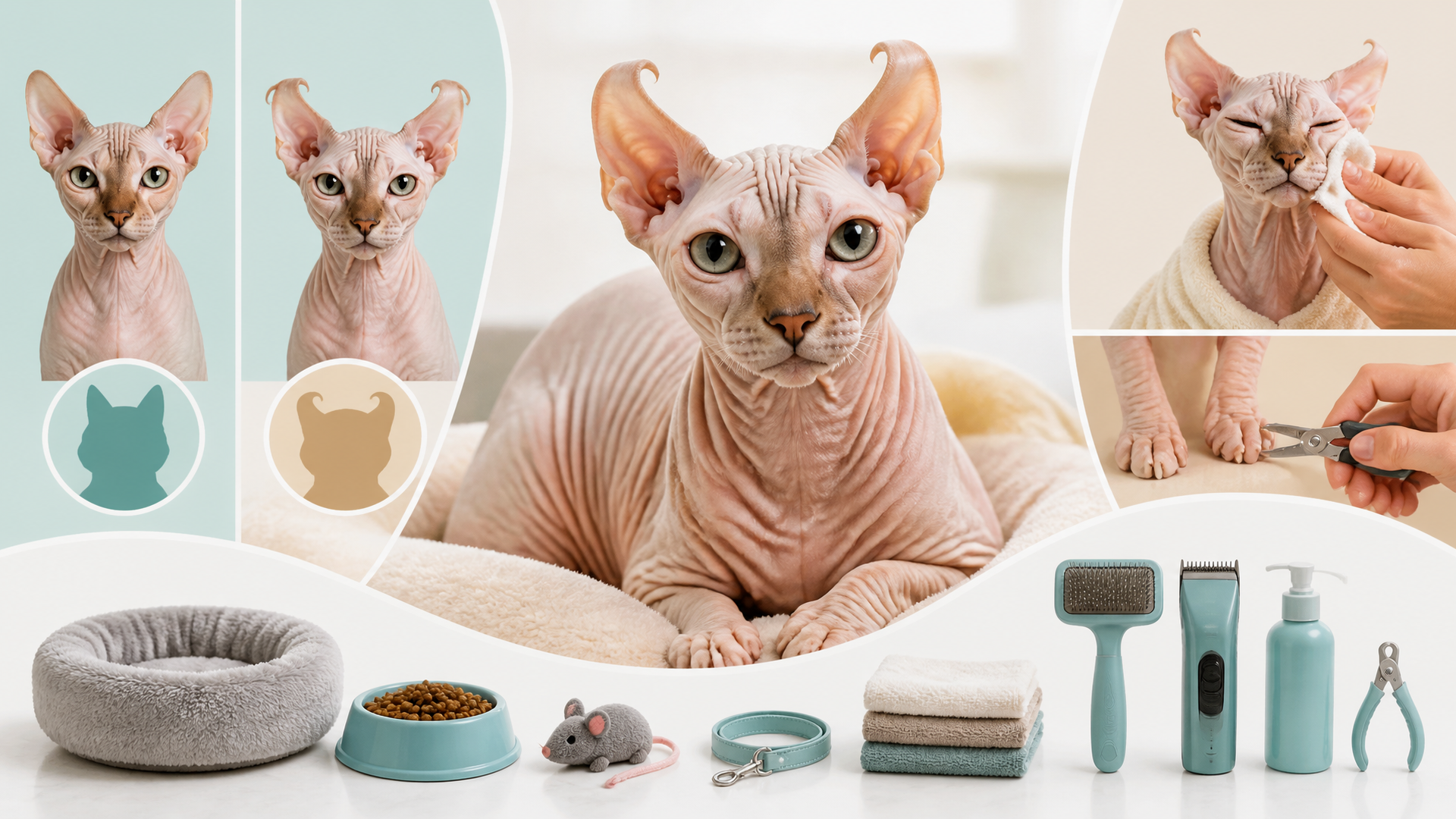
Elf Sphynx: Guide: What Every Owner Should Know
The Elf Sphynx combines the hairless body of a Sphynx with the backward-curled ears of an American Curl, creating a warm, wrinkled, playful companion. But here’s what that means for you as an owner: these cats require weekly baths, twice-weekly ear checks, and a high-calorie diet. If you skip any of those, you’ll deal with greasy skin stains on furniture, ear infections within weeks, and a cold, miserable cat. This guide walks through exactly what to do, what products to use, and when to call the vet.

What Makes an Elf Sphynx Different from a Standard Sphynx?
The key difference is in the ears. Standard Sphynx cats have large, upright, bat-like ears. Elf Sphynx ears curl backward, giving them an elfin appearance. That curled shape traps wax and moisture more easily, which means ear infections are a real risk if you don’t stay on top of cleaning.
Here’s a quick comparison so you can see where care needs overlap and where they diverge:
| Trait | Elf Sphynx | Standard Sphynx |
|---|---|---|
| Ear shape | Curled backward (130–170 degree curl) | Upright, bat-like |
| Ear cleaning frequency | 2x per week minimum | 1x per week |
| Skin oil production | Same (high) | Same (high) |
| Bath frequency | Weekly | Weekly |
| Sun sensitivity | Same (extreme) | Same (extreme) |
| Breed recognition | Rare designer cross | CFA/TICA recognized |
Practical implication: If you already own a standard Sphynx, you know the drill — but the Elf’s ears demand more attention. Plan for an extra 5 minutes per week just on ear care, and budget for a quality ear cleaner.
Elf Sphynx: Guide: What Every Owner Should Know Grooming: Step-by-Step Routine (Complete Supply List)
Because Elf Sphynx cats produce more skin oil than furred cats, that oil builds up as a brownish film on furniture, bedding, and your clothes. Weekly baths and daily spot checks are the only way to manage it. Here’s the full routine.
What You’ll Need
- Hypoallergenic cat shampoo (Earthbath or Aveeno oatmeal-based cat shampoo)
- Soft washcloth or silicone grooming mitt
- Warm water (100–102°F — test with your wrist)
- Two thick, warm towels
- Vet-approved ear cleaner (Vet’s Best Ear Cleaner or Zymox)
- Cotton balls or soft gauze pads (never cotton swabs)
- Cat-safe moisturizer (Nutri-Vet Skin Oil or coconut oil — tiny amount)
- Low-noise blow dryer (optional; use on low/cool setting only)
Before You Start: The Pre-Bath Check
Check your cat’s skin for redness, bumps, dry patches, or any brownish discharge between skin folds. Then inspect the ears: look for dark wax, a musty smell, or redness inside the curl. If you see open sores, crusting, or signs of infection (pus, swelling, or your cat flinching when you touch the ear), stop here and call your vet. Bathing with an infection can make it worse.
Step 1: Fill the Bath and Wet the Cat
Fill a sink or small tub with 2–3 inches of warm water. Place a rubber mat on the bottom so your cat feels secure. Wet the body with a cup or sprayer, keeping water away from the face, ears, and eyes. Go slowly — Elf Sphynx cats chill fast, so keep the bathroom warm (75°F or so).
Step 2: Shampoo and Scrub
Apply a dime-sized amount of hypoallergenic cat shampoo to your hands and work it into a lather on the cat’s back, sides, belly, legs, and tail. Pay special attention to skin folds — armpits, neck wrinkles, and the base of the tail — where oil and dead skin cells accumulate. Use a soft washcloth or silicone grooming mitt for gentle exfoliation.
Common mistake: Using too much shampoo. More product doesn’t mean cleaner — it means more residue to rinse, which can irritate skin. Start small and add only if needed.
Step 3: Rinse Completely
Rinse until the water runs clear and you can’t feel any slipperiness on the skin. Residual shampoo is the #1 cause of skin irritation in hairless cats. If you’re unsure, rinse one more time.
Step 4: Dry Warmly
Wrap your cat in a warmed towel and pat dry — don’t rub. Rub drying can cause friction irritation on sensitive hairless skin. Use a second dry towel to absorb remaining moisture. If your cat tolerates it, a blow dryer on the lowest cool setting can speed things up, but keep the dryer moving and never point it at the face or ears.
Verification step: After drying, run your clean hand over the cat’s skin. If you feel any greasy residue, you didn’t rinse well enough — consider a quick re-rinse next time. If the skin feels dry but not tight, you’re in good shape.
Step 5: Clean the Ears (Critical for Elf Sphynx)
Using a cotton ball dampened with ear cleaner, gently wipe the visible part of the inner ear and the curled fold. Never insert anything into the ear canal itself. For Elf Sphynx ears, pay extra attention to the pocket where the curl folds — this is where wax and moisture hide. Use a fresh cotton ball for each ear.
Realistic trade-off: If you skip ear cleaning for two weeks, expect dark brown wax buildup and a musty odor. At four weeks, you’re looking at a yeast or bacterial infection that requires a vet visit and medicated ear drops. Weekly cleaning is not optional — it’s the difference between a healthy cat and a $200+ vet bill.
Step 6: Moisturize (Only If Needed)
Some Elf Sphynx cats have dry skin after bathing. If you see flakiness or your cat seems itchy, apply a drop of cat-safe oil to your palms and lightly pat onto dry areas. If the skin already feels naturally oily, skip this step. Over-moisturizing can clog pores and cause feline acne (blackheads on the chin and tail).
Health Risks Specific to the Elf Sphynx
Elf Sphynx cats are generally healthy but have three breed-specific vulnerabilities you need to watch for.
1. Sunburn and Skin Damage
Hairless skin has no UV protection. A Elf Sphynx can get sunburned in as little as 15 minutes in direct sunlight. Sunburn shows up as pink or red patches, especially on the ears, nose, and back. Severe sunburn can lead to skin cancer over time.
What to do: Keep your cat indoors during peak sun hours (10 AM–4 PM). If they enjoy sitting in a sunny window, apply cat-safe sunscreen (My Dog Nose It or similar) to exposed areas. Avoid human sunscreen — zinc oxide is toxic to cats.
2. Ear Infections (The #1 Elf-Specific Issue)
Because of the curled ear shape, Elf Sphynx ears trap moisture and wax more than any other breed. Signs of infection include:
- Brown, black, or yellow discharge
- Musty or sour odor
- Head shaking or scratching at ears
- Redness or swelling inside the ear
- Your cat flinching when you touch the ear
When to escalate: If you see any of these signs, stop home cleaning and call your vet. Over-the-counter ear cleaners can actually make an active infection worse by spreading bacteria. Your vet needs to examine the ear and prescribe the right medication.
3. Temperature Sensitivity
Elf Sphynx cats have a high metabolism because their body works harder to stay warm. They need more calories than a furred cat of the same size. A typical adult Elf Sphynx (8–10 lbs) needs about 300–350 calories per day — roughly 1.5x what a furred cat needs.
What this means for feeding: Use a high-protein, moderate-fat wet food with at least 40% protein. Many owners feed a mix of wet food (morning and evening) and free-choice dry food. Avoid cheap fillers like corn, wheat, and soy — they provide empty calories and can cause digestive issues.
Temperament and Living Needs
Elf Sphynx cats are intensely people-oriented. They follow you from room to room, sleep under the covers with you, and demand attention. They are not suited for owners who are away 10+ hours daily. If you work full-time, consider adopting a second cat (another Sphynx-type or a friendly companion breed) to keep your Elf company.
Living environment must-haves:
- Indoor temperature 68–75°F. Below 65°F, your cat will shiver and become lethargic. Heated cat beds (K&H Pet Products) are a worthwhile investment.
- Cat trees, wall shelves, and interactive toys (puzzle feeders, wand toys). These cats are smart and need mental stimulation.
- Keep food and water bowls away from the litter box. Elf Sphynx cats are particular about hygiene — they may stop eating if bowls are too close to waste.
Decision criterion: If you are away from home more than 8 hours per day, an Elf Sphynx is not a good fit unless you have a companion cat. The breed’s need for social interaction is non-negotiable — loneliness leads to destructive behavior and depression.
Daily & Weekly Care Checklist (Save This Page)
Print this or save it to your phone. It covers everything you need to do to keep your Elf Sphynx healthy and comfortable.
Daily:
- [ ] Check eyes and nose for discharge — wipe with a soft, damp cloth (warm water only)
- [ ] Offer fresh water and meals on schedule (canned food twice daily)
- [ ] 20+ minutes of interactive play (wand toys, fetch, puzzle feeders)
- [ ] Inspect skin for new spots, redness, or bumps
- [ ] Check ears for odor or visible wax buildup (quick 10-second sniff test)
Weekly:
- [ ] Full bath with hypoallergenic cat shampoo
- [ ] Ear cleaning (twice weekly if your cat tends to build wax)
- [ ] Nail trim (use cat-specific clippers; avoid cutting the quick)
- [ ] Check inside the curled ear folds for trapped moisture
Monthly:
- [ ] Weigh your cat — track on a simple note in your phone. Any change over 0.5 lbs in a month warrants a vet check.
- [ ] Apply topical flea prevention (only cat-specific products — dog flea meds can kill cats)
- [ ] Brush teeth with a pet-safe toothpaste (Virbac CET or similar)
Feeding Guidelines for a High-Metabolism Cat
Because Elf Sphynx cats burn more calories keeping warm, you’ll likely need to feed more than you’d expect. Here are practical starting points: