Bichon Tear Stain: Guide: What Every Owner Should Know
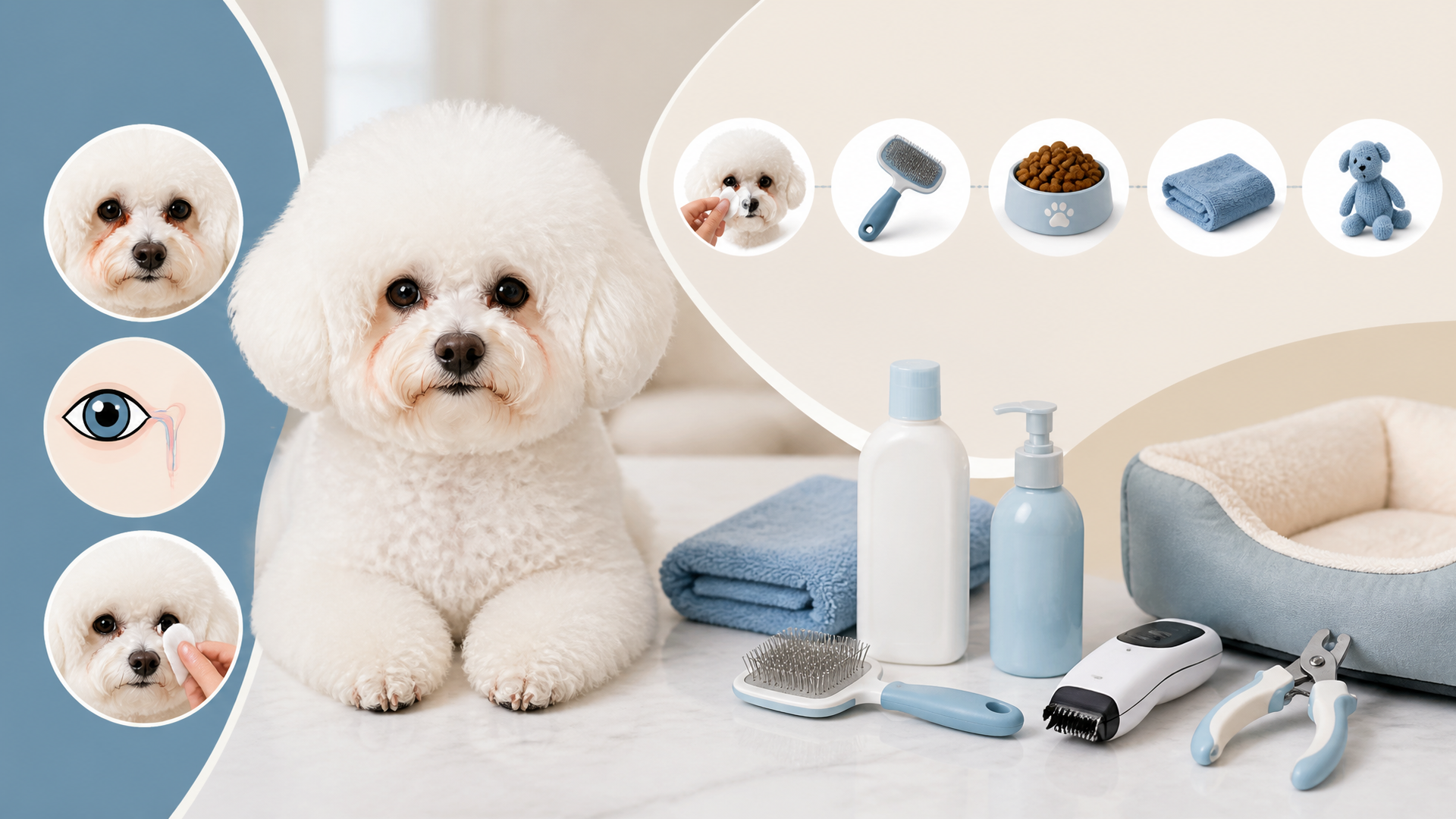
The fastest way to reduce Bichon tear stains is to combine daily surface cleaning with identifying the root cause. Bichons have shallow eye sockets and small tear ducts, making them prone to overflow. The reddish streaks come from porphyrins — iron-containing molecules in tears — that oxidize on white fur. For puppies under 6 months, teething is usually the trigger — be patient. For adults, diet and allergies are the main drivers. Here’s the two-part plan that works.

What’s Really Behind Those Reddish Streaks
Bichon anatomy makes some tearing inevitable, but the severity depends on controllable triggers. Use this table to pin down yours fast.
| Trigger | How It Shows | Usual Timeline |
|---|---|---|
| Teething | Extra tear production in puppies | Resolves by 6–9 months |
| Allergies | Itchy skin, paw licking, ear redness | Peaks seasonally or after diet change |
| Irritants | Sudden staining after new shampoo, bedding, or products | Shows within 1–2 days |
| Blocked tear ducts | Constant wetness despite daily cleaning | Requires vet flushing |
| Poor diet | Dull coat, excessive tearing, soft stool | Improves 4–6 weeks after diet change |
Quick check: If staining appears suddenly with redness, swelling, or discharge — that’s a possible infection. See your vet within 48 hours.
The Daily Routine That Actually Prevents Stains
Consistency beats every product. Build this into morning and evening — it takes 2 minutes total.
Morning
Wipe eye area with a warm, damp microfiber cloth (use a fresh section each time). Dry completely — moisture is the enemy. Check for dried discharge and gently loosen with the cloth.
Evening
Repeat the wipe-and-dry step. Apply an unscented stain-prevention powder (zeolite-based) to keep the area dry. Brush face fur away from eyes with a slicker brush so tears don’t sit on fur.
Weekly
Trim fur around eyes using curved blunt-tip scissors. Look for split ends that hold moisture against the skin.
Verification check: To confirm if your tap water is worsening stains, buy a home iron test strip (under $10) or call your local water utility for a report. If iron levels are above 0.3 mg/L, switch to filtered or distilled water. If you switch and see no change in 2 weeks, water minerals are not your problem — move to a diet trial.
Three Grooming Hacks That Save White Fur
These techniques are breed-specific and make a real difference for Bichons.
Use Filtered Water for Drinking
Tap water with high iron or mineral content can worsen staining. Switch to filtered or distilled water for drinking. Common mistake: changing water without also fixing diet or allergy issues — stains rarely have one single cause.
Clean from the Inner Corner Outward
Apply a pet-safe eye wipe starting at the inner corner and wiping outward. Never reuse the same wipe on both eyes. Common mistake: rubbing too hard or using human makeup remover, which irritates the eye and increases tearing.
Choose Alcohol-Free Products
Look for wipes or solutions with boric acid, chlorhexidine, or aloe vera. Trade-off: Some dogs are sensitive to aloe — test a small patch of skin behind the ear before using around eyes. Avoid peroxide or bleach-based whitening products — they damage the coat and can cause yellowing. Common mistake: using too much powder. A cakey layer traps moisture and irritates the skin more than it helps.
Best Products for Bichon Tear Stains (Comparison Table)
| Product Type | What to Look For | How Often to Use | When It Works Best |
|---|---|---|---|
| Stain wipes | Alcohol-free, boric acid formula | Daily | Maintenance and mild stains |
| Stain powders | Zeolite-based, unscented | 1–2 times daily | Keeping area dry after cleaning |
| Whitening shampoo | Blueberry or papaya extract | Weekly bath | Removing surface discoloration |
| Tear stain treats | Cranberry-based + probiotics | 1–2 treats daily | Supporting from the inside (not a standalone fix) |
| Gel/ointment | Pet-safe, non-irritating | Before bed | Protecting overnight when eyes water most |
(This article contains affiliate links. If you purchase through them, we may earn a small commission at no extra cost to you.)
When Home Care Isn’t Enough: Your Step-by-Step Flow
You’ve been wiping daily, switched water, and trimmed fur — but stains are worse than ever. Follow this operator flow with clear checkpoints.
Early Checkpoint (Week 1–2)
Are you using the right product types (wipes + powder, not just one)? Is the area staying dry between cleanings? Has the diet changed recently? If yes to all, move to ordered steps below.
If No Improvement: Likely Causes
- Food allergy — common suspects: chicken, beef, corn, wheat. Try a limited-ingredient diet for 6–8 weeks.
- Yeast overgrowth — reddish-brown with a sour smell. Requires vet-prescribed antifungal treatment.
- Blocked tear duct — tears constantly wet even after wiping. Needs veterinary flushing.
Ordered Steps for Stubborn Stains
1. Day 1–3: Switch to filtered water plus the daily wipe-and-powder routine. Verify you’re actually using filtered water (not just tap in a filter pitcher that hasn’t been changed).
2. Day 4–7: Add a probiotic supplement or tear stain treat. Look for cranberry and probiotics on the label.
3. Week 2–3: Conduct a strict food trial — single protein (e.g., salmon or duck), limited-ingredient diet. No treats or chews outside the trial.
4. If stains persist at week 4: Make a vet appointment for a tear duct exam and possible flushing.
How to Check for a Blocked Tear Duct at Home
After you wipe and dry, the area feels wet again within 10–15 minutes. There’s no redness, discharge, or smell — just constant moisture. This strongly suggests a blocked duct. The only way to confirm is a veterinary flush. Don’t try to flush at home.
Escalation Signals — See the Vet Immediately
- Green or yellow discharge
- Swollen or red eyelids
- Squinting or pawing at the eye
- Cloudy appearance to the eye
Success Check
Stains should fade within 1–2 weeks of addressing the root cause. White fur returns gradually — don’t expect instant results. If the skin underneath stays pink or wet despite clean care, keep looking for the trigger.
Should You Shave the Tear Stains? Decision Criterion by Age/Severity
For adult Bichons with severe staining that stays wet against the skin, shaving helps break the moisture cycle. Use a safety trimmer with a guard — leave at least 1/8 inch of fur to prevent chafing. Trade-off: shaving removes protective fur. If your dog spends time outdoors in direct sun, the exposed skin can burn. In that case, use a pet-safe zinc-free sunscreen on the bare area.
For puppies under 6 months, avoid shaving altogether. Their skin is more sensitive, and teething-related stains usually resolve on their own. Instead, stick to daily wipe-and-dry and wait for adult coat to come in.
If the skin is already red, sore, or crusty, skip shaving and see a vet — it could be a bacterial or yeast infection.
Frequently Asked Questions
Can I use hydrogen peroxide on Bichon tear stains?
No. Hydrogen peroxide burns the skin, damages the coat, and may cause yellowing. Stick to pet-safe stain wipes or powders.
Do Bichon puppies grow out of tear stains?
Sometimes. Stains often improve after teething ends (around 6–9 months). But many adult Bichons continue to have mild staining due to facial structure. Management, not cure, is the realistic goal.
Are tear stains painful for my Bichon?
The stains themselves aren’t painful, but the underlying cause may be. Allergies, infections, or blocked ducts can cause discomfort. If your dog squints, rubs, or the area looks red, see a vet.
Will changing food really help?
For some Bichons, yes. Food allergies are a common cause of excessive tearing. A high-quality, limited-ingredient diet can reduce inflammation and porphyrin production. Give it 4–6 weeks to see results.
Save This Guide
Bichon tear stains need a two-pronged approach: daily surface care (wipes + powder) plus finding the root cause (diet, allergies, or anatomy). Consistency matters more than expensive products. For puppies, be patient — teething often resolves the issue. For adults, use the ordered flow above. Most Bichons need ongoing maintenance rather than a one-time fix. Consistent daily care and addressing the cause will keep those white cheeks brighter over time.