Walking a Beagle Daily: Daily Routine & Expert Tips
Beagles need at least 30–45 minutes of walking every day, split into two outings. Without that daily exercise, your Beagle will find their own entertainment — and you won’t like the results. A bored Beagle is a destructive, vocal Beagle. Here’s exactly how to build a daily walking routine that works for both of you.

The Beagle Walk Reality Check
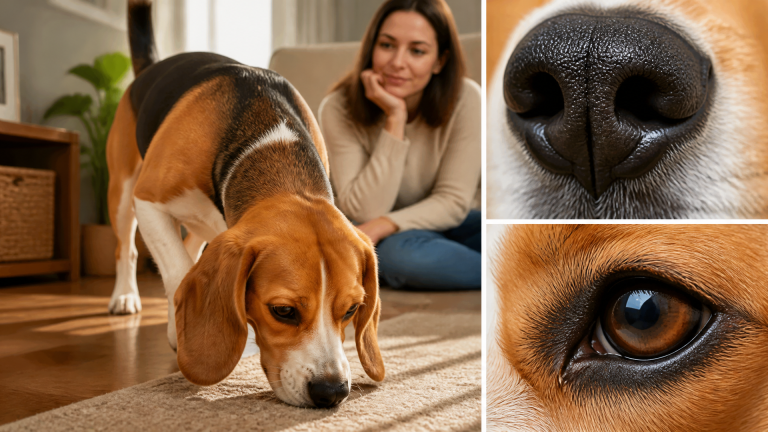
Beagles were bred to hunt in packs, following scents for hours. That nose doesn’t take weekends off. When you walk a Beagle, you’re not just burning energy — you’re managing one of the world’s most powerful scent-tracking machines.
The single biggest mistake owners make: treating a Beagle walk like a Labrador walk. Your Beagle will stop, backtrack, circle, and plant their feet to investigate smells. That’s not stubbornness. That’s their brain working the way it was designed to.
The failure mode to watch for: your Beagle learns that pulling gets them where they want to go faster. Once that pattern sets in, every walk becomes a tug-of-war.
Quick Checklist for Every Beagle Walk
Run through this before you grab the leash:
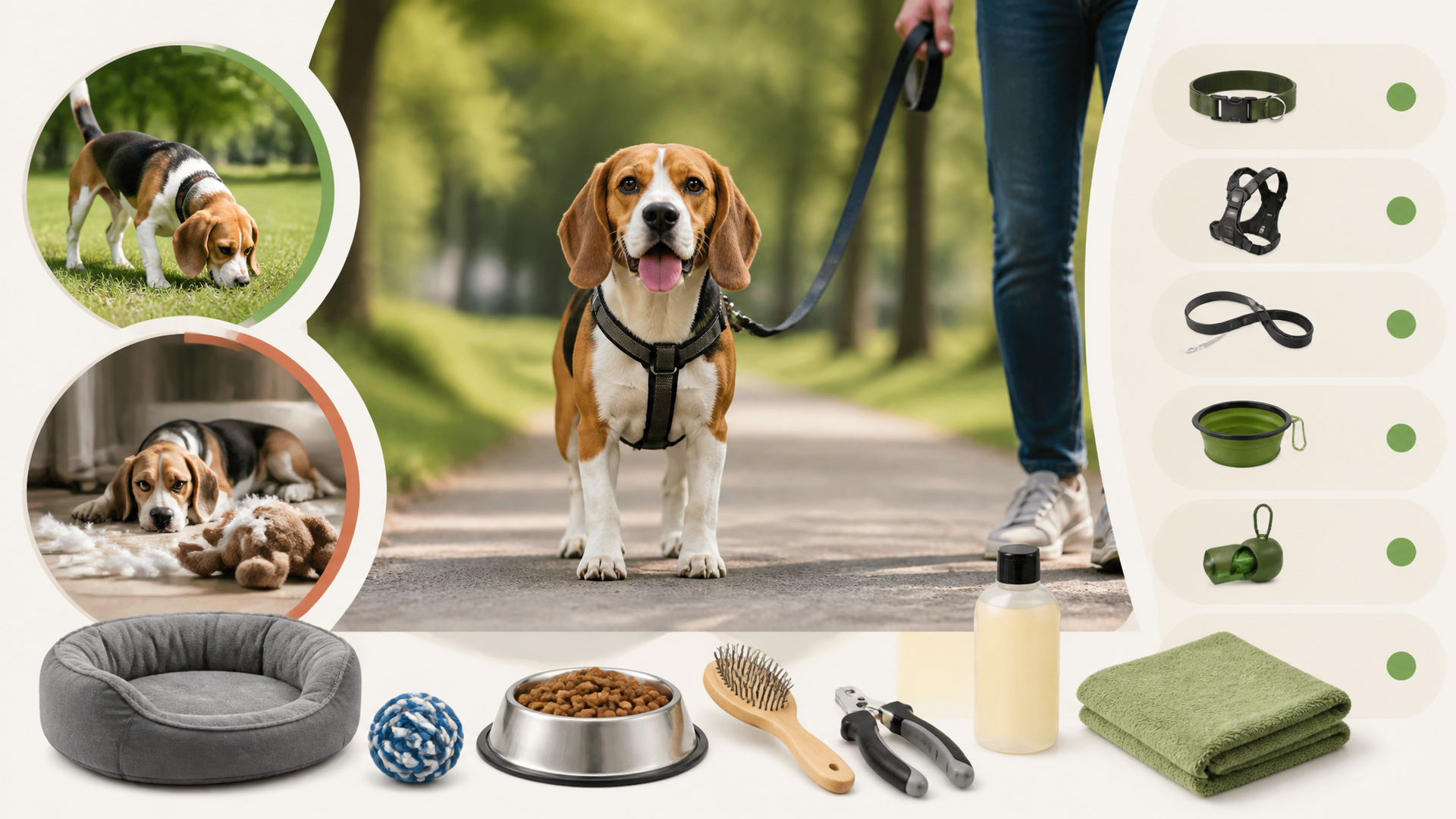
- [ ] Harness (not collar) — Front-clip harness reduces pulling and protects their delicate trachea
- [ ] 6-foot leash — Retractable leashes are dangerous for Beagles who bolt after scents
- [ ] High-value treats — String cheese, freeze-dried liver, or boiled chicken (not their regular kibble)
- [ ] Poop bags — Double-bag if you have a larger Beagle
- [ ] Weather check — If pavement is too hot for your palm (5-second test), it’s too hot for their paws
Phase‑by‑Phase: The 30‑Minute Beagle Walk
Phase 1: The Start (5 minutes)
Your Beagle needs to empty out before you go anywhere interesting. Walk a predictable route around your yard or immediate block. No sniffing yet. Use a consistent cue like “go potty” to build the association.
Checkpoint: If your Beagle hasn’t relieved themselves within 5 minutes, walk in tight circles in one spot. The movement stimulates elimination. Don’t move to Phase 2 until they’ve gone.
Phase 2: The Sniff Window (15–20 minutes)
This is where most Beagle walks fall apart. Your Beagle wants to scent-track. You want to “make progress.” The solution: alternate between structured walking and loose‑leash sniffing.
Use a pattern like:
- 2 minutes of focused walking (treats for eye contact or heeling)
- Let them sniff for 30–60 seconds at a telephone pole, bush, or fire hydrant
- Cue them back to your side with a treat
- Repeat
Why this works: You’re working with their nose, not against it. A Beagle who gets their sniff quota is a Beagle who walks calmly beside you the rest of the time.
Phase 3: The Cool Down (5–10 minutes)
Ease them back toward home. Shorten the leash slightly. Lower your energy. This final phase reinforces that walks end calmly, not frantically.
Success check: Your Beagle is walking beside you with a loose leash, not pulling or fixating on every scent. They may still sniff, but they check in with you regularly.
The Sniff‑and‑Track Problem (and How to Fix It)
This is the failure mode most owners hit around week three: your Beagle catches a scent, drops their head, and starts pulling like a sled dog. You brace, pull back, and suddenly every walk is an arm workout.
How to detect it early: Your Beagle’s ears go back, tail goes straight up, and they stop responding to their name. That’s tracking mode. They literally cannot hear you over their nose.
What to do immediately:
- Stop walking. Plant your feet.
- Don’t pull back — that triggers opposition reflex (they pull harder).
- Make a high‑pitched, excited sound. Most Beagles will break focus out of curiosity.
- The moment they look at you, mark it with “yes” and give a high‑value treat.
- Redirect them in a different direction.
When to escalate: If your Beagle has successfully bolted and ignored recalls more than three times, switch to a hands‑free waist leash (not retractable) or a double‑ended leash that clips to both front and back of their harness. This gives you control without relying on arm strength. Also consider a breakaway safety collar with ID tags in case they ever get loose.
When Your Beagle Refuses to Move
This isn’t defiance. Your Beagle has found a scent so compelling that moving forward feels impossible to them.
- Crouch down to their level
- Gently press on their chest (not their neck) to break their nose‑to‑ground posture
- Place a treat directly under their nose, then lure them up and forward
- If they still won’t budge, take 3 steps away in any direction. The change in your position often breaks the scent lock.
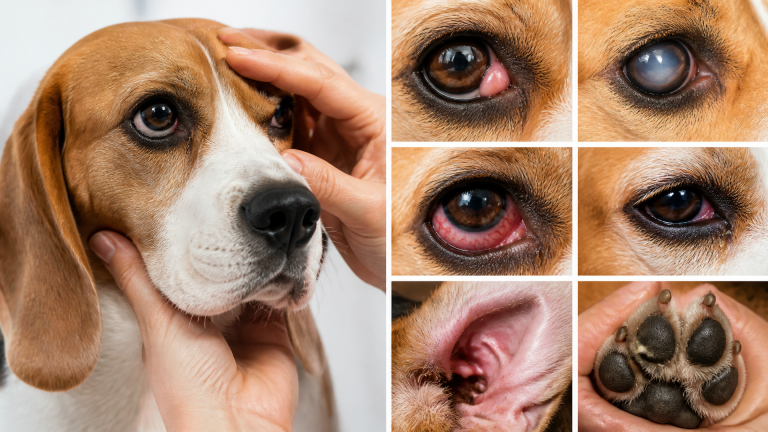
Red flag: If your Beagle refuses to move and also shows signs of limping, excessive panting, drooling, or disorientation, stop the walk immediately. Carry them home or to shade, and contact your vet if symptoms persist. These could be signs of heatstroke, paw pad injury, or joint issues. Do not try to “push through” a walk when a Beagle is clearly in distress.
Gear That Actually Works for Beagles
The front‑clip harness is non‑negotiable. Beagles have delicate tracheas. A collar‑based walk can cause coughing, gagging, or long‑term airway damage. Look for a harness with a front D‑ring that redirects pulling to the side.
Treat pouch with a magnetic or snap closure. Ziploc bags split when you’re fumbling for treats one‑handed. Get a pouch that opens easily and closes securely — otherwise your Beagle will learn to nose at it while you walk.
Portable water bowl for walks over 45 minutes or in warm weather. Beagles run warm and don’t always show obvious signs of heat stress until they’re in trouble.
Affiliate disclosure: We may earn a commission on qualifying purchases if you use the links above.
Hot Pavement Reality Check
If the outside temperature is 77°F, asphalt in direct sun can reach 125°F. By 87°F, it hits 143°F. Your Beagle’s paw pads will burn before they show pain.
Test: Press the back of your hand against the pavement for 5 seconds. If you can’t hold it there comfortably, walk on grass or dirt, or walk during the coolest part of the day (dawn or dusk).
Stop threshold: If your Beagle suddenly lifts a paw, starts limping, or refuses to walk on pavement, stop immediately. Check for blisters or redness. Carry them to a cooler surface and walk on grass for the rest of the outing. If pads are blistered, see your vet.
The Walk That Saves Your Sanity
A tired Beagle is a good Beagle. A Beagle who got their daily walk is calm indoors, less likely to bay at every noise, less tempted to counter‑surf, and easier to train. The 30‑minute walk you skip today is the night of barking you’ll regret tomorrow.
Save This Guide: Start with the checklists. Build the phase‑by‑phase routine. Watch for the tracking failure mode before it becomes a habit. Your Beagle’s nose is a gift — but you control where it takes you both.