Does a Pomeranian Have a Double Coat
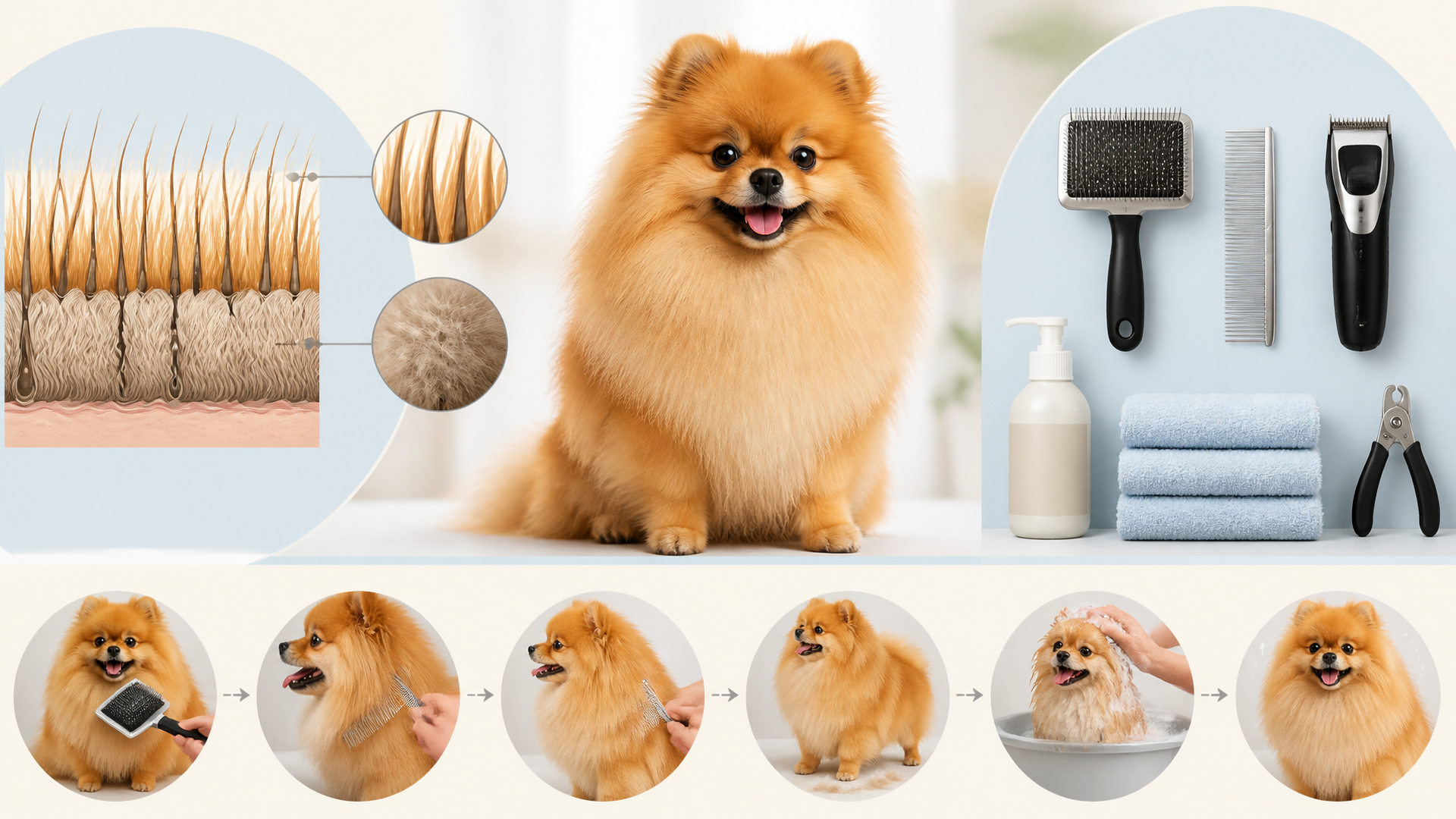
Yes, Pomeranians have a double coat. That means two distinct layers: a soft, dense undercoat that keeps them warm in winter and cool in summer, plus a longer, harsh outer coat that repels dirt and moisture. This double coat is why your Pom sheds heavily twice a year and mats easily if you skip brushing. It also shapes every grooming decision you make.

The most important choice: keep the coat full-length (needs weekly brushing) or go for a 1–2 inch “puppy cut” (easier, but still never shave). Below you’ll find exactly what tools to use, how to brush without missing the undercoat, and how to confirm your grooming actually worked.
Tools and Prerequisites for Pom Coat Care
Before you start, get these. Using the wrong brush is the #1 mistake.
| Tool | Why You Need It | Best For |
|---|---|---|
| Slicker brush (medium-firm, curved) | Fine bent wires lift undercoat debris without scratching sensitive Pom skin | Daily line brushing |
| Pin brush (with rounded tips) | Wider pins smooth the outer coat and remove light tangles | Finishing coat after slicker |
| Greyhound comb (stainless steel, fine + wide teeth) | Checks for hidden mats near skin – the only tool that catches missed tangles | Verification step after every brushing session |
| Detangling spray (leave-in, conditioner-based) | Reduces breakage and makes brushing less stressful for your Pom | Before brushing, especially on dry coat or post-walk |
| Undercoat rake (gentle metal teeth) | Safely removes shed undercoat without cutting guard hairs | Heavy shedding seasons (spring/fall) |
| High-velocity dryer (or a powerful human blow dryer on cool) | Blows moisture out of thick undercoat; prevents skin infections from dampness | Post-bath to ensure undercoat is bone-dry |
Affiliate disclosure: Some links in this article may be affiliate links. If you buy through them, we may earn a small commission at no extra cost to you.
Step-by-Step Grooming Plan for a Pom’s Double Coat
1. Pre-Brush Check (Daily or Every Other Day)
Run your fingers through the coat from skin to tip. Feel for any small tangles or “carpet-like” patches – these are early mats. If you find a mat larger than a dime, stop and apply detangling spray. Gently tease it apart with your fingers before using any brush.
Friction point: Many owners rush this step. Missing a mat at the skin means you’ll pull painfully during line brushing, and your Pom will start avoiding grooming. Spend 30 seconds on this check.
Verification checkpoint after this step: Pass a greyhound comb through the area. If the comb glides without snagging, the coat is ready for brushing. If it catches, repeat the teasing or move to step 2 with extra care.
2. Line Brush the Undercoat (The Key Step – Do This Right)
This technique reaches the undercoat without pulling the outer coat. It’s the single most important skill for Pom owners.
- Part the hair in a straight line down the back.
- Take a 1-inch section. Hold the hair near the roots with one hand (this prevents skin tugging).
- With the slicker brush, brush from the skin outward in short, quick strokes.
- Move the part line over by 1 inch and repeat. Cover the entire body—this takes 10–15 minutes on a full coat.
- Pay extra attention to the rear (pants), behind the ears, and under the legs. These are prime mat zones because friction and moisture collect there.
Decision criterion: If you have less than 15 minutes per session, a full-length coat will mat. Consider a 1–2 inch puppy cut from a groomer to cut brushing time in half. But never shave—shaving ruins the double coat’s ability to regulate temperature.
Verification checkpoint after line brushing: Run the greyhound comb through each brushed section. If you feel resistance, you missed a tangle. Go back with the slicker on that spot. Successful grooming means the comb slides through the entire coat with zero snags.
3. Outer Coat Finish
Switch to the pin brush. Brush in the direction of hair growth (backward from tail to head) to smooth the outer layer and fluff the coat. This gives the classic Pom silhouette. A few gentle strokes on the tail to fluff it up.
4. Bathing (Every 3–6 Weeks)
Double coats trap water and soap. Here’s how to do it without damaging the coat:
- Use lukewarm water (not hot).
- Apply a dog shampoo formulated for double coats or for sensitive skin. Avoid human shampoo—it strips natural oils.
- Lather with your hands, not a scrub brush. Work shampoo into the undercoat by massaging.
- Rinse thoroughly until water runs clear. Any soap residue causes dandruff and itching.
- Towel dry gently (don’t rub – it mats). Squeeze water out.
- Use a high-velocity dryer on low heat. Blow the undercoat dry completely, working from skin outward. This takes 10–15 minutes on a full coat.
Success signal: After drying, brush again lightly. The coat should feel light, airy, and not clumpy. If it feels damp or heavy, you didn’t dry the undercoat fully. A damp undercoat can lead to hot spots or skin infections.
5. Trimming (Optional – Never Shave)
Shaving a Pom damages the coat’s growth cycle. It can grow back patchy, thin, or with a different texture (often coarse and uneven). If you want a shorter cut, have a groomer use scissors or clippers with a long guard comb to take off 1–2 inches. A “puppy cut” (uniform 1–2 inches) is safe and still protects the skin from sun and cold.
When to Skip DIY and Call the Groomer
- Matts are tight against the skin and you can’t see the skin underneath.
- Your Pom shows signs of pain (yelping, snapping) during brushing.
- You notice redness, pus, or bald spots near matted areas.
- You simply don’t have 15–20 minutes every other day for brushing.
Professional groomers can safely demat with thinning shears or clipper work without shaving the whole coat. It’s worth the $40–60 fee to avoid skin injury.
Grooming Decision Checklist
Use this before every brushing or bath session:
- [ ] Have I checked for mats near the skin with my fingers?
- [ ] Is the slicker brush clean and free of hair clumps?
- [ ] Do I have detangling spray nearby if needed?
- [ ] After brushing, did the greyhound comb pass through without any snags?
- [ ] After bathing, is the undercoat completely dry before finishing?
- [ ] Have I waited at least 3 weeks since the last bath? (Over-bathing dries the coat.)
If you answer “no” to any, pause and address that step before moving on.
Troubleshooting Common Coat Problems
Excessive shedding year-round – Poms shed heavily in spring and fall. If shedding never stops or you see bald patches, visit a vet. Causes include allergies, hypothyroidism, or poor nutrition. A diet rich in omega-3 fatty acids (fish oil supplements) can reduce shedding.
Mats tight to the skin – Do NOT brush a tight mat. Use blunt-nosed scissors to cut it out parallel to the skin, or go to a professional groomer. Pulling can tear the thin Pom skin and cause infection.
Coat losing its fluff – Over-bathing (more than once every 3 weeks) strips natural oils. Human shampoo dries the coat. Allowing the dog to stay damp after walks clumps the undercoat. If the coat looks flat, try a conditioning spray and brush more frequently.
When to call the vet – Redness, pus, or persistent scratching near a matted area may indicate a skin infection. Shave the area carefully and apply a vet-recommended topical treatment. Also call if you see excessive hair loss in patches.
Related Questions (FAQ)
Does a Pomeranian’s double coat mean it can’t get cold?
No. The undercoat helps, but a Pom still gets cold in temperatures under 30°F or if shivering. Use a sweater or coat in extreme cold – but not a tight one that mats the fur.
Can I use a Furminator on my Pomeranian?
Use with extreme caution. A Furminator can pull too much undercoat and damage guard hairs, leading to a thin, patchy coat. Stick with a slicker brush and undercoat rake for safer de-shedding.
Is it okay to give a Pomeranian a summer cut?
A short trim (1–2 inches) is fine. Never shave to the skin – the outer coat protects from sunburn and overheating. A “teddy bear cut” (round face, shorter body) is popular and safe if done with scissors.
How often should I brush a Pomeranian with a full double coat?
At least every other day, and daily during shedding seasons. Skipping leads to painful mats that may require shaving. If you can’t commit to that schedule, opt for a puppy cut.
What’s the best brush for a Pomeranian?
A medium-firm slicker brush like the Hertzko Self-Cleaning Slicker Brush works well for most Poms. Pair it with a stainless steel greyhound comb (like the Chris Christensen 000) for verification.
Save This Guide: A Pom’s double coat requires line brushing every 2–3 days (daily in shedding season), never shaving, and thorough drying after baths. Use the greyhound comb as your verification tool: if it glides without snags, you’re done. Consistent care keeps your Pomeranian healthy, fluffy, and comfortable all year.