Inside of Miniature Schnauzer Ear Very Pink
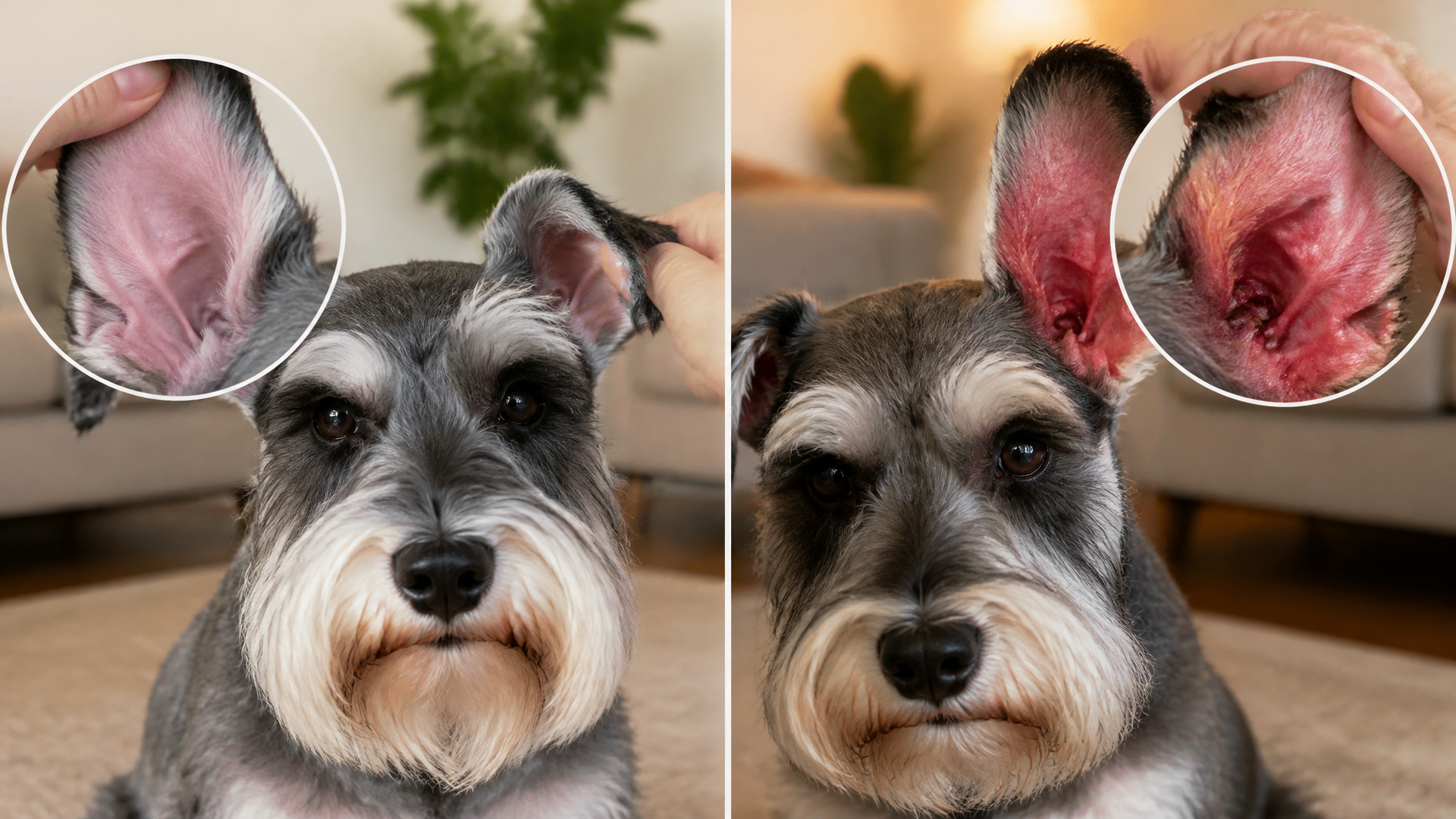
Lifted your Miniature Schnauzer’s ear flap and seen bright pink skin? The short answer: pink is normal for many Schnauzers, but “very pink” plus redness, swelling, discharge, or odor means trouble. Here’s the 30-second test — sniff the ear and check for debris. If neither is present, your Schnauzer is likely fine. If you catch a yeasty, sour, or metallic smell, an infection could be brewing.

Why Your Schnauzer’s Ears Are Naturally Pink
Miniature Schnauzers have pale inner ear skin by nature. Their blood vessels show through easily, giving that pink or reddish appearance. Three breed-specific factors make them more prone to ear trouble than other dogs:
- Floppy drop ears. The heavy leather ear flap traps warmth and moisture — a perfect breeding ground for yeast and bacteria.
- Thick hair deep in the ear canal. Schnauzers grow hair inside the ear, which can trap wax and debris if not regularly plucked.
- Frequent allergies. Miniature Schnauzers are prone to environmental and food allergies, and inflamed ears are often the first symptom.
That means your Schnauzer’s naturally pink ear can turn “very pink” from irritation, infection, or allergy before you notice any other signs. Important boundary: some Schnauzers have more pigment than others. Puppies often have brighter pink ears that darken as they mature. What matters is a change from your dog’s baseline — not the color alone.
Normal Pink vs. Problem Pink: Quick Comparison Table
| What You See | Normal Pink | Likely Infection | Likely Allergy |
|---|---|---|---|
| Color | Pale to medium pink, consistent | Dark red, inflamed, angry-looking | Bright pink, sometimes blotchy |
| Discharge | Little to none | Yellow, brown, or black waxy gunk | Clear or light yellow |
| Smell | Neutral or faint doggy smell | Yeasty, sour, or musty | Usually odorless unless secondary infection |
| Touch | Warm but not hot, dog tolerates | Hot to the touch, dog flinches | Warm, itchy, dog rubs/ scratches |
| Behavior | Normal head carriage | Head shaking, tilting, pawing at ear | Frequent scratching, rubbing on furniture |
Save this table. Take a photo of your Schnauzer’s ear in natural light when it’s healthy — you now have a baseline to compare against later. That photo is your verification step: if the pinkness changes, you’ll spot it immediately.
The 5-Minute Ear Check: Step-by-Step
Do this check once a week. For floppy-eared Schnauzers, weekly inspection catches problems before they become painful.
Before You Start
- A cotton ball
- A dog-safe ear cleaning solution (ask your vet for a recommendation — check this popular option for schnauzers)
- A high-value treat
- Never use Q-tips — they push debris deeper and can damage the ear drum.
Step 1: The Look (30 seconds)
Lift the ear flap and shine a flashlight into the canal. Compare to the table above. Check for color changes, swelling, or debris.
Step 2: The Sniff (10 seconds)
Lower your nose to the ear opening. A healthy ear smells like nothing much. A yeasty, sour, or metallic odor signals trouble.
Step 3: The Touch (30 seconds)
Run your finger along the inside of the ear flap and base of the ear. If the skin feels hot or your Schnauzer pulls away, that’s a red flag.
Step 4: The Behavior Check (30 seconds)
Watch your dog for 30 seconds. Head tilting, shaking, or pawing at the ear? That means it’s bothering him.
Likely Causes You Might Find
- Brown waxy buildup — likely yeast. Call your vet.
- Black crumbly debris — could be ear mites. Requires vet treatment.
- Thick yellow pus — bacterial infection. Needs prescription medication.
- Barely any discharge but bright red — likely allergy irritation.
Friction Point: The Dog Won’t Hold Still
Wrap your Schnauzer in a towel like a burrito and have a second person hold him. Reward with a high-value treat after every check.
Success Check
If all four steps come back clear — normal color, no smell, comfortable to touch, no head shaking — you’re done until next week.
Escalation Signals (Stop and Call the Vet)
- Ear is hot, swollen, or painful to touch
- Discharge is yellow, brown, or bloody
- Strong odor
- Head shaking or tilting that doesn’t stop
- Your Schnauzer cries when you touch the ear
3 Expert Tips for Healthy Schnauzer Ears
Tip 1: Pluck Ear Hair Monthly (But Do It Right)
- Actionable step: Once a month, gently pluck visible hair from the ear canal using your fingers or a hemostat. Only remove hair you can easily reach — never dig. Using a plucking powder (like this one) helps grip the hair and reduces irritation.
- Common mistake to avoid: Shaving the inside of the ear with clippers. This can cause micro-cuts that become infected. Plucking is safer because hair comes out from the root.
Tip 2: Use the Right Cleaning Technique
- Actionable step: Saturate a cotton ball with a vet-recommended ear cleaner, wipe the visible ear flap and the opening of the canal, then let your dog shake his head. Never pour solution directly into a dirty ear.
- Common mistake to avoid: Over-cleaning. Once a week is plenty unless your vet says otherwise. Scrubbing too often strips protective oils and makes ears more prone to infection. Trade-off: some owners worry plucking causes infection, but when done correctly on clean ears, it prevents debris buildup. The risk of not plucking — trapped moisture and yeast — is higher.
Tip 3: Check for Seasonal Allergy Triggers
- Actionable step: If your Schnauzer’s ears get pinker every spring or fall, note it on your calendar. A daily antihistamine (ask your vet for the right one) can prevent the inflammation before it starts.
- Common mistake to avoid: Assuming all ear redness means infection. Allergic ears look pink but typically lack discharge or smell. Starting antibiotics when there’s no infection can lead to resistance.
When to Call the Vet
Call your veterinarian within 24 hours if you see any of these:
- Ear is noticeably hot or swollen
- Discharge is yellow, brown, black, or bloody
- Strong yeasty or sour odor
- Your Schnauzer shakes his head repeatedly or tilts it to one side
- The ear is painful to touch
- The redness doesn’t improve after cleaning once
Call immediately (emergency vet) if:
- Your dog can’t walk straight or is losing balance
- You see blood or pus draining from the ear
- The ear flap is swelling like a balloon (hematoma)
Practical implication for your next step: If the ear looks pink but passes the sniff and touch tests, you can safely wait and recheck in 2–3 days. If any escalation signal appears, do not wait — go straight to the vet. Early treatment of a Schnauzer ear infection usually means a simple course of drops; waiting can lead to a ruptured eardrum or hematoma surgery.
Frequently Asked Questions
Can I use hydrogen peroxide to clean my Schnauzer’s ear?
No. Hydrogen peroxide irritates the sensitive skin inside the ear canal and can delay healing. Use a dog-specific ear cleaner recommended by your vet.
My Schnauzer’s ear is pink but doesn’t smell — is that okay?
Probably yes. Many Miniature Schnauzers have naturally pink inner ears. If there’s no discharge, no odor, and no behavior changes, monitor it and recheck in a few days.
Should I pluck ear hair before or after cleaning?
After cleaning. Clean the ear first to remove surface debris, then pluck. This reduces the chance of pushing dirt deeper into the canal.
How often should I clean my Miniature Schnauzer’s ears?
Once a week is sufficient for most Schnauzers. Dogs who swim or have a history of ear infections may need more frequent cleaning — follow your vet’s guidance.
Save This Guide: A healthy Miniature Schnauzer ear is pale to medium pink with no smell or discharge. Use the comparison table to spot trouble early, and do the 5-minute ear check weekly. When in doubt, snap a photo and send it to your vet — catching an infection early saves your dog pain and a costly vet visit.
Disclosure: Some product links in this article are affiliate links. If you purchase through them, we may earn a small commission at no extra cost to you.