Sphynx Cat Anatomy: Guide: What Every Owner Should Know
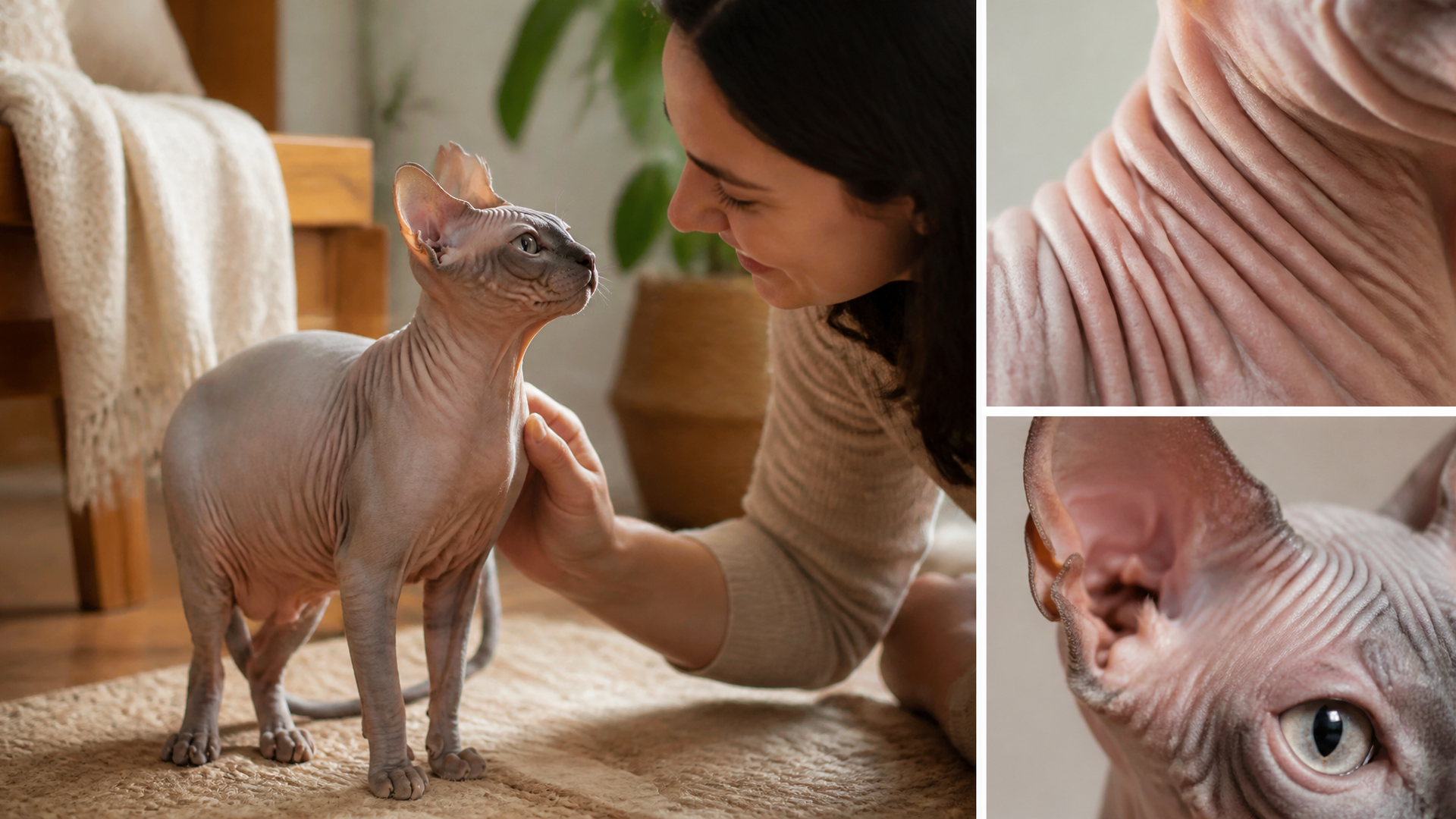
Sphynx cats aren’t truly hairless — they’re covered in a fine peach‑fuzz layer of down hair invisible to the eye but soft to the touch. This genetic mutation affects their entire body structure, from their oily, wrinkled skin to their oversized ears and powerful hind legs. Understanding Sphynx anatomy is essential for keeping these cats healthy, warm, and free from breed‑specific health issues. Here’s what you need to know, starting with the most distinctive feature.

Skin: The Sphynx’s Most Distinctive Feature
A Sphynx’s skin behaves very differently from a furry cat’s coat. Without fur to absorb sebum, Sphynx cats produce excess oil that builds up on the skin surface. This is normal — but it requires regular management.
Weekly skin care routine:
1. Daily wipe‑down: Use a soft microfiber cloth dampened with warm water to remove oil buildup. Focus on skin folds, chin, and tail area.
2. Bathing schedule: Bathe every 1–2 weeks using a gentle, cat‑safe shampoo formulated for sensitive skin.
3. Check for blackheads: Inspect the chin, tail, and back regularly. Sphynx cats are prone to feline acne.
4. Moisturize when needed: Apply unscented, pet‑safe moisturizer if skin appears dry or flaky.
Verification step: After wiping, look at the cloth. A light tan is normal. Heavy brown residue means you missed an area — go back and clean more thoroughly.
Common mistake to avoid: Over‑bathing strips natural oils and causes rebound oiliness. Stick to a consistent schedule rather than reacting to visible oil.
Expert tip: Use a soft microfiber cloth rather than paper towels for daily wiping. It’s gentler on sensitive skin and catches more oil without causing irritation.
Signs you may be over‑cleaning:
- Skin appears red or inflamed after wiping
- Increased oil production within 24 hours of bathing
- Dry, flaky patches between baths
- Your cat seems uncomfortable during handling
Temperature Regulation Challenges
Without a coat for insulation, Sphynx cats have a higher metabolic rate to maintain body temperature. They burn more calories than furred cats and need about 20–30% more food. You’ll notice they constantly seek warm spots — radiators, heating vents, sunny patches, and even your laptop.
Check your cat’s comfort:
| Condition | What to look for | Action needed |
|---|---|---|
| Too cold | Seeking heat sources, hunched posture, shivering, cool ears and paw pads | Provide sweater or heated bed |
| Comfortable | Relaxed posture, warm to touch, normal activity | No action needed |
| Overheated | Panting, lethargy, seeking cool surfaces | Move to cooler area, offer water |
Room temperature target: Keep your home between 70–80°F. Anything below 65°F requires a sweater or heated bed for comfort.
Trade‑off to watch: Sweaters and heated beds can cause overheating if overused. If your cat starts panting or moves to a cool floor, remove the sweater and offer a cooler spot. A soft‑sided carrier like the GAPZER Pet Carrier for Large Cats with a removable fleece liner can help keep your Sphynx warm during travel while letting you adjust the insulation as needed.
Body Structure: Built for Warmth and Agility
Sphynx cats have a medium‑build body with a broad chest and a rounded, firm belly. Their hind legs are slightly longer than their front legs, giving them a distinctive stance and powerful jumping ability.
Key measurements for adult Sphynx cats:
| Feature | Male | Female |
|---|---|---|
| Weight | 10–14 lbs | 6–10 lbs |
| Height | 8–10 inches | 7–9 inches |
| Body length (nose to tail base) | 14–18 inches | 13–16 inches |
| Lifespan | 8–15 years | 8–15 years |
Their hip structure is notably prominent compared to furred breeds. This isn’t a health concern — it’s a visual effect from the lack of coat coverage. You should be able to feel hip bones without excessive pressure, but they shouldn’t feel sharp or protruding.
The Sphynx Belly
A healthy Sphynx has a rounded, slightly firm belly. This is normal and helps with heat retention. It’s one of the breed’s signature traits — don’t mistake it for obesity or bloating.
Red flags to watch for:
- Sudden belly enlargement (could indicate fluid retention)
- Tender or painful belly when touched
- Visible veins on the abdomen
- Lethargy combined with belly changes
When to call the vet: If you notice any of these signs, especially sudden changes or pain, schedule an appointment within 24 hours.
Head and Face: The Wrinkled, Expressive Look
The Sphynx head is wedge‑shaped with prominent cheekbones and a flat forehead. Their ears are massive — up to 3–4 inches tall — and sit wide apart. This large ear surface helps with temperature regulation but also means increased risk of ear infections.
Ear cleaning step by step:
1. Check ears weekly for wax buildup or dark debris. Sphynx cats produce more ear wax than furred breeds due to their oily skin.
2. Use a vet‑recommended ear cleaner and cotton balls — never cotton swabs, which can damage the ear canal.
3. Gently wipe the visible part of the ear canal using a fresh cotton ball for each ear.
4. Contact your vet if you see redness, swelling, discharge, or if your cat shakes its head excessively.
Verification step: After cleaning, smell the ear. A healthy ear has no odor. A yeasty or foul smell means an infection may already be starting — see your vet.
Expert tip: Clean ears every 7–10 days as part of your routine, not just when they look dirty. Regular cleaning prevents infections before they start.
Common mistake to avoid: Using alcohol‑based cleaners or human ear drops. These can burn and damage your cat’s sensitive ear tissue.
Their eyes are lemon‑shaped and large, another adaptation that makes them look expressive. The lack of eyelashes (common in Sphynx) means they rely on blinking and tears to keep eyes clean. You may notice slight tear staining around the inner corners — gentle daily wiping with a warm cloth keeps this under control.
Whiskers and Sensing
Sphynx cats have shorter, more brittle whiskers than furred breeds, and some are born with very few or none at all. This is normal and not a health concern. However, it means they rely more heavily on their other senses, particularly sight and hearing.
What this means for your home:
- Sphynx cats may be more cautious in low‑light environments
- Keep furniture arrangement consistent — they need spatial predictability
- Consider night lights if your cat seems hesitant in dark rooms
- Provide climbing structures with clear visibility rather than enclosed spaces
Digestive System: Higher Needs, More Sensitivity
The Sphynx’s fast metabolism demands high‑quality, protein‑rich food. Their digestive system is less forgiving than most breeds, with a higher incidence of food sensitivities and gastrointestinal upset.
Feeding guidelines:
- Frequency: 2–4 small meals per day rather than free‑feeding
- Protein content: 40–50% protein dry matter (high‑protein, low‑carbohydrate formula)
- Grain‑free options often work well for this breed
- Transition period: Change foods gradually over 7–10 days to avoid digestive upset
Watch for these digestive issues:
- Vomiting within 2 hours of eating (possible food intolerance)
- Chronic soft stool or diarrhea
- Excessive gas
- Visible discomfort after eating
Expert tip: Sphynx cats commonly develop food allergies to chicken. If your cat has ongoing digestive problems or skin issues, try a novel protein source like rabbit, duck, or venison for 8–12 weeks. Document any changes in stool quality and skin condition during the trial.
Common mistake to avoid: Switching foods too frequently looking for the “perfect” diet. Stick with one high‑quality food for at least 4–6 weeks before evaluating results.
Common Health Concerns in Sphynx Anatomy
Knowing your cat’s normal anatomy helps you spot problems early. Here are the most common health issues related to Sphynx body structure:
Hypertrophic Cardiomyopathy (HCM)
The most serious genetic concern in Sphynx cats. This condition causes thickening of the heart muscle and can lead to heart failure.
Why Sphynx are at risk: The breed’s genetic pool is relatively small, and HCM is inherited in an autosomal dominant pattern. About 25–30% of Sphynx cats will develop HCM in their lifetime.
Screening recommendations:
| Age | Screening | Frequency |
|---|---|---|
| 1–2 years | Baseline echocardiogram | Once |
| 2–5 years | Echocardiogram | Every 1–2 years |
| 5+ years | Echocardiogram + blood work | Annually |
Warning signs of heart disease:
- Rapid or difficult breathing
- Sudden hind leg paralysis or pain
- Collapse or fainting episodes
- Lethargy and decreased appetite
When to seek emergency care: If your cat collapses, has difficulty breathing, or shows sudden hind leg paralysis, go to an emergency vet immediately.
Dental Issues
Sphynx cats are prone to dental disease, partly due to genetics and partly because of their unique mouth anatomy. Their teeth are normal in number, but gum inflammation develops faster than in many other breeds.
Daily dental care routine:
1. Brush teeth with pet‑safe enzymatic toothpaste
2. Provide dental treats approved by the Veterinary Oral Health Council (VOHC)
3. Check gums weekly for redness, swelling, or bleeding
4. Schedule annual professional dental cleanings
Skin Infections
The Sphynx’s oily skin creates an ideal environment for yeast and bacterial overgrowth.
Signs of skin infection:
- Unusual odor (yeasty or sour)
- Red, inflamed skin patches
- Crusty or scaly areas
- Excessive scratching or licking
- Dark brown discharge in skin folds