Lifespan of Beagle Lab Mix
A healthy Beagle Lab Mix typically lives 10–15 years, with most reaching 12–14 years. That’s a solid range for a medium-to-large dog — but the choices you make from puppyhood through senior years determine whether your dog hits 15 or falls short at 10.

The counter-intuitive truth most articles skip: Beagle Lab Mixes often inherit opposite health problems from each parent breed. Managing those conflicting risks — not treating them like an average mutt — is what actually extends their life.
What this means for you: You’re signing up for a 12–14 year commitment. Decisions about food, exercise, and vet care in the first year especially will either add years or cost them.
How Long Do Beagle Lab Mixes Really Live?
Most Beagle Lab Mixes reach 12–14 years with good care. Some push to 15. A few fall short at 10 due to preventable issues like obesity or untreated ear infections.
| Factor | Beagle Lab Mix | Pure Beagle | Pure Labrador |
|---|---|---|---|
| Average lifespan | 12–14 years | 12–15 years | 10–12 years |
| Primary health risk | Obesity + ear infections | Obesity + epilepsy | Hip/joint issues + obesity |
| Weight range | 35–60 lbs | 20–30 lbs | 55–80 lbs |
| Energy level | Medium-high | High | High |
Your mix’s size matters. A dog closer to Lab size (55–60 lbs) may live 1–2 years less than one closer to Beagle size (35–45 lbs) — larger dogs simply age faster.
Quick verification check: Weigh your dog weekly on the same home scale. If weight changes by more than 5% in two weeks, adjust food or see a vet before bigger problems develop.
What Actually Affects Your Beagle Lab Mix’s Lifespan
Weight Management Is the #1 Lifespan Factor
Both Beagles and Labradors are genetically prone to obesity. A Beagle Lab Mix carrying 10–15 extra pounds significantly increases risk of joint issues, diabetes, heart disease, and shorter lifespan.
Actionable step: Run your hand over your dog’s ribs weekly. You should feel them without pressing hard, but they shouldn’t be visible. If you can’t feel ribs, cut food by 10% and increase exercise.
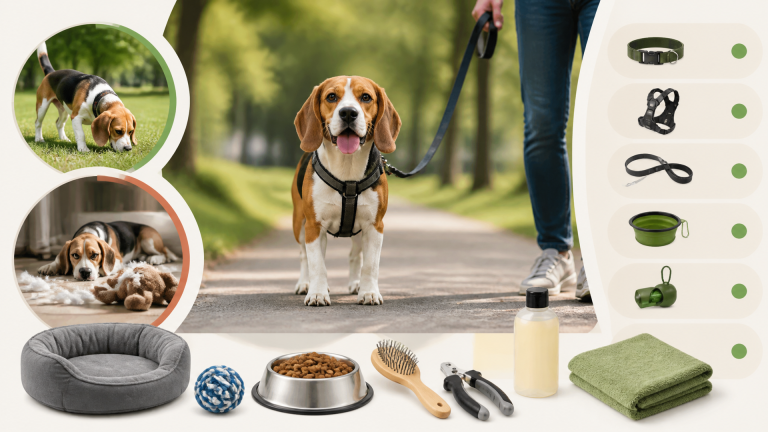
Common mistake: Free-feeding (leaving food out all day). Beagle Lab Mixes will eat until sick. Use measured meals twice a day only.
Failure mode you’ll see: If you free-feed, expect rapid weight gain by 6 months. That round belly isn’t “puppy fat” — it’s excess weight stressing developing hips and elbows.
Opposite Health Risks You Need to Balance
This is where breed-specific knowledge saves years of life.
From the Beagle side: Ear infections, epilepsy, back issues, hypothyroidism.
From the Lab side: Hip dysplasia, elbow dysplasia, obesity, exercise-induced collapse.
The trade-off you must navigate: Treating ear infections with steroids can worsen hip dysplasia. Managing weight through high-impact exercise can damage bad joints. You need a vet who understands both breed lines to help you choose between low-impact ear care and high-impact joint protection.
3 Expert Tips You Can’t Afford to Skip
Tip #1: Get X-rays before starting joint supplements. Don’t assume glucosamine is harmless. It can mask early hip dysplasia symptoms, delaying surgical options. Get X-rays at 12–18 months if your mix shows stiffness — not after starting supplements. The common mistake: thinking “preventative supplements can’t hurt” — they can if they hide a problem.
Tip #2: Clean ears weekly, but use the right method. Never use cotton swabs inside the ear canal. Use a vet-approved ear cleaner (like Virbac Epi-Otic or Zymox) with cotton balls. Beagle-type floppy ears trap moisture — untreated infections can damage hearing. The common mistake: using human ear drops or Q-tips.
Tip #3: Feed large-breed puppy food for the first year, not standard puppy food. This slows growth rate and reduces hip/joint risk later, especially if your mix leans toward Lab body type. Switch to adult food around 12 months when growth plates close. The common mistake: feeding calorie-dense food designed for smaller breeds.
The 6-Step Longevity Care Flow for Beagle Lab Mix Owners
Follow this sequence from puppyhood through senior years. Each step includes checkpoints so you know you’re on track.
Step 1: Get Baseline Health Screening (Puppy Stage)
Early checkpoint: Hip and elbow X-rays at 12 months if your mix is over 40 lbs at full growth. This gives you comparison images later.
Likely cause of early issues: Rapid growth from overfeeding. A puppy gaining more than 2 lbs per week after 3 months is growing too fast.
Action: Feed measured meals using a large-breed puppy formula (e.g., Purina Pro Plan Large Breed Puppy or Royal Canin Large Puppy).
Verification: At each vet visit, ask for a body condition score (BCS) on a 1–9 scale. Target is 4–5. If your vet gives a 6+, reduce food immediately.
Step 2: Build a Joint-Protecting Exercise Routine
Friction point: High-energy mix that wants to run, but growing joints need protection. If you force calmness entirely, the dog becomes destructive. You need structured activity, not free running.
Action: Structured walks (30 min × 2 daily) + swimming if available. No forced running on pavement until 18 months. After 18 months, gradually increase intensity.
Success check: Your dog should be tired after exercise but not limping. If you see a bunny-hop run (both hind legs moving together), that’s a sign of hip discomfort — pull back and get X-rays.
Step 3: Ear Care Protocol (Weekly Non-Negotiable)
Likely cause of infections: Floppy ears trap moisture + Beagle genetics + Lab’s love of water. If your mix swims, ear infections are almost guaranteed without weekly cleaning.
Action: Check ears every Sunday. Clean if you see redness, smell, or wax buildup. Dry ears thoroughly after swimming.
Failure mode: If you skip one week, you may find a full-blown infection requiring vet treatment. One skipped week can undo months of good care.
Verification step: After cleaning, sniff the ear. A healthy ear smells like nothing. A yeasty or musty smell means infection is starting — treat with extra drying or vet visit.
Step 4: Weight Control (Lifelong)
Success check: You can feel ribs easily, see a visible waist from above, and your dog has an abdominal tuck from the side. If any are missing, you’re overfeeding.
Escalation signal: If your dog gains more than 5% body weight in a month, switch to a lower-calorie food and increase exercise before checking for thyroid issues.
Practical tip: Use a kitchen scale to measure food — not cup estimates. Studies show owners consistently overfeed by 20–30% when using cups.
Step 5: Watch for Breed-Specific Warning Signs
Beagle signs: Repeated ear infections, seizures, unexplained weight gain (hypothyroidism).
Lab signs: Limping after exercise, reluctance to jump, dragging back paws.
Concrete action: Take a video of any limping or stiffness and show your vet. It’s more helpful than describing it.
Step 6: Age-Appropriate Vet Care
- Under 6 years: Annual checkup, routine vaccines, heartworm prevention
- 7–10 years: Bi-annual checkups, bloodwork annually, dental cleanings
- 11+ years: Bi-annual checkups, bloodwork every 6 months, senior diet consideration
Health Conditions Beagle Lab Mix Owners Need to Watch For
Not every dog gets these, but knowing them means you catch problems early.
| Condition | Signs | Action |
|---|---|---|
| Hip/elbow dysplasia | Stiffness after rest, bunny-hop run, difficulty with stairs | X-rays, joint supplements, weight control, surgery if needed |
| Chronic ear infections | Head shaking, odor, redness, discharge | Weekly cleaning, vet treatment, possible allergy workup |
| Hypothyroidism | Unexplained weight gain, hair loss, lethargy | Blood test, daily thyroid medication (very manageable) |
| Epilepsy | Seizures (focal or full |