Liver Line Shih Tzu
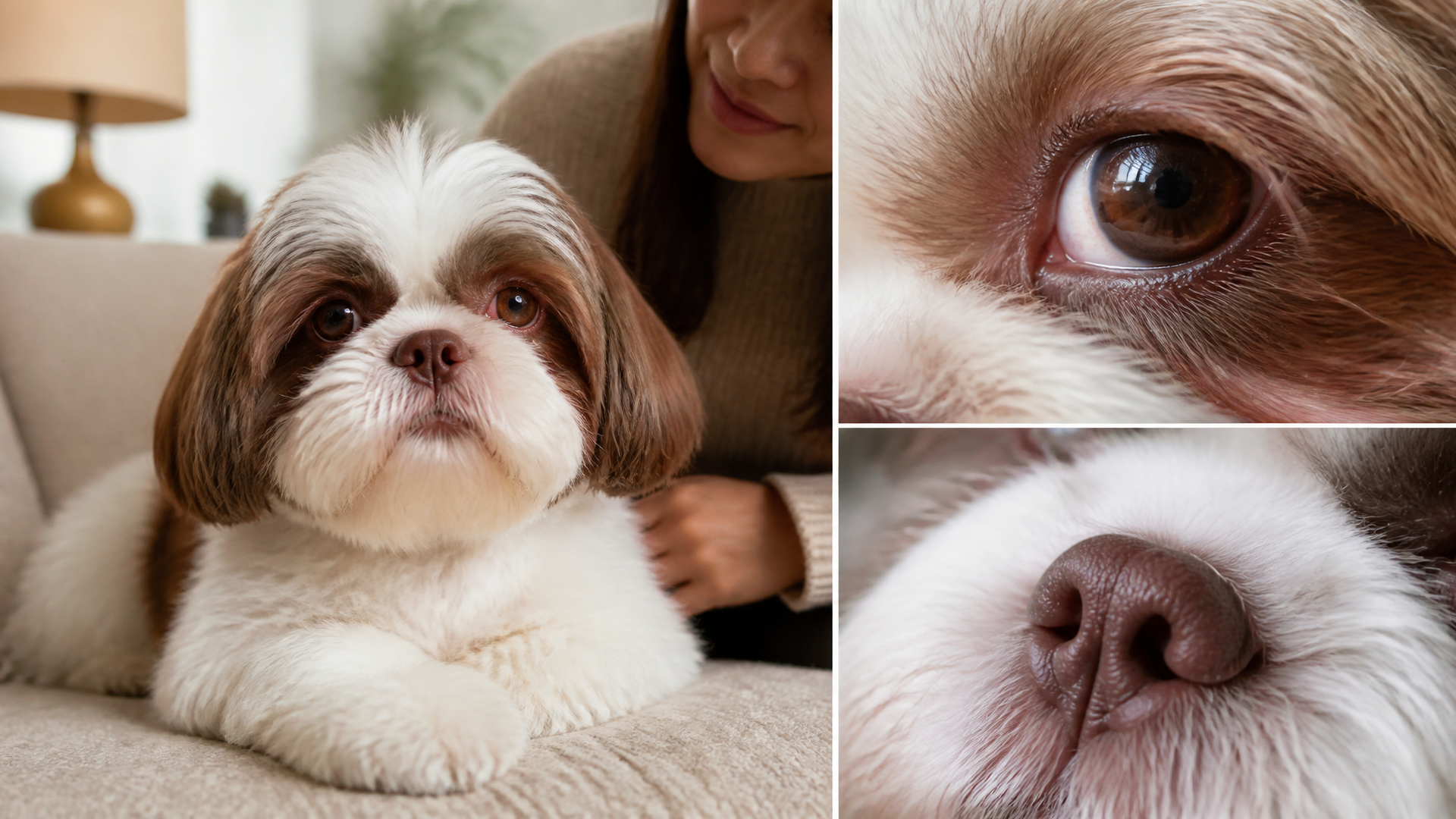
A liver line Shih Tzu isn’t a separate breed – it’s a standard Shih Tzu with a brown nose, eye rims, and paw pads instead of black. This chocolate pigment comes from a recessive gene, and it changes exactly two things about your daily care routine: you need sunscreen and extra nose moisturizer. Everything else – grooming, feeding, health – stays the same as any well-cared-for Shih Tzu.

If you’re considering buying or already own a liver-pointed Shih Tzu, here’s what you really need to know.
Spotting a True Liver Line Shih Tzu
Liver line isn’t about coat color – it’s about point pigment (nose, lips, eye rims, paw pads). Here’s the quick visual guide:
| Trait | True Liver Line | Standard Shih Tzu |
|---|---|---|
| Nose | Brown (liver) | Black |
| Eye rims | Brown, matching nose | Black |
| Paw pads | Brown or pink-grey | Black or dark grey |
| Coat color | Any (gold, white, brindle, etc.) | Any |
| Genetics | Recessive bb | Dominant BB or Bb |
Verification step: Ask the seller or breeder for a single clear photo showing nose, eye rims, and paw pads together. If the nose is brown but eye rims are black, that’s a mismark – not a true liver line.
Expert tip #1: Take a photo of your dog in natural daylight (not under a yellow light bulb). Yellow lighting can make a black nose look brown and trick you into thinking you have a liver line when you don’t. A true liver nose will look clearly brown – like milk chocolate – in both sunlight and shade. If the nose looks black in some lighting, it’s not a true liver line. This simple check prevents confusion when evaluating puppies or verifying your breeder’s claims.
Genetics Behind the Liver Color
The liver gene is recessive, so both parents must carry at least one copy (Bb) for a puppy to express it (bb). Two black-nosed parents can produce liver puppies if both carry the hidden gene. You cannot predict liver line from coat color alone.
What this means for you as a buyer: Don’t pay a premium for “rare color” unless the breeder provides genetic testing results confirming the parents’ B-locus status. A responsible breeder can show you proof. If they can’t, assume the puppy may not be a true liver line – or worse, the breeding wasn’t health-tested.
Trade-off warning: Liver line Shih Tzus are not show-ring eligible under AKC standard (which requires a black nose for conformation judging). If you plan to compete, avoid liver-pigmented dogs. If you just want a family pet, the nose color doesn’t matter.
Expert tip #2: If your breeder mentions “rare liver line” but can’t tell you the B-locus genotype of both parents, that’s a red flag. Genetic testing for the B locus is under $100 per dog and takes two weeks. A breeder who skipped this test for a “rare” trait probably skipped health testing too. Ask for the test results in writing before you put down any deposit. This single question separates serious breeders from sellers who just want a higher price for a different nose color.
Daily Care Adjustments for a Liver-Pigmented Dog
Medically, liver line Shih Tzus are no different from their black-nosed siblings – but the lighter pigment demands two habits.
Sun Protection Is Non-Negotiable
A light brown or pink nose burns faster than a black one. Apply pet-safe sunscreen (SPF 15–30, zinc-oxide free) to the nose, ear tips, and any unpigmented belly skin before outdoor time. Epi-Pet is a trusted brand. Reapply after swimming or heavy play.
Common mistake: Skipping sunscreen on cloudy days. UV rays still penetrate clouds, and a liver nose can burn in 20 minutes of midday sun. On a walk between 10 a.m. and 4 p.m., your Shih Tzu’s nose is at risk even if the sky is overcast. Keep a sunscreen stick in your dog bag year-round and make application a habit before any outdoor trip longer than a quick potty break.
Common mistake #2: Using human sunscreen. Most human sunscreens contain zinc oxide or other ingredients that are toxic to dogs when licked off. Your Shih Tzu will lick its nose – it’s a natural behavior. Only use formulas labeled specifically for dogs. A single lick of zinc-oxide sunscreen can cause vomiting and drooling in a small dog like a Shih Tzu, which typically weighs 9–16 pounds.
Daily Nose Balm
Liver-colored noses show cracking and dryness easily. Run a finger over the nose every morning. If it feels rough, apply a thin layer of dog-safe nose balm – Snout Soother or Natural Dog Company balm works well.
Expert tip #3: Apply balm right after breakfast so it becomes part of your morning routine. Waiting until the nose cracks means your dog will be in pain – early moisturizing prevents that. If you notice the nose is already cracked, apply balm three times daily (morning, noon, and before bed) until the skin smooths out. Cracks can take 3 to 5 days to heal fully, and during that time your Shih Tzu may avoid sniffing or eating normally because touching the cracked nose hurts. Consistent application prevents this cycle entirely.
When to call the vet: If the nose develops oozing sores, blisters, or changes color dramatically (from brown to red or white), schedule a vet visit. These can signal autoimmune conditions like pemphigus, which Shih Tzus are prone to regardless of nose color. Liver pigment doesn’t cause these conditions, but it makes early signs easier to see.
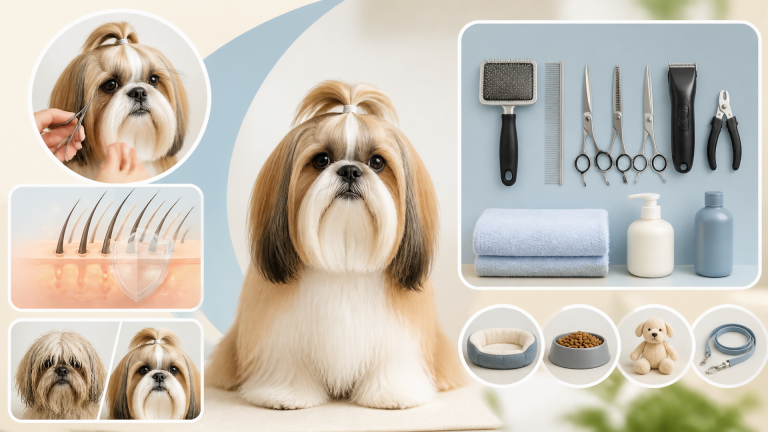
Grooming Tips That Matter for Liver Line Coats
Shih Tzus need daily brushing regardless of pigment, but liver line coats show staining differently.
- Facial staining: Red-brown tear stains stand out against white or gold coats. Wipe the face daily with a damp cloth. Switch to a stainless steel bowl for water – plastic bowls harbor bacteria that worsen tear stains. Add filtered water if your tap water is high in iron or minerals, which can darken stains further.
- Paw pad care: Liver-colored paw pads can crack in dry climates. Trim pad hair monthly and apply moisturizing balm after walks. Check between the toes weekly for debris, since Shih Tzus with liver paw pads may have lighter, more sensitive skin between the pads that irritates easily.
- Bath products: Use a color-safe, tearless shampoo (like Isle of Dogs or Burt’s Bees) to avoid stripping natural oils. Avoid whitening shampoos that can be harsh on sensitive skin. Liver line Shih Tzus with white coats benefit from a purple-toned shampoo (like Chris Christensen White on White) applied only to white areas every fourth bath to neutralize yellowing.
- Nail trims: Liver-colored nails show the quick more easily than black nails. Clip small amounts every 7–10 days. The quick on a liver-colored nail appears as a pinkish line running through the center – stop clipping when you see it start to round at the tip. This is easier than guessing on black nails, so take advantage of the visible quick.
Health Screening: Don’t Let Rare Color Fool You
No evidence shows the liver gene causes health problems. But because the trait is less common, some breeders use “rare color” to distract from missing health tests. Buyer trap: A breeder charging $3,000 for a “rare liver line” but skipping OFA hips, patella, and eye exams is selling a liability, not a luxury.
Decision implication: Before you put down a deposit, ask for the parents’ OFA/CHIC numbers. If the breeder can’t provide them, walk away. A well-bred Shih Tzu of any nose color is healthier than a poorly bred rare color.
Health conditions Shih Tzus are prone to (regardless of liver pigment):
- Patellar luxation: Kneecap slipping out of place. OFA screening on parents reduces your risk.
- Hip dysplasia: More common than people realize in small breeds. Ask for OFA hip scores on both parents.
- Progressive retinal atrophy (PRA): Causes blindness. CERF eye exams on parents are non-negotiable.
- Portosystemic shunt: Liver abnormality seen more often in Shih Tzus than many other breeds. Ask if the breeder tests for bile acids.
- Allergies: Skin and food allergies are common. Liver line dogs don’t have higher allergy rates, but cracked paws from allergies look worse on lighter-pigmented pads, so you’ll notice symptoms sooner.
Breeder verification checklist:
A responsible Shih Tzu breeder – liver line or not – should be able to show you:
- OFA or PennHIP hip evaluation on both parents
- OFA patella evaluation on both parents
- CERF annual eye exam results (within the last year)
- Genetic testing for the B locus (to confirm liver line genetics)
- Health guarantee in writing (minimum 1 year for congenital conditions)
- Veterinary records showing puppy’s first vaccines and deworming
If any of these are missing, the “rare color” price doesn’t justify the risk.
Quick Decision Aid: Is Your Care Routine on Track?
Use this 5-item check to see if you’re meeting the extra needs of a liver line Shih Tzu:
1. Nose protection: Do you apply sunscreen or balm before outdoor time? □ Yes □ No
2. Eye rim match: Are the eye rims the same brown as the nose? □ Yes □ No
3. Paw pad check: Are pads smooth, not cracked? □ Yes □ No
4. Water bowl: Do you use stainless steel (not plastic)? □ Yes □ No
5. Sun limits: Do you avoid midday sun (10 a.m.–4 p.m.)? □ Yes □ No
If you answered No to any check, add that item to your weekly routine. Your dog will thank you.
Products That Help
Affiliate disclosure: Some links below are affiliate links. We may earn a small commission at no extra cost to you.
| Product | Why It Helps | Best For |
|---|---|---|
| Pet-safe sunscreen (Epi-Pet) | Protects liver nose from burns | Outdoor dogs |
| Snout Soother balm | Moisturizes dry/cracked noses | Winter or dry-climate dogs |
| Stainless steel bowl | Reduces tear stain bacteria | All Shih Tzus |
| Slicker brush (Chris Christensen) | Prevents matting on daily coat | Long-haired liver lines |
| Tear stain wipes (Eye Envy) | Removes daily buildup | White/gold liver lines |
| Purple-toned shampoo (Chris Christensen White on White) | Neutralizes yellowing on white coats | White liver lines |
| Nail clippers with safety guard | Prevents cutting the quick on liver-colored nails | At-home grooming |
Save This Guide
Liver line Shih Tzus are standard Shih Tzus with a recessive brown pigment. Their care is nearly identical to any Shih Tzu, with two key extras: daily nose protection from sun and dryness, and careful verification when buying. Check nose, eye rims, and paw pads all match before you commit, and keep sunscreen in your dog bag year-round.
Key takeaway: A liver nose needs sunscreen and balm. Everything else – grooming, feeding, health – stays the same as any well-cared-for Shih Tzu. Verify your breeder’s health testing credentials before paying a premium for liver pigment, and build nose protection into your daily routine so it becomes automatic.