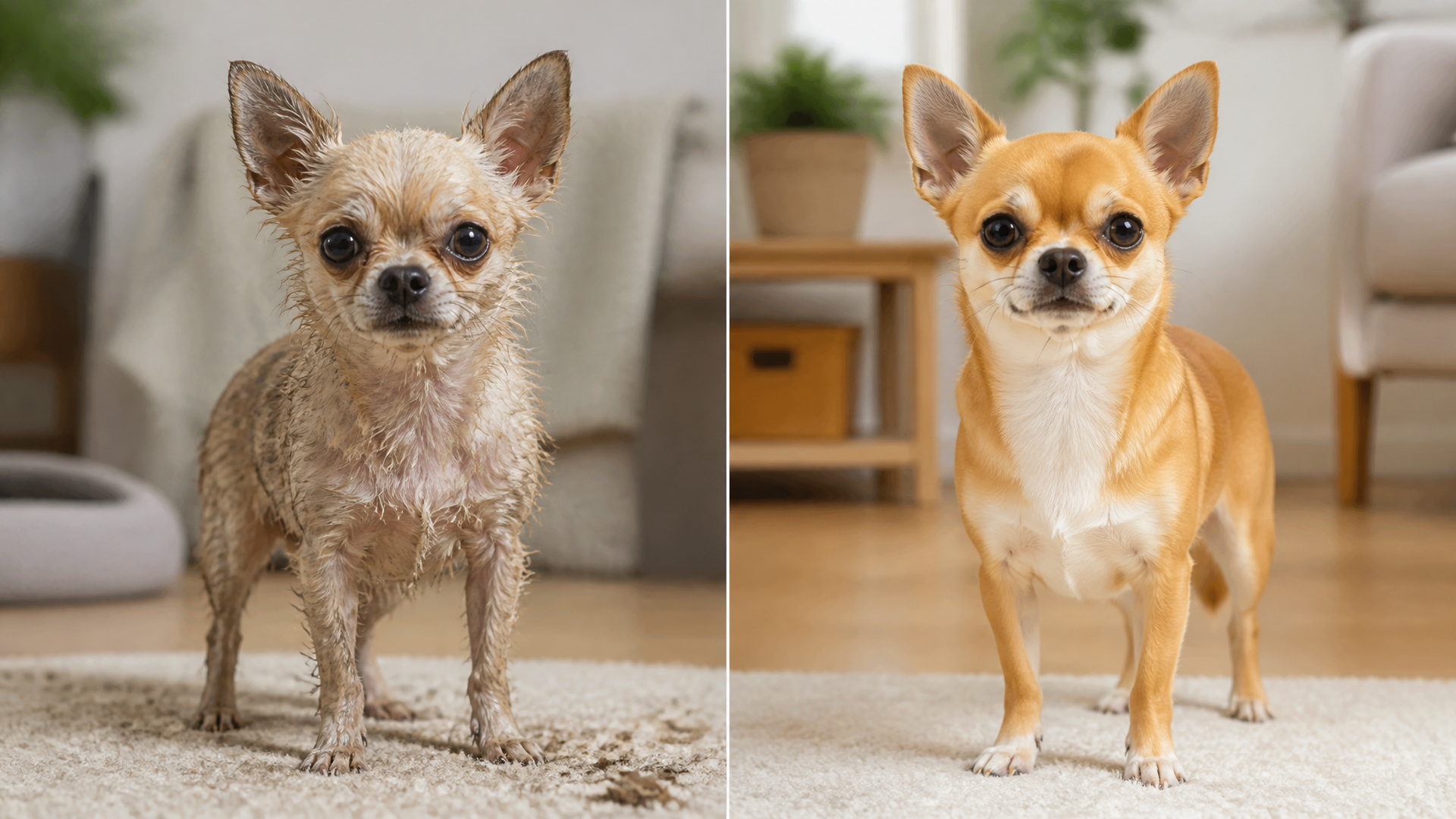
do Chihuahuas Smell: Guide: What Every Owner Should Know
Yes, Chihuahuas can develop a doggy smell — but it’s not “just the breed.” Most odors come from dental disease, skin infections, or anal glands, and all three are fixable. The good news: you can pinpoint the cause at home before it gets out of hand.

Here’s the failure mode most owners miss: They assume the smell is normal for a small dog and try to mask it with fragranced wipes or sprays. That never works. The odor always comes back stronger because the underlying issue — whether infected gums, yeast overgrowth, or full anal glands — is still there. Detecting the specific type of smell early is how you stop the cycle before it becomes a chronic problem.
What this means for you: You don’t need a crate full of deodorizing sprays. Instead, the money you’d spend on odor-masking products is better invested in a finger brush, enzymatic shampoo, and a vet dental cleaning. That actually stops the smell at the source.
Why Does My Chihuahua Smell?
Chihuahuas have breed-specific traits that make odor more likely: crowded teeth trap food, thin skin reacts easily to allergens, and ears can collect debris despite standing upright. The smell is always a signal, not a personality trait. Here’s how to decode which signal you’re dealing with.
Dental Disease (The #1 Cause)
Chihuahuas are prone to tartar buildup, gum infection, and tooth abscesses because their mouths are small and teeth overlap. Bad breath that smells like sulfur or rot is your first clue. If the mouth smells sour, schedule a dental check.
Expert tip: Brush daily using a finger brush with ultra-soft bristles and dog-safe toothpaste — never human toothpaste, which is toxic to dogs. Focus on the back molars where infection hides. Make it part of your evening routine so you don’t forget.
Common mistake: Skipping the back teeth because they’re hard to reach. That’s exactly where odor starts. Use a curved finger brush designed for small mouths to access those rear molars without your dog squirming away.
How to check at home: Lift your Chihuahua’s lip and look at the upper molars. If you see yellow or brown buildup along the gum line, or if the gums bleed when touched, dental disease is likely the source. A 2023 study found that over 80% of small-breed dogs over age 2 have some stage of periodontal disease — so this isn’t rare, and it’s worth checking regularly.
Skin and Coat Infections
Thin skin reacts to allergens — pollen, dust, even certain proteins in food — leading to yeast or bacterial overgrowth. A musty, greasy odor often comes from the armpits, belly, and ear flaps. Redness or itching confirms it. Chihuahuas with skin folds or those who wear sweaters in cold weather are especially prone because trapped moisture feeds yeast.
Expert tip: Wash with an enzymatic shampoo like Dechra MiconaHex+Triz no more than once every two weeks. Over-bathing strips natural oils and makes the odor worse. If your Chihuahua has a double coat (some long-haired varieties do), use a conditioner afterward to prevent dryness.
Common mistake: Using a regular oatmeal or coconut shampoo that doesn’t target yeast. It just masks the smell for a day, then the odor returns stronger. Stick with a veterinary antifungal formula containing chlorhexidine or ketoconazole.
Trade-off to know: Enzymatic shampoo works well for yeast, but it can dry out a Chihuahua’s thin coat if used more often than every 10–14 days. If your dog has dry flaky skin between baths, reduce frequency or follow with a light conditioner. You can also spot-clean dirty paws and belly with a damp cloth instead of a full bath.
Anal Glands
A fishy, metallic smell from the rear means the anal sacs need expressing. Chihuahuas with soft stools, allergies, or weight issues are most prone. Some dogs scoot, others just reek without any visible sign. Because Chihuahuas are small, their anal glands are tiny and can fill up fast — sometimes within weeks.
Expert tip: Add a teaspoon of canned pumpkin (not pie filling) to their food daily. The extra fiber firms up stools and helps the glands empty naturally during bathroom breaks. This single change eliminates the need for manual expression in many dogs.
Common mistake: Trying to express the glands yourself without training. It’s easy to rupture them or cause infection. Let a groomer or vet handle it — it’s inexpensive and quick, usually around $15–25.
Verification step: If you notice the fishy smell, gently lift the tail and check for swelling at the 4 o’clock and 8 o’clock positions around the anus. Redness or hard lumps mean the glands are full or infected and need professional attention within a day or two.
Ear Infections
Even though Chihuahuas have erect ears (not floppy), they still get infections from allergies or trapped debris. A yeasty, popcorn-like smell from the ears needs a vet visit. Chihuahuas with narrow ear canals are especially at risk because debris gets stuck and moisture lingers.
Expert tip: Use a vet-approved ear cleaner weekly. Part of keeping odor away is keeping debris out. Wipe the outer ear with a cotton ball soaked in cleaner — never pour liquid directly into the ear canal unless directed by your vet.
Common mistake: Using cotton swabs. They push wax and infection deeper into the ear canal and can rupture the eardrum. Wipe only the outer ear flap with a soft cloth or cotton ball, and stop at the first bend of the ear canal.
Diet and Digestion
A low-quality diet can produce foul-smelling stool and gas that makes your Chihuahua smell from the back end. Dogs on kibble with high corn or wheat content often have more odor than those on a meat-first diet. If the smell is coming from the rear but anal glands are fine, look at the food bowl.
Expert tip: Switch to a food with a named protein as the first ingredient (chicken, turkey, lamb, or fish) and no artificial preservatives. Give it two weeks — that’s how long it takes for the gut microbiome to adjust. You’ll notice a difference in stool odor within that window.
Common mistake: Switching foods too fast. A sudden change causes diarrhea, which makes anal gland problems worse. Transition over 7 days: 25% new food mixed with 75% old, then 50/50, then 75/25, then 100% new.
How to Fix the Smell: A Quick Decision Aid
Run through this 5‑point checklist before you call the vet. Each item takes less than 30 seconds to check:
1. Teeth – Lift the lip and check upper molars for yellow or brown buildup. Yes → schedule a dental cleaning within 2 weeks.
2. Ears – Smell the ear opening. Any dark discharge or yeasty odor? Yes → ear infection likely; see the vet within 3 days.
3. Skin – Run your hand over the back and belly. Greasy patches, dandruff, or hot spots? Yes → try enzymatic shampoo; if no change in 3 days, see the vet.
4. Rear – Watch for scooting or sniff for fishy odor. Yes → anal glands need expression (vet or groomer).
5. Diet – Recent food change or new treats in the past week? Yes → allergy may be the root cause; revert to the old diet for 5 days and see if the smell fades.
If none of these fit, it’s time for a vet visit — especially if the smell is sudden or unusual. A dog that smelled fine yesterday and smells bad today needs a professional look.
| Odor Type | Likely Cause | Action | Typical Cost |
|---|---|---|---|
| Rotten eggs / sulfur | Dental disease | Vet for cleaning | $200–$600 |
| Fishy / metallic | Anal glands | Expression (vet or groomer) | $15–$25 |
| Musty / greasy | Skin infection | Antifungal shampoo | $20–$30 per bottle |
| Yeasty popcorn | Ear infection | Vet treatment | $50–$150 |
| Sweet or fruity | Possible diabetes | Immediate vet | Varies |
When the Smell Means Something Serious
A sudden sweet or fruity odor can signal diabetes in dogs. This isn’t common, but it’s worth knowing because early treatment matters. A rotten, bloody smell might point to an intestinal issue. If your Chihuahua also loses appetite, vomits, or acts lethargic, skip home treatments and go to the vet within 24 hours.
Also note: if the smell returns within a few days after treatment, the root cause may be an allergy — not a one-off infection. Work with your vet to identify the trigger. Common culprits include chicken, beef, dairy, and environmental allergens like dust mites or pollen. An elimination diet or allergy test can pin down the cause.
Save This Guide
Key takeaway: The smell is a symptom, not a breed trait. Brush teeth daily, wash bedding weekly, use an enzymatic shampoo when needed, and don’t ignore a persistent fishy or musty odor — it’s your Chihuahua telling you something needs attention. Start with the 5‑point checklist above, and if the smell doesn’t resolve within a week of home care, make a vet appointment.
Some links in this article are affiliate links. If you buy through them, we may earn a small commission.