Why Labradors Like Water
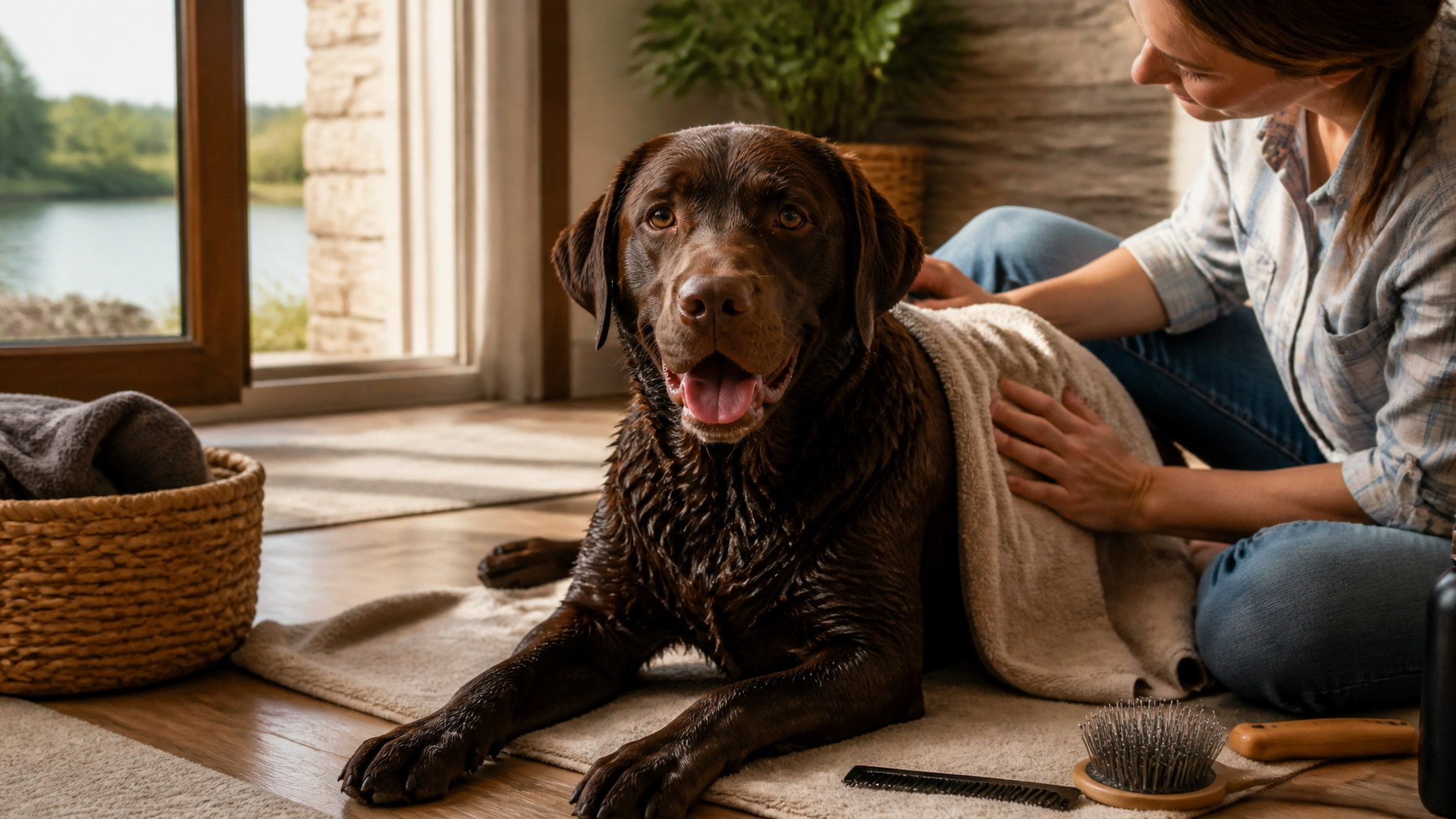
Labradors are drawn to water because they were bred for it — generations of waterfowl retrieving and fishing work gave them a water-repellent double coat, webbed feet, and an otter-like tail that acts as a rudder. If you own a Lab, you’ve seen that instinct kick in the second they see a puddle, a hose, or a swimming pool. They don’t just like water; they’re built to be in it.

But that instinct doesn’t mean every Lab is a safe, natural swimmer. Puppies, seniors, and dogs with past bad experiences need a slow, structured introduction. This guide covers the science behind that love, when it might not kick in, how to test your Lab’s readiness, and the safety gear that keeps every splash fun.
Why Labradors Are Built for Water
The Labrador’s body is a swimming machine. Three physical features make them stand out in the water:
- Double coat: The outer guard hairs shed water; the dense undercoat traps warmth even in cold lakes. A Lab can swim in water as low as 45°F for short periods without getting chilled.
- Webbed feet: Skin between the toes acts like natural paddles, giving more thrust per stroke than most breeds.
- Otter tail: Thick at the base and tapering, the tail works as a rudder for steering. A Lab’s tail never tucks — it keeps swinging to maintain course.
Beyond anatomy, Labs have high stamina and a relentless retrieve drive. That combination turns any body of water into an invitation to play fetch for hours.
Historically, the breed’s ancestor — the St. John’s water dog from 18th-century Newfoundland — helped fishermen haul nets and retrieve loose fish. British nobles refined those dogs into the modern Labrador Retriever. The result: a dog that sees water as a workspace, not an obstacle.
When a Lab’s Water Love Doesn’t Kick In
Not every Labrador automatically loves water. Some individuals never develop the instinct, and that’s normal. Common reasons include:
- Breeding line: Field-trial Labs often have stronger water drive than show-line Labs. If your Lab comes from a conformation line, they may prefer dry land.
- Negative experience: Being thrown into water, dunked, or caught in a wave can create lasting fear.
- Health issues: Hip dysplasia, arthritis, or ear infections make swimming painful. A Lab that avoids water after age 7 may be telling you something.
- Puppy stage: Puppies under 12 weeks old lack temperature regulation and should not be forced into water. Wait until they’re at least 4 months old and fully vaccinated.
If your Lab refuses water despite multiple calm attempts, do not force them. Some Labs simply prefer a hose spray to a lake.
How to Confirm Your Lab Is Ready for Water
Before you jump in, run a quick water-readiness test. This helps you gauge comfort and avoid a panic event.
1. Choose a calm, shallow spot — a kiddie pool or a quiet beach with a gradual slope.
2. Stand at the water’s edge with your Lab on a loose leash. Watch body language: ears forward, relaxed sniffing = ready. Ears back, tucked tail, avoiding = not ready.
3. Toss a floating toy into 2–3 inches of water. If your Lab steps in to retrieve, praise and repeat. If they hesitate or back away, stop.
4. Increase depth gradually over multiple sessions. Wait until your Lab voluntarily paddles in chest-deep water before calling it a success.
This verification step takes 5–10 minutes. If your Lab shows any sign of fear, end the session and try again another day in a warmer, shallower location.
The Hidden Risks of a Water-Obsessed Lab
A Lab that loves water too much can get into trouble. Overenthusiasm often leads to swimming past exhaustion, which carries real risks.
- Fatigue and drowning: Even strong swimmers can tire. A Lab that swims in circles, drifts sideways, or starts climbing onto you is done. Without a life jacket, they may not make it back.
- Hypothermia: Labs tolerate cold, but water below 50°F saps body heat fast. Shivering after swimming means the session was too long.
- Water intoxication (hyponatremia): An overeager Lab that swallows too much water while retrieving can develop a dangerous drop in sodium levels. Symptoms include bloating, vomiting, lethargy, and stumbling. This is a veterinary emergency.
- Unsafe water sources: Blue-green algae, strong currents, ice, and hidden debris can turn a fun swim into a crisis. Always scout the area first.
The trade-off: your Lab’s love of water makes them happy, but it also means you must stay alert. Never leave a water-loving Lab unsupervised near any body of water.
Safe Water Introduction: Step-by-Step Operator Flow
Follow this flow to build a confident, safe swimmer. Adjust the pace based on your Lab’s reactions.
Before You Start: Quick Prep Checklist
- [ ] Choose a safe, shallow location (no current, clear bottom, gradual slope)
- [ ] Fit a properly sized life jacket with top handle and chest strap
- [ ] Bring a large floating toy (too big to swallow)
- [ ] Bring a microfiber towel and fresh water for rinsing
- [ ] Check water temperature (above 50°F recommended)
Early Checkpoints (Watch for These Signs)
| Checkpoint | What to Look For | Action |
|---|---|---|
| Body language | Tail up, ears relaxed, curious sniffing | Good sign — let them explore |
| Refusal to enter | Ears back, tucked tail, backing away | Stop. Try a shallower spot or return later |
| First paw dip | Pauses, sniffs, then steps in | Praise calmly. Toss toy a few inches |
| Paddling motion | Front legs paddling, back legs kicking | They’re swimming — stay close |
| Panting or circling | Excessive panting, slow wide circles | Call them in immediately |
Ordered Steps for Introduction
1. Sit at the water’s edge with your Lab on a loose leash. Let them watch, sniff, and get comfortable.
2. Toss a floating toy just 1–2 feet into shallow water. If they retrieve, praise. Repeat, gradually moving the toy farther.
3. Show them the exit – guide them to a known point where they can walk out easily. Labs can panic if they can’t find the way back.
4. Increase depth slowly – over 2–3 sessions, allow them to venture into water where they must paddle. Keep the first swimming sessions to 5–7 minutes.
5. End while they’re still eager – stop before they get tired. This builds a positive association.
Likely Causes of Reluctance
- Past trauma – being thrown in or dunked. Take extra time with calm encouragement.
- Cold water – even Labs can feel uncomfortable below 50°F. Use a neoprene vest if water is cool.
- Joint pain – older Labs or those with hip dysplasia may avoid swimming. Check with your vet.
- Unknown floor – murky water or weedy bottoms can spook them. Stick to clear, sandy areas.
Escalation Signals (Stop and Dry Off Immediately)
- Swimming in circles or drifting sideways – exhaustion.
- Repeatedly climbing onto you or the shore – done.
- Shivering or shaking after exiting – hypothermia risk.
- Ears smelling yeasty or sour after drying – moisture trapped; treat before next swim.
Success check: After 3–5 calm, short sessions, your Lab should willingly enter shallow water and paddle confidently. If they still refuse after 6 sessions, consult your vet to rule out pain or hearing/vision loss.
3 Expert Tips for Water-Loving Labs
Tip 1: Master Ear Care After Every Swim
- Actionable step: After each swim, squeeze a vet-recommended ear-drying solution into each ear, massage the base for 30 seconds, then let your Lab shake. Wipe visible moisture with a cotton ball — never use cotton swabs.
- Common mistake: Assuming air-drying is enough. Floppy-eared Labs trap moisture deep in the canal, leading to yeast or bacterial infections within 24 hours.
Tip 2: Use a Life Jacket Even for Strong Swimmers
- Actionable step: Choose a jacket with a front chest strap, bottom belly panel, and a top handle. Adjust so you can just fit two fingers under the straps.
- Common mistake: Thinking “my Lab knows how to swim” means they can’t drown. Fatigue, muscle cramps, and currents can overwhelm any dog. A life jacket also gives you a handle for quick retrieval.
Tip 3: Rinse and Condition After Salt or Chlorine Exposure
- Actionable step: Immediately after swimming in saltwater or a chlorinated pool, rinse your Lab’s coat with fresh water until it runs clear. Then apply a dog-safe moisturizing conditioner and rinse again.
- Common mistake: Only rinsing “when you remember.” Salt and chlorine continue to dry out skin and coat. Make rinsing part of every swim routine, not an occasional chore.
Essential Safety Gear for Water-Loving Labs
| Item | Why It Matters | What to Look For |
|---|---|---|
| Life jacket | Keeps tired Labs afloat; handle for quick grab | Bright color, front chest strap, top handle, bottom belly strap. Avoid bulky neck designs |
| Floating toys | Satisfies retrieving instinct without sinking | Durable, large enough not to choke. Avoid foam that breaks into pieces |
| Ear-drying solution | Prevents yeast and bacterial infections | Drying agent (alcohol-free) with a gentle applicator tip |
| Quick-dry towel | Removes excess water fast to cut down chill | Microfiber or chamois, large enough for a 65–80 lb dog |
| Freshwater rinse | Removes chlorine, salt, algae, and debris | Bring a gallon jug or use a sprayer at home before drying |
Disclosure: this guide contains general product type recommendations. Actual safety and fit should be verified with the manufacturer.
Warning Signs Your Lab Needs a Water Break
Even if your Lab wants to keep going, watch for these signals and call it quits:
- Excessive panting or drooling – Overheating or stress.
- Swimming in circles or drifting sideways – Exhaustion; they may be unable to climb out.
- Shivering or shaking – Cold; hypothermia risk increases with exposure.
- Repeatedly climbing onto you or the shore – They’re tired or uncomfortable. Take the hint.
- Ears smelling yeasty or sour – Indicates moisture trapped inside; clean and dry before next swim.
Save This Guide
Labradors love water because their genetics, coat, feet, and tail were all designed for it — but that instinct doesn’t make them immune to danger. Use the operator flow to introduce swimming safely, test your Lab’s readiness, and understand the boundaries of that water love. Follow the expert tips for ear and coat care, keep the right gear on hand, and watch for warning signs so every splash is a happy one.
Key takeaway: Your Lab’s love of water is natural — your responsibility is to make it safe. Save this guide for next swim season.