Bichon Health: Warning Signs & What To Do
Your Bichon Frise is a tough little dog, but their small size and fluffy coat hide problems until they’re serious. The #1 threat? Dental disease. By age three, most Bichons already have periodontal disease, and many owners don’t spot it until teeth need extracting. Here’s exactly what to watch for and what to do right now — not next week.

The Most Overlooked Health Problem in Bichons
Dental Disease Destroys More Than Teeth
Bad breath isn’t just “dog breath.” It’s the first sign of infection. In Bichons, periodontal disease progresses fast because their mouths are crowded with small teeth. Beyond tooth loss, bacteria enter the bloodstream and damage the heart, liver, and kidneys.
What this means for your daily routine: You need to brush your Bichon’s teeth every single day — skipping even two days allows plaque to harden into tartar. Start with a dog-safe toothpaste like Virbac C.E.T. Enzymatic Toothpaste and a small finger brush. Once tartar forms, only a professional cleaning under anesthesia can remove it.
How to check if your routine is working: Run a clean white paper towel along the gum line. If you see yellow or brown residue, you’re not brushing thoroughly enough. If the gums bleed when you brush, stop and see your vet — that’s active gum disease.
One realistic limitation: Even with daily brushing, most Bichons still need an annual professional dental cleaning. Brushing slows the buildup but doesn’t stop it completely. Budget for this vet visit — it typically costs $300–$600 depending on your area.
Four Health Problems Bichon Owners See Most Often
Luxating Patella — The Knee That Pops Out
Watch for the “skip-hop”: your Bichon runs a few steps, lifts a hind leg, and sets it down normally again. That’s the kneecap slipping out of the groove. It’s common in Bichons because of their hind-leg structure.
Trade-off to know: Mild cases don’t need surgery, but they do need management. Keep your dog lean (a healthy Bichon weighs 10–18 pounds). Avoid letting them jump off furniture — use pet stairs instead. If the skipping gets worse or your dog cries out, a Grade 3 or 4 luxation typically requires surgery.
How to verify the severity at home: Gently run your fingers along the knee while your dog stands. If you feel a pop or the kneecap slides easily out of place with light pressure, that’s a vet visit. You can’t fix this with rest alone.
Allergies — The Itch That Won’t Quit
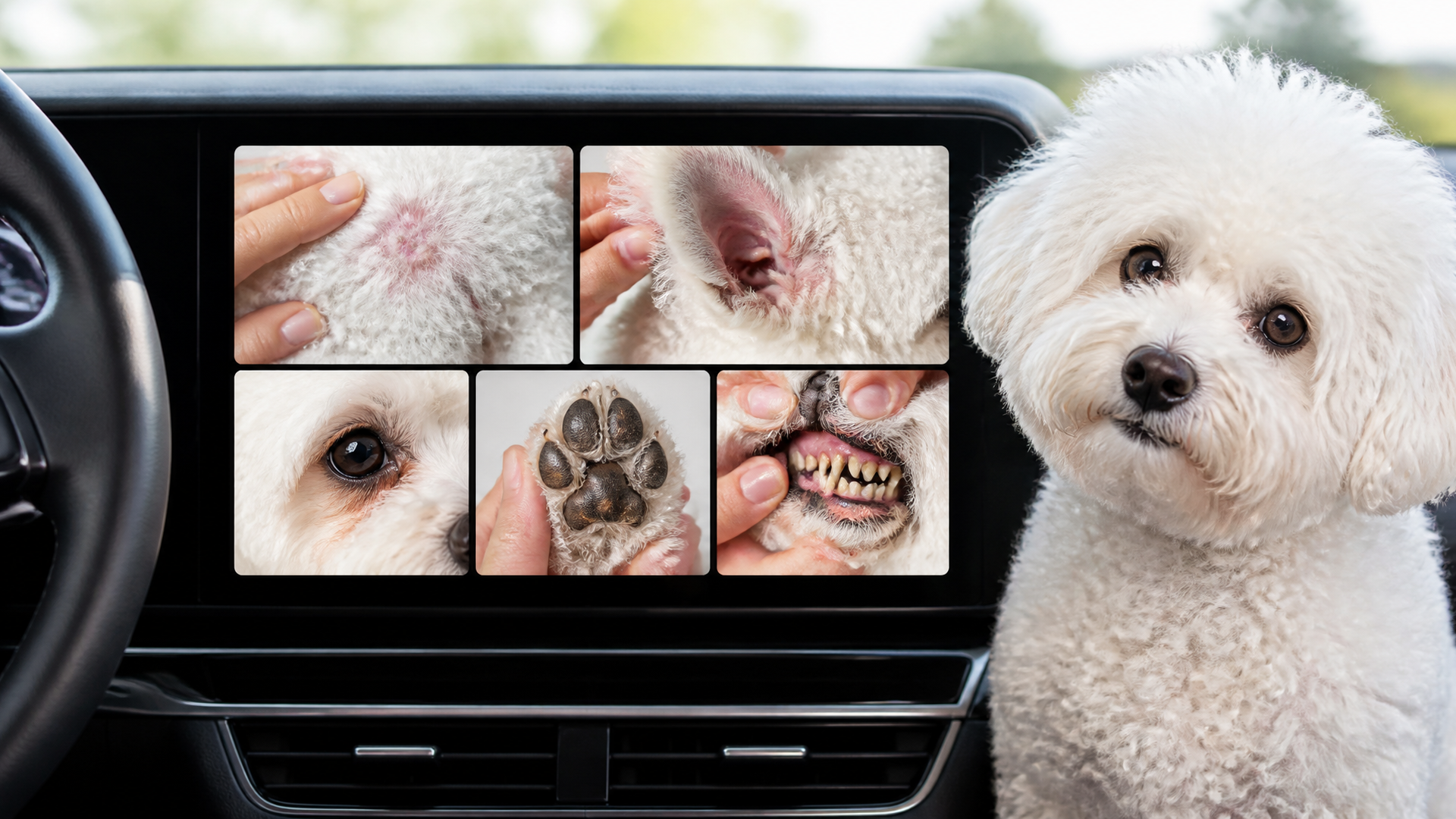
Bichons have sensitive skin. The classic signs: constant paw licking (the feet turn pink or brown from saliva staining), red inner ears, and scabby bumps on the belly.
What the answer changes by season: If your Bichon itches only in spring and fall, environmental allergies (pollen, grass) are the likely trigger. If it’s year-round, suspect food — chicken and dairy are the biggest offenders. Your vet can run a food trial (8–12 weeks on a hydrolyzed protein diet) to isolate the trigger.
Practical implication for your wallet: Antihistamines like Zyrtec can help year-round itching, but they’re not a cure. Expect a long-term plan that may include prescription food, immunotherapy shots, or medicated baths. Over-the-counter oatmeal shampoos (like Burt’s Bees Oatmeal Shampoo) are good for soothing but won’t treat the underlying allergy.
Ear Infections — The Floppy Ear Trap
Those adorable drop ears trap moisture and debris. If your Bichon shakes her head or the ears smell like yeast (bready or musty), infection is already underway.
What to do step by step: First, check the ears weekly. Use a cotton ball with a vet-recommended ear cleaner (not hydrogen peroxide — that irritates). Wipe only the visible part of the ear canal; never stick anything deep inside. If you see dark coffee-ground debris, that’s yeast. If it’s yellow pus, that’s bacteria. Both need vet treatment — over-the-counter drops won’t work and can make it worse.
Trade-off to know: Chronic ear infections can lead to a hematoma (blood blister on the ear flap) or ruptured eardrum. If your dog yelps when you touch an ear, stop and go to the vet. Don’t try to clean it yourself.
Bladder Stones — The Life-Threatening Blockage
Bichons have a genetic risk for calcium oxalate stones. Symptoms: straining to urinate with little output, blood in urine, accidents in the house, or licking the genital area excessively. Male Bichons are at higher risk because their urethra is narrower — a stone can fully block it within hours.
Concrete verification step: If your Bichon squats or lifts a leg for more than 30 seconds without producing urine, that’s an emergency. Place a white paper towel under the urine stream and check for crystals (gritty sediment) or pink tinges. Do not wait to see if it resolves on its own — a blocked urinary tract can cause kidney failure and death within 24 hours.
Practical implication for prevention: Feed a consistent, approved diet. Avoid high-oxalate foods (spinach, sweet potatoes, almonds) as treats. Your vet can test urine pH at annual checkups; a pH below 6.0 or above 7.0 raises stone risk.
Quick Decision Aid: Home Care vs. Vet Emergency
Print this or screenshot it. Answer YES or NO to each item. If any answer is YES, call your vet immediately (or go to an emergency vet after hours).
- Breathing trouble: Gasping, open-mouth breathing when resting, or blue/pale tongue? YES / NO
- Refused food for more than 24 hours: Not eating, especially with vomiting or lethargy? YES / NO
- Sudden collapse or can’t stand: Unresponsive or dragging a leg? YES / NO
- Blood in urine or straining to pee: Especially in a male Bichon? YES / NO
- Eye swelling or intense squinting: Could be injury, glaucoma, or infection? YES / NO
If all answers are NO, you can monitor a mild issue (one loose stool, one sneeze) for 24 hours. But trust your gut — if your Bichon seems “off,” a vet visit is safer than waiting.
3 Practical Tips From Experienced Bichon Owners
1. Do a Weekly Head-to-Tail Check Every Sunday
Run your hands over your Bichon while watching TV. Feel for lumps, check ears for odor, look at teeth, press gently on the belly.
Common mistake: Only checking the top of the coat. Skin problems hide under the fluff, especially on the belly and armpits.
Action step: Use a fine-tooth comb for the belly and armpits — that’s where fleas, hot spots, and small lumps start.
2. Manage Tear Stains With Diet, Not Just Wipes
Tear stains are cosmetic, but they can also mean blocked tear ducts or food allergies.
Common mistake: Using only topical stain removers without addressing diet.
Action step: Wipe the eye area daily with a warm, damp cloth and trim the face hair short. If stains smell bad or the skin looks red, that’s infection — see your vet. Ask about switching to a novel protein food (e.g., salmon or venison) to see if staining improves.
3. Protect the Knees With Simple Flooring Changes
Bichons with luxating patella need grip under their feet.
Common mistake: Letting your Bichon run on tile or hardwood floors.
Action step: Place carpet runners, yoga mats, or washable rugs in high-traffic areas. Keep your Bichon lean — even one extra pound adds significant pressure to those tiny knees. On-leash walks are better than off-leash fetch where they might make sharp turns.
Red Alert Symptoms That Are Always Emergency
These cannot wait. Go to the nearest emergency vet immediately.
- Non-stop vomiting or diarrhea (especially with blood)
- Bloated, hard abdomen that’s tender to touch
- Seizures or loss of consciousness
- Inability to walk or stand
- Eye injury – a popped eye or sudden intense squinting
- Any sign of poisoning: drooling, shaking, collapse, or known ingestion of something toxic
Because Bichons weigh only 10–18 pounds, even small amounts of toxin are dangerous. Keep these items off your counters and out of reach: chocolate, xylitol (gum, peanut butter, toothpaste), grapes, raisins, onions, garlic, and alcohol. Also secure electrical cords — Bichons love to chew. If you suspect poisoning, call the ASPCA Poison Control Hotline (888-426-4435) immediately or go to the vet.
Save This Guide
This guide covers the warning signs that matter most for Bichons — dental disease, kneecap issues, allergies, ear infections, and bladder stones. Weekly checks, daily dental brushing, and prompt attention to limping, itching, or urinary changes are your best tools for catching problems early. This page is worth keeping saved for quick reference.
We are a participant in the Amazon Services LLC Associates Program and other affiliate programs. If you purchase through links on this page, we may earn a small commission at no extra cost to you.