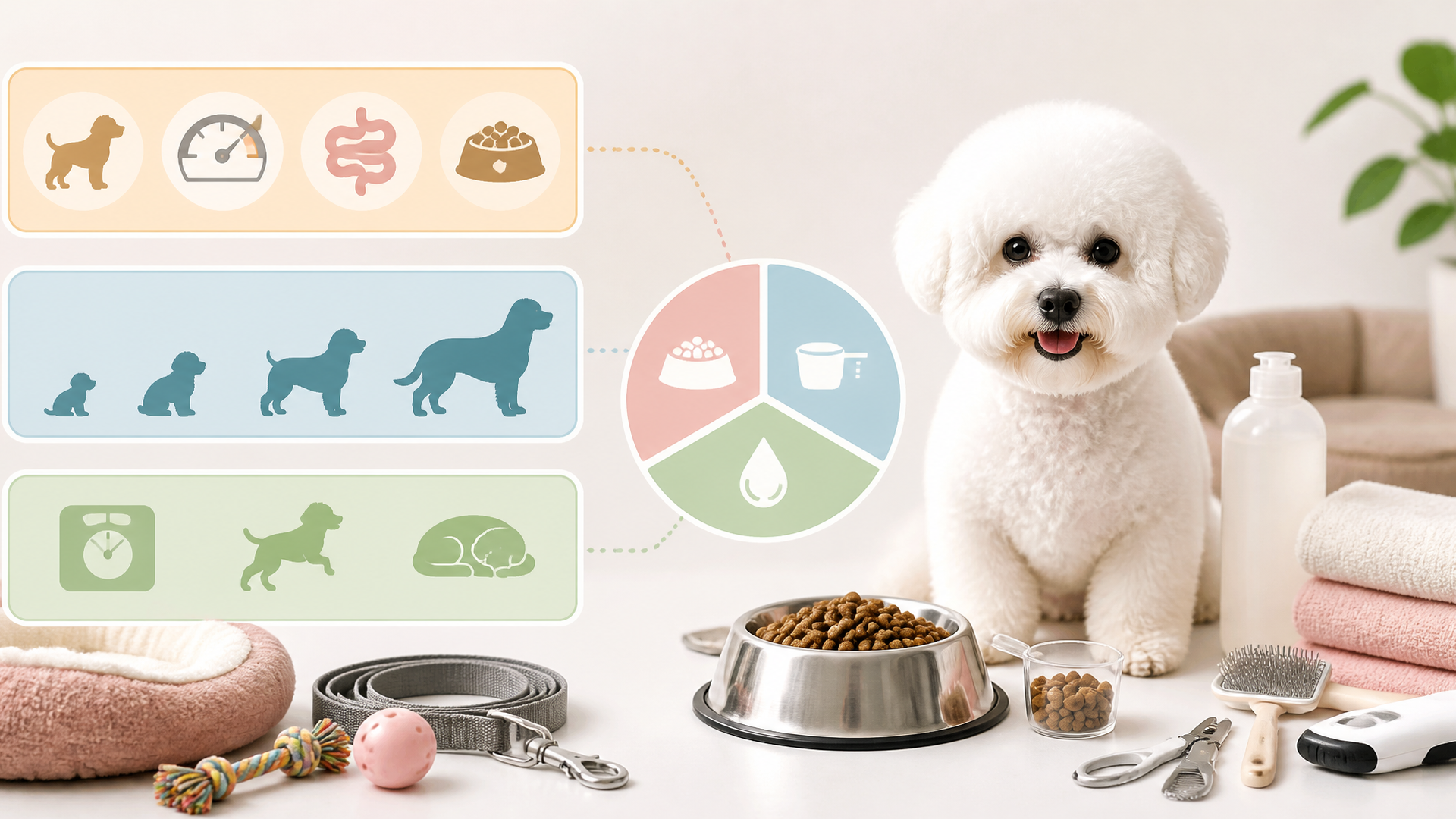
Bichon Frisé Diet: Daily Routine & Expert Tips
Feed your Bichon Frise ½ to 1 cup of premium dry food daily, split into two measured meals, and adjust based on age, weight, and activity level. The diet problem most Bichon owners miss isn’t picky eating — it’s a slow-onset food allergy that looks like normal dry skin until it becomes chronic ear infections and hot spots. Catch it early with the three-part check below.

Daily Feeding Routine by Life Stage
Bichons pack on weight easily and carry a higher risk of pancreatitis. Consistent meal times and measured portions are non-negotiable. This table gives you real numbers to work with.
| Life Stage | Daily Amount (dry food) | Meals per Day | Treat Limit |
|---|---|---|---|
| Puppy (2–4 months) | ¼ – ½ cup | 3–4 | 5–10% of daily calories |
| Puppy (4–12 months) | ½ – ¾ cup | 3 (until 6 months), then 2 | 10% max |
| Adult (1–7 years) | ½ – 1 cup | 2 | 10% max |
| Senior (7+ years) | ½ – ¾ cup (adjust for activity) | 2 | 10% max (low-fat treats) |
All amounts are approximate. Check your food bag and adjust for body condition. Ideal adult weight: 10–18 pounds.
Portion tip you’ll actually use: Don’t rely on the scoop that came with the bag. Use a standard dry measuring cup or a kitchen scale — grams are more accurate than cups. A “heaping cup” vs. a level cup can add 50–80 calories a day, enough for your Bichon to gain two pounds in a month.
The Diet Failure Mode Most Owners Miss
Bichons develop food allergies differently than other small breeds. Instead of immediate vomiting or hives, signs creep in over weeks. What looks like “just dry winter skin” or “a little scratching after walks” is often the start of a chicken or grain sensitivity.
Three-part test to tell allergies from normal irritation:
1. Check the ears – Normal Bichon ears are pink and clean. Dark, waxy, yeasty-smelling discharge inside the ear flap means allergies, not dirt.
2. Watch the paws – If your Bichon licks their front paws right after meals (within 30–60 minutes), that’s a food reaction, not boredom.
3. Listen to the belly – Loud gurgling sounds that start within an hour of eating and last 10+ minutes point to digestive irritation.
If you see two out of three, start a diet change now. Don’t wait for hot spots or a $400 vet bill for chronic ear infections.
Four Steps to Identify and Fix Food Allergies at Home
Here’s the ordered plan Bichon owners use to identify triggers before spending money on allergy tests.
Step 1: Switch to a Novel Protein Food
Choose a limited-ingredient diet with a protein your Bichon hasn’t eaten before — salmon, duck, venison, or rabbit are safe bets because most Bichon foods use chicken or beef. Brands that work well for many owners: Natural Balance LID Duck & Potato or Merrick LID Grain-Free Turkey.
Transition over 7–10 days:
- Days 1–2: 25% new food + 75% old
- Days 3–4: 50/50
- Days 5–6: 75% new + 25% old
- Day 7+: 100% new
If your Bichon refuses the new food, warm it slightly with a splash of warm water (not hot) to release aroma. Never mix in cheese or meat to force acceptance — that contaminates the elimination trial.
Step 2: Eliminate All Treats for Two Weeks
This is where most owners slip. Your Bichon doesn’t need variety during this period. Use a single piece of their new kibble as a reward. That means no dental chews, no training biscuits, no “just one” piece of cheese. Hidden chicken, beef, wheat, and soy lurk in nearly every commercial treat. Even “grain-free” treats often contain chicken fat or chicken liver.
Step 3: Track Symptoms Daily
Note three things every evening: scratching level (mild/moderate/severe), ear check (clean/dirty), and stool consistency. After two weeks on the new diet, you should see measurable improvement if food was the trigger. Use a notes app or a simple calendar — written records beat memory when you’re talking to your vet later.
Step 4: Reintroduce Treats One at a Time
Once symptoms are gone, add back one treat type every 3–4 days. If scratching or ear discharge returns within 48 hours, that treat is a trigger. Remove it permanently and test the next treat in 5–7 days.
Your clear stop/escalate threshold: If you see no improvement after 4 weeks on the new diet, or if your Bichon develops vomiting, diarrhea lasting more than 24 hours, or severe itching that causes hair loss or open sores, stop the home trial and schedule a vet visit. Your vet may recommend a prescription hydrolyzed protein diet or bloodwork to rule out environmental allergies.
Daily Diet Checkpoint (10-Second Evening Scan)
Run through this every night. One “no” means fix that item tomorrow. Five “yes” answers means your routine is solid.
1. Portion measured? – Did you use a measuring cup or scale, not an eyeball estimate?
2. Treats counted? – Under 10% of daily calories? (For a 12-lb adult, that’s about 20 small biscuits or ½ ounce of freeze-dried meat.)
3. Body condition good? – Can you feel ribs easily without pressing? Visible waist when viewed from above?
4. No allergy signals? – No excessive scratching, paw licking, or ear discharge today?
5. Bowl washed? – Cleaned with hot soapy water between meals — not just a rinse. Unwashed bowls harbor bacteria that can cause loose stools or yeast overgrowth in small dogs.
Products Bichon Owners Actually Reach For
- Dry kibble for small breeds – Royal Canin Bichon Frise Adult (smaller kibble shape fits a Bichon’s jaw) or Hill’s Science Diet Small & Toy Breed (balanced for toy-breed metabolism). Both are available at major pet retailers.
- Limited-ingredient wet food – Use as a topper for picky eaters. Look for single-protein formulas like Merrick LID Grain-Free Turkey or Natural Balance LID Duck & Potato.
- Hypoallergenic treats – Zuke’s Mini Naturals (2 calories each) or single-ingredient freeze-dried treats like Vital Essentials Minnows (no fillers, no binders).
- Omega-3 supplement – Fish or krill oil supports skin health during allergy seasons. Use a pump with a measured dose — a dropper squeeze is too variable for a 12-lb dog. Grizzly Salmon Oil is a common pick among Bichon owners.
We recommend these product types based on common Bichon owner success. Always introduce new food gradually. Some links may be affiliate links — they help us write more breed-specific guides at no extra cost to you.
Quick Diet Answers
How much should I feed my Bichon puppy?
For a puppy under 6 months, give ¼ to ½ cup of high-quality puppy kibble split into 3–4 meals. Reduce to 2 meals after 6 months. Puppies need more frequent meals to prevent blood sugar dips.
Can Bichons eat carrots?
Yes, raw or steamed carrots make a healthy low-calorie treat. Cut into coin-sized pieces to prevent choking. Avoid whole baby carrots — they’re a choking hazard for a toy-breed mouth.
What’s the best diet for a Bichon with chronic ear infections?
A limited-ingredient or hydrolyzed protein diet (often prescription). Work with your vet to rule out food allergies as the root cause rather than treating the ears alone.
Should I feed wet or dry food?
Dry kibble helps keep teeth clean and makes portion control easier. Use wet food as a topper for picky eaters, but no more than ¼ can per meal to avoid loose stools.
Save This Guide – Keep this feeding overview handy when shopping for food or troubleshooting a health issue. The biggest takeaway: portion control plus allergy awareness equals a healthier, happier Bichon.