Types of Sphynx Cats
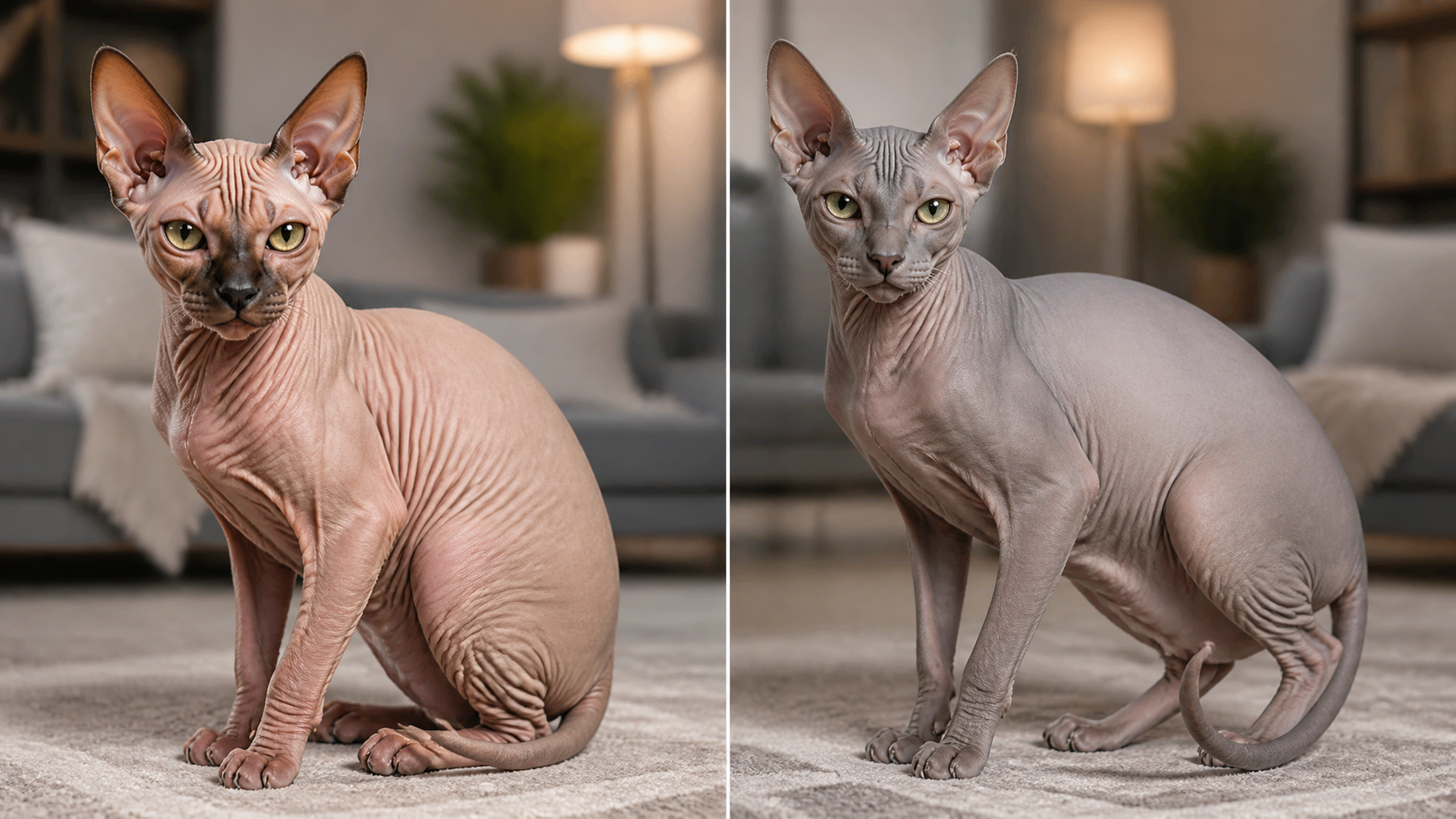
If you’re looking for types of Sphynx cats, here’s what you need to know: there are two distinct breeds — the Canadian Sphynx and the Donskoy (Don Sphynx) — plus several color and coat variations within each. Most people picture the Canadian Sphynx when they think “hairless cat,” but the Donskoy has a different genetic mutation and requires slightly different care. Understanding which type you’re considering changes your grooming routine, health monitoring, and even what products you’ll need at home.

Canadian Sphynx vs. Donskoy: The Two Main Breeds
The Canadian Sphynx and Donskoy look similar at first glance, but they’re genetically distinct. This matters because their skin care, breeding health, and even their coat patterns differ.
Canadian Sphynx
- Origin: Toronto, Canada (1960s) through a natural recessive genetic mutation
- Coat genetics: Recessive gene — two copies needed for hairlessness
- Skin feel: Warm peach fuzz or chamois leather; often has a fine down on the nose, ears, and tail
- Temperament: Extremely social, attention-seeking, dog-like loyalty
- Common health issues: Hypertrophic cardiomyopathy (HCM), skin infections, sunburn sensitivity
- Lifespan: 8–14 years
Donskoy (Don Sphynx)
- Origin: Rostov-on-Don, Russia (1987) through a dominant genetic mutation
- Coat genetics: Dominant gene — only one copy needed for hairlessness
- Skin feel: Tighter, smoother rubbery texture; tends to be more completely bald
- Temperament: Curious, playful, slightly more independent than the Canadian
- Common health issues: Gingivitis, dental problems, skin conditions, HCM
- Lifespan: 12–15 years
Quick decision rule: If you live in a sunny climate and want to minimize sunscreen application, the Canadian Sphynx’s fine down offers light protection. The Donskoy’s fully bald skin requires more diligent sun and temperature management.
Coat and Color Variations Within Sphynx Types
Even within hairless breeds, “type” includes color, pattern, and coat variation. These affect nothing about care but matter for identifying your cat.
Four Coat Types in Donskoy Cats
The Donskoy has four distinct coat variations that appear in litters:
| Coat Type | Description | Care Note |
|---|---|---|
| Rubber Bald | Completely hairless from birth | Most common; requires regular oil-wipe baths |
| Flock | Fine peach-fuzz coat that disappears by age 2 | Needs less frequent bathing during transition |
| Velour | Soft short coat on mucosal (nose/ear) areas | Partial coat requires brush during shedding |
| Bush | Full, wiry coat — not technically hairless | Often not recognized as Sphynx type; needs brushing |
Color and Pattern Points
Sphynx cats come in every color and pattern found in other cats because the skin shows the pigment directly:
- Solid: White, black, blue, red, cream, chocolate, lavender
- Pointed: Siamese-style darker ears, face, paws, tail
- Tabby: Classic, mackerel, spotted, ticked patterns visible on skin
- Tortoiseshell and Calico: Mixed black/red or white patches
- Mink: Intermediate color between pointed and solid, with aqua eyes
Practical takeaway: Your Sphynx’s color determines how quickly they sunburn. Light-colored Sphynx cats (white, cream, pointed) need sunscreen or full shade during peak UV hours. Dark-colored Sphynx can tolerate slightly more sun exposure.
Key Differences That Change How You Care for Each Type
Canadian Sphynx: Grease Management Required
Canadian Sphynx skin produces more oil because there’s no coat to absorb it. You’ll need:
- Weekly baths with cat-safe shampoo (Burt’s Bees Sphynx shampoo or similar pH-balanced formula)
- Daily wiping with pet-safe wipes between baths
- Ear cleaning every 3–5 days (they produce more ear wax)
- Moisturizing balm for paw pads and nose if they crack
Common mistake: Over-bathing. Bathing more than once a week strips natural oils and causes dry, irritated skin. Stick to weekly unless your vet recommends more.
Donskoy: Dental Priority Required
The Donskoy breed has higher rates of dental disease, including gingivitis and tooth resorption. Prioritize:
- Daily tooth brushing with enzymatic cat toothpaste
- Annual dental cleanings starting at age 2
- Oral health treats or water additives (check with vet first)
- Soft food options if they develop gum sensitivity
Common mistake: Assuming dental care is optional because the cat looks healthy. Donskoy cats often hide dental pain until it’s advanced. Start brushing as a kitten.
Both Types: Temperature and Sun Management
Both breeds are cold-intolerant and sun-sensitive. Essential care includes:
- Indoor-only lifestyle (these are not outdoor cats)
- Heated cat beds in winter (K&H Pet Products heated beds work well)
- Sweaters for temperatures below 70°F (look for soft, non-itchy fabrics like cotton blends)
- Pet-safe sunscreen on ears, nose, and light skin patches during sunbathing near windows
- Checking skin daily for redness, bumps, or dry patches
Common mistake: Using human sunscreen. Zinc oxide is toxic to cats. Use pet-specific sunscreen or sunblock.
Your Weekly Sphynx Care Operator Flow
Follow this weekly check routine to catch problems early:
Step 1: Touch Check (daily, 30 seconds)
- Run hands over entire body feeling for bumps, scabs, or oily patches
- Note any areas that feel unusually hot or cold
Step 2: Ear Inspection (every 3 days)
- Look inside ears for dark wax buildup or redness
- Clean with vet-recommended ear cleaner (don’t use Q-tips inside the ear canal)
Step 3: Bath or Wipe (weekly, 10–15 minutes)
- Fill sink with 2–3 inches of lukewarm water (100°F, not hot)
- Use Sphynx-specific shampoo or hypoallergenic baby shampoo
- Rinse thoroughly — residue causes irritation
- Dry completely with a soft towel; avoid blow dryers on high heat
Step 4: Nail Trim (every 1–2 weeks)
- Trim tips only; avoid the pink quick
- Use cat nail clippers (grinders can overheat on sensitive paws)
Step 5: Dental Check (daily, 2 minutes)
- Lift lips and look for red or swollen gums
- Brush with enzymatic toothpaste
Stop signal: If you find lumps, open sores, significant hair regrowth (in a hairless cat), or your cat stops eating or using the litter box, see your vet within 24 hours.
FAQ: Types of Sphynx Cats
Are there different sizes or body types among Sphynx cats?
Yes. Canadian Sphynx typically weigh 6–12 pounds with a medium, muscular build. Donskoy can be slightly heavier at 8–15 pounds with a more substantial bone structure. The Peterbald (a Russian breed with Sphynx ancestry) is longer and more slender.
Can two Canadian Sphynx parents produce a Donskoy kitten?
No. They are different breeds with different genetic mutations. Cross-breeding is rare and not recognized by most breed registries.
Which Sphynx type is best for people with allergies?
Neither Sphynx breed is truly hypoallergenic. Allergens come from saliva and skin oils, not fur. Both types produce dander and Fel d1 protein. Some people react less to Donskoy, but allergy testing with an adult cat is the only reliable way to know.
How do I know which type my Sphynx is if I adopted them?
Look at registration papers, or check for the fine down on the body (Canadian) versus completely bald rubbery skin (Donskoy). A DNA test from a company like Basepaws or Wisdom Panel can confirm breed ancestry.
Save This Guide
When choosing between Sphynx types, your biggest decision is Canadian versus Donskoy: the Canadian needs more oil-management bathing; the Donskoy needs more dental vigilance. Both types require indoor living, sun protection, and regular skin checks. Know which breed you have, follow the weekly care flow, and your Sphynx will stay healthy with minimal surprises.