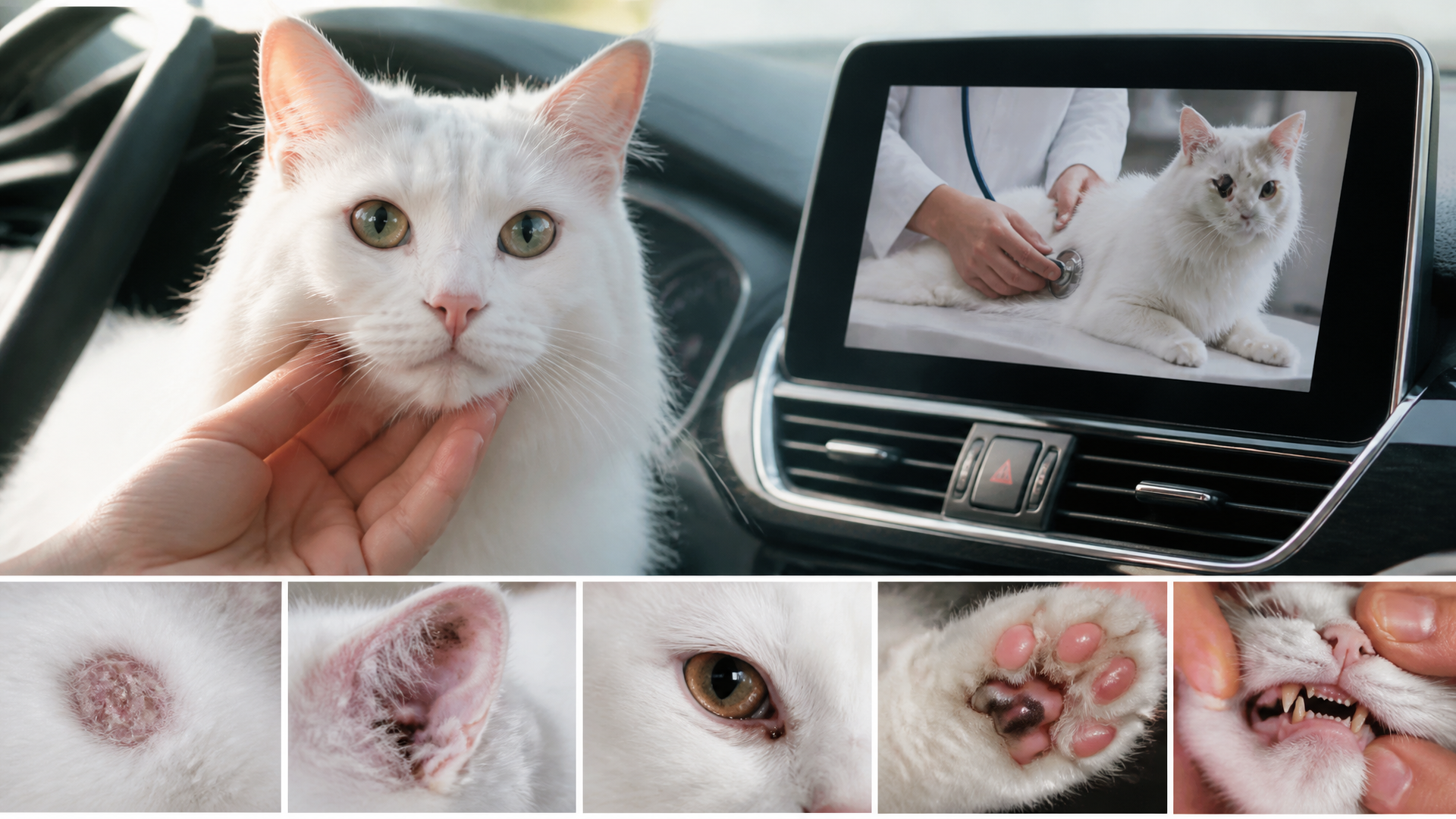
Turkish Angora Health: Warning Signs & What To Do
Turkish Angoras are generally healthy cats with a lifespan of 12–18 years, but they carry two breed-specific risks you need to know about: hypertrophic cardiomyopathy (HCM) and hereditary ataxia. Both show early warning signs you can catch at home. Here’s what to look for, what to do, and how to save your cat months of suffering by acting early.

Breed-Specific Risks Every Angora Owner Should Know
Turkish Angoras are prone to four main health issues that set them apart. Knowing these ahead of time means you’ll spot trouble early instead of guessing later.
Hypertrophic Cardiomyopathy (HCM)
A thickening of the heart muscle that reduces pumping ability. It can develop silently for years. Annual echocardiograms by a board-certified cardiologist catch it much earlier than a stethoscope alone. Practical implication: If your vet only listens to the heart during checkups, ask for an echo referral. The cost ($300–$600) is worth avoiding an emergency trip with fluid in the lungs.
Hereditary Ataxia
A neurological condition unique to Turkish Angoras. Kittens show wobbliness, head tremors, or uncoordinated movements around 2–4 weeks old. It’s present from birth. Trade-off: There is no treatment, but affected kittens can still live comfortable indoor lives with accommodations (low furniture, no stairs). The decision to adopt a kitten with ataxia is a personal one; discuss quality of life with your vet.
Deafness in White-Coated Angoras
Linked to the white coat gene. Blue-eyed white Angoras have the highest risk (65–85% are deaf), but any white Angora can be affected. Verification step: Ask your vet for a BAER hearing test at 5–6 weeks old. The test is painless and takes about 15 minutes – it confirms hearing in each ear. If your kitten is deaf, you’ll need to use hand signals and keep them indoors.
Dental Disease
Turkish Angoras develop tartar and gingivitis faster than many breeds. Realistic mismatch: Some owners skip dental care because their cat resists brushing. The consequence is expensive extractions or heart/kidney infections from oral bacteria. A compromise: use dental treats and water additives approved by the Veterinary Oral Health Council (VOHC) if brushing is impossible.
Warning Signs That Need a Vet Visit Immediately
These five signs are your cue to call the vet, not wait and see. If you see any of these, call your vet’s office and describe what you observed. The best next move is to get an appointment within 24 hours – earlier for breathing issues.
Labored Breathing or Open-Mouth Breathing
A healthy cat breathes quietly through its nose. Panting or heaving sides can signal fluid in the lungs from HCM. This is an emergency – go to an ER vet.
Sudden Hind-Leg Weakness or Collapse
If your Angora drags its back legs or can’t stand, suspect a saddle thrombus – a blood clot caused by heart disease. This is life-threatening. Rush to the nearest emergency hospital.
Wobbly Gait or Head Tremors in a Kitten
If your kitten (under 8 weeks) stumbles or bobs its head while walking, it may have hereditary ataxia. Your vet can confirm with a neurological exam.
Unexplained Weight Loss Despite a Normal Appetite
Turkish Angoras are naturally lean, but visible ribs or a prominent spine without diet changes is a red flag for hyperthyroidism, dental pain, or early organ disease. Implication: Catch this early and treatment (medication, diet change) is often simpler than waiting until the cat stops eating.
Bad Breath or Drooling
Don’t dismiss it as “normal cat breath.” Foul odor, drooling, pawing at the mouth, or red gums signal dental disease. Untreated dental problems can lead to tooth loss and infections that spread to the heart and kidneys.
When to See the Vet for Routine Screening
Even without warning signs, Turkish Angoras need specific preventive care on a regular schedule.
Annual echocardiogram starting at age 1 – This is the gold standard for detecting HCM. A stethoscope alone misses many early cases. Ask your vet for a referral to a board-certified cardiologist or a clinic that offers echo screenings. Verification step for HCM screening: Call the cardiology office and confirm they use echocardiography (ultrasound), not just an ECG. Also ask if they provide a report with measurements of wall thickness – that’s the data you want.
BAER hearing test for white kittens – Schedule this at 5–6 weeks old. If your kitten is deaf, begin hand-signal training immediately. Deaf Angoras can live full lives indoors, but they must never go outside unsupervised.
Yearly dental cleanings under anesthesia – Turkish Angoras benefit from professional cleanings more often than many mixed-breed cats. Your vet can tell you if yearly or every 18 months fits your cat’s needs.
Routine bloodwork annually after age 7 – Senior Angoras are at higher risk for kidney disease and hyperthyroidism. Baseline bloodwork gives your vet a normal range to compare against.
How to Keep Your Turkish Angora Healthy: 3 Expert Tips
These practical steps make a real difference in preventing common health issues.
Start Dental Care Early – Before Problems Start
Actionable step: Introduce a finger brush or small cat toothbrush with poultry-flavored enzymatic toothpaste when your kitten is 8–12 weeks old. Brush 3–4 times per week minimum. A toothbrush kit like the Vet’s Best Enzymatic Toothpaste + Finger Brush works well.
Common mistake to avoid: Waiting until you see bad breath or red gums. By then, plaque has hardened into tartar that requires professional cleaning. Prevention is much easier than treatment.
Know Your Cat’s Normal Resting Breathing Rate
Actionable step: Count your cat’s breaths per minute when they’re sleeping peacefully. Place your hand on their side, count each rise and fall for 30 seconds, multiply by 2. Normal is 20–30 breaths per minute. Check this once a week so you know their baseline.
Common mistake to assume: Heavy breathing after play is normal for cats. It’s not. Cats don’t pant to cool down the way dogs do. If your Angora pants after mild activity, that’s a potential HCM warning sign.
Track Weight Changes Monthly
Actionable step: Weigh your cat on a baby scale or kitchen scale once a month. Write it down. A change of more than 0.5 pounds in either direction without a diet change is worth a vet call. A digital kitchen scale with a bowl attachment works well.
Common mistake to avoid: Relying on “feeling” if your cat has lost weight. Angoras have fine, silky coats that hide weight loss well. Monthly weighing catches gradual changes you won’t notice by touch.
Monthly Health Check for Turkish Angora Owners
Run through this decision aid once a month. If any item is a “no,” schedule a vet visit within the week.
| Check Item | What to Look For | Pass/Fail |
|---|---|---|
| Resting breathing rate | 20–30 breaths per minute, no effort | ☐ Pass / ☐ Fail |
| Weight stable | Within 0.5 lbs of last month’s weight | ☐ Pass / ☐ Fail |
| Gums and breath | Pink gums, no odor, no drooling | ☐ Pass / ☐ Fail |
| Hind-leg strength | Walks normally, jumps up without hesitation | ☐ Pass / ☐ Fail |
| Appetite and thirst | Eats and drinks normally, no changes | ☐ Pass / ☐ Fail |
A single “fail” means call your vet within 48 hours. Two or more “fails” means call today.
Frequently Asked Questions
How long do Turkish Angora cats live?
Turkish Angoras typically live 12–18 years with proper care. Regular veterinary screenings, a balanced diet, and indoor-only living give them the best chance at reaching the upper end of that range.
Is deafness common in Turkish Angoras?
Yes, particularly in white-coated Angoras with blue eyes. About 65–85% of white cats with two blue eyes are deaf from birth. White Angoras with one blue eye or both non-blue eyes have a lower risk but should still be tested with a BAER test.
Can Turkish Angoras get heart disease?
Yes. Hypertrophic cardiomyopathy (HCM) is the most common heart condition. Annual echocardiograms starting at age 1 are the best way to catch it early. Blood tests like pro-BNP are less accurate – ask for the echo.
What does ataxia look like in Turkish Angora kittens?
Ataxia appears as a wobbly, uncoordinated gait, head tremors, and difficulty standing or walking. It’s noticeable by 2–4 weeks of age and is present from birth, not something that develops later.
Do Turkish Angoras need special food?
No single food is required, but a high-quality, protein-rich diet with taurine (essential for heart health) supports their overall health. Avoid grain-heavy fillers. Your vet can recommend specific brands based on your cat’s age and health.
This guide contains affiliate links. We may earn a small commission if you purchase products through them, at no extra cost to you.
Save This Guide: Turkish Angoras are resilient cats, but their breed-specific risks – HCM, ataxia, deafness, and dental disease – mean proactive screening pays off. Use the monthly health check table to catch changes early, and schedule annual echocardiograms and dental cleanings for peace of mind.