Can Shih Tzu Eat Papaya
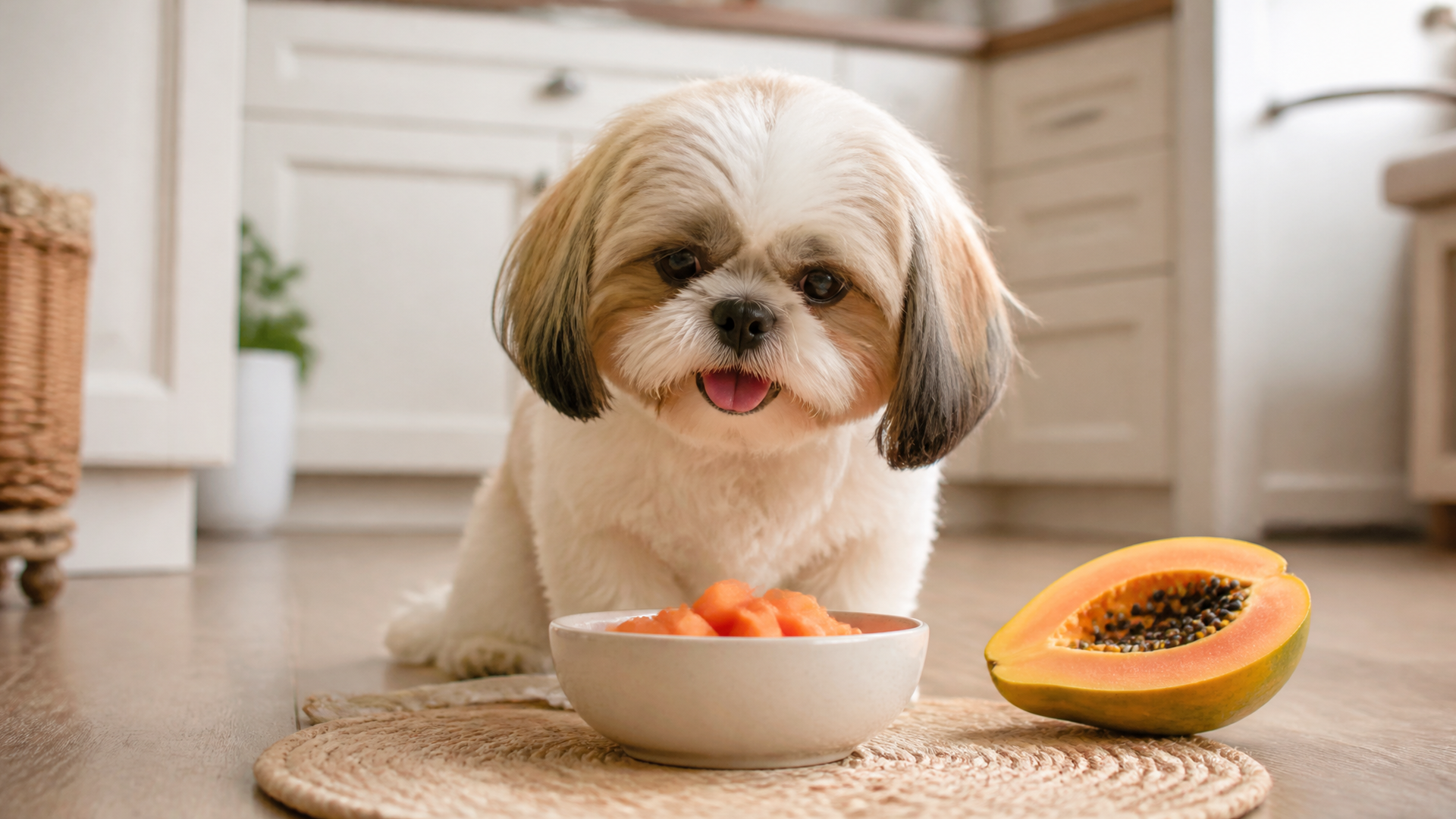
Yes, your Shih Tzu can safely eat papaya. This tropical fruit is non-toxic and provides vitamins A, C, and E plus the digestive enzyme papain. But because Shih Tzus weigh only 9–16 pounds, portion control and proper prep are non-negotiable. Serve 1–2 teaspoons of fresh, peeled, seedless papaya cut into ¼-inch cubes, no more than 2–3 times per week.

| Safe portion (Shih Tzu) | ≤ 1–2 teaspoons diced (about ¼ ounce) |
|---|---|
| Maximum frequency | 2–3 times per week |
| Parts to remove | Skin, seeds, stem |
| Cut size | ¼-inch cubes or smaller |
| Stop feeding if… | Vomiting, diarrhea, lethargy occur |
Important: These guidelines apply only to fresh, ripe papaya (yellow-orange skin that yields slightly to pressure). Canned papaya often contains added sugar or syrup. Dried papaya is sugar-dense and may contain sulfites. Papaya juice lacks fiber and concentrates sugar – avoid it.
What This Means for Your Shih Tzu’s Diet
Papaya can be a healthy occasional treat, but it doesn’t replace a balanced diet or offer unique benefits over safer options like blueberries or cucumber. If your Shih Tzu already gets fruit treats, swap papaya in once or twice a week rather than adding it on top. For a small dog prone to loose stools, skip papaya entirely and stick with low-sugar vegetables (green beans, carrots). The fiber and sugar in papaya can trigger diarrhea even in a single teaspoon if your dog’s gut isn’t used to it.
How Much Papaya Can a Shih Tzu Eat?
Start with a single ½ teaspoon piece on the first try. Wait 24 hours to check for digestive upset. If tolerated, you can increase to:
- Toy-sized Shih Tzu (under 9 lbs): ½ to 1 teaspoon per serving
- Standard Shih Tzu (9–16 lbs): 1–2 teaspoons per serving
- Frequency: 2–3 times per week, never daily
Overfeeding fruit is the most common mistake. A single teaspoon of papaya has about 1 gram of sugar. For a 10-pound dog, that’s roughly 2% of their daily calorie budget. Two teaspoons is 4%. Add other treats and you’re quickly past the 10% treat limit.
How to Safely Prepare Papaya for Your Shih Tzu
1. Select a ripe papaya. Confirm by gently pressing – it should give slightly. The skin should be mostly yellow-orange, not green. Green papaya is harder to digest and can cause stomach upset.
2. Wash the outside with cool water to remove dirt or pesticide residue.
3. Slice in half lengthwise and scoop out all the black seeds with a spoon. Seeds are a choking hazard and can cause intestinal blockage in small dogs – remove every single one.
4. Peel off the skin. The skin is tough and fibrous. Small dogs can’t break it down, and it may irritate the stomach.
5. Cut the flesh into ¼-inch cubes (about the size of a small pea). This prevents choking.
6. Serve fresh or freeze cubes on a tray for 2 hours, then store in an airtight bag for up to 3 months. Perfect for stuffing into a Kong toy.
Verification checkpoint: After cutting, rub a cube between your fingers. If any seed fragments or tough skin remain, rinse and re-check. A single missed seed can cause trouble for a Shih Tzu.
When Papaya Can Be Dangerous
Even with proper prep, two real risks remain:
- High sugar load. Shih Tzus are prone to obesity and pancreatitis. Feeding papaya daily or in portions larger than 2 teaspoons can tip the balance. If your dog has a history of pancreatitis, avoid fruit treats altogether.
- Stomach sensitivity. Some Shih Tzus react to the fiber or natural sugars with gas, loose stools, or vomiting. If your dog is on a prescription diet for digestive issues, papaya is not a safe addition without vet approval.
Trade-off to consider: Papaya offers slightly more vitamin C than apple or blueberry, but also more sugar. If your goal is a low-sugar treat, stick with cucumber or green beans. If you want digestive enzymes, consider a vet-approved probiotic supplement instead – more reliable than fruit.
Signs Your Shih Tzu Ate Too Much Papaya
Stop feeding papaya immediately if you notice:
- Loose stools or diarrhea within 12 hours
- Vomiting (especially if seed pieces are present)
- Gas, bloating, or discomfort (whining, hunched posture)
- Loss of appetite or lethargy
- Drooling or pawing at the mouth (possible seed stuck)
When to call the vet: If symptoms last longer than 12 hours, or if you suspect a seed is stuck (gagging, persistent vomiting, unable to pass stool). For a small Shih Tzu, even one papaya seed can cause obstruction.
Expert Tips for Feeding Papaya to a Shih Tzu
Tip 1 – Introduce slowly. Offer a single ½-teaspoon piece on the first try. Wait 24 hours to check for digestive upset. Common mistake: Giving a full portion immediately before seeing how your dog reacts.
Tip 2 – Watch the sugar load. Keep a log of all treats (including fruit) for a week to ensure total treats stay under 10% of daily calories. Common mistake: Assuming fruit is “free” food. Papaya has about 5 grams of sugar per 3.5 oz, so even a teaspoon adds up for a small dog.
Tip 3 – Store leftovers correctly. Dice and freeze extra papaya in a single layer on a tray, then transfer to an airtight bag. Use within 3 months. Common mistake: Leaving cut papaya at room temperature – it spoils quickly and can grow bacteria that cause vomiting.
Save This Guide – Papaya Feeding Checklist
- Papaya is safe for Shih Tzus – seeds and skin are not
- Serve only 1–2 teaspoons of fresh, peeled, seedless fruit
- Cut into pea-sized cubes to prevent choking
- Limit to 2–3 times per week
- Introduce with a ½-teaspoon test
- Watch for digestive upset – stop if diarrhea or vomiting
- Freeze extra for enrichment treats
- Canned, dried, or juice versions are not safe
We may earn a commission from affiliate links on this page, but our recommendations are based on your Shih Tzu’s safety first.
FAQ
Can Shih Tzu puppies eat papaya?
Puppies under 6 months have more sensitive digestive systems. Wait until adulthood, then start with half the adult portion – about ¼ teaspoon. Always check with your vet first.
What about dried papaya?
Dried papaya is much higher in sugar and often contains added sulfites. Avoid it. Stick to fresh or frozen.
Can Shih Tzu eat papaya seeds?
No. Seeds are a choking and blockage hazard. Remove every seed before serving.